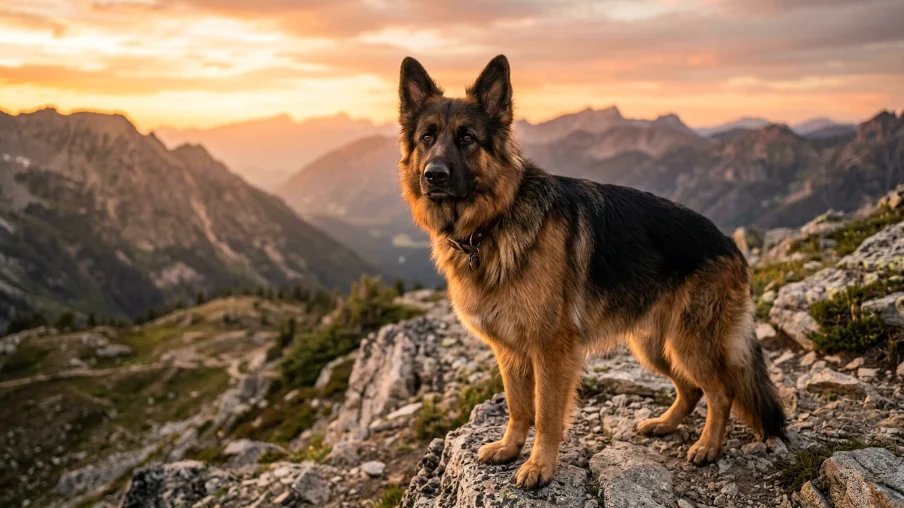
The Long Haired German Shepherd is a German Shepherd Dog that inherits a recessive gene for a longer, flowing coat. Despite its striking appearance, it shares the same intelligence, loyalty, and working heritage as standard-coated German Shepherds. The biggest mistake buyers make is focusing on coat length instead of health testing, temperament, and responsible breeding practices.
Quick Snapshot Table
| Category | Details |
|---|---|
| Breed | German Shepherd Dog |
| Alternative Names | Long Coat German Shepherd, Long Stock Coat German Shepherd |
| Coat Type | Long Coat |
| Coat Length | Medium-Long to Long |
| Coat Texture | Soft, Dense, Flowing |
| Undercoat | Present in Most Dogs |
| Origin | Germany |
| Developed By | Max von Stephanitz |
| Breed Group | Herding Group |
| Coat Gene | Recessive Long-Hair Gene |
| Height | 22–26 Inches |
| Weight | 50–90 Pounds |
| Lifespan | 9–13 Years |
| Intelligence Ranking | Among the Most Intelligent Dog Breeds |
| Trainability | Excellent |
| Energy Level | High |
| Exercise Needs | High |
| Mental Stimulation Needs | Very High |
| Working Drive | Moderate to Very High |
| Protective Instinct | Strong |
| Loyalty Level | Extremely High |
| Affection Toward Family | High |
| Stranger Friendliness | Reserved but Not Aggressive |
| Good With Children | Usually Yes |
| Good With Other Dogs | Yes, With Socialization |
| Good With Cats | Sometimes, Early Introduction Recommended |
| Family Friendly | Yes |
| First-Time Owner Friendly | Moderate |
| Apartment Friendly | Sometimes |
| Working Ability | Excellent |
| Guard Dog Ability | Excellent |
| Watchdog Ability | Excellent |
| Service Dog Potential | High |
| Search and Rescue Potential | High |
| Protection Sport Potential | High |
| Herding Instinct | Moderate |
| Prey Drive | Moderate to High |
| Barking Level | Moderate |
| Drooling Level | Low |
| Shedding Level | Heavy |
| Seasonal Shedding | Very Heavy |
| Grooming Needs | Moderate to High |
| Brushing Frequency | 3–5 Times Weekly |
| Bathing Frequency | Every 6–8 Weeks |
| Climate Tolerance | Excellent in Cool Weather |
| Heat Tolerance | Moderate |
| Cold Tolerance | High |
| Adaptability | High |
| Puppy Growth Period | Up to 24 Months |
| Mental Maturity | 2–3 Years |
| Adult Coat Development | 12–24 Months |
| Common Colors | Black & Tan, Black & Red, Sable, Black, Bi-Color |
| Rare Colors | White, Blue, Isabella, Liver |
| Eye Color | Brown (Most Common) |
| Nose Color | Black Preferred |
| AKC Recognition | Recognized as German Shepherd Dog |
| FCI Recognition | Yes |
| UKC Recognition | Yes |
| Breed Standard Focus | Temperament, Structure, Working Ability |
| Hip Dysplasia Risk | Moderate to High |
| Elbow Dysplasia Risk | Moderate to High |
| Degenerative Myelopathy Risk | Present in Breed |
| Bloat Risk | Significant |
| Recommended Health Tests | OFA Hips, OFA Elbows, DM Testing, Cardiac Screening |
| Best For | Active Families, Working Homes, Experienced Owners |
| Not Ideal For | Sedentary Owners, Low-Activity Households |
| Average Puppy Price | $1,500–$4,000+ |
| Annual Ownership Cost | $1,500–$4,500+ |
| Life Stage to Full Maturity | 2–3 Years |
| Overall Maintenance Level | Moderate to High |
| Popularity | One of the Most Popular German Shepherd Coat Variations Worldwide |
Why the Long Haired German Shepherd Continues to Grow in Popularity
Few dogs combine beauty, intelligence, and versatility quite like the Long Haired German Shepherd.
Its flowing coat often attracts attention first, but experienced owners quickly discover that appearance is only a small part of the breed’s story. Underneath the longer fur is the same capable working dog that made German Shepherds famous worldwide.
Whether serving as a family companion, protection dog, search-and-rescue partner, sport competitor, or service animal, the Long Haired German Shepherd retains the breed’s hallmark traits of intelligence, loyalty, and trainability.
However, this is not a breed for everyone. High exercise requirements, heavy shedding, and strong working instincts demand a level of commitment that many first-time owners underestimate.
What Is a Long Haired German Shepherd?
A Long Haired German Shepherd is a purebred German Shepherd Dog that inherits two copies of a recessive gene responsible for producing a longer coat.
The long coat creates noticeable feathering around the ears, chest, legs, and tail while maintaining the breed’s overall structure, temperament, and working ability.
Importantly, a Long Haired German Shepherd is not a separate breed.
It remains a German Shepherd Dog and should be evaluated according to the same standards of temperament, health, structure, and working ability that apply to all German Shepherds.
Quick Answer
- Purebred German Shepherd Dog
- Long coat caused by recessive genetics
- Same intelligence and trainability
- Same working heritage
- Requires more grooming
- Heavy seasonal shedding
What Is a Long Haired German Shepherd?
A Long Haired German Shepherd is a German Shepherd Dog that inherits a recessive gene causing a longer coat with feathering around the ears, chest, legs, and tail. It remains the same breed as a standard-coated German Shepherd and generally shares the same intelligence, loyalty, trainability, and working ability.
Breed History and Origin
The Long Haired German Shepherd shares its history with the modern German Shepherd breed.
In the late nineteenth century, German cavalry officer Max von Stephanitz sought to develop the ideal working dog. His focus was never coat type or color. Instead, he prioritized intelligence, endurance, trainability, and usefulness.
His famous philosophy still guides responsible breeders today:
“Utility is the true criterion of beauty.”
Long-coated puppies occasionally appeared in early breeding programs because the long-coat gene naturally existed within the German Shepherd gene pool.
Historically, some breeders preferred shorter coats for practical working purposes because shorter fur collected less debris and dried more quickly in difficult environments.
Today, long-coated German Shepherds are widely admired by enthusiasts around the world and can be found in family homes, sport venues, and working roles.
What Experienced Breeders Focus On
Here is where most people get it wrong.
Many buyers believe coat length determines quality.
Experienced breeders focus on something else:
- Stable temperament
- Strong nerves
- Correct structure
- Health testing
- Working ability
- Sound movement
- Genetic diversity
Appearance alone tells you very little about a dog’s long-term health or suitability.
Appearance
The Long Haired German Shepherd possesses the same basic structure as any well-bred German Shepherd Dog.
A correct specimen should appear athletic, balanced, agile, and capable of sustained work.
The coat should enhance the dog’s appearance without hiding structural strengths or weaknesses.
Size
| Gender | Height | Weight |
|---|---|---|
| Male | 24–26 Inches | 65–90 Pounds |
| Female | 22–24 Inches | 50–70 Pounds |
Coat Characteristics
A Long Haired German Shepherd typically displays:
- Longer neck ruff
- Ear feathering
- Chest feathering
- Tail plume
- Longer fur on the legs
- Fuller rear furnishings
Coat density can vary significantly between individuals.
Some dogs possess moderate feathering, while others develop extremely full coats.
Coat Texture
The coat is usually:
- Soft but weather-resistant
- Dense around the neck
- Longer on the tail
- Fuller around the chest
- Moderate to heavy undercoat
Seasonal shedding can be substantial.
Owners often underestimate just how much fur accumulates during spring and fall coat-blowing periods.
Common Colors
Long-haired German Shepherds can occur in virtually all recognized German Shepherd colors:
- Black and Tan
- Black and Red
- Sable
- Solid Black
- Bi-Color
- Black and Cream
- Dark Sable
Color does not predict intelligence, trainability, health, or temperament.
Responsible breeders evaluate far more than color when planning a breeding program.
Genetics and Color Explanation
Why Some German Shepherds Have Long Hair
The Long Haired German Shepherd inherits a recessive gene responsible for producing a longer coat.
For a puppy to develop a long coat, it must receive one copy of the gene from each parent.
This means two standard-coated German Shepherds can produce long-haired puppies if both carry the recessive gene.
Long Coat Inheritance Table
| Parent Combination | Possible Result |
|---|---|
| Carrier × Carrier | Standard and long-haired puppies possible |
| Long Hair × Carrier | Increased chance of long-haired puppies |
| Long Hair × Long Hair | Long-haired puppies expected |
The long-coat gene affects appearance, not intelligence, trainability, or temperament.
Here is where many buyers become confused.
A long coat does not automatically indicate higher quality, rarity, or superior breeding.
Responsible breeders evaluate far more than coat length.
Long-Haired vs Plush-Coated German Shepherd
Many people mistakenly confuse plush-coated and long-haired German Shepherds.
| Trait | Plush Coat | Long Coat |
|---|---|---|
| Coat Length | Medium | Long |
| Feathering | Minimal | Pronounced |
| Tail Furnishings | Moderate | Heavy |
| Grooming Needs | Moderate | Higher |
Temperament and Personality
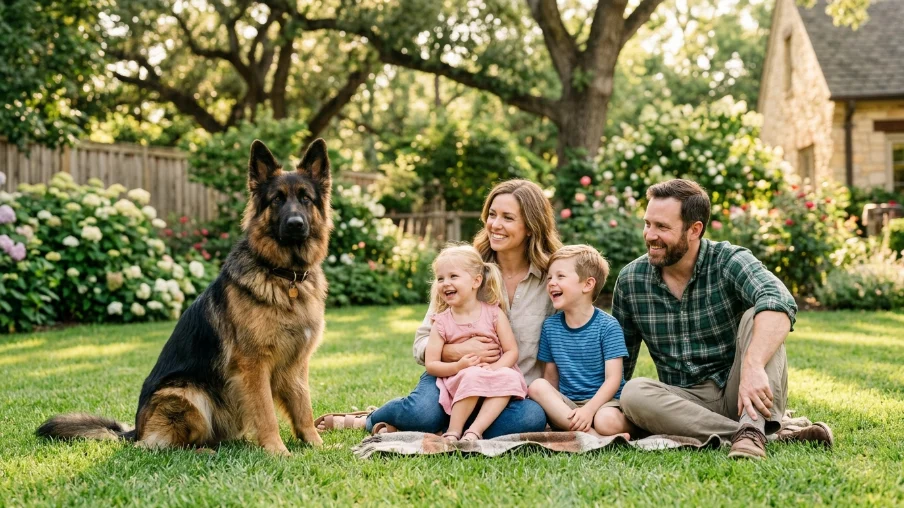
The Long Haired German Shepherd generally exhibits the same temperament expected from a well-bred German Shepherd Dog.
Typical Personality Traits
- Loyal
- Intelligent
- Protective
- Alert
- Confident
- Trainable
- Family-oriented
When properly socialized, these dogs often develop strong bonds with their families while remaining naturally observant of their surroundings.
Protective Instincts
German Shepherds possess natural protective tendencies.
A stable dog should:
- Observe before reacting
- Show confidence rather than fear
- Remain manageable under stress
- Distinguish between normal situations and genuine threats
The real issue is not whether a dog is protective.
The real issue is whether that protection is balanced by stable nerves and sound temperament.
Family Compatibility
Most Long Haired German Shepherds thrive in homes that provide:
- Daily exercise
- Consistent leadership
- Socialization
- Mental stimulation
- Family interaction
Intelligence and Trainability
German Shepherds consistently rank among the most intelligent and trainable dog breeds.
Their ability to learn quickly makes them popular in:
- Service work
- Police work
- Search and rescue
- Detection work
- Competitive obedience
- Protection sports
Training Strengths
| Skill | Performance |
|---|---|
| Obedience | Excellent |
| Problem Solving | Excellent |
| Recall Training | Excellent |
| Working Ability | Excellent |
| Adaptability | High |
Training Priorities
Successful owners focus on:
- Socialization
- Impulse control
- Recall training
- Confidence building
- Exposure to new environments
A highly intelligent dog without proper direction can develop undesirable behaviors.
Exercise Requirements
Long Haired German Shepherds require substantial physical and mental exercise.
Daily Exercise Recommendations
| Activity | Time |
|---|---|
| Walking | 60–90 Minutes |
| Training | 15–30 Minutes |
| Play Sessions | 20–40 Minutes |
| Mental Enrichment | Daily |
Activities They Enjoy
- Hiking
- Running
- Tracking
- Obedience training
- Scent work
- Agility
- Fetch
Many behavior problems stem from boredom rather than temperament.
Insufficient stimulation often results in:
- Excessive barking
- Destructive chewing
- Digging
- Hyperactivity
Health Problems and Genetic Risks
Long-haired German Shepherds face the same health concerns found throughout the breed.
The coat itself does not create major health problems.
Common Health Conditions
Hip Dysplasia
One of the most recognized orthopedic issues in German Shepherds.
Elbow Dysplasia
Can affect mobility and long-term comfort.
Degenerative Myelopathy
A progressive neurological disease affecting the spinal cord.
Gastric Dilatation Volvulus (Bloat)
A potentially life-threatening emergency requiring immediate veterinary care.
Allergies
Can affect skin and coat quality.
Health Risk Table
| Condition | Risk Level |
|---|---|
| Hip Dysplasia | High |
| Elbow Dysplasia | High |
| Bloat | High |
| Degenerative Myelopathy | Moderate |
| Allergies | Moderate |
Health Testing Responsible Breeders Use
- OFA Hip Evaluation
- OFA Elbow Evaluation
- Degenerative Myelopathy DNA Testing
- Cardiac Screening
- Temperament Evaluation
Experienced breeders focus on reducing risk through careful selection rather than making unrealistic health guarantees.
Long Haired German Shepherd Puppy Guide
Long-haired puppies change dramatically during their first two years.
The fluffy appearance many buyers love eventually develops into the adult coat.
What to Expect at Different Ages
8 Weeks
- Transition to new home
- Socialization begins
- Basic training foundation
12 Weeks
- Critical learning period
- Exposure to people and environments
6 Months
- Teething phase
- Increased independence
12 Months
- Adolescent behavior often peaks
- Continued training remains essential
Common First-Time Owner Mistake
Many owners stop socialization too early.
Socialization is not a single event.
It should continue throughout adolescence.
Puppy Development Timeline
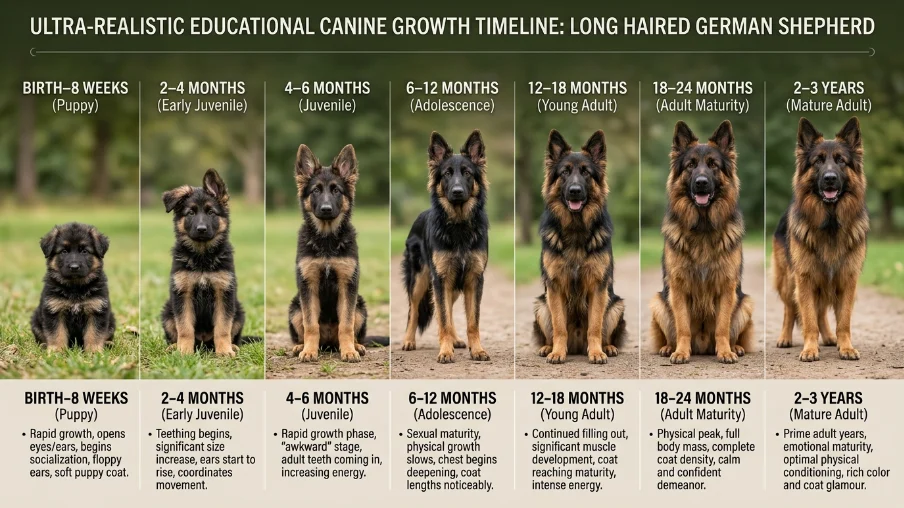
| Age | Development Stage |
|---|---|
| Birth–8 Weeks | Early neurological development |
| 2–4 Months | Critical socialization period |
| 4–6 Months | Teething begins |
| 6–12 Months | Adolescence develops |
| 12–18 Months | Physical maturity increases |
| 18–24 Months | Mental maturity improves |
| 2–3 Years | Full adult temperament develops |
Feeding and Nutrition
Proper nutrition supports healthy growth, muscle development, and long-term joint health.
Feeding Priorities
- High-quality animal protein
- Balanced fat content
- Controlled calorie intake
- Appropriate calcium-to-phosphorus ratios
Feeding Mistakes to Avoid
- Overfeeding puppies
- Excessive supplements
- Rapid weight gain
- Frequent table scraps
Maintaining a lean body condition can help reduce orthopedic stress.
Grooming Guide
The beautiful coat requires regular maintenance.
Grooming Schedule
| Task | Frequency |
|---|---|
| Brushing | 3–5 Times Weekly |
| Ear Inspection | Weekly |
| Nail Trimming | Monthly |
| Bathing | Every 6–8 Weeks |
Essential Grooming Tools
- Slicker brush
- Undercoat rake
- Steel comb
- Nail grinder
- Deshedding tool
Seasonal Shedding
Long-haired German Shepherds typically experience heavy seasonal shedding.
Routine grooming reduces loose fur and helps prevent matting.
Step-by-Step Care Guide
Daily
- Exercise
- Training
- Water refresh
- Mental stimulation
Weekly
- Coat maintenance
- Ear checks
- Paw inspections
Monthly
- Nail trimming
- Weight assessment
Annually
- Veterinary examination
- Preventive health screening
Common Owner Mistakes
Buying Based on Appearance Alone
Appearance alone tells you very little.
Temperament and health should come first.
Underestimating Exercise Needs
Many owners assume a backyard replaces exercise.
It does not.
Skipping Early Training
Small training issues often become major adult behaviors.
Choosing Untested Breeding Stock
Health testing remains one of the most important factors when selecting a puppy.
Insights Most Articles Miss
Experienced breeders focus on something else.
They evaluate:
- Nerve strength
- Confidence
- Environmental stability
- Structural soundness
- Working drives
- Recovery from stress
The best puppy is rarely the fluffiest one.
The best puppy is the one most likely to mature into a stable, healthy adult.
Long Haired German Shepherd Pros and Cons
| Pros | Cons |
|---|---|
| Extremely intelligent | Heavy shedding |
| Highly trainable | Requires extensive exercise |
| Loyal family companion | Grooming commitment |
| Protective nature | Can become destructive when bored |
| Versatile working ability | Not ideal for sedentary owners |
| Strong bonding ability | Requires ongoing training |
Price Guide and Ownership Costs
How Much Does a Long Haired German Shepherd Cost?
A Long Haired German Shepherd puppy from a reputable breeder typically costs between $1,500 and $4,000 or more. Price depends on health testing, pedigree quality, titles, breeder reputation, bloodline, and geographic location.
Puppy Price Table
| Source | Typical Cost |
|---|---|
| Reputable Breeder | $1,500–$4,000+ |
| Working Lines | $2,000–$5,000+ |
| Rescue Adoption | $100–$600 |
Annual Ownership Costs
| Expense | Estimated Cost |
|---|---|
| Food | $600–$1,500 |
| Veterinary Care | $300–$1,500 |
| Training | $200–$2,000 |
| Grooming Supplies | $100–$500 |
Why Prices Vary
- Health testing
- Working titles
- Show titles
- Pedigree quality
- Geographic demand
- Breeder reputation
How to Find a Reputable Breeder
Look for breeders who:
- Perform OFA testing
- Discuss temperament openly
- Provide pedigrees
- Socialize puppies
- Offer lifetime support
- Prioritize health and temperament
Avoid breeders focused solely on rarity marketing.
Questions to Ask Before Buying
- Are both parents health tested?
- Can I review OFA records?
- How are puppies socialized?
- What temperament traits are emphasized?
- What support is provided after purchase?
- Why was this breeding planned?
Buyer Warning Section
Red flags include:
- No health testing
- No pedigree records
- Extremely low pricing
- Multiple rare-color advertisements
- No temperament information
- High-pressure sales tactics
Lifestyle Compatibility
| Lifestyle Factor | Suitable? | Notes |
|---|---|---|
| Families | Yes | Excellent with training |
| Children | Yes | Supervision recommended |
| Apartments | Sometimes | Requires substantial exercise |
| Active Owners | Excellent | Ideal match |
| Working Homes | Excellent | Thrives with purpose |
| First-Time Owners | Moderate | Commitment required |
Long Haired German Shepherd vs Standard German Shepherd
| Trait | Long Haired | Standard Coat |
|---|---|---|
| Grooming | Higher | Moderate |
| Shedding | Heavy | Heavy |
| Intelligence | Same | Same |
| Working Ability | Same | Same |
| Temperament | Similar | Similar |
| Maintenance | Higher | Lower |
The primary difference is coat length rather than behavior or intelligence.
Preparation Checklist
Before bringing a puppy home:
- Research breeders
- Choose a veterinarian
- Purchase grooming supplies
- Create a training plan
- Puppy-proof your home
- Budget for emergencies
- Schedule socialization opportunities
FAQs
Are Long Haired German Shepherds rare?
They are less common than standard-coated German Shepherds but are not extremely rare.
Why do some German Shepherds have long hair?
Long hair is caused by a recessive genetic trait inherited from both parents.
Are Long Haired German Shepherds recognized by AKC?
Yes. They are recognized as German Shepherd Dogs with a long coat.
Are they good family dogs?
Most are excellent family companions when properly trained and socialized.
Do they shed more?
Shedding is often more noticeable because the hair is longer.
Are they more expensive?
Many long-haired puppies command higher prices due to demand and appearance.
Can they work in protection sports?
Yes. Coat length does not prevent working ability.
Do they get hotter in summer?
The coat can increase grooming needs, but proper coat maintenance helps regulate temperature.
What colors can they be?
Black and tan, sable, black, bi-color, black and red, and several other recognized German Shepherd colors.
How long do they live?
Most live between 9 and 13 years with proper care and responsible breeding.
Conclusion
The Long Haired German Shepherd combines the intelligence, loyalty, versatility, and working heritage that made the German Shepherd one of the world’s most respected breeds. While the flowing coat attracts attention, responsible ownership requires looking beyond appearance and focusing on temperament, health testing, structure, and long-term suitability.
For active owners willing to invest in training, grooming, and daily engagement, the Long Haired German Shepherd can be an exceptional companion and working partner for many years.