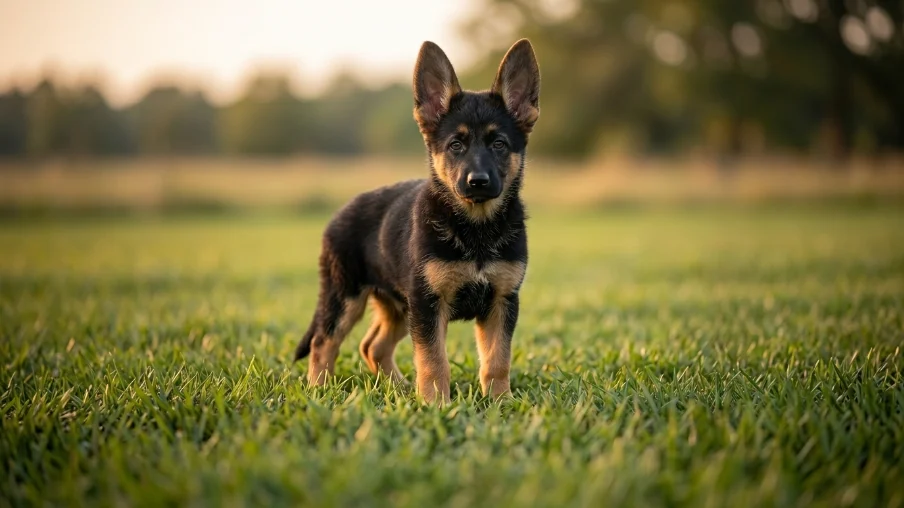
A Baby German Shepherd is a rapidly growing working-breed puppy known for intelligence, drive, and strong loyalty traits. They require structured training, early socialization, and controlled exercise to develop stable adult behavior. Experienced breeders prioritize temperament, health testing, and structure far more than appearance or color.
| Trait | Details |
|---|---|
| Breed | German Shepherd Dog |
| Life Stage | Puppy |
| Expected Adult Weight | 50–90 lbs |
| Expected Adult Height | 22–26 inches |
| Intelligence | Very High |
| Trainability | Excellent |
| Energy Level | High |
| Family Friendly | Yes |
| Good With Children | Usually Yes (with Socialization) |
| Good With Other Pets | Moderate to Good (Early Socialization Needed) |
| First-Time Owner Friendly | Moderate |
| Exercise Needs | High |
| Mental Stimulation Needs | Very High |
| Socialization Window | Critical (8–16 Weeks) |
| Training Sensitivity | High During Puppy Phase |
| Shedding | Heavy |
| Coat Type | Double Coat |
| Grooming Needs | Moderate |
| Growth Rate | Rapid During First 12–18 Months |
| Teething Phase | 3–6 Months |
| Fear Imprint Stages | 8–12 Weeks and 6–9 Months |
| AKC Group | Herding Group |
| Lifespan Expectation | 9–13 Years |
| Vaccination Period | Starts at 6–8 Weeks |
| Deworming Need | Frequent in Early Months |
| Nutrition Requirement | High-Protein Puppy Diet |
| Crate Training Benefit | Very High |
| Bite Inhibition Training | Essential Early Skill |
| Common Puppy Challenges | Chewing, Biting, Hyperactivity |
| Behavioral Development | Strong Working Drive Emerges Early |
| Apartment Friendly | Usually No (Unless Highly Exercised) |
| Training Difficulty | Moderate |
| Owner Experience Level | Beginner to Intermediate (With Commitment) |
| Early Exercise Limit | Controlled Until Growth Plates Close |
| Overall Suitability | Active Families and Structured Homes |
What Is a Baby German Shepherd?
A Baby German Shepherd is a German Shepherd Dog in its early developmental stage, typically from birth up to adolescence.
At this stage, the puppy is not just “growing physically” it is building core temperament, nerve stability, and learning patterns that shape adult behavior.
Here is where most people get it wrong: they treat puppy behavior as temporary, when in reality it permanently shapes adult structure and temperament.
Breed History and Purpose
The German Shepherd was developed in Germany by Captain Max von Stephanitz as a purpose-driven working dog.
Core foundation traits:
- Herding intelligence
- High obedience drive
- Environmental confidence
- Physical endurance
- Task focus under pressure
Modern puppies still inherit these working traits, even in companion homes.
Appearance and Early Development
Baby German Shepherds grow rapidly and often look “out of proportion” during early months.
Key Physical Traits:
- Large paws (growth indicator)
- Thickening double coat
- Floppy or semi-erect ears
- Rapid height increase
- Lean adolescent frame after 4–6 months
Growth Reality Check:
Appearance is not a quality indicator. Structure and movement matter more than coat or color.
Genetics and Structure
A Baby German Shepherd inherits traits from both parents, but expression is not predictable from appearance alone.
Important genetic factors:
- Hip and elbow structure
- Temperament stability
- Drive level (low vs high working intensity)
- Coat type and density
- Skeletal growth pattern
Responsible breeders focus on:
- Health screening (OFA-style evaluations)
- Genetic testing for degenerative conditions
- Stable temperament pairing
- Structural soundness over aesthetics
Important insight:
Even health-tested parents can produce variation due to polygenic inheritance.
Temperament and Behavior
Baby German Shepherds are naturally:
- Alert
- Curious
- Highly responsive
- Emotionally sensitive
- Quick learners
Real breeder insight:
The biggest mistake is assuming “confidence” means dominance. True confidence is calm environmental recovery, not pushy behavior.
Common challenges during growth:
- Over-attachment to owner
- Early guarding instincts
- Reactivity if under-socialized
- Frustration barking in adolescence
Temperament is shaped more by early handling than most people realize.
Intelligence and Trainability
German Shepherd puppies are among the fastest-learning working breeds.
Best training approach:
- Short sessions (5–10 minutes)
- High reward clarity
- Consistent structure
- Early leash foundation
- Controlled exposure to new environments
Critical mistake:
Overtraining physically without mental structure leads to overstimulation and poor impulse control.
Exercise Requirements
Baby German Shepherds require balanced activity not excessive exercise.
Recommended:
- Short walks (multiple daily)
- Controlled play sessions
- Puzzle feeding
- Basic obedience drills
Avoid:
- Long forced runs
- Jumping-heavy exercise (joint risk)
- Overstimulation in public areas
Growth plates are still developing, especially under 12 months.
Health Risks and Genetic Concerns
Common breed-related risks include:
- Hip dysplasia
- Elbow dysplasia
- Degenerative myelopathy (late onset)
- Allergies and sensitivities
- Growth-related bone stress issues
What experienced breeders prioritize:
- Structural scoring
- Genetic diversity balance
- Slow, controlled growth feeding plans
Early detection matters more than treatment.
Puppy Development Timeline
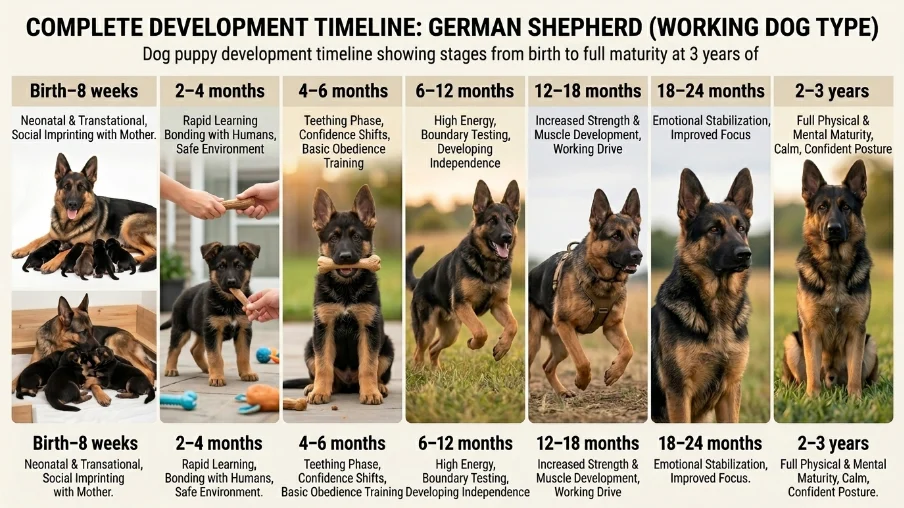
| Age | Stage |
|---|---|
| Birth–8 Weeks | Neonatal + early social imprinting |
| 2–4 Months | Rapid learning + bonding window |
| 4–6 Months | Teething + confidence shifts |
| 6–12 Months | Adolescence begins (testing boundaries) |
| 12–18 Months | Strength + drive increases |
| 18–24 Months | Emotional stabilization |
| 2–3 Years | Full maturity |
Key expert note:
The 8–11 week window is critical for fear imprint development.
Feeding and Nutrition
Proper nutrition controls long-term joint health.
Essentials:
- Large-breed puppy formula
- Controlled calcium levels
- High-quality protein source
- Avoid rapid weight gain
Overfeeding is one of the most common causes of skeletal stress.
Grooming Guide
German Shepherd puppies shed early.
Routine care:
- Weekly brushing (minimum)
- Nail trimming
- Ear checks
- Occasional bathing
Double coat develops fully after adolescence.
Step-by-Step Care
Daily:
- Training session
- Structured exercise
- Feeding routine
Weekly:
- Grooming
- Social exposure
- Behavior reinforcement
Monthly:
- Growth tracking
- Veterinary check if needed
Common Owner Mistakes
- Delayed socialization
- Inconsistent rules
- Over-exercising young joints
- Choosing breeders by color only
- Ignoring mental stimulation
- Rewarding unwanted behaviors
Insights Most Articles Miss
Experienced breeders evaluate:
- Stress recovery speed
- Environmental neutrality
- Food drive balance
- Nervous system stability
- Learning consistency under distraction
Appearance is secondary to behavioral structure.
Price Guide and Costs
| Category | Cost Range |
|---|---|
| Puppy Price | $800–$3,500+ |
| First Year Care | $1,000–$2,500 |
| Training | $200–$2,000 |
| Food (annual) | $500–$1,200 |
Total ownership cost often exceeds purchase price within the first year.
How to Find a Reputable Breeder
Look for:
- Verified health testing
- Transparent pedigree history
- Puppy socialization programs
- Stable temperament focus
- Lifetime breeder support
Avoid:
- No health documentation
- “Rare color” marketing focus
- Mass litter availability
- Refusal to show parents
Buyer Warning Signs
- Extremely low pricing
- No testing or paperwork
- Multiple breeds advertised
- Pressure-based sales tactics
- No contract or health guarantee
Lifestyle Compatibility
| Factor | Suitable? | Notes |
|---|---|---|
| Families | Yes | Needs training |
| Children | Yes | Supervision required |
| Apartments | Moderate | High exercise need |
| Active Owners | Excellent | Ideal match |
| Working Homes | Excellent | Thrives with tasks |
| First-Time Owners | Moderate | Requires guidance |
Breed Comparison
| Trait | Baby German Shepherd | Labrador Puppy |
|---|---|---|
| Trainability | Very High | High |
| Protection Drive | Strong | Low |
| Energy | High | High |
| Sensitivity | Moderate | Lower |
Preparation Checklist
- Crate
- Large-breed puppy food
- Leash and collar
- Training treats
- Grooming tools
- Vet appointment booked
- Socialization plan
FAQs
How fast do Baby German Shepherds grow?
They grow rapidly in the first year, especially between 2–8 months.
Are they easy to train?
Yes, but consistency is required from day one.
When do ears stand up?
Typically between 3–6 months.
Are they aggressive?
No. Temperament depends on breeding and socialization.
Do they shed a lot?
Yes, year-round heavy shedding.
Are they good with kids?
Yes, if properly trained and supervised.
Can they live in apartments?
Possible, but exercise demands are high.
When are they fully mature?
Around 2–3 years.
Conclusion
A Baby German Shepherd is not just a pet it is the foundation stage of a powerful working breed. Success depends on genetics, early training, structured socialization, and responsible ownership. The difference between a stable adult and a difficult dog is usually made during puppyhood, not adulthood.