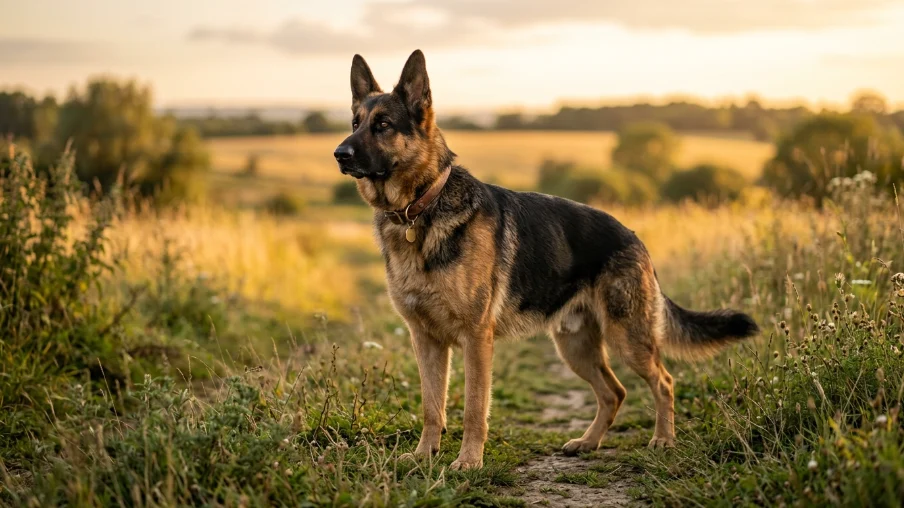
A male German Shepherd is typically larger, more physically imposing, and more territorially driven than a female of the same breed. Males tend toward bolder, more outwardly confident behavior, while often requiring more structured leadership during adolescence. Experienced owners note that sex differences matter less than individual genetics, but they do shape training priorities and timelines.
Quick Snapshot Table
| Feature | Details |
| Breed | German Shepherd Dog (male) |
| Average Weight (Adult) | 65–90 lbs |
| Average Height | 24–26 inches at the shoulder |
| Lifespan | 9–13 years |
| Coat Type | Double coat, medium to long |
| Common Colors | Black and tan, sable, black, white |
| Temperament | Confident, protective, loyal, territorial |
| Energy Level | High |
| Trainability | Excellent, with consistent leadership |
| Good With Children | Yes, with socialization and supervision |
| Good With Other Male Dogs | Mixed depends on individual dog and socialization |
| Neuter Consideration | Often recommended after growth plate closure (12–18+ months) |
| Average Puppy Price | $800–$2,500+ (reputable breeders) |
What Defines a Male German Shepherd?
A male German Shepherd is, structurally and genetically, the same breed as a female but sex hormones and skeletal growth patterns produce real, observable differences in size, behavior tendencies, and developmental timeline.
Here is where most people get it wrong: they assume “male” automatically means more aggressive or harder to manage. That is not accurate. What sex actually predicts more reliably is physical size, certain hormone-driven behaviors (marking, mounting, intermale tension), and a generally bolder default temperament not aggression itself. Aggression in German Shepherds, male or female, is overwhelmingly a product of genetics, socialization, and training, not sex.
Responsible breeders evaluate males and females against the same temperament and structural standards. The real issue is that males develop on a slightly different physical and hormonal timeline, and owners who don’t plan for that timeline run into avoidable problems during adolescence.
Male vs. Female German Shepherd: Key Differences
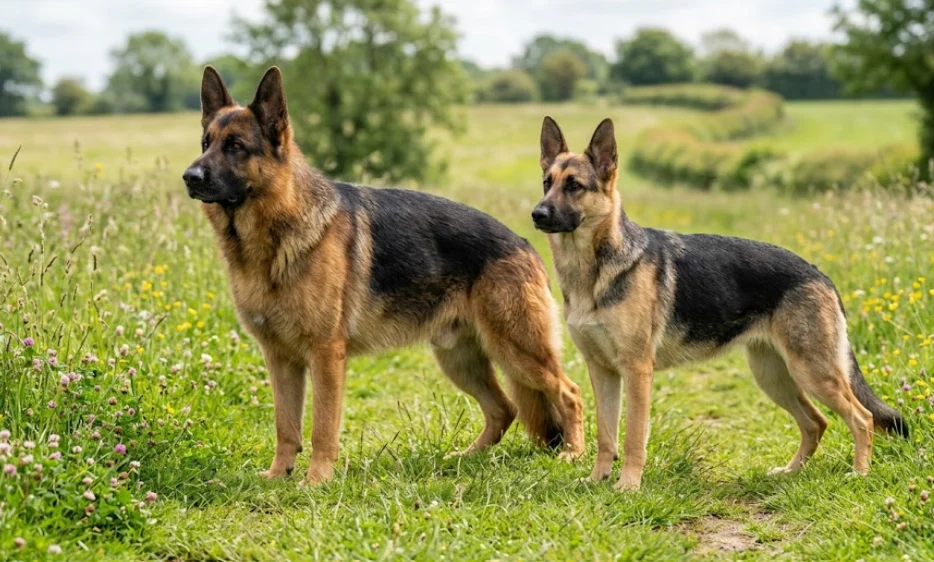
| Trait | Male | Female |
| Weight | 65–90 lbs | 50–70 lbs |
| Height | 24–26 inches | 22–24 inches |
| Bone Structure | Heavier, more substantial | Finer, more refined |
| Head Size | Larger, blockier | Narrower, more refined |
| Maturity Timeline | Often slower to mentally mature (2.5–3 years) | Often matures slightly faster (2–2.5 years) |
| Heat Cycles | None | Twice yearly, roughly every 6 months |
| Territorial Marking | More pronounced, especially intact males | Less frequent |
| Intermale Tension | More common with other intact males | Less common between females, though can occur |
| Trainability | Equal, but adolescence can be more challenging | Equal, often described as slightly more food/handler motivated early on |
| Protective Drive | Often more overt and physically expressed | Often present but can be more subtle |
This is a generalization, not a rule. Individual temperament varies enormously based on bloodline, socialization, and training sex is one input among many, not the deciding factor.
Appearance
Male German Shepherds carry the same breed standard as females but typically express it on a larger frame.
Key physical traits in males:
- Head: Larger, more masculine, broader skull with a pronounced stop
- Body: Heavier bone structure, deeper chest, more visible muscling through the shoulders and neck
- Height: Typically 24–26 inches at the shoulder, occasionally taller in working-line dogs
- Weight: 65–90 lbs at full maturity, with working-line males sometimes exceeding this range
- Coat: Same double-coat structure as females color and length vary by line, not sex
- Overall presence: Males are often described as having a more commanding, blockier silhouette compared to the leaner, more refined look typical of females
Show-line males tend to have a more angulated rear and a slightly sloped topline; working-line males are typically straighter-backed and more squarely built a distinction worth knowing if you’re evaluating a specific dog rather than just the breed in general.
Temperament and Personality
Male German Shepherds are frequently described by experienced owners and trainers as having a more outwardly confident, “look at me” presence compared to females though this varies by individual and bloodline.
Common temperament traits in males:
- Bold confidence: Often more willing to investigate new environments and assert themselves physically
- Strong territorial instinct: Marking behavior, perimeter patrolling, and heightened alertness to property boundaries are more pronounced in intact males
- Protective drive: Frequently expressed more physically positioning themselves between the family and perceived threats
- Social dynamics with other males: Intact males can develop tension or conflict with other intact male dogs, particularly during adolescence and in unfamiliar settings
- Affection with family: Despite the tougher exterior, well-socialized males are often described as deeply affectionate and even clingy with their primary handler
Experienced breeders focus on something beyond sex when evaluating temperament: nerve strength, recovery time after a startle, and willingness to engage versus avoid. A male puppy that recovers quickly from a loud noise and re-engages with curiosity is showing you far more useful information than its sex ever will.
Size and Growth Expectations
| Age | Approximate Weight | Approximate Height |
| 3 Months | 25–35 lbs | 13–16 inches |
| 6 Months | 45–60 lbs | 18–22 inches |
| 9 Months | 55–70 lbs | 21–24 inches |
| 12 Months | 60–80 lbs | 23–25 inches |
| 18 Months | 65–85 lbs | 24–26 inches |
| 2+ Years (Full Maturity) | 65–90 lbs | 24–26 inches |
Males often continue filling out adding muscle mass and chest depth well after they’ve reached full height, sometimes through 2.5–3 years of age. This is a notable difference from females, who tend to reach full physical maturity slightly earlier.
Growth plates in male German Shepherds typically close between 12–18 months. High-impact exercise before this point increases the risk of joint and growth plate injuries a consideration that matters more for males given their larger frame and faster weight gain during adolescence.
Training Considerations Specific to Males
Male German Shepherds are just as trainable as females the breed’s intelligence is not sex-dependent but adolescence often presents a distinct set of challenges in males that owners should plan for.
What to expect during male adolescence (6–18 months):
- Increased boundary testing: Males commonly push limits more visibly during this period, particularly around 8–14 months
- Marking behavior: Territorial marking, both indoors and outdoors, often begins or intensifies during adolescence
- Heightened reactivity to other male dogs: Some males become more selective or tense around unfamiliar male dogs, even with strong early socialization
- Mounting behavior: Common during adolescence and not always sexual frequently linked to excitement, stress, or social positioning
- Distraction and independence: A previously responsive puppy may become more selectively obedient, testing whether commands still apply
Training strategies that work well with male GSDs:
- Maintain calm, consistent leadership rather than escalating corrections this breed responds to clarity, not force
- Increase structured exercise and mental work during adolescence rather than reducing it
- Manage introductions to other male dogs deliberately rather than assuming default friendliness
- Reinforce impulse control exercises (place command, wait at doors, loose-leash walking) heavily between 6–14 months
- Avoid dog parks during peak adolescence if your male shows any signs of tension with other males controlled, known playmates are safer
Neutering: What the Evidence Actually Shows
This is a topic where Google’s quality requirements matter opinions vary widely online, and the evidence is genuinely mixed.
What current veterinary research generally supports:
- Early spay/neuter (before growth plate closure) is associated with a higher risk of orthopedic issues, including hip dysplasia and cranial cruciate ligament injuries, in large breeds like the German Shepherd
- Many veterinary orthopedic specialists recommend waiting until 12–18 months, sometimes later for working-line males, before neutering
- Neutering does not reliably “fix” aggression or dominance-related behavior problems that stem from genetics or inadequate socialization it primarily reduces hormone-driven behaviors like marking, roaming, and mounting
- The decision involves weighing orthopedic risk, behavioral goals, household circumstances (intact females in the home, multi-dog management), and breeder contract requirements
This is an area where evidence is still evolving and individual circumstances matter significantly. Discuss timing with your veterinarian based on your specific dog’s growth, breed line, and household situation rather than following a fixed rule.
Health Considerations
Male German Shepherds share the same core breed health risks as females, with a few sex-specific considerations.
Shared breed health risks:
- Hip dysplasia malformation of the hip joint; OFA or PennHIP testing on parents reduces but does not eliminate risk
- Elbow dysplasia affects the elbow joint, often co-occurring with hip dysplasia
- Degenerative myelopathy (DM) progressive spinal cord disease linked to the SOD1 gene mutation; DNA testing identifies Clear, Carrier, or At Risk status
- Bloat (GDV) life-threatening stomach distension and twisting; deep-chested males may carry marginally elevated risk due to chest depth, though this is not definitively breed-sex-specific in current research
Male-specific considerations:
- Testicular health intact males should be monitored for testicular tumors, more common in older intact dogs; regular veterinary checks are advisable
- Prostate issues intact males have some elevated risk of benign prostatic hyperplasia with age; neutering reduces this risk
- Larger frame, more joint stress the heavier average size of males means orthopedic conditions, when present, often progress with greater mechanical stress on joints
Health Testing Checklist for Breeding Stock:
| Test | Purpose |
| OFA Hip Evaluation | Hip dysplasia screening |
| OFA Elbow Evaluation | Elbow dysplasia screening |
| DM (SOD1) DNA Test | Degenerative myelopathy status |
| OFA Cardiac Exam | Heart health |
| Ophthalmologist Exam | Eye health clearance |
Exercise Requirements
Given their larger average size and often higher physical drive, male German Shepherds frequently need slightly more structured outlet than females though individual energy levels vary more than sex alone predicts.
| Activity | Duration/Frequency |
| Structured walk or run | 45–60 minutes, twice daily |
| Off-leash play or fetch | 20–30 minutes |
| Mental stimulation | 15–20 minutes of training or enrichment |
| Total daily engagement | 90–120+ minutes |
Signs of under-exercise:
- Increased marking or territorial behavior indoors
- Destructive chewing
- Heightened reactivity toward other dogs or visitors
- Restlessness, pacing, or excessive barking
A male German Shepherd that receives consistent physical and mental work is dramatically easier to live with than one left to generate his own outlets.
Feeding and Nutrition
Because males typically carry more body mass and muscle, feeding amounts generally run higher than for females though body condition, not breed-average charts, should guide actual portions.
| Life Stage | Food Type | Notes |
| 8–16 weeks | Large-breed puppy formula | 3–4 small meals daily |
| 4–12 months | Large-breed puppy formula | 2–3 meals daily; monitor growth rate closely |
| 12+ months adult | Large-breed adult formula | 2 meals daily; portion to maintain visible waist |
| Senior (7+ years) | Senior or joint-support formula | 2 meals, adjusted for activity and joint health |
Key considerations specific to larger males:
- Avoid free-feeding; scheduled meals reduce bloat risk in deep-chested males
- Omega-3 fatty acids support joint health, particularly valuable given the additional weight-bearing stress in larger males
- Monitor body condition by feel, not by following generic chart amounts every dog’s metabolism differs
Common Owner Mistakes With Male German Shepherds
1. Assuming “male” means “more aggressive” This is one of the most persistent myths in dog ownership. Sex influences certain behaviors marking, intermale tension, boldness but it does not determine aggression. Genetics, socialization, and training are the real drivers.
2. Skipping structured leadership during adolescence Male GSDs that don’t receive consistent rules and exercise during the 6–18 month window often develop pushy, boundary-testing habits that become much harder to manage in adulthood.
3. Mismanaging introductions to other male dogs Owners who assume all dogs will get along set their male up for bad experiences. Controlled, gradual introductions with known, well-matched dogs work far better than assuming success at the dog park.
4. Making neutering decisions based on internet opinion rather than veterinary guidance This is a nuanced, evolving area of veterinary science. Blanket statements (“always neuter early” or “never neuter”) oversimplify a decision that should be based on your specific dog, breed line, and circumstances.
5. Underestimating adult size and strength A male German Shepherd at full maturity is a physically powerful animal. Leash manners, recall, and impulse control need to be solid well before the dog reaches full size not after.
Insights Most Articles Miss
Bloodline affects sex-typical behavior more than people expect
Working-line males (Czech, DDR, West German working lines) tend to express male-typical boldness and drive more intensely than show-line males. A show-line male German Shepherd may be noticeably calmer and less territorially driven than a working-line male of the same age. If you’re choosing a breeder, ask directly about the line it tells you more than sex alone.
Intermale tension is often situational, not universal
Many male German Shepherds coexist peacefully with other male dogs they’ve grown up with, while showing more caution toward unfamiliar intact males. This is a normal pattern, not a sign of poor temperament. Owners who interpret selective caution as “aggression” sometimes over-manage a dog that is actually behaving appropriately.
Mental maturity often lags behind physical size in males
A 10-month-old male German Shepherd can look fully adult 70+ lbs, full height while still having the impulse control of a much younger dog. This mismatch between physical size and mental maturity is one of the most common reasons owners describe adolescent males as “out of control.” The dog isn’t being defiant; the brain genuinely hasn’t caught up to the body yet.
Price Guide and Ownership Costs
Puppy Price Ranges (2026):
| Source | Price Range | Notes |
| Reputable health-tested breeder | $1,200–$2,800+ | OFA-tested parents, working or show line documented |
| Backyard breeder / pet-focused | $600–$1,200 | Variable health testing; buyer beware |
| Rescue / adoption | $50–$400 | Adult males more available than puppies |
| Working-line specialty breeder | $2,000–$5,000+ | Trained protection or sport prospects priced higher |
Annual ownership costs (estimated):
| Expense | Annual Cost (USD) |
| High-quality food (larger portions for males) | $900–$1,500 |
| Routine veterinary care | $400–$700 |
| Flea, tick, and heartworm prevention | $200–$400 |
| Grooming tools or professional grooming | $150–$600 |
| Training classes or private sessions | $200–$900 (especially Year 1) |
| Pet insurance | $400–$900 |
| Supplies, toys, enrichment | $200–$400 |
| Total Annual Estimate | $2,450–$5,400 |
Male German Shepherds, due to larger average size, often run slightly higher on food costs and potential veterinary expenses than females of the same breed.
How to Find a Reputable Breeder
What a reputable breeder does:
- Health tests both parents: OFA hips, elbows, and DM (SOD1) at minimum
- Can speak specifically to the temperament tendencies of their male puppies, not just generic breed traits
- Evaluates male puppies individually for nerve strength, confidence, and recovery rather than assuming all males fit one mold
- Provides a written health guarantee and clear return/rehome policy
- Asks about your experience with male dogs specifically, particularly if you have other intact males at home
Red flags:
- Breeders who claim all their males are “naturally dominant” or “alpha” as a selling point this language is outdated and often signals poor understanding of canine behavior
- No individual temperament assessment offered for specific puppies
- Refusal to provide OFA documentation
- Pressure to commit to a specific puppy sight-unseen based on sex alone
Questions to Ask Before Buying a Male Puppy
- Can I see OFA test results for both parents hips, elbows, and DM status?
- How would you describe this specific male puppy’s temperament compared to his littermates?
- Is this puppy from working-line or show-line genetics?
- What is your recommendation on neutering timing for this line?
- How do you evaluate confidence and nerve strength in your male puppies?
- What is your experience with male-to-male dog interactions in dogs from your lines?
- What is your health guarantee, and what does it cover?
- Can I meet the sire, or see documentation/video if he’s not on-site?
Buyer Warning Section
Avoid breeders who:
- Market male puppies using aggressive or “guard dog” language without backing it with health testing or legitimate working credentials
- Cannot explain temperament differences between specific puppies in a litter
- Push males as inherently better protectors without discussing the training and socialization required to develop that reliably
- Sell intact adult males with vague histories around behavior or bite history
A note on “protection-trained” claims: Genuine personal protection training is a specialized, expensive, multi-year process performed by qualified professionals not something achievable through a few sessions or claimed casually by a puppy seller. Be skeptical of breeders selling young male puppies with unverified “protection” credentials attached to inflate price.
Lifestyle Compatibility
| Lifestyle Factor | Suitable? | Notes |
| Families with children | Yes | Excellent with socialization; supervise young children given size |
| Households with other intact males | Caution | Manage introductions carefully; conflict risk higher than with females |
| Apartment living | Possible | Daily exercise is essential given size and energy |
| Active, outdoor owners | Excellent | Thrives with structured physical and mental work |
| Working homes (dog alone 8+ hours) | Not recommended | Separation anxiety and under-stimulation risk |
| Multi-dog households (mixed sex) | Generally good | Often easier than all-male households |
| First-time dog owners | Possible with commitment | Adolescence can be demanding; training support recommended |
| Experienced dog owners | Excellent | Particularly well-suited to handlers comfortable with structured leadership |
| Properties needing a watchful presence | Excellent | Natural territorial awareness, well-channeled with training |
Preparation Checklist
Essentials before bringing a male puppy home:
- [ ] Appropriately sized crate, sized for adult dimensions with a divider for puppyhood
- [ ] Heavy-duty collar and leash rated for a large adult dog
- [ ] Stainless steel food and water bowls
- [ ] Large-breed puppy food
- [ ] Chew toys appropriate for strong jaws
- [ ] Baby gates or barriers for managing space during adolescence
Training and planning:
- [ ] Puppy obedience class enrolled
- [ ] Veterinary appointment scheduled within 72 hours of pickup
- [ ] Family discussion on neutering timeline with your veterinarian
- [ ] Plan for managing introductions to other dogs, especially other males
Documentation to collect from breeder:
- [ ] AKC registration application
- [ ] Health guarantee in writing
- [ ] Parent OFA certification copies
- [ ] DM test results (SOD1)
- [ ] Vaccination and deworming records
FAQs
Q: Are male German Shepherds more aggressive than females? No. Sex does not reliably predict aggression. Males tend toward more territorial marking and bolder physical presence, but aggression in German Shepherds is primarily driven by genetics, socialization, and training quality not sex.
Q: How much bigger is a male German Shepherd compared to a female? Males typically weigh 65–90 lbs and stand 24–26 inches at the shoulder, compared to females at 50–70 lbs and 22–24 inches. Males also tend to have heavier bone structure and a blockier head.
Q: At what age should I neuter a male German Shepherd? Many veterinary orthopedic specialists recommend waiting until at least 12–18 months, after growth plates close, due to large-breed orthopedic risk associated with early neutering. The right timing depends on your individual dog and should be discussed with your veterinarian.
Q: Are male German Shepherds harder to train than females? No trainability is not sex-dependent in this breed. However, adolescent males often show more visible boundary-testing behavior between 6–18 months, which can make training feel more demanding during that window specifically.
Q: Do male German Shepherds get along with other male dogs? It varies. Many do, particularly with dogs they’re raised alongside or carefully introduced to. Some intact males show more caution or tension with unfamiliar male dogs, especially during adolescence. This is a normal breed pattern, not necessarily a temperament flaw.
Q: Is a male or female German Shepherd better for a first-time owner? Neither sex is definitively “easier.” Some first-time owners find females slightly more manageable during adolescence due to typically faster mental maturation, but individual temperament and breeder quality matter far more than sex alone.
Q: Do male German Shepherds mark territory indoors? Marking behavior, especially in intact males, can occur indoors if not addressed through consistent training and supervision during adolescence. Neutering often reduces this tendency, though training remains important regardless.
Q: How much does a male German Shepherd puppy cost? From reputable, health-tested breeders, expect $1,200–$2,800 or more, with working-line prospects from specialty breeders sometimes priced higher. Avoid puppies priced dramatically below this range, as it often signals skipped health testing.
Conclusion
A male German Shepherd brings size, presence, and a particular kind of bold confidence that many owners specifically seek out. But sex is just one variable in a much larger picture genetics, breeder quality, socialization, and consistent training shape the dog far more than whether he’s male or female.
Owners who go in expecting a slightly more physically commanding dog, a somewhat more demanding adolescence, and a deeply loyal adult companion tend to have realistic, satisfying experiences with this breed. Owners chasing a stereotype the “alpha guard dog” sold on size and posturing alone often end up disappointed or, worse, with a poorly trained dog that never reaches its real potential.
Approach a male German Shepherd as an individual first, and a male second. That’s where responsible ownership actually starts.