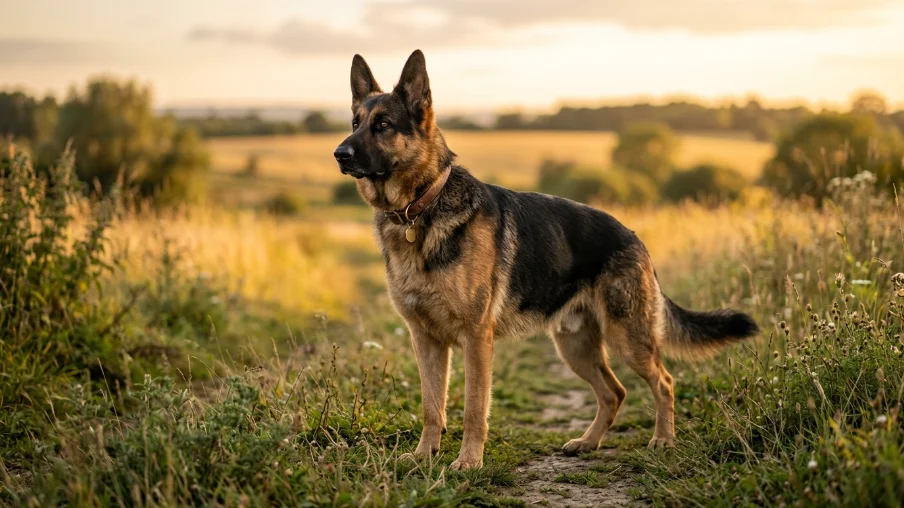
A full grown German Shepherd is a large, intelligent working dog known for loyalty, trainability, and athleticism. Most adults reach full physical maturity between 18–24 months, though mental maturity often continues until around 3 years of age. Experienced breeders focus on structure, temperament, health testing, and working ability not size or appearance alone.
Quick Snapshot Table
| TraitFull Grown German Shepherd | |
|---|---|
| Breed Group | Herding |
| Adult Height | 22–26 inches |
| Adult Weight | 50–90+ pounds |
| Life Expectancy | 7–13 years |
| Coat Type | Double coat |
| Coat Length | Short, Medium, or Long varieties |
| Trainability | Very High |
| Intelligence | Extremely High |
| Energy Level | High |
| Working Drive | Very High |
| Loyalty | Exceptional |
| Protective Instinct | Strong |
| Family Friendly | Yes, with training |
| Good With Children | Usually yes when socialized |
| Good With Other Pets | Moderate to Good (early socialization needed) |
| Stranger Behavior | Reserved / Protective |
| Exercise Needs | High |
| Daily Exercise Requirement | 60–120+ minutes |
| Mental Stimulation Needs | Very High |
| Shedding | Heavy |
| Seasonal Shedding | Very Heavy (“coat blow” seasons) |
| Grooming Needs | Moderate to High |
| Brushing Frequency | 3–5 times per week |
| Drooling | Low to Moderate |
| Barking Level | Moderate |
| Apartment Friendly | Not ideal (possible with strict exercise routine) |
| First-Time Owner Friendly | Moderate |
| Experience Level | Beginner to Intermediate |
| Socialization Importance | Critical |
| Training Difficulty | Moderate |
| Off-Leash Reliability | Moderate to High with training |
| Guard Dog Ability | Excellent |
| Watchdog Ability | Excellent |
| Service Dog Potential | Excellent |
| Search & Rescue Potential | Excellent |
| Police/Military Use | Very Common |
| Herding Ability | Excellent |
| Adaptability | High |
| Heat Tolerance | Moderate |
| Cold Tolerance | High |
| Climate Preference | Cool to Moderate climates |
| Common Health Concerns | Hip dysplasia, elbow dysplasia, degenerative myelopathy, bloat |
| Health Screening Importance | Extremely High |
| Puppy Price Range | $800–$3,500+ |
| Maintenance Level | Moderate to High |
| Popularity | Top 5 most popular breeds globally |
| AKC Recognition | Yes |
| FCI Recognition | Yes |
| Original Purpose | Herding and livestock protection |
| Modern Roles | Family companion, service dog, police K9, search & rescue, protection work |
| Distinguishing Feature | Strong build, upright ears, confident stance |
| Overall Suitability | Highly versatile working and family dog requiring active lifestyle and structured training |
What Is a Full Grown German Shepherd?
A full grown German Shepherd is simply an adult German Shepherd that has completed most of its physical development.
Many people assume a dog is fully mature once it reaches adult height. Here is where most people get it wrong.
Height develops relatively early, but muscle mass, chest depth, confidence, and mental stability continue developing long afterward.
Most German Shepherds are not truly mature until approximately 2–3 years old.
Breed History and Origin
The German Shepherd originated in Germany during the late 1800s.
The breed was developed by Max von Stephanitz with the goal of creating the ideal working dog.
Over time, German Shepherds became known for:
- Herding livestock
- Police work
- Military service
- Search and rescue
- Personal protection
- Family companionship
Their versatility remains one of the breed’s defining characteristics.
Appearance
A full grown German Shepherd should appear athletic, balanced, and powerful.
Adult Size
| Sex | Height | Weight |
|---|---|---|
| Male | 24–26 inches | 65–90+ lbs |
| Female | 22–24 inches | 50–70+ lbs |
Physical Characteristics
- Upright ears
- Strong muzzle
- Deep chest
- Double coat
- Bushy tail
- Athletic movement
- Powerful hindquarters
Appearance alone tells you very little about quality.
Experienced breeders evaluate movement, structure, temperament, and health rather than simply size.
Genetics and Color Explanation
German Shepherd genetics influence:
- Size
- Structure
- Coat type
- Color
- Temperament tendencies
- Health traits
Common colors include:
- Black and Tan
- Black and Red
- Sable
- Solid Black
- Bi-Color
Responsible breeders evaluate far more than color.
The real issue is preserving sound temperament, working ability, and health.
Temperament and Personality
German Shepherds are known for:
- Loyalty
- Intelligence
- Confidence
- Trainability
- Alertness
- Protective instincts
A well-bred adult should be:
- Stable
- Socially confident
- Environmentally sound
- Trainable
- Responsive
Poor socialization can create problems regardless of genetics.
Intelligence and Trainability
They excel in:
- Obedience
- Tracking
- Protection sports
- Service work
- Detection work
- Search and rescue
Training should begin early and continue throughout adulthood.
Mental stimulation is just as important as physical exercise.
Exercise Requirements
Adult German Shepherds require substantial activity.
Daily Exercise Needs
| Activity | Recommended |
|---|---|
| Walks | 60–120 min |
| Training | 15–30 min |
| Mental Games | Daily |
| Structured Play | Daily |
Without sufficient stimulation, unwanted behaviors often develop.
Health Problems and Genetic Risks
Common concerns include:
Orthopedic Issues
- Hip dysplasia
- Elbow dysplasia
Neurological Conditions
- Degenerative myelopathy
Digestive Concerns
- Gastric dilatation-volvulus (bloat)
Other Issues
- Allergies
- Arthritis
- Skin problems
Responsible breeders often use:
- OFA evaluations
- Hip screening
- Elbow screening
- Genetic testing
Health screening reduces risk but cannot eliminate it entirely.
Puppy Development Timeline
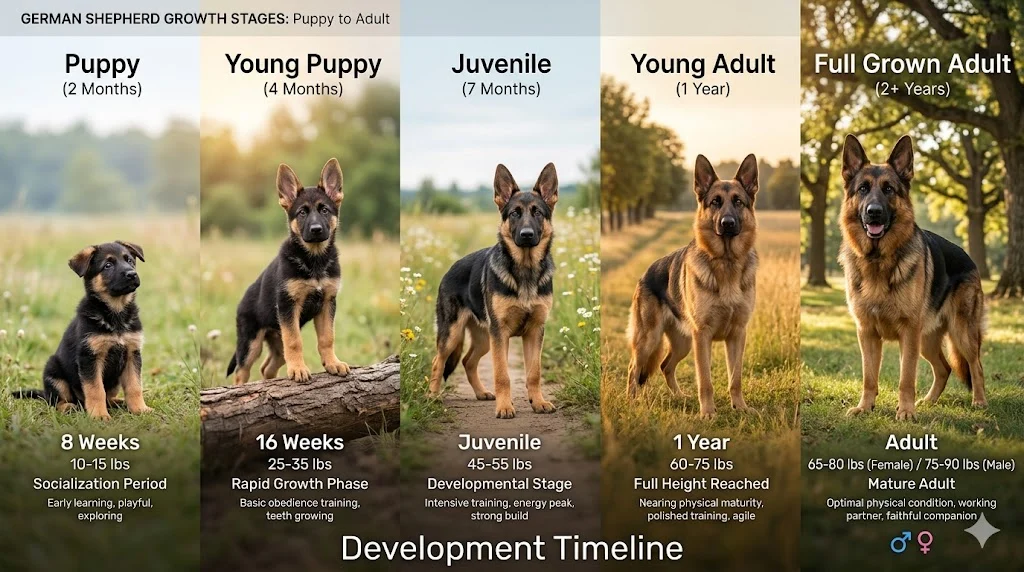
German Shepherds mature slowly compared with many breeds.
| Age | Development Stage |
|---|---|
| Birth–8 Weeks | Early neurological development |
| 2–4 Months | Critical socialization period |
| 4–6 Months | Rapid learning and teething |
| 6–12 Months | Adolescent phase |
| 12–18 Months | Adult size develops |
| 18–24 Months | Muscular maturity |
| 2–3 Years | Full mental maturity |
Feeding and Nutrition
Adult German Shepherds require balanced nutrition.
Key priorities include:
- High-quality protein
- Appropriate calorie intake
- Healthy body condition
- Joint support when recommended by a veterinarian
Overfeeding contributes to obesity and orthopedic stress.
Grooming Guide
German Shepherds are heavy shedders.
Grooming Schedule
| Task | Frequency |
|---|---|
| Brushing | 2–4x weekly |
| Nail Trimming | Monthly |
| Ear Checks | Weekly |
| Bathing | Every few months |
| Dental Care | Several times weekly |
Regular brushing significantly reduces loose hair.
Step-by-Step Care Guide
Daily
- Exercise
- Training
- Fresh water
- Mental stimulation
Weekly
- Brushing
- Ear inspection
- Weight monitoring
Monthly
- Nail trimming
- Equipment inspection
- Preventive care review
Common Owner Mistakes
Many first-time owners underestimate:
- Exercise requirements
- Socialization needs
- Mental stimulation demands
- Shedding levels
- Adolescent behavior
The real issue is not intelligence.
It is that intelligent dogs become challenging when their needs are ignored.
Insights Most Articles Miss
Experienced breeders focus on something else besides size.
Key observations include:
- Temperament predicts success better than appearance.
- Oversized dogs are not necessarily healthier.
- Working ability often matters more than color.
- Structure affects long-term soundness.
- Stable nerves are critical.
A large dog with poor temperament is never superior to a balanced dog with strong character.
Price Guide and Ownership Costs
| Expense | Estimated Cost |
|---|---|
| Puppy Purchase | $800–$5,000+ |
| Annual Food | $500–$1,500 |
| Veterinary Care | $300–$1,500+ |
| Training | $200–$3,000+ |
| Supplies | $200–$800 |
Lifetime ownership costs often exceed many buyers’ expectations.
How to Find a Reputable Breeder
Look for breeders who:
- Perform health testing
- Prioritize temperament
- Provide pedigree information
- Socialize puppies
- Discuss strengths and weaknesses honestly
Avoid breeders focusing only on:
- Rare colors
- Extreme size
- Marketing claims
Questions to Ask Before Buying
- Are the parents health tested?
- What temperament traits are expected?
- Can I see health certifications?
- What socialization was provided?
- Are there working titles or evaluations?
- What support is offered after purchase?
Buyer Warning Section
Avoid purchasing from breeders who:
- Refuse health documentation
- Promise “perfect” health
- Emphasize color over quality
- Sell puppies too young
- Avoid answering questions
Responsible breeding involves transparency.
Lifestyle Compatibility
| Lifestyle Factor | Suitable? | Notes |
|---|---|---|
| Families | Yes | Excellent with training |
| Children | Yes | Requires supervision |
| Apartments | Sometimes | Needs extensive exercise |
| Active Owners | Excellent | Ideal match |
| Working Homes | Excellent | Thrives with jobs |
| First-Time Owners | Possible | Requires commitment |
Full Grown German Shepherd vs Working Line German Shepherd
| Trait | Standard Adult | Working Line |
|---|---|---|
| Energy | High | Very High |
| Drive | High | Extremely High |
| Family Focus | Strong | Variable |
| Working Ability | Excellent | Exceptional |
| Training Demand | High | Very High |
Preparation Checklist
Before bringing home a German Shepherd:
- Secure fencing
- Training plan
- Quality food
- Crate
- Veterinary provider
- Exercise routine
- Grooming tools
- Socialization strategy
FAQs
What Is a Full Grown German Shepherd?
A full grown German Shepherd is an adult German Shepherd that has reached physical maturity. Most dogs achieve their adult height by 12–18 months and continue developing muscle, structure, and mental maturity until approximately 2–3 years of age.
Is a Full Grown German Shepherd Rare?
No. The German Shepherd is one of the most recognized and widely owned dog breeds worldwide. However, exceptional examples from health-tested working or show lines can be less common and more expensive.
How Much Does a Full Grown German Shepherd Cost?
An adult German Shepherd may cost anywhere from $500 to $5,000+ depending on age, pedigree, training level, health testing, and breeding quality. Professionally trained adults often command significantly higher prices.
Is a Full Grown German Shepherd a Good Family Dog?
Yes. A properly socialized German Shepherd can be an excellent family companion. Their loyalty, intelligence, and protective instincts make them popular family dogs, although they require training and consistent leadership.
What Health Problems Affect a Full Grown German Shepherd?
Common concerns include hip dysplasia, elbow dysplasia, degenerative myelopathy, bloat, allergies, and certain orthopedic issues. Responsible breeders perform health screening to reduce inherited risks.
At what age is a German Shepherd fully grown?
Most reach physical maturity between 18–24 months and mental maturity by 2–3 years.
How big is a full grown male German Shepherd?
Typically 65–90+ pounds and 24–26 inches tall.
How big is a full grown female German Shepherd?
Usually 50–70+ pounds and 22–24 inches tall.
Do German Shepherds calm down with age?
Most become more settled after maturity, though they remain active dogs.
Are German Shepherds aggressive?
Properly bred and socialized dogs should be confident and stable rather than aggressive.
How much exercise do they need?
Most adults require at least 1–2 hours of activity daily.
Do German Shepherds shed a lot?
Yes. They are among the heavier-shedding breeds.
Are German Shepherds good with children?
Generally yes when trained and supervised appropriately.
Can German Shepherds live in apartments?
Some can adapt, but daily exercise is essential.
What is the biggest health concern?
Hip dysplasia, elbow dysplasia, and bloat are among the most commonly discussed concerns.
Conclusion
A full grown German Shepherd is far more than a large, impressive-looking dog. The breed’s true value lies in its intelligence, stability, trainability, and working heritage. While adult size and appearance attract attention, experienced breeders focus on health, temperament, structure, and sound genetics.
For owners willing to provide training, exercise, and responsible care, the full grown German Shepherd remains one of the most versatile and rewarding dog breeds in the world.