The average Golden Retriever life span is 10–12 years, shorter than many similarly sized breeds due to a high cancer incidence. Cancer accounts for the majority of Golden Retriever deaths, making it the single biggest factor limiting life expectancy in this breed. Experienced owners focus less on luck and more on breeder selection, weight management, and early screening the factors that actually move the number.
Quick Snapshot Table
| Feature | Details |
|---|---|
| Breed | Golden Retriever |
| Breed Group | Sporting Group |
| Breed Origin | Scotland, Mid-1800s |
| Original Purpose | Retrieving Waterfowl and Game Birds |
| Average Life Span | 10–12 Years |
| Upper Range (Well-Bred/Cared-For) | 13–14 Years |
| Average Weight (Adult) | Males: 65–75 lbs / Females: 55–65 lbs |
| Height | Males: 23–24 in / Females: 21.5–22.5 in |
| Leading Cause of Death | Cancer (approximately 60% of deaths) |
| Major Health Risks | Hemangiosarcoma, Lymphoma, Hip Dysplasia, Elbow Dysplasia, Heart Disease |
| Additional Health Risks | Osteosarcoma, Mast Cell Tumors, Hypothyroidism, Allergies, Cataracts |
| Genetic Diversity Concern | Yes – Popular Sire Effect Has Narrowed the Gene Pool |
| Health Testing Available | OFA Hips, Elbows, Heart; CERF Eyes; Cardiac Exams; Genetic Panels |
| Recommended Health Clearances | Hips, Elbows, Eyes, Heart, Ichthyosis DNA Test |
| Spay/Neuter Timing Impact | Linked to Joint and Some Cancer Risks in Research |
| Diet Impact on Lifespan | Significant – Obesity May Reduce Lifespan by Up to 2 Years |
| Exercise Needs | 60–120+ Minutes Daily |
| Energy Level | High |
| Intelligence | Very High |
| Trainability | Excellent |
| Family Friendly | Exceptional |
| Good With Children | Excellent |
| Good With Other Dogs | Excellent |
| Therapy Dog Potential | Outstanding |
| Service Dog Potential | Excellent |
| Search & Rescue Potential | Very Good |
| Shedding Level | Heavy |
| Coat Type | Dense Water-Repellent Double Coat |
| Grooming Needs | Moderate to High |
| Brushing Frequency | 3–5 Times Weekly |
| Seasonal Shedding | Very Heavy |
| Temperament | Friendly, Intelligent, Gentle, Eager to Please |
| Aggression Risk | Very Low |
| Barking Level | Low to Moderate |
| Adaptability | High |
| Apartment Friendly | Sometimes, With Adequate Exercise |
| First-Time Owner Friendly | Excellent |
| Cold Weather Tolerance | High |
| Heat Tolerance | Moderate |
| Obesity Risk | High if Overfed or Under-Exercised |
| Puppy Growth Period | Up to 18–24 Months |
| Mental Stimulation Needs | High |
| Swimming Ability | Excellent |
| Water Retrieval Instinct | Strong |
| Average Puppy Price | $1,000–$3,500+ |
| Adoption Cost | $200–$800 |
| Lifetime Ownership Cost | $25,000–$40,000+ |
| Common Veterinary Expense | Cancer Treatment and Orthopedic Care |
| Cancer Risk Level | Among the Highest of Popular Dog Breeds |
| Longevity Factors | Genetics, Weight Management, Exercise, Preventive Care |
| Ethical Breeder Importance | Extremely High |
| Popularity Ranking | Consistently One of the World’s Most Popular Breeds |
| AKC Recognition | Yes |
| Overall Suitability | Outstanding Family, Therapy, Sporting, and Companion Dog |
What Determines a Golden Retriever’s Life Span?
A Golden Retriever’s life span is shaped by genetics, breeder selection practices, body condition, and the quality of veterinary care it receives throughout life not by chance alone.
The breed’s average life expectancy of 10–12 years sits noticeably below other dogs of similar size, such as Labrador Retrievers, who commonly reach 12–14 years. This gap is not an accident of size or build. It is driven overwhelmingly by one factor: cancer.
Here is where most people get it wrong: they treat lifespan as something fixed by breed alone, when in reality the spread within the breed is wide. Some Golden Retrievers live 8 years. Others live 14 or longer. The difference usually traces back to genetics behind the dog, body weight maintained across its life, and how early health problems were caught and managed.
What science currently understands is that cancer rates in Golden Retrievers are unusually high compared to most breeds, and multiple ongoing studies including the Morris Animal Foundation’s Golden Retriever Lifetime Study are actively working to identify the genetic and environmental factors responsible. The full picture is not yet complete, and owners should be cautious of any source claiming definitive causes.
Breed History and Origin
The Golden Retriever was developed in Scotland in the mid-1800s by Dudley Marjoribanks, 1st Baron Tweedmouth, who crossed a yellow-coated Wavy-Coated Retriever with the now-extinct Tweed Water Spaniel, later adding Irish Setter and additional Wavy-Coated Retriever lines.
The breeding goal was a capable hunting retriever suited to the wet Scottish Highlands climate a dog with a soft mouth for retrieving game undamaged, strong swimming ability, and a biddable, trainable temperament.
This working history matters for understanding lifespan today. The original founding population was relatively small, and the breed’s surge in popularity through the 20th century concentrated genetics further through what is known as the “popular sire effect” a small number of high-demand stud dogs siring a disproportionate share of puppies. This narrowed genetic diversity is now considered a meaningful contributor to the breed’s elevated cancer rates and reduced lifespan compared to less popular, more genetically diverse breeds.
Average Life Span by the Numbers

| Statistic | Figure | Source Type |
| Median life span (most studies) | 10–12 years | Veterinary breed surveys |
| UK Kennel Club survey median | Approximately 12 years | Breed health survey |
| US breed-specific studies | 10–11 years | Veterinary academic research |
| Oldest documented Golden Retrievers | 16–17 years | Anecdotal/breed club records |
| Life span 30 years ago | Reported closer to 16–17 years | Historical breeder accounts |
A widely discussed concern within the breed community is that average Golden Retriever life span appears to have declined over recent decades. Older breed surveys and breeder anecdotes from the 1970s describe averages closer to 16–17 years, while more recent studies consistently report 10–12 years. Researchers have not established a single confirmed cause for this apparent decline, though rising cancer rates are the leading suspected factor. Treat exact historical comparisons with some caution, since survey methods and reporting standards have also changed over time.
Genetics and Inherited Health Risk
The genetic story behind Golden Retriever life span centers on one issue more than any other: cancer susceptibility.
Cancer types most associated with reduced lifespan in the breed:
| Cancer Type | Typical Onset Age | Notes |
| Hemangiosarcoma | 8–12 years | Aggressive cancer of blood vessel lining; often affects spleen or heart; frequently undetected until advanced |
| Lymphoma | 6–10 years | Cancer of the lymphatic system; one of the more treatable canine cancers with chemotherapy |
| Mast Cell Tumors | Variable, often 7+ years | Skin tumors; outcome depends heavily on grade and location |
| Osteosarcoma | Variable, more common in larger/older dogs | Bone cancer; aggressive, often requires amputation and chemotherapy |
Responsible breeders evaluate far more than coat color and conformation. Increasingly, ethical Golden Retriever breeders are incorporating longevity and cancer history from extended pedigrees into their breeding decisions not just the immediate parents’ health clearances. Some are participating in ongoing genetic research initiatives aimed at identifying cancer-risk markers.
What genetic testing currently can and cannot tell you:
- Can identify known inherited conditions like Progressive Retinal Atrophy (PRA) and Ichthyosis
- Cannot currently predict most cancer risk with reliability, since cancer susceptibility in Golden Retrievers appears to involve multiple genes and environmental interaction
- Can help rule out specific known mutations in a given line
Major Health Conditions That Shorten Life Span
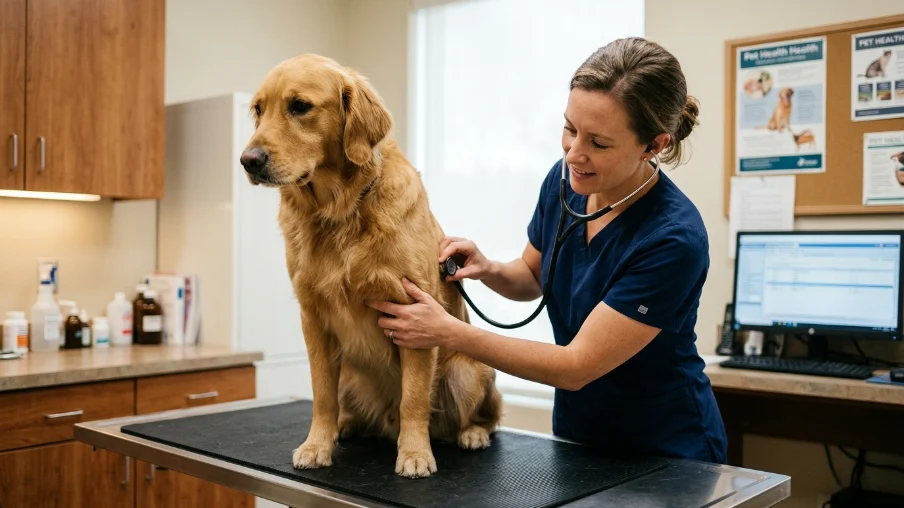
Cancer (Leading Cause of Death)
Multiple studies estimate cancer accounts for roughly 50–65% of Golden Retriever deaths substantially higher than the average across all dog breeds. This single statistic explains most of the gap between Golden Retriever life expectancy and that of comparably sized breeds.
Heart Disease
Subvalvular Aortic Stenosis (SAS) and dilated cardiomyopathy occur in the breed at elevated rates. Cardiac screening (auscultation and echocardiogram for breeding dogs) is part of standard OFA health testing recommendations.
Hip and Elbow Dysplasia
Joint malformation affecting mobility and quality of life, particularly in later years. While not usually fatal on its own, dysplasia-related pain and reduced mobility can compound other age-related health decline.
Hypothyroidism
A relatively common but manageable condition in the breed, caused by underactive thyroid function. Symptoms include weight gain, lethargy, and coat thinning. Generally well controlled with lifelong medication and does not significantly shorten lifespan when properly managed.
Obesity-Related Conditions
Excess weight places stress on joints, organs, and the cardiovascular system, and is independently associated with reduced lifespan across virtually all dog breeds, Golden Retrievers included.
The real issue is this: many of these conditions are individually manageable. What most shortens lifespan is the combination of late detection and accumulated, unmanaged risk factors over a dog’s life not any single diagnosis in isolation.
Factors Within an Owner’s Control
Experienced breeders and veterinarians consistently point to a set of modifiable factors that meaningfully affect how long a Golden Retriever lives separate from genetics, which owners cannot control once a puppy is chosen.
1. Body weight management Research across multiple breeds, including a well-cited lifetime study on Labrador Retrievers, has shown that dogs maintained at a lean body condition lived measurably longer than littermates allowed to become overweight in some studies, close to two years longer. There is no reason to believe this principle does not apply similarly to Golden Retrievers.
2. Spay/neuter timing Some research has linked early spay/neuter (before growth plate closure) to increased joint disorder risk and, in certain studies, altered cancer risk profiles in Golden Retrievers specifically. This is an active area of research, and recommendations vary. Discuss timing with your veterinarian based on your individual dog rather than following a fixed rule.
3. Regular veterinary screening Annual wellness exams, and biannual exams after age 7, increase the likelihood of catching conditions like hemangiosarcoma or early organ changes before they become advanced. Early-stage cancer treatment outcomes are meaningfully better than late-stage outcomes across nearly all cancer types.
4. Dental care Periodontal disease is linked to systemic inflammation and, in some research, increased cardiovascular strain. Regular dental care is a low-cost, high-impact contributor to overall health.
5. Diet quality and consistency Avoiding excessive treats, maintaining consistent high-quality nutrition, and avoiding extreme weight fluctuations all support long-term organ and joint health.
6. Exercise without overexertion Regular moderate exercise supports cardiovascular and joint health, while excessive high-impact activity, especially in puppyhood before growth plates close, can contribute to joint problems later in life.
Life Stage Timeline and Aging Milestones
| Age | Life Stage | What to Expect |
| 0–1 Year | Puppy | Rapid growth; growth plates open until 12–18 months; baseline health screening begins |
| 1–2 Years | Young Adult | Full height reached; energy levels peak; ideal time for baseline bloodwork |
| 2–6 Years | Adult / Prime | Lowest disease incidence period; maintain weight and fitness routine |
| 6–8 Years | Mature Adult | Increase monitoring; begin biannual vet visits; watch for early mobility changes |
| 8–10 Years | Senior Transition | Cancer risk rises significantly; increased screening recommended; joint support often needed |
| 10–12 Years | Senior | Average life expectancy range; quality-of-life monitoring becomes central to care decisions |
| 12+ Years | Geriatric | Above-average longevity; typically requires significant care adjustments and close veterinary partnership |
The 8-year mark is a meaningful inflection point. This is when cancer incidence and other age-related conditions begin rising more steeply in the breed. Owners who shift to more frequent veterinary monitoring around this age generally catch problems earlier than those who maintain a once-yearly schedule into the senior years.
Feeding and Nutrition for Longevity
| Life Stage | Food Type | Feeding Focus |
| Puppy (0–12 months) | Large-breed puppy formula | Controlled growth rate to protect joint development |
| Adult (1–7 years) | High-quality adult large-breed formula | Weight maintenance; lean body condition |
| Senior (7+ years) | Senior or joint-support formula | Lower calorie density; joint and cognitive support nutrients |
Nutritional priorities tied directly to lifespan:
- Maintain a body condition score where ribs are easily felt but not visible this single factor is one of the most consistently cited contributors to extended lifespan across veterinary research
- Limit treats to under 10% of daily caloric intake
- Consider omega-3 fatty acid supplementation for joint and potentially cardiovascular support, under veterinary guidance
- Avoid sudden diet changes; transition foods gradually over 7–10 days to support digestive health
Evidence is limited on specific “anti-cancer” diets marketed for the breed. Be cautious of products making strong longevity claims without peer-reviewed support behind them.
Exercise Guide for a Long, Healthy Life
| Life Stage | Recommended Daily Exercise |
| Puppy (under 1 year) | Short, frequent play sessions; avoid forced long-distance running |
| Adult (1–7 years) | 60–90 minutes, mixing walking, play, and swimming |
| Senior (7+ years) | 30–60 minutes, lower-impact activity; swimming is excellent for joint-friendly cardio |
| Geriatric (12+ years) | Shorter, gentle walks tailored to mobility and comfort |
Golden Retrievers were bred as working retrievers, and swimming in particular is both historically appropriate for the breed and gentle on aging joints making it one of the better exercise options for maintaining fitness into the senior years without added joint stress.
Common Owner Mistakes That Shorten Life Span
1. Allowing gradual weight gain to go unaddressed Weight creep happens slowly enough that many owners do not notice until a dog is significantly overweight. Regular body condition checks not just relying on the scale number catch this earlier.
2. Skipping senior-stage veterinary screening Many owners maintain the same once-a-year vet visit schedule from puppyhood through old age. Given the breed’s elevated cancer risk after age 8, this is generally too infrequent during the senior years.
3. Choosing a puppy without asking about extended family cancer history Most buyers ask whether the puppy’s parents are healthy. Few ask about grandparents, aunts, and uncles but cancer often appears later in life, after a dog has already been bred. A thorough pedigree history conversation with the breeder reveals more than parent health alone.
4. Over-restricting exercise out of fear, or over-exercising puppies Both extremes carry risk. Under-exercised adult dogs face obesity-related lifespan reduction; over-exercised puppies face elevated joint injury risk during the growth period.
5. Dismissing subtle behavior changes as “just aging” Lethargy, reduced appetite, or behavior changes are sometimes attributed automatically to normal aging when they may signal an underlying, treatable condition. Appearance and behavior alone tell you very little veterinary evaluation is what actually clarifies the picture.
Insights Most Articles Miss
Spleen and heart screening deserves more attention than it gets
- Hemangiosarcoma, the breed’s most lethal cancer, frequently originates in the spleen or heart and often produces no symptoms until a dog collapses from internal bleeding. Some veterinarians now recommend periodic abdominal ultrasound screening for Golden Retrievers over age 8, even without symptoms a practice not yet universal but increasingly discussed among breed-focused veterinarians.
The Golden Retriever Lifetime Study is actively reshaping understanding of this issue
- The Morris Animal Foundation has been following approximately 3,000 Golden Retrievers since 2012 in one of the largest breed-specific longitudinal health studies ever conducted. Findings from this study continue to refine understanding of cancer risk factors, environmental contributors, and genetic markers and owners researching the breed’s lifespan should look for updated findings rather than relying solely on older statistics.
Lifespan variance between breeding lines is wider than most buyers realize
- Not all Golden Retriever lines carry equal cancer risk. Some breeding programs with documented multi-generational longevity exist, though they are not always easy to identify from a single litter announcement. Asking a breeder directly about lifespan and cause of death across grandparent and great-grandparent generations not just whether the immediate parents are currently healthy surfaces information most buyers never ask for.
Price Guide and Cost Considerations Tied to Health
| Source | Price Range | Lifespan-Relevant Notes |
| Reputable health-tested breeder | $1,500–$3,500+ | Extended pedigree health history available; cardiac, hip, elbow, eye clearances |
| Backyard breeder / pet-focused | $700–$1,500 | Limited or no extended family health history |
| Rescue / adoption | $150–$500 | Health history often unknown; adult dogs common |
Lifetime cost considerations relevant to longevity:
| Expense Category | Estimated Lifetime Cost (10–12 years) |
| Routine veterinary care | $4,000–$8,000 |
| Cancer screening and senior diagnostics | $1,500–$4,000+ |
| Emergency or cancer treatment (if needed) | $3,000–$15,000+ |
| Pet insurance (recommended given cancer prevalence) | $4,800–$10,800 over a lifetime |
Pet insurance is worth particularly serious consideration for this breed specifically, given the documented elevated cancer rate and the high cost of oncology treatment when it becomes necessary.
How to Choose a Breeder With Longevity in Mind
Questions specifically about lifespan and health history to ask breeders:
- What is the average age at death across this line’s recent generations?
- What did grandparents and great-grandparents die from, if known?
- Have any dogs in this line been affected by hemangiosarcoma or lymphoma?
- Are the parents OFA-certified for hips, elbows, and heart, with current cardiac clearance?
- Are you involved with or have you contributed data to breed longevity research such as the Golden Retriever Lifetime Study?
- What is your approach to weight and body condition guidance for puppy buyers?
A breeder who can answer these questions in detail, with specific examples, is demonstrating a level of engagement with breed health that goes well beyond minimum certification requirements.
Lifestyle Compatibility
| Lifestyle Factor | Suitable? | Notes |
| Families with children | Yes | Excellent temperament; gentle and patient breed reputation is well earned |
| Active owners | Yes | Benefits from regular exercise that also supports long-term health |
| Sedentary households | Caution | Inactivity contributes directly to obesity-related lifespan reduction |
| First-time owners | Yes | Among the more forgiving breeds for inexperienced owners |
| Owners able to commit to senior-stage veterinary costs | Important | Given elevated cancer risk, budget and emotional readiness for senior-stage care matters significantly |
| Multi-pet households | Yes | Generally sociable with other animals |
| Owners prioritizing a long-lived breed above all else | Caution | Other breeds have statistically longer average lifespans; this should be a known trade-off, not a surprise |
Lifespan Comparison: Golden Retriever vs. Similar Breeds
| Breed | Average Life Span | Leading Cause of Reduced Lifespan |
| Golden Retriever | 10–12 years | Cancer (particularly hemangiosarcoma, lymphoma) |
| Labrador Retriever | 12–14 years | Obesity-related conditions, joint disease |
| Standard Poodle | 12–15 years | Generally longer-lived; some bloat and immune-related risk |
| Flat-Coated Retriever | 8–10 years | Also has notably high cancer rate, even higher than Golden Retriever in some studies |
| Border Collie | 12–15 years | Fewer breed-specific cancer predispositions documented |
- This comparison underscores that the Golden Retriever’s shortened average lifespan relative to similarly sized breeds is a recognized, breed-specific pattern within the veterinary and research community not simply a function of being a larger dog.
Preparation Checklist for Maximizing Life Span
At acquisition:
- [ ] Request extended pedigree health history, not just immediate parents
- [ ] Confirm OFA hip, elbow, and cardiac clearances for both parents
- [ ] Ask about any cancer history in the line
- [ ] Establish a relationship with a veterinarian experienced with the breed
Throughout adulthood:
- [ ] Maintain lean body condition consistently
- [ ] Schedule annual wellness exams (ages 1–7)
- [ ] Maintain dental care routine
- [ ] Keep up to date on appropriate vaccinations and parasite prevention
Entering senior years (age 7+):
- [ ] Shift to biannual veterinary visits
- [ ] Discuss baseline bloodwork and possible periodic ultrasound screening with your vet
- [ ] Adjust diet to senior-appropriate formula
- [ ] Monitor mobility and adjust exercise intensity as needed
- [ ] Consider pet insurance review if not already in place
FAQs
Q: What is the average life span of a Golden Retriever? The average Golden Retriever life span is 10–12 years, based on multiple veterinary breed surveys and longitudinal studies. Some individual dogs live considerably longer, particularly those from health-screened lines with strong weight and veterinary care management.
Q: Why do Golden Retrievers have a shorter life span than other similarly sized dogs? The primary reason is an unusually high cancer rate, particularly hemangiosarcoma and lymphoma, which together account for a large share of breed deaths. Genetic factors related to limited diversity within the breed’s gene pool are considered a contributing cause, though research is ongoing.
Q: What is the most common cause of death in Golden Retrievers? Cancer is the leading cause of death in the breed, with studies estimating it accounts for roughly half to nearly two-thirds of all Golden Retriever deaths substantially higher than the average across dog breeds generally.
Q: Can diet and exercise actually extend a Golden Retriever’s life span? Yes, to a meaningful degree. Maintaining a lean body condition has been linked to extended lifespan in canine research, and consistent moderate exercise supports cardiovascular and joint health. These factors do not eliminate genetic cancer risk but can meaningfully affect overall healthspan and, in many cases, longevity.
Q: At what age is a Golden Retriever considered a senior? Most veterinarians consider Golden Retrievers seniors starting around age 7–8, which is earlier than many smaller breeds, given the elevated health risks that begin emerging around this age.
Q: Do male and female Golden Retrievers have different life spans? Some studies suggest a slight statistical difference, with females in certain surveys showing marginally longer average lifespans, though findings are not entirely consistent across all research and the difference, where found, is generally small.
Q: Is pet insurance worth it for a Golden Retriever specifically? Given the breed’s documented elevated cancer rate and the often high cost of oncology treatment, many veterinarians and breed-specific organizations consider pet insurance a particularly worthwhile consideration for this breed compared to lower-risk breeds.
Q: What is the oldest a Golden Retriever has been documented to live? Anecdotal breed club records and individual case reports describe Golden Retrievers reaching 16–17 years, though this is well above the breed average and not something to expect as typical.
Q: Has the Golden Retriever’s average life span actually declined over time? Many breeders and breed historians report that average lifespan was higher in past decades, with some older accounts citing 16–17 years as more typical in the mid-20th century. Current studies consistently report 10–12 years. A single confirmed cause for this apparent decline has not been firmly established, though rising cancer incidence is the most commonly cited factor.
Q: Does spaying or neutering affect a Golden Retriever’s life span? Some research has linked the timing of spay/neuter, particularly early procedures performed before growth plate closure, to increased joint disorder risk and altered cancer risk patterns specifically in this breed. This remains an active research area, and timing decisions are best made individually with a veterinarian rather than following a universal rule.
Conclusion
A Golden Retriever’s life span is not simply a number assigned to the breed it is the outcome of genetics inherited from its lineage, combined with decisions made by breeders and owners across the dog’s entire life. The 10–12 year average reflects a breed genuinely affected by an elevated cancer rate, and that reality deserves honest acknowledgment rather than minimization.
At the same time, the factors within an owner’s control body weight, veterinary screening frequency, dental care, and breeder selection meaningfully shift outcomes in either direction. None of these guarantee a particular result. But owners who engage seriously with them consistently see better outcomes than those who treat lifespan as something left entirely to chance.
Choosing a Golden Retriever means accepting a breed-specific trade-off: extraordinary temperament and family compatibility, alongside a documented and real health vulnerability that asks more of its owners than some other breeds. Going in with that understanding rather than discovering it later is what separates owners who are caught off guard from those who are genuinely prepared.