Golden Retrievers have specific nutritional needs tied to their size, joint health, heart health, and cancer predisposition generic dog food recommendations often miss these entirely. The best dog food for a Golden Retriever prioritizes joint-supporting nutrients, lean protein, controlled calorie density, and taurine adequacy. DCM (dilated cardiomyopathy) concerns linked to grain-free diets make food selection for this breed more consequential than for most choose carefully.
Quick Snapshot: Golden Retriever Nutritional Profile
| Feature | Details |
| Breed Size | Large breed (55–75 lbs females / 65–80 lbs males) |
| Life Stage Categories | Puppy / Adult / Senior |
| Primary Health Risks | Hip dysplasia, elbow dysplasia, cancer, DCM, obesity, hypothyroidism |
| Key Nutrients to Prioritize | Protein, omega-3 fatty acids, glucosamine, chondroitin, taurine, antioxidants |
| Key Nutrients to Monitor | Calcium (puppies), fat content, total calories |
| Grain-Free Diet Caution | Yes linked to DCM in this breed specifically |
| Ideal Protein Source | Named animal protein (chicken, salmon, beef, lamb) as first ingredient |
| Daily Calories (Adult) | Approx. 1,300–1,700 kcal depending on weight and activity |
| Feeding Schedule | 2 meals daily for adults; 3 meals for puppies under 6 months |
| Foods to Avoid | Grapes, raisins, xylitol, onions, garlic, macadamia nuts, excess salt |
What Is the Best Dog Food for a Golden Retriever?

There is no single best dog food for every Golden Retriever but there are specific nutritional standards this breed requires that narrow the field considerably.
Here is where most people get it wrong: they select dog food based on marketing terms “natural,” “holistic,” “premium” rather than ingredient quality, nutrient density, and breed-specific health considerations. A dog food with a beautiful label and a high price tag may still be nutritionally inappropriate for a Golden Retriever.
The ideal food for this breed:
- Lists a named animal protein (chicken, salmon, beef) as the first ingredient
- Contains adequate taurine either from meat sources or supplementation
- Includes joint-supporting compounds: glucosamine and chondroitin
- Provides omega-3 fatty acids for coat, skin, and inflammation support
- Is formulated for large breeds controlling calorie density and calcium ratios
- Is NOT primarily grain-free, unless under specific veterinary guidance
Experienced breeders and canine nutritionists focus on something else beyond ingredient lists: they look at whether the manufacturer conducts feeding trials and employs board-certified veterinary nutritionists. That distinction separates genuinely research-backed foods from marketing products.
Why Golden Retrievers Have Unique Nutritional Needs
Golden Retrievers are not generic large-breed dogs. Several breed-specific health realities make their nutrition more consequential than the average dog’s.
1. Cancer Predisposition
Golden Retrievers have one of the highest cancer rates of any dog breed studies suggest that over 60% of Goldens will develop some form of cancer in their lifetime. Antioxidants including vitamin E, vitamin C, selenium, and beta-carotene help combat oxidative stress. A diet rich in these compounds, from whole-food ingredients, is genuinely valuable not just marketing language.
2. Joint and Orthopedic Disease
Hip and elbow dysplasia are highly prevalent in the breed. Excess body weight dramatically worsens joint disease. Calorie-controlled feeding and foods containing glucosamine and chondroitin provide meaningful support starting in puppyhood, not just in old age.
3. DCM (Dilated Cardiomyopathy) Risk
The FDA investigated a potential link between grain-free diets particularly those high in legumes, lentils, peas, and potatoes as primary ingredients and DCM in dogs between 2018 and 2022. Golden Retrievers were disproportionately represented in the reported cases. The science is still evolving, but the FDA’s findings are serious enough that most veterinary cardiologists and veterinary nutritionists advise against grain-free diets for Golden Retrievers without a medically compelling reason.
4. Obesity Tendency
Golden Retrievers are food-motivated, highly social, and exercise-enthusiastic which means owners tend to reward them generously with food. The breed is significantly prone to obesity. Extra weight in a dog already genetically vulnerable to joint disease and cancer is not a minor cosmetic issue it is a health risk.
5. Hypothyroidism
Golden Retrievers are among the breeds most predisposed to hypothyroidism, which slows metabolism and further increases obesity risk. Dogs with hypothyroidism require dietary management in consultation with a veterinarian often a controlled-calorie, high-protein formula.
Ingredients to Look For
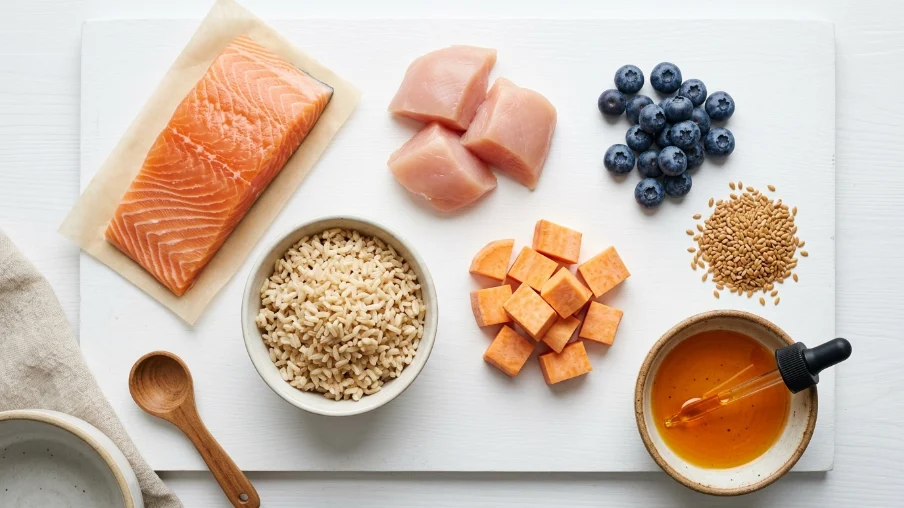
Protein Sources (Look For These)
| Protein | Why It Matters |
| Deboned chicken / chicken meal | Complete amino acid profile; chicken meal is more concentrated than whole chicken |
| Deboned salmon / salmon meal | Excellent omega-3 source; supports skin, coat, and joints |
| Deboned beef | High-quality complete protein |
| Lamb meal | Good for dogs with chicken sensitivities |
| Whole eggs | Highly bioavailable complete protein |
Critical rule: The first ingredient should always be a named animal protein not “meat meal,” not “poultry by-product meal,” not “animal digest.” Named sources mean accountability for ingredient origin.
Carbohydrate Sources (Preferred)
- Brown rice
- Oatmeal
- Barley
- Whole grain corn (digestible and supports taurine metabolism)
- Sweet potato (in moderate amounts alongside grains not as the primary carbohydrate)
Avoid as primary carbohydrates: Peas, lentils, legumes, and potatoes in large quantities these are the ingredients associated with DCM concerns in grain-free formulas.
Beneficial Additives
| Additive | Benefit |
| Glucosamine | Joint cartilage support |
| Chondroitin | Joint fluid maintenance |
| Omega-3 fatty acids (DHA/EPA) | Anti-inflammatory; coat and brain support |
| Taurine | Cardiac muscle function; DCM prevention |
| Vitamin E | Antioxidant; immune support |
| L-Carnitine | Fat metabolism; weight management |
| Probiotics | Gut health; immune function |
| Antioxidant blend (vitamin C, selenium, beta-carotene) | Cancer risk reduction support |
Ingredients to Avoid
Dangerous Foods Never Feed These:
| Ingredient | Risk |
| Grapes and raisins | Acute kidney failure even small amounts can be fatal |
| Xylitol (artificial sweetener) | Severe hypoglycemia, liver failure |
| Onions and garlic (all forms) | Destroys red blood cells; causes anemia |
| Macadamia nuts | Neurological symptoms, weakness, hyperthermia |
| Chocolate | Theobromine toxicity cardiac and neurological effects |
| Alcohol | Severe toxicity at small doses |
| Raw yeast dough | Expands in stomach; alcohol production |
| Cooked bones | Splintering risk; internal puncture |
Commercially Problematic Ingredients:
| Ingredient | Concern |
| Generic “meat meal” or “animal digest” | Unknown origin, variable quality |
| Artificial preservatives (BHA, BHT, ethoxyquin) | Potential long-term health concerns |
| Artificial colors (Red 40, Yellow 5, Blue 2) | No nutritional value; unnecessary in dog food |
| High corn syrup or added sugars | Obesity risk, metabolic disruption |
| Excessive salt | Kidney and cardiovascular strain over time |
| Peas / lentils / legumes as primary ingredients | DCM association especially concerning for Goldens |
Puppy Feeding Guide (Golden Retriever Puppies)

Golden Retriever puppies grow rapidly and that growth rate makes their nutrition unusually critical. The real issue is this: puppies fed too many calories, too much calcium, or standard (non-large-breed) puppy food experience accelerated bone growth that significantly increases the risk of orthopedic disease.
Always feed large-breed puppy formula not regular puppy food, not adult food.
Puppy Feeding Schedule
| Age | Meals Per Day | Approximate Daily Amount |
| 8–12 weeks | 3–4 meals | Per feeding guide on bag (start conservatively) |
| 3–6 months | 3 meals | Adjust by body condition, not just weight |
| 6–12 months | 2–3 meals | Transition to 2 meals around 6 months |
| 12 months+ | 2 meals | Transition to adult large-breed food around 12–15 months |
Puppy Nutritional Requirements
- Protein: 22–32% on a dry matter basis from named animal sources
- Fat: 8–20% puppies need fat for brain development but excess drives obesity
- Calcium: 1.0–1.8% dry matter critical not to exceed this; do not supplement calcium in a puppy eating a balanced large-breed food
- Phosphorus: 0.8–1.6% dry matter
- DHA: Important for brain and eye development look for fish meal or fish oil in the formula
Never supplement a balanced puppy food with extra calcium, milk, or cottage cheese unless under direct veterinary direction. The calcium excess risk in large-breed puppies is more dangerous than the deficiency risk when eating a quality food.
When to Switch from Puppy to Adult Food
Golden Retrievers are typically ready to transition from puppy food to adult large-breed food between 12–15 months. They are not fully grown until 18–24 months, but large-breed puppy food should not be fed beyond 15 months as the elevated nutrient levels become inappropriate.
Transition gradually over 10–14 days: mix increasing proportions of new food with decreasing proportions of puppy food to avoid digestive upset.
Adult Feeding Guide
Adult Golden Retrievers (approximately 1–7 years) require a large-breed adult formula that manages calorie density while delivering complete nutrition.
Daily Calorie Requirements (Adult)
| Weight | Low Activity | Moderate Activity | High Activity |
| 55 lbs (female) | ~1,100 kcal | ~1,300 kcal | ~1,500 kcal |
| 65 lbs (male) | ~1,300 kcal | ~1,550 kcal | ~1,800 kcal |
| 75 lbs (male) | ~1,500 kcal | ~1,750 kcal | ~2,000 kcal |
These are approximate starting points. The only reliable way to assess whether feeding amounts are correct is regular body condition scoring not the feeding guide on the bag, which tends toward generous amounts.
Body Condition Scoring The Practical Method
Run your hands firmly along your Golden’s ribcage:
- Too thin: Ribs visible from a distance; no fat covering
- Ideal: Ribs easily felt with light pressure; not visible; waist visible from above
- Overweight: Ribs require firm pressure to feel; no visible waist; abdomen rounded
- Obese: Ribs cannot be felt through fat layer; rounded back; heavy abdomen
Golden Retrievers are notorious for appearing “solid” rather than overweight their thick double coat disguises excess body fat effectively. Always rely on hands-on assessment, not visual appearance.
Adult Nutritional Requirements (AAFCO Standards)
| Nutrient | Minimum (Dry Matter Basis) |
| Protein | 18% |
| Fat | 5% |
| Calcium | 0.5% |
| Phosphorus | 0.4% |
| Omega-6 fatty acids | 1.0% |
In practice, quality foods for Golden Retrievers typically exceed minimums aim for 25–30% protein and 12–18% fat in an adult food, with confirmed omega-3 fatty acid levels.
Senior Feeding Guide (Golden Retrievers 7+ Years)
Golden Retrievers are considered seniors from approximately 7–8 years. Their nutritional needs shift in several ways:
- Reduced calorie needs: Metabolism slows; portion reduction of 10–20% is often appropriate
- Continued high protein: Contrary to older advice, senior dogs benefit from maintained or increased protein to preserve muscle mass unless kidney disease is diagnosed
- Enhanced joint support: Glucosamine and chondroitin become more critical; consider supplementation if not present in the food at therapeutic levels
- Antioxidant elevation: Aging immune systems benefit from higher antioxidant concentrations
- Kidney function monitoring: Senior foods with moderately reduced phosphorus are appropriate for most older dogs; dramatically reduced protein is only warranted in confirmed kidney disease
Practical changes to make at 7–8 years:
- Transition to a senior or mature large-breed formula
- Schedule biannual veterinary wellness checks including bloodwork to catch metabolic and kidney changes early
- Reassess calorie needs every 6 months weight creep in sedentary senior Goldens is very common
- Discuss joint supplementation with your veterinarian: dedicated glucosamine supplements often provide higher therapeutic doses than food alone
Grain-Free vs. Grain-Inclusive: The DCM Question
This is the most consequential food decision Golden Retriever owners currently face and it deserves a clear, evidence-based answer.
What happened: Beginning around 2018, the FDA received a significant increase in reports of dilated cardiomyopathy (DCM) a serious heart condition in dog breeds not traditionally predisposed to it. Golden Retrievers were among the most affected. A common factor across reported cases was grain-free diets high in legumes, lentils, and peas.
What the science shows:
- The exact mechanism is not fully confirmed
- Taurine deficiency appears to be involved in some but not all cases
- Legume-heavy diets may interfere with taurine synthesis or absorption
- Grain-containing diets from established manufacturers with feeding trial data have not shown the same association
- The FDA investigation is ongoing; final conclusions have not been published
What veterinary cardiologists and nutritionists recommend for Golden Retrievers:
Avoid grain-free diets as a default choice for this breed. If a Golden Retriever has a confirmed grain allergy (rare true grain allergies in dogs are less common than many believe), work with a veterinary nutritionist rather than switching to a grain-free commercial formula independently.
Bottom line: For the vast majority of Golden Retrievers with no diagnosed grain sensitivity, a grain-inclusive food from a manufacturer that employs veterinary nutritionists and conducts AAFCO feeding trials is the evidence-supported choice.
Wet Food, Dry Food, or Raw?
Dry Kibble
The most practical and widely used option. Shelf-stable, dental benefit from chewing, easy to measure portions, cost-effective. Quality varies enormously ingredient quality and manufacturer practices matter more than format.
Wet / Canned Food
Higher moisture content (good for hydration), typically higher palatability. More expensive per calorie. Can be used as a topper to increase interest in kibble for picky Goldens. Higher moisture can benefit dogs with kidney or urinary issues. Dental benefit is minimal do not rely on wet food for dental health.
Raw Diets (BARF / Prey Model)
Higher protein density, no ultra-processing. However: significant food safety risks (Salmonella, Listeria, E. coli for the dog and for household humans), nutritional imbalances in home-prepared raw diets are extremely common, and the evidence base for health benefits over quality kibble is limited. If pursuing raw feeding, work with a board-certified veterinary nutritionist to formulate a balanced diet. Off-the-shelf commercial raw foods vary widely in quality and testing standards.
Fresh / Gently Cooked Subscription Foods
A growing category offering fresh-cooked, portion-controlled meals. Generally high-quality ingredients, convenient, and well-formulated by reputable companies. More expensive. Appropriate for owners willing to pay the premium; not nutritionally superior to a quality kibble in most cases.
Practical recommendation for most Golden Retriever owners: A high-quality grain-inclusive large-breed kibble from a manufacturer with veterinary nutritionist oversight and feeding trial data supplemented with fish oil if omega-3 levels are not confirmed in the food is the most evidence-supported, practical, and cost-effective approach.
Feeding Schedule and Portion Control
Daily Feeding Schedule (Adult):
| Time | Activity |
| Morning (7–8 AM) | First meal 50% of daily portion |
| Midday (optional) | Training treats deduct from daily calorie allotment |
| Evening (5–6 PM) | Second meal 50% of daily portion |
Why two meals matter: Feeding once daily increases the risk of bloat (GDV) in large deep-chested dogs. Two meals also reduce between-meal hunger, which drives counter-surfing and food-begging behavior common in Golden Retrievers.
Treat management:
Treats should account for no more than 10% of daily calorie intake. Golden Retrievers are highly food-motivated owners tend to be generous, and treats add up faster than expected.
Low-calorie training treat options:
- Baby carrots
- Cucumber slices
- Blueberries (antioxidant bonus)
- Plain cooked chicken (small pieces)
- Commercial low-calorie training treats
Do not feed immediately before or after vigorous exercise this is a bloat risk management practice. Wait at least 30–60 minutes before or after intense activity before feeding.
Supplements Worth Considering
Not every Golden Retriever needs supplements a complete and balanced diet from a reputable manufacturer should cover baseline needs. However, certain supplements have meaningful evidence behind them for this breed.
| Supplement | Evidence Level | Use Case |
| Fish oil (EPA/DHA omega-3) | Strong | Coat health, anti-inflammatory, joint support, heart support |
| Glucosamine + chondroitin | Moderate | Joint support, particularly in dogs with diagnosed dysplasia or seniors |
| Taurine | Moderate | Cardiac support, especially if diet history includes grain-free foods |
| Probiotics | Moderate | Digestive health, immune function, post-antibiotic recovery |
| Vitamin E | Moderate | Antioxidant; most valuable alongside fish oil supplementation |
| L-carnitine | Moderate | Weight management support in hypothyroid or obese dogs |
| Coenzyme Q10 | Emerging | Cardiac support in dogs with heart disease history |
Important: Supplements are not regulated as rigorously as pharmaceuticals. Choose products with NSF, NASC, or USP certification, and always inform your veterinarian of any supplements being given interactions with medications do occur.
How to Read a Dog Food Label
Understanding a dog food label separates informed buyers from marketing victims.
The guaranteed analysis panel:
| Item | What It Tells You |
| Crude Protein (%) | Minimum protein content includes protein from all sources |
| Crude Fat (%) | Minimum fat content |
| Crude Fiber (%) | Maximum fiber content |
| Moisture (%) | Water content critical for comparing wet vs. dry foods |
Dry matter basis calculation: To compare a wet food (78% moisture) to a dry food (10% moisture), you must convert to dry matter basis. Divide the nutrient percentage by (100 minus moisture percentage).
Ingredient list rules:
- Ingredients are listed by weight before processing “chicken” sounds better than “chicken meal” but chicken meal is more protein-dense after moisture is removed
- The first five ingredients are the most telling this is where protein sources, grains, and fats appear
- Marketing terms like “natural,” “holistic,” and “premium” have no legal definition in pet food they are advertising language
AAFCO statement: Look for “complete and balanced for [life stage] as substantiated by AAFCO feeding trials” this is more meaningful than “formulated to meet AAFCO nutrient profiles,” which requires no live animal testing.
Common Feeding Mistakes Golden Retriever Owners Make
1. Feeding regular adult food to puppies Large-breed puppy food is not optional for Golden Retriever puppies. Standard adult or regular puppy foods often have calcium and calorie levels that accelerate growth and increase orthopedic disease risk.
2. Following bag feeding guidelines too literally Feeding guides on dog food bags are starting points calibrated for average activity levels and they tend to err on the generous side. Many Goldens doing well on food bags are quietly becoming overweight.
3. Choosing grain-free “because it sounds healthier” Grain-free diets became popular through human dietary trends extended to pets. There is no evidence that grains are harmful to dogs without diagnosed grain sensitivity and significant concern about DCM links in this breed specifically.
4. Ignoring treats in the calorie count A Golden Retriever fed a perfectly portioned meal and then given five biscuits and a rawhide during the day is in caloric surplus. Treats count.
5. Switching foods too frequently Digestive microbiome stability requires consistency. Frequent food changes cause loose stools, gas, and reduced nutrient absorption. When a food change is needed, transition over 10–14 days.
6. Supplementing calcium without veterinary guidance Adding dairy, cottage cheese, or calcium supplements to a puppy’s balanced food can push calcium above safe limits and directly increase hip dysplasia risk.
7. Free-feeding Leaving food available all day removes your ability to monitor appetite one of the earliest indicators of illness. It also makes calorie control impossible. Scheduled meals are always preferable for this breed.
Insights Most Articles Miss
Taurine is the most underappreciated nutrient for Golden Retrievers
Most generic dog nutrition articles discuss protein and fat. What they rarely cover is taurine an amino acid critical for cardiac muscle function. Golden Retrievers have a documented tendency toward lower taurine levels compared to many other breeds, which is compounded by grain-free diets high in legumes. Ensure your Golden’s food contains either direct taurine supplementation or high levels of taurine-rich ingredients (meat, fish, organs). If your dog has been on a grain-free diet for an extended period, a veterinary cardiac evaluation is worth discussing.
Food and coat quality are directly linked
Many Golden Retriever owners notice coat quality changes and attribute them to grooming or seasons. Dull, brittle, or excessively dry coat is often a direct nutritional signal insufficient omega-3 fatty acids, poor protein bioavailability, or zinc deficiency. Before spending money on coat-specific shampoos, evaluate the food first.
The “best rated” food on review sites may not be the best for your dog
Commercial dog food review websites typically rate foods based on ingredient lists alone not feeding trial data, not palatability, not manufacturer quality control. A food with a perfect score on an aggregator site that has never been through AAFCO feeding trials is not necessarily better than a “lower-rated” food from a manufacturer with decades of nutritional research behind it.
Calorie density varies dramatically between kibbles
A cup of one kibble may contain 300 calories. A cup of another may contain 450. Feeding “one cup twice daily” without knowing the calorie density of your specific food makes portion control impossible. Always look up the kcal/cup on the manufacturer’s website and calculate from your dog’s actual needs.
Price Guide and Annual Feeding Costs
Monthly Food Costs (Approximate, 65-lb Adult Golden Retriever):
| Food Category | Monthly Cost | Annual Cost |
| Budget kibble (low-quality) | $30–$50 | $360–$600 |
| Mid-range kibble (quality large-breed formula) | $60–$90 | $720–$1,080 |
| Premium kibble (veterinary-recommended brands) | $90–$140 | $1,080–$1,680 |
| Fresh / gently cooked subscription | $150–$250 | $1,800–$3,000 |
| Home-prepared raw (with nutritionist formulation) | $120–$200+ | $1,440–$2,400+ |
Additional supplement costs (if used):
| Supplement | Monthly Cost |
| Fish oil (quality brand, 65-lb dog) | $15–$30 |
| Glucosamine + chondroitin | $20–$40 |
| Probiotic | $15–$25 |
The false economy of cheap food: Veterinary care for obesity-related joint disease, DCM treatment, or digestive issues frequently costs far more than the savings from low-quality food. This is not a universal argument for the most expensive food but it is a credible argument for avoiding the cheapest options.
How to Choose the Right Food for Your Golden Retriever
Use this decision framework:
Step 1: Identify life stage Puppy (under 12–15 months) → large-breed puppy formula required Adult (1–7 years) → large-breed adult formula Senior (7+ years) → senior or mature large-breed formula
Step 2: Rule out grain-free Unless your veterinarian has specifically recommended grain-free for a documented condition, select a grain-inclusive formula.
Step 3: Check manufacturer credentials Does the company employ board-certified veterinary nutritionists? Do they conduct AAFCO feeding trials (not just formulation)? Do they have quality control measures and recall history? Hill’s Science Diet, Purina Pro Plan, Royal Canin, and Eukanuba are examples of companies that consistently meet these standards.
Step 4: Verify first five ingredients Named animal protein first. Grain source (brown rice, barley, oatmeal) in top five. No generic “meal” or “digest” as the primary protein.
Step 5: Check calorie density Look up kcal/cup. Calculate daily portions from your dog’s actual weight and activity level. Adjust every 4–6 weeks based on body condition scoring.
Step 6: Transition properly Never switch foods abruptly. 10–14 day transition minimum.
Recommended Food Evaluation Criteria
| Criteria | What to Look For |
| Manufacturer | Employs veterinary nutritionist; conducts feeding trials |
| Protein source | Named animal protein as first ingredient |
| Grain content | Grain-inclusive for most Goldens |
| Life stage | Appropriate for puppy / adult / senior |
| Calorie density | Known and appropriate for your dog’s weight and activity |
| Additives | Glucosamine, omega-3s, taurine, antioxidants |
| AAFCO statement | Feeding trial substantiated (not just “formulated to meet”) |
| Recall history | Clean or limited recall history |
Lifestyle Compatibility: Food Choices by Situation
| Situation | Recommended Approach |
| Active working or sporting Golden | Higher calorie, higher fat; performance formula or increased portions of premium adult food |
| Sedentary / house dog | Calorie-controlled large-breed adult food; strict portion management |
| Overweight Golden | Prescription or over-the-counter weight management formula; increase exercise simultaneously |
| Puppy with rapid growth | Large-breed puppy formula; no calcium supplementation; monitor body condition monthly |
| Senior with joint disease | Senior formula with high glucosamine; consider dedicated joint supplement |
| Golden with allergies | Limited ingredient diet with novel protein (venison, duck, rabbit); veterinary guidance essential |
| Golden post-grain-free diet | Transition to grain-inclusive food; consider taurine supplementation; discuss cardiac screening with vet |
| Dog on medication | Consult veterinarian some medications interact with nutrients in food |
FAQs
Q: What is the best dog food for Golden Retrievers? The best food is a grain-inclusive large-breed formula from a manufacturer that employs board-certified veterinary nutritionists and conducts AAFCO feeding trials. Named animal protein should be the first ingredient. Top-tier brands consistently recommended by veterinary nutritionists include Purina Pro Plan, Hill’s Science Diet, and Royal Canin not because of marketing, but because of research investment and quality control history.
Q: Can Golden Retrievers eat grain-free food? Most veterinary nutritionists and cardiologists currently advise against grain-free diets for Golden Retrievers due to the documented DCM association with legume-heavy grain-free formulas. Unless your dog has a diagnosed grain intolerance confirmed through veterinary testing, a grain-inclusive food is the evidence-supported choice.
Q: How much should I feed my Golden Retriever per day? For an average 65-lb adult Golden at moderate activity, approximately 1,400–1,600 kcal per day but calorie density varies significantly between foods. Calculate from kcal/cup listed by the manufacturer, not just cup measurements. Adjust every 4–6 weeks based on body condition scoring.
Q: When should I switch my Golden Retriever from puppy food to adult food? Between 12–15 months. Do not continue large-breed puppy food beyond 15 months. Transition gradually over 10–14 days mixing the new food with the old.
Q: Should I add supplements to my Golden Retriever’s food? Fish oil (omega-3 fatty acids) has strong evidence for this breed and is worth adding if not confirmed in the food at meaningful levels. Glucosamine and chondroitin are beneficial for joint support, especially from middle age onward. Taurine supplementation is worth discussing with your vet, particularly if your dog has prior history of grain-free feeding.
Q: Are raw diets safe for Golden Retrievers? Raw diets carry genuine food safety risks for both dogs and humans in the household particularly children and immunocompromised individuals. They can be nutritionally balanced under veterinary nutritionist guidance, but are not inherently superior to quality cooked food. If pursuing raw feeding, professional formulation is not optional.
Q: Can Golden Retrievers eat human food? Some human foods are safe: plain cooked chicken, cooked fish, carrots, blueberries, cooked sweet potato, plain rice. Many are dangerous: grapes, raisins, onions, garlic, xylitol, chocolate, macadamia nuts, alcohol. When in doubt, check with your veterinarian before introducing any new human food.
Q: My Golden Retriever is overweight what food should I feed? A veterinary-formulated weight management food combined with strict portion control and increased daily exercise. Do not simply reduce portions of regular food dramatically this can create nutrient deficiencies. Weight management formulas maintain nutrient density while reducing calorie density. Work with your veterinarian to set a safe target weight loss rate of 1–2% of body weight per week.
Q: Is wet food or dry food better for Golden Retrievers? Neither is categorically superior. High-quality dry kibble provides practical advantages (dental contact, easy portioning, cost-effectiveness, shelf stability). Wet food offers higher moisture and is more palatable. Many owners combine both. The manufacturer’s quality and formula composition matter far more than format.
Q: How do I know if my Golden Retriever’s food is working? Signs of a nutritionally appropriate diet: consistent ideal body condition, healthy weight, glossy double coat with no excessive dryness or shedding beyond seasonal norms, firm well-formed stools, consistent energy levels, and absence of chronic digestive issues. If any of these are problematic despite a quality food, consult your veterinarian some issues indicate underlying health conditions rather than food quality.
Preparation Checklist: Setting Up Your Golden Retriever’s Feeding System
- [ ] Select appropriate food for life stage (puppy / adult / senior)
- [ ] Confirm grain-inclusive formula from reputable manufacturer
- [ ] Look up kcal/cup on manufacturer website; calculate daily portion from dog’s weight and activity
- [ ] Purchase stainless steel or ceramic bowls (avoid plastic harbors bacteria and may cause contact dermatitis)
- [ ] Set two fixed feeding times daily; remove uneaten food after 20 minutes
- [ ] Purchase a measuring cup do not estimate portions
- [ ] Set up a treat tracking system: weigh or count daily treats against the 10% calorie allowance
- [ ] Schedule first body condition score assessment at 4 weeks on new food
- [ ] Discuss fish oil and taurine supplementation with your veterinarian
- [ ] Mark calendar for food transition schedule if switching foods (10–14 days minimum)
Conclusion
Feeding a Golden Retriever correctly is more nuanced than the pet food industry typically communicates and the stakes are higher for this breed than for most.
The DCM concern alone makes grain-free diets an active risk for Golden Retrievers, not a neutral choice. The breed’s orthopedic and obesity predispositions make calorie control genuinely consequential. The cancer prevalence makes antioxidant and omega-3 nutrition more than a marketing point.
None of this requires expensive boutique food or complicated homemade diets. What it requires is informed selection: a grain-inclusive large-breed formula from a manufacturer with serious nutritional science behind it, fed in appropriate measured portions, adjusted over time based on your individual dog’s body condition.
Feed the dog in front of you not the feeding guide on the bag, not the neighbor’s recommendation not the most-marketed product on the shelf. Learn to body condition score your dog. Adjust every few months. Work with your veterinarian on breed-specific health monitoring.
Golden Retrievers give their owners extraordinary loyalty and affection for 10–13 years. A thoughtful, consistent approach to their nutrition is one of the most direct investments an owner can make in the quality and length of that time.