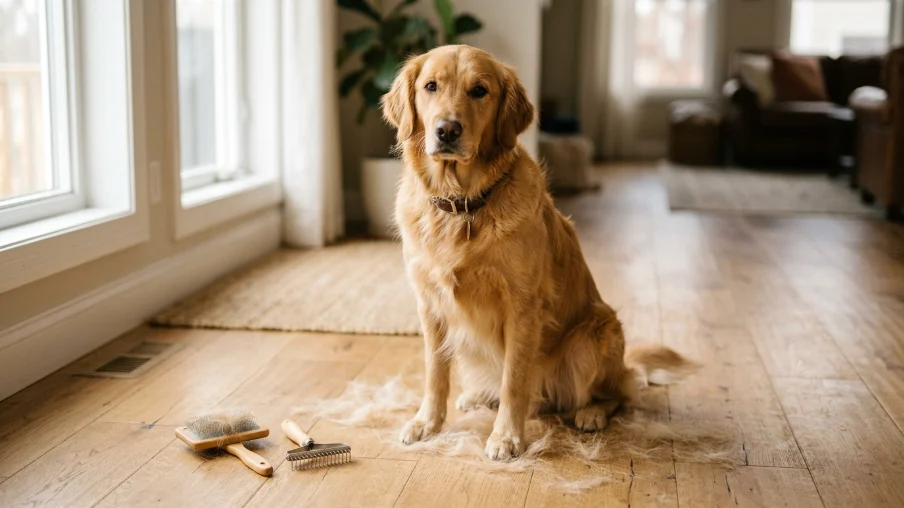
Golden Retrievers are heavy, year-round shedders with two major seasonal “coat blows” each spring and fall when shedding intensifies dramatically. No tool, supplement, or grooming trick stops shedding entirely but the right routine reduces loose hair in your home by 60–70%. Sudden excessive shedding outside seasonal peaks is a genuine health signal and warrants a veterinary evaluation, not just more brushing.
Quick Snapshot: Golden Retriever Shedding at a Glance
| Feature | Details |
| Shedding Level | Heavy among the highest of all popular breeds |
| Shedding Type | Year-round with two seasonal peaks |
| Coat Type | Dense double coat water-resistant outer coat, thick soft undercoat |
| Seasonal Coat Blows | Spring (heaviest) and Fall |
| Daily Brushing Needed? | Yes, during coat blows; 3–4x per week baseline |
| Best Brush Type | Undercoat rake + slicker brush combination |
| Does Shaving Help? | No harmful to the double coat |
| Supplements That Help | Omega-3 fatty acids (fish oil) evidence-supported |
| When to See a Vet | Sudden bald patches, skin irritation, or shedding outside seasonal norms |
| Hypoallergenic? | No not suitable for allergy-sensitive households |
What Is Golden Retriever Shedding?
Golden Retriever shedding is the natural, continuous process by which the breed sheds its dense double coat. It is not a problem to be solved it is a biological reality of owning this breed.
The Golden Retriever carries a double coat: a dense, water-resistant outer guard coat and a thick, insulating undercoat beneath it. Both layers shed continuously, but it is the soft undercoat that produces the visible clumps of fur most Golden owners know well.
Here is where most people get it wrong: they expect shedding to have an “off season.” It does not. Golden Retrievers shed 365 days a year. What changes is the volume from moderate baseline shedding to the dramatic seasonal blowouts that can fill a garbage bag of fur in a single brushing session.
Understanding this upfront saves new owners considerable frustration. The question is never whether a Golden will shed it is how to manage it effectively without it taking over your home or your schedule.
Why Golden Retrievers Shed So Much
The double coat exists for a reason. Golden Retrievers were developed in 19th-century Scotland as waterfowl retrievers working in cold, wet conditions where an insulating, water-shedding coat was essential to the dog’s survival and function.
That coat has not changed because the breed moved indoors. The genetics that produce a dense, insulating undercoat are still fully expressed in every Golden Retriever alive today, whether they are retrieving ducks in a Scottish loch or sleeping on a couch in a suburban living room.
The double coat structure:
- Outer guard coat: Longer, coarser hairs that lie flat and repel water and debris. Sheds moderately year-round.
- Undercoat: Dense, soft, cotton-like layer that insulates. This is the layer that sheds heavily during seasonal transitions.
The dog’s coat responds to changes in daylight length photoperiod more than temperature. This is why indoor dogs with consistent climate control still experience seasonal shedding. The light cycle triggers hormonal changes that initiate the coat cycle regardless of indoor temperature.
Factors that influence shedding volume:
| Factor | Effect on Shedding |
| Seasonal light change | Triggers major coat blows twice yearly |
| Diet quality | Poor nutrition increases shedding; high-quality food with Omega-3s reduces it |
| Hormonal status | Intact females shed more heavily after heat cycles; pregnancy and nursing trigger significant shedding |
| Stress | Acute and chronic stress both increase shedding |
| Health status | Thyroid disease, allergies, skin infections, and parasites all cause abnormal shedding |
| Age | Puppies shed their soft puppy coat between 6–12 months as the adult coat grows in |
| Hydration | Chronically dehydrated dogs tend to have poorer coat condition |
Golden Retriever Coat Types and Shedding Differences
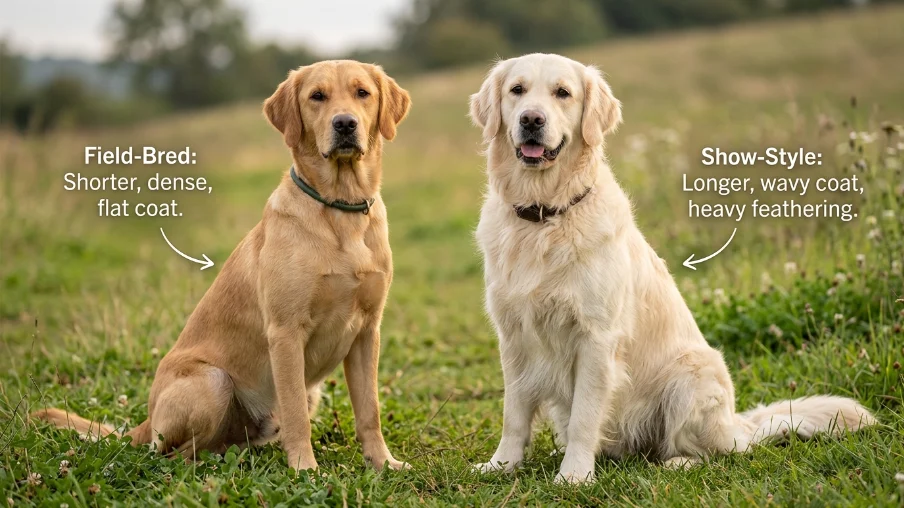
Not all Golden Retrievers have identical coats and coat type affects grooming workload meaningfully.
| Coat Type | Description | Shedding Level | Grooming Demand |
| Field / American (shorter) | Flatter, less feathering, shorter overall length | Heavy | Moderate |
| Show / English (longer, wavier) | Dense feathering on chest, legs, tail, and belly | Very heavy | High |
| English Cream (slightly different texture) | Slightly thicker undercoat in some lines | Heavy to very heavy | High |
Longer coats do not shed more hairs but the hairs are longer, mat more easily, and create more visible accumulation on furniture and clothing. Field-type Goldens are often slightly easier to maintain for owners who find grooming time a challenge.
When Do Golden Retrievers Shed the Most?
There are two distinct shedding periods every Golden owner needs to anticipate.
Spring Coat Blow (Heaviest)
Typically March through May in the Northern Hemisphere. The dog sheds its dense winter undercoat in preparation for warm weather. This is the most dramatic shedding period some Goldens will lose what looks like an entire second dog’s worth of fur over 3–6 weeks.
Fall Coat Blow (Secondary)
Typically September through November. The summer coat sheds to make way for the denser winter undercoat. Usually lighter than the spring blow but still significantly heavier than baseline shedding.
Baseline shedding (the rest of the year): A steady, moderate shedding that is always present. Surfaces will collect fur. Clothes will collect fur. Black pants are functionally banned from most Golden households.
Puppy coat transition (6–12 months): At some point between 6 and 12 months, Golden Retriever puppies shed their soft, fluffy puppy coat as the adult double coat grows in. Owners sometimes describe this as the worst shedding they experience and it can be alarming if unexpected. It is entirely normal and temporary.
Tools That Actually Work
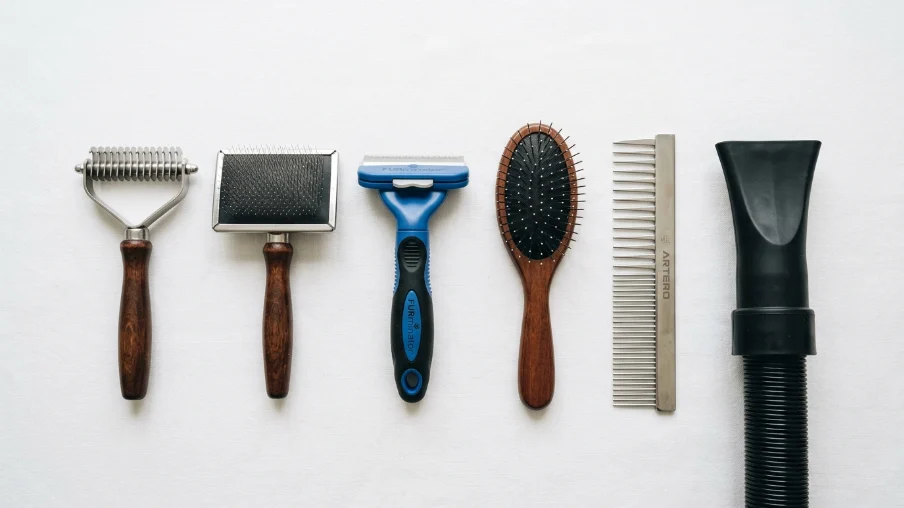
This is where experienced Golden owners know something that most general pet guides miss: not all grooming tools are equally effective, and using the wrong tool for the wrong coat layer wastes time without meaningfully reducing shedding.
Tool Recommendations by Purpose
| Tool | Purpose | Effectiveness |
| Undercoat rake | Removes loose undercoat before it falls | Excellent the most important tool |
| Slicker brush | Surface debris and loose outer coat | Very good for finishing |
| De-shedding tool (e.g., Furminator) | Deep undercoat removal during coat blows | Excellent for blowouts; use with caution (see note) |
| Pin brush | Detangling feathering and longer sections | Good for longer coats and post-bath |
| Wide-tooth comb | Final check for mats, especially in feathering | Essential; reveals what brushes miss |
| High-velocity dryer | Blows loose undercoat out before it falls | Dramatic time-saver; reduces brushing time by 50%+ |
| Rubber curry brush | Short massage-style brush for bathing | Good supplemental tool |
Important note on de-shedding tools: Tools like the Furminator are highly effective during active coat blows but should not be used aggressively year-round. Overuse can damage the outer guard coat by cutting rather than removing loose hairs. During peak shedding, 1–2 sessions per week is appropriate; during baseline shedding, stick to the undercoat rake and slicker brush.
The high-velocity dryer is underrated by most guides. Pet-quality blow dryers (not human hair dryers, which concentrate heat) used after bathing physically eject loose undercoat before it detaches on its own. Owners who invest in this tool consistently report it as the single biggest reduction in household fur accumulation.
Grooming Routine by Season
Baseline Routine (Year-Round)
| Task | Frequency |
| Full brush-out (undercoat rake + slicker) | 3–4 times per week |
| Wide-tooth comb check (feathering areas) | Weekly |
| Bath | Every 6–8 weeks or as needed |
| High-velocity blow-dry post-bath | Each bath |
| Nail trimming | Every 3–4 weeks |
| Ear cleaning | Monthly; check weekly |
| Teeth brushing | Daily ideally; 3x per week minimum |
During Coat Blows (Spring & Fall)
| Task | Frequency |
| Full brush-out | Daily |
| De-shedding tool session | 2–3 times per week |
| Bath with de-shedding shampoo | Every 2–3 weeks during peak blow |
| High-velocity dryer | Each bath |
Grooming tip most guides skip: Brush before bathing, not just after. Removing loose undercoat before the bath prevents it from matting when wet and dramatically speeds up drying time.
Step-by-Step Brushing Guide
Brushing a Golden Retriever correctly takes 15–20 minutes at baseline and up to 30–40 minutes during a coat blow. Rushing produces surface results without removing the undercoat that actually causes accumulation.
Correct brushing sequence:
- Start with the undercoat rake work in sections, going with the coat direction first, then slightly against it to lift undercoat
- Work from rear to front hind quarters, back, sides, chest, then neck and head
- Pay attention to friction points behind the ears, around the collar area, in the “armpits” (axillary area), and groin area mat fastest
- Switch to the slicker brush same sectional approach, removes what the rake loosened
- Finish with the wide-tooth comb run through all feathering (chest, legs, tail, belly); if it catches, there is a mat that needs attention
- Check ears, paw pads, and tail base these areas accumulate debris and mats that routine brushing misses
Never brush a dry, dirty coat aggressively. A light misting with water or a conditioning spray before brushing reduces static, prevents coat breakage, and makes the process more comfortable for the dog.
Bathing for Shedding Management
Regular bathing loosens dead undercoat and is one of the most underutilized tools in managing Golden Retriever shedding.
Bathing schedule:
- Baseline: every 6–8 weeks
- During coat blows: every 2–3 weeks
- After heavy outdoor activity: as needed
Shampoo selection matters:
| Shampoo Type | Best Use |
| De-shedding or deshedding formula | During coat blows; helps loosen dead undercoat |
| Moisturizing or Omega-enriched | Dry skin or coat-quality concerns |
| Hypoallergenic | Dogs with known skin sensitivities |
| Anti-itch or medicated | Only under veterinary direction |
Critical bathing steps for shedding control:
- Brush before the bath remove loose coat first
- Saturate the coat fully double coats repel water; use a hand shower attachment and work shampoo down to the skin
- Let shampoo sit for 2–3 minutes before rinsing
- Rinse thoroughly shampoo residue left in the undercoat causes itching, which triggers scratching and more shedding
- Use a high-velocity dryer point the nozzle down the coat to eject loose fur as the coat dries
- Final brush-out once fully dry
The combination of bath + high-velocity dry + post-bath brush is the most effective single grooming session for reducing shedding volume. Many owners schedule this every 2–3 weeks during peak periods and report a dramatic reduction in household fur.
Diet and Nutrition for Coat Health
Diet has a real, documented effect on coat quality and shedding volume in dogs. It does not prevent normal shedding, but poor nutrition consistently produces more shedding, duller coat, and worse skin condition.
Key nutritional factors:
Omega-3 Fatty Acids
The most evidence-supported dietary supplement for coat quality in dogs. Omega-3s specifically EPA and DHA reduce skin inflammation, improve coat luster, and decrease excess shedding associated with dry or inflamed skin.
- Best sources: Fish oil (salmon, sardine, or anchovy oil), DHA-enriched kibble
- Dosage: Consult your veterinarian for weight-appropriate dosing; general guideline is approximately 20mg EPA+DHA per pound of body weight daily
- Timeline: Allow 8–12 weeks of consistent supplementation before evaluating results coat changes are slow
Protein Quality
Coat is composed primarily of keratin protein. Dogs fed low-protein or poor-quality protein diets have demonstrably poorer coat condition. Look for named protein sources (chicken, salmon, beef) as the first ingredient not “meat meal” or unnamed protein sources.
Hydration
Chronically underhydrated dogs shed more and have drier, more brittle coats. Ensure fresh water is always available; some dogs do better with a water fountain that encourages drinking.
What does not work:
| Claim | Reality |
| “Anti-shedding” dog foods | No food stops normal shedding; quality food reduces excess shedding only |
| Biotin alone reduces shedding | Limited evidence in dogs without biotin deficiency |
| Coconut oil applied topically | Anecdotal; no strong clinical evidence for shedding reduction |
| Shaving the coat | Harmful to the double coat; disrupts coat regrowth and insulation (see below) |
Does Shaving a Golden Retriever Reduce Shedding?
This is one of the most persistent myths in Golden Retriever ownership. The short answer is no and it causes harm.
Why shaving a double-coated dog is a mistake:
The double coat functions as a two-way thermal regulator: it insulates against cold in winter and critically protects against heat in summer by trapping cool air close to the skin. Shaving removes this system entirely.
More importantly, in many double-coated dogs, the outer guard coat and undercoat do not grow back at the same rate or to the same quality after shaving. This is called “post-clipping alopecia” or coat funk a condition where the coat grows back patchy, with altered texture, or fails to grow back normally at all. It is documented in Golden Retrievers and other double-coated breeds.
Does shaving reduce shedding? Temporarily, the individual hairs that fall are shorter. But the volume of shedding does not decrease and the dog loses its natural protection against UV radiation, heat, insects, and cold.
The correct approach to summer heat is providing shade, cool surfaces, access to water, and managing exercise timing not removing the coat.
Managing Shedding in Your Home
Even with a perfect grooming routine, Golden Retrievers will deposit fur throughout your home. The goal is management, not elimination.
High-impact home strategies:
Furniture and Flooring
- Use washable furniture covers or designated dog blankets on sofas and beds removes and washes in one step
- Microfiber furniture tends to attract and hold fur more than leather or tight-weave fabrics
- Hardwood and tile floors show fur more but are far easier to clean than carpets during coat blows
- Area rugs should be shaken or vacuumed daily during peak shedding
Vacuuming
- Invest in a vacuum specifically designed for pet hair standard vacuums struggle with fine Golden fur embedded in carpet
- Vacuum daily during coat blows; every 2–3 days at baseline
- Rubber-bladed squeegees remove embedded fur from carpet more effectively than most vacuum attachments
Air Quality
- HEPA air purifiers meaningfully reduce airborne dander and fine fur particles relevant for households with mild dog allergies
- Replace HVAC filters more frequently during peak shedding seasons
Clothing
- A lint roller is non-negotiable Golden Retriever ownership equipment
- Dark clothing, velvet, and corduroy attract and hold Golden fur most visibly
- Many experienced Golden owners simply accept fur as a clothing accessory and stock their cars with lint rollers
When Shedding Becomes a Health Problem
Normal Golden Retriever shedding follows predictable seasonal patterns and produces an even coat with no bald patches, healthy skin underneath, and a dog that shows no signs of discomfort.
Abnormal shedding looks different and experienced owners learn to distinguish the two.
Seek veterinary evaluation when you observe:
| Warning Sign | Possible Cause |
| Bald patches or thinning in non-shedding season | Mange, ringworm, bacterial skin infection, hormonal disease |
| Excessive shedding with visible skin irritation or redness | Allergies (environmental or food), contact dermatitis |
| Symmetrical hair loss on flanks or tail base | Hypothyroidism, Cushing’s disease |
| Shedding with intense itching, biting, or scratching | Flea allergy dermatitis, environmental allergies, skin infection |
| Dull, brittle coat with increased shedding | Nutritional deficiency, EPI, internal parasite load |
| Sudden heavy shedding with behavioral changes | Acute stress, illness, pain, or systemic disease |
| Hair loss with skin thickening or darkening | Endocrine disorder |
Hypothyroidism is especially worth knowing about in Golden Retrievers. The breed is genetically predisposed to hypothyroidism, and one of the most consistent early signs is changes in coat quality increased shedding, dull coat, and poor regrowth after normal hair loss. If your Golden’s coat quality changes noticeably without a clear seasonal explanation, thyroid testing is a reasonable first step.
Puppy Coat Transition What New Owners Need to Know
Golden Retriever puppies are born with soft, fluffy single-layer coats that are not representative of their adult double coat. Between approximately 6 and 12 months of age, this puppy coat sheds out and is replaced by the adult double coat.
What this looks like:
- The puppy coat loosens and clumps begin coming out in brushing
- The coat may temporarily look uneven, patchy, or duller during the transition
- The undercoat grows in first, making the puppy look fluffier before the outer coat comes in
- The process typically completes by 18 months, with full adult coat present
What owners often get wrong: Many new Golden owners experience the puppy coat transition and panic, thinking their puppy is sick or shedding abnormally. This is normal and temporary. The volume can be surprising, but the skin underneath should look healthy, and the puppy should show no signs of itching, irritation, or distress.
The puppy coat transition is an excellent time to establish a grooming routine the puppy learns to tolerate and eventually enjoy brushing during a period when the stakes are lower than adult coat management.
Golden Retriever Shedding vs. Other Breeds
Prospective owners often ask how Golden Retriever shedding compares to other popular breeds.
| Breed | Shedding Level | Coat Type | Comparable to Golden? |
| Golden Retriever | Very Heavy | Double coat, medium-long | |
| Labrador Retriever | Heavy | Double coat, short | Less volume per session; more difficult to collect |
| German Shepherd | Very Heavy | Double coat, medium | Comparable; similar seasonal patterns |
| Border Collie | Heavy | Double coat, medium | Slightly less than Golden |
| Bernese Mountain Dog | Very Heavy | Double coat, long | Comparable; longer hairs more visible |
| Poodle | Minimal | Single coat, curly | Near-hypoallergenic; dramatically less shedding |
| Dachshund (smooth) | Light | Single coat, short | Minimal |
| Siberian Husky | Extreme | Double coat, dense | Heavier than Golden during coat blows |
The real issue for allergy sufferers is not just fur volume it is dander (shed skin cells), which Golden Retrievers produce regardless of coat length. There is no truly hypoallergenic dog, but Golden Retrievers are among the less suitable choices for households with significant dog allergies.
Common Owner Mistakes in Managing Shedding
1. Brushing only when fur becomes visible on furniture Reactive brushing allows undercoat to accumulate, mat, and detach in clumps. Consistent brushing 3–4 times per week prevents the backlog that makes coat blows feel unmanageable.
2. Skipping the undercoat Surface brushing with a slicker brush looks effective but does not reach the undercoat layer that drives most shedding. An undercoat rake used first makes every subsequent grooming step more effective.
3. Bathing without a high-velocity dryer Towel drying or air drying a Golden after a bath leaves loosened undercoat trapped in the coat where it detaches gradually over the next several days. Blow-drying ejects that fur immediately and dramatically reduces post-bath shedding in the home.
4. Shaving the dog to “solve” shedding As discussed does not work, is potentially harmful, and creates coat regrowth problems in some dogs.
5. Inconsistent diet and hydration Switching foods frequently, feeding low-quality food, or allowing chronic dehydration consistently produces worse coat condition and more shedding than the baseline for the breed.
6. Ignoring feathering areas The long feathering on a Golden’s chest, legs, belly, and tail catches and holds loose fur from the rest of the coat. These areas need comb attention at every grooming session, not just occasional attention.
7. Over-bathing without conditioning Bathing more than every 2–3 weeks without a moisturizing conditioner strips natural oils from the coat, causes dry skin, and actually increases shedding by creating skin irritation.
Insights Most Articles Miss
The light cycle matters more than temperature Many owners move to air-conditioned homes and expect their Golden’s coat blow to shift or diminish. It does not because the trigger is photoperiod (day length), not heat. Even an indoor dog receives enough light cues through windows to maintain the seasonal coat cycle.
Two-brush households are not optional for heavy coat types Owners with longer-coated or show-type Goldens who use only one brush type consistently leave work undone. The combination of undercoat rake for depth, slicker for surface, and wide-tooth comb for feathering is not overcomplicated it is efficient. Each tool serves a layer of the coat the others do not reach.
Grooming table investment for large dogs Grooming a 65-pound Golden on the floor is physically demanding and inconsistent. A grooming table at a comfortable working height produces more thorough, faster grooming sessions, reduces handler fatigue, and critically teaches the dog that grooming has a defined beginning and end rather than being an unpredictable floor-level event. Many experienced Golden owners consider this one of the best investments they made.
Shedding changes significantly after spay/neuter Spayed female Goldens often develop a denser, woollier undercoat called a “spay coat” the result of altered hormone levels. This coat type felts more easily than the normal double coat and requires more frequent grooming. Neutered males can experience similar changes, though typically less pronounced. If your Golden’s coat texture changes noticeably after surgery, adjust your grooming routine accordingly.
Price Guide: Grooming Costs and Tool Investment
Initial grooming tool investment:
| Tool | Estimated Cost (USD) |
| Quality undercoat rake | $15–$35 |
| Slicker brush (large) | $15–$30 |
| De-shedding tool (Furminator or similar) | $30–$60 |
| Wide-tooth metal comb | $10–$20 |
| Pin brush (for longer coats) | $15–$30 |
| High-velocity pet dryer | $60–$200 |
| Grooming table (optional but recommended) | $80–$200 |
| Total Initial Investment | $225–$575 |
Professional grooming costs:
| Service | Typical Cost |
| Full groom (bath, dry, brush-out, nail trim) | $60–$120 |
| De-shedding treatment (extended blow-out) | $80–$150 |
| Frequency during coat blows | Every 3–4 weeks recommended |
| Frequency at baseline | Every 6–8 weeks |
| Estimated Annual Grooming Cost | $400–$900 (professional) |
Many Golden owners choose a hybrid approach: professional de-shedding treatments during coat blows (2–3 times per year) combined with consistent at-home maintenance between appointments.
Lifestyle Compatibility and Shedding Expectations
| Household Factor | Shedding Impact | Recommendation |
| Dark furniture and flooring | Fur highly visible | Washable covers; light-colored rugs |
| Light or white furniture | Fur less visible but still present | Regular vacuum schedule |
| Carpet-heavy home | Fur embeds deeply | High-suction pet vacuum; rubber squeegee |
| Allergy-sensitive household member | High-dander breed | Consider alternative breed; consult allergist first |
| Multiple Goldens | Shedding multiplies proportionally | Daily grooming routine essential |
| Outdoor/active lifestyle | More dirt carried in on coat | More frequent bathing; mud room or entry mat |
| Rental property | Fur accumulates in baseboards and vents | Deep clean schedule; HEPA filter investment |
| Children in household | Fur on clothes and surfaces constant | Lint rollers in every room; washable everything |
Preparation Checklist for New Golden Owners
Grooming toolkit:
- [ ] Undercoat rake
- [ ] Large slicker brush
- [ ] Wide-tooth metal comb
- [ ] De-shedding tool (Furminator or comparable)
- [ ] High-velocity pet dryer (strongly recommended)
- [ ] De-shedding or moisturizing dog shampoo
- [ ] Dog conditioner
- [ ] Conditioning or detangling spray for between-brush sessions
Home management:
- [ ] Pet-hair vacuum (test suction on carpet before purchase)
- [ ] HEPA air purifier for primary living area
- [ ] Washable furniture covers for sofas and chairs
- [ ] Lint rollers multiple; keep in car, bedroom, and entryway
- [ ] Dedicated dog towels for post-bath and wet-weather drying
Health monitoring:
- [ ] Baseline veterinary exam establishing normal coat and skin condition
- [ ] Omega-3 fish oil supplement (discuss dosing with vet)
- [ ] Calendar markers for expected coat blow periods
- [ ] Awareness of warning signs that distinguish normal from abnormal shedding
FAQs
Q: Is Golden Retriever shedding really as bad as people say? Yes and sometimes worse during seasonal coat blows. Golden Retrievers consistently rank among the heaviest-shedding popular breeds. Owners who research the breed honestly before purchasing adjust more easily than those who expect it to be manageable without significant effort.
Q: At what age do Golden Retrievers start shedding heavily? The puppy coat transition between 6–12 months is often the first heavy shedding experience. Adult seasonal coat blows begin once the adult double coat is fully established, typically around 12–18 months of age.
Q: Can I reduce Golden Retriever shedding with diet changes? Diet affects coat quality and can reduce excess shedding caused by poor nutrition or skin inflammation. Omega-3 fatty acid supplementation has the strongest evidence. However, normal seasonal shedding cannot be eliminated by any dietary change only supported.
Q: How often should I brush my Golden Retriever? A minimum of 3–4 times per week at baseline is necessary to prevent undercoat accumulation and matting. During seasonal coat blows, daily brushing is needed and even then will not fully keep pace with the volume of shedding without additional bathing and blow-drying.
Q: Does bathing more often make shedding worse? Frequent bathing without conditioning can strip coat oils, causing dry skin and increased shedding. Bathing every 2–3 weeks with a quality shampoo and conditioner, followed by high-velocity drying, actually reduces household shedding accumulation rather than increasing it.
Q: Should I shave my Golden Retriever in summer to reduce shedding? No. Shaving a double-coated breed removes the coat’s natural insulation and UV protection, does not meaningfully reduce shedding volume, and can permanently alter coat texture in some dogs. Managing the coat with regular brushing and bathing is both safer and more effective.
Q: Why does my Golden shed more after baths? The bath loosens dead undercoat that was not yet fully detached. If the coat is not blow-dried with a high-velocity dryer, this loosened fur sheds into the home over the following days. Using a high-velocity dryer immediately after bathing ejects most of this fur during the grooming session rather than in your living room.
Q: Are Golden Retrievers bad for people with dog allergies? Generally yes. Golden Retrievers are high-dander dogs, and it is the dander (dried skin cells on the fur) rather than the fur itself that triggers most dog allergies. No amount of grooming eliminates dander production. Allergy-sensitive households should consult an allergist before committing to this breed.
Q: My Golden has a bald patch is this normal shedding? No. Bald patches, thinning in a specific location, or areas of visible skin are not part of normal shedding patterns. These warrant a veterinary evaluation to rule out ringworm, mange, bacterial infection, hypothyroidism, or other skin and endocrine conditions.
Q: Do English Cream Golden Retrievers shed less than American Goldens? No. Both varieties carry the same double-coat genetics and shed comparably. Some English Cream lines have slightly different coat textures but are not meaningfully lighter shedders. Marketing claims suggesting English Creams are “lower shedding” are not supported by breed genetics.
Conclusion
Golden Retriever shedding is not a problem with a solution. It is a permanent feature of the breed one rooted in the same genetics that makes these dogs exceptional water retrievers, reliable workers, and endlessly warm companions.
What it is not is unmanageable. The owners who struggle most with Golden shedding are those who approach it reactively cleaning up after the fact rather than establishing a consistent grooming routine that prevents accumulation in the first place.
The undercoat rake, slicker brush, high-velocity dryer, and a twice-yearly bathing schedule during coat blows will do more for your home’s cleanliness than any miracle supplement, anti-shedding food, or grooming shortcut being marketed online.
Invest in the right tools. Learn to use them correctly. Build the routine before you need it. And keep a lint roller in every room.
Goldens give back everything you put in in loyalty, in warmth, in working partnership. The fur is simply part of the deal.