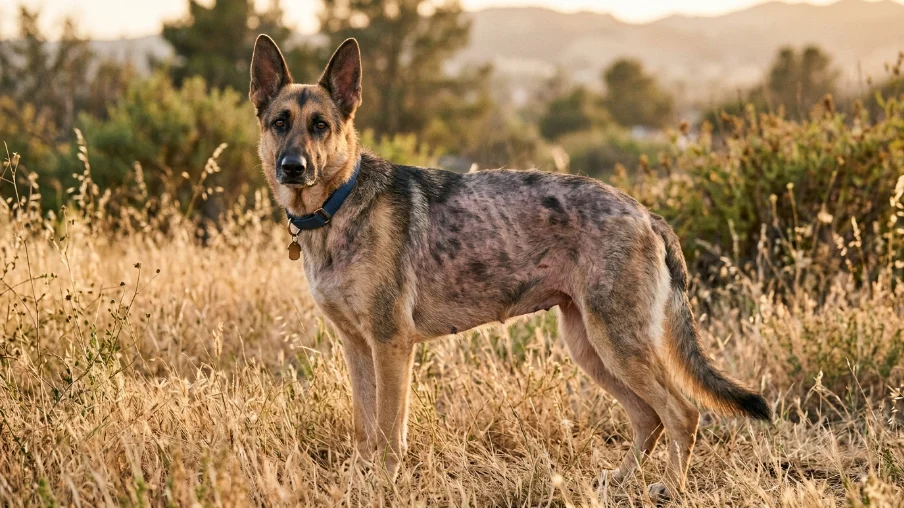
A Hairless German Shepherd is an extremely rare German Shepherd affected by genetic hair loss or severe coat abnormalities rather than a naturally hairless breed type. While their unusual appearance attracts attention online, experienced breeders and veterinarians often associate hairlessness with underlying health or genetic concerns.
The real issue is usually skin protection, immune health, and responsible breeding practices rather than appearance alone.
Quick Snapshot Table
| Category | Key Details |
|---|---|
| Breed Type | German Shepherd with hair loss condition |
| Natural Breed? | No |
| Common Name | Hairless German Shepherd |
| Breed Classification | Medical or genetic condition, not a recognized breed |
| Main Causes | Genetics, endocrine disorders, skin disease |
| Possible Medical Triggers | Alopecia, pituitary dwarfism, autoimmune disease, severe allergies |
| Coat Condition | Sparse or missing fur |
| Hair Loss Pattern | Partial thinning or near-total baldness |
| Rarity | Extremely rare |
| Recognition Status | Not recognized as a separate breed variation |
| Skin Sensitivity | Very high |
| Sun Exposure Risk | Serious |
| Temperature Tolerance | Reduced |
| Cold Weather Tolerance | Poor without protection |
| Heat Sensitivity | High risk of sunburn and overheating |
| Skin Texture | Dry, irritated, flaky, or hyperpigmented in some cases |
| Common Skin Problems | Infections, irritation, dermatitis, cracking |
| Allergy Risk | Often elevated |
| Immune Sensitivity | Can be higher than average |
| Grooming Needs | Specialized skin care |
| Bathing Requirements | Gentle medicated or moisturizing routines often needed |
| Moisturizing Needs | Frequent skin hydration may be necessary |
| Protective Clothing Needs | Often requires coats or UV-protective clothing |
| Health Concern Level | Moderate to high |
| Veterinary Monitoring | Regular dermatology care recommended |
| Temperament | Typically similar to standard German Shepherds |
| Intelligence Level | Very high |
| Trainability | Excellent |
| Energy Level | Moderate to high depending on health |
| Protective Instinct | Usually retained |
| Family Friendly | Possible with experienced care |
| Good With Children | Usually yes if socialized |
| Good for First-Time Owners? | Usually not ideal |
| Exercise Needs | Moderate but weather-dependent |
| Outdoor Limitations | Extreme weather exposure should be limited |
| Diet Needs | High-quality skin-supportive nutrition |
| Supplement Needs | Omega fatty acids commonly recommended by veterinarians |
| Lifespan | Highly dependent on underlying condition |
| Common Associated Disorders | Hormonal imbalance, thyroid disease, alopecia syndromes |
| Genetic Risk Level | Potentially significant depending on cause |
| Average Price (2026) | $500–$3,000+ depending on medical condition and lineage |
| Annual Medical Costs | Often significantly higher than standard German Shepherds |
| Breeding Recommendation | Dogs with inherited hair-loss disorders should not be bred |
| Ethical Concern | Significant |
| Animal Welfare Concern | Intentional breeding for hairlessness raises serious ethical questions |
| Veterinary Insight | Hair loss is usually a symptom, not a desirable trait |
| Behavior Expert Insight | Stable temperament depends on breeding quality and socialization, not coat condition |
| Public Misconception | Not a naturally hairless dog breed like Xoloitzcuintli |
| Care Difficulty | High-maintenance compared to standard German Shepherds |
| Average Medical Costs | Often higher due to dermatology and hormone management |
| Best Home Type | Experienced owners prepared for ongoing medical and skin care |
Why Hairless German Shepherds Go Viral Online
Hairless German Shepherds often attract massive attention because they look unusual and almost surreal compared to standard shepherds.
Some appear:
- partially bald
- thin coated
- patchy haired
- almost completely hairless
Their appearance creates curiosity very quickly online.
Here is where most people get it wrong.
A Hairless German Shepherd is not a naturally established hairless breed like the Xoloitzcuintli or Chinese Crested Dog.
In most cases, hairlessness in German Shepherds is linked to:
- genetic abnormalities
- endocrine disorders
- severe skin disease
- autoimmune conditions
- inherited coat defects
Experienced breeders do not intentionally aim to produce hairless shepherds.
What Is a Hairless German Shepherd?
A Hairless German Shepherd is usually a German Shepherd Dog affected by severe hair loss or abnormal coat development.
The condition may appear:
- at birth
- during puppy development
- later in adulthood
Hair loss can range from:
- thin coat patches
- sparse undercoat
- complete baldness in some areas
The condition itself is not considered a recognized coat variety within the breed.
Understanding the Possible Causes
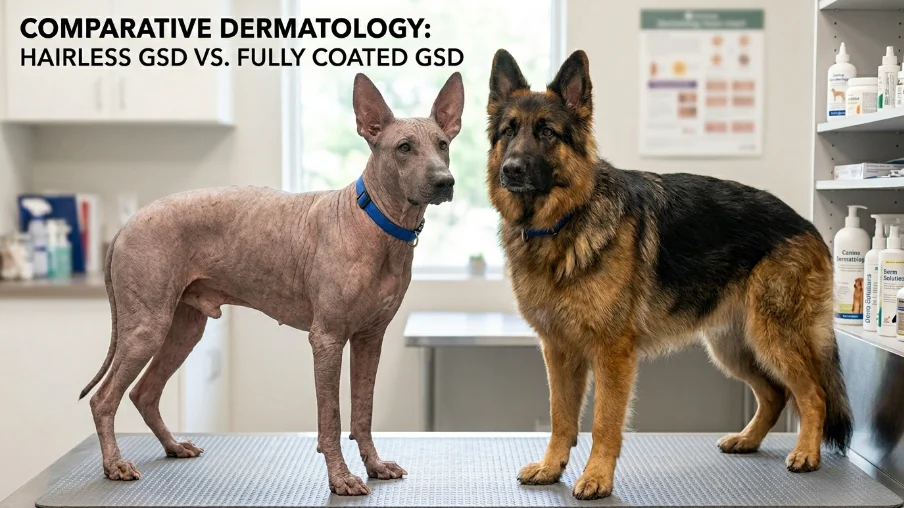
Genetic Coat Defects
Some hairless German Shepherds inherit abnormal genes affecting:
- hair follicle development
- coat growth
- skin function
These defects may appear even if parent dogs look relatively normal.
Hormonal Disorders
Hair loss is commonly linked to endocrine problems such as:
- thyroid disease
- growth hormone deficiency
- adrenal disorders
Autoimmune Skin Conditions
Some dogs develop immune related disorders that damage:
- hair follicles
- skin tissue
- coat quality
This can lead to progressive hair loss over time.
Common Symptoms and Appearance Changes
Visible Physical Signs
Hairless German Shepherds may develop:
- bald patches
- flaky skin
- excessive dryness
- darkened skin areas
- sparse fur growth
- irritated skin folds
Some retain small amounts of fur around:
- the face
- legs
- tail
- ears
Skin Problems Often Become the Biggest Challenge
The skin becomes vulnerable to:
- sunburn
- bacterial infections
- irritation
- environmental allergens
This is why skin management becomes a daily responsibility for owners.
Puppy Development Timeline
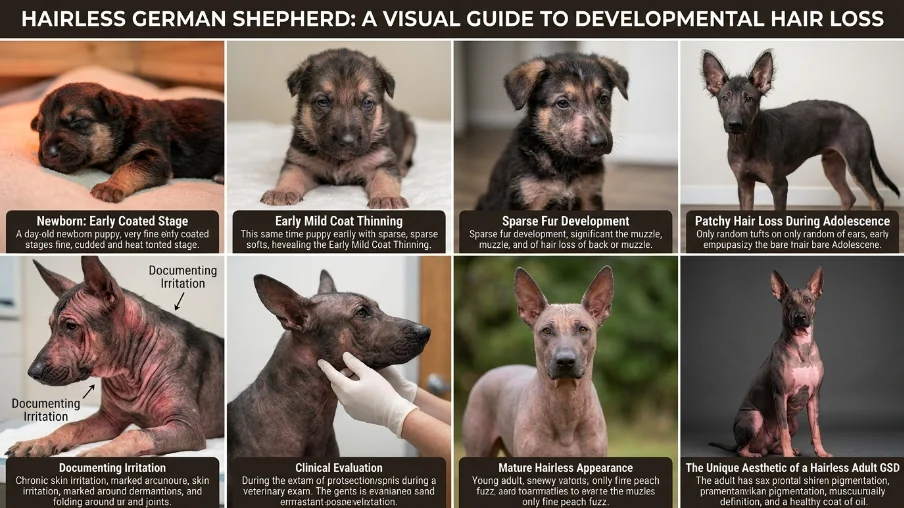
Most Hairless German Shepherd puppies are not fully hairless at birth. The condition often becomes noticeable gradually as coat development fails to progress normally.
Growth Timeline Table
| Age | Normal German Shepherd Development | Hairless Related Changes |
|---|---|---|
| Birth to 4 Weeks | Thick puppy coat develops evenly | Mild thinning may appear |
| 5 to 8 Weeks | Dense fur growth continues | Sparse coat areas become visible |
| 2 to 3 Months | Adult pigmentation strengthens | Patchy hair loss may begin |
| 3 to 5 Months | Undercoat thickens rapidly | Fur becomes thin or uneven |
| 5 to 8 Months | Adult coat transition starts | Significant bald areas may develop |
| 8 to 12 Months | Coat matures and stabilizes | Chronic skin irritation often appears |
| 1 to 2 Years | Full adult coat develops | Permanent hair loss patterns become established |
The Stage Where Owners Usually Notice the Problem
Most owners become concerned between:
- 3 and 6 months of age
This is when healthy German Shepherd puppies typically begin developing:
- dense undercoats
- stronger guard hairs
- adult coat texture
Affected puppies often remain:
- thin coated
- patchy haired
- excessively soft coated
The contrast becomes increasingly obvious beside healthy littermates.
Why Early Veterinary Evaluation Matters
Persistent coat abnormalities should never be ignored.
Veterinarians may evaluate:
- hormone levels
- skin health
- genetic conditions
- autoimmune disease
Early diagnosis can help reduce:
- skin infections
- chronic irritation
- long term discomfort
Temperament and Behavior
Hairlessness itself does not directly change temperament.
Most Hairless German Shepherds still display:
- intelligence
- loyalty
- alert behavior
- strong owner attachment
However, chronic discomfort from skin problems may influence:
- confidence
- stress tolerance
- social comfort
Dogs experiencing irritation or pain can become:
- more reactive
- physically sensitive
- less tolerant of environmental stress
Skin Care Requirements
Daily Protection Is Essential
Hairless or partially hairless German Shepherds often require:
- moisturizing skin care
- sun protection
- temperature management
- gentle bathing routines
Sun Exposure Risks
Without fur protection, exposed skin can burn quickly.
This becomes especially dangerous during:
- hot summer weather
- extended outdoor activity
- intense UV exposure
Cold Weather Challenges
German Shepherds are naturally designed for weather resistance.
Hairless dogs lose much of that protection and may struggle with:
- cold temperatures
- wind exposure
- reduced insulation
Health Risks Owners Should Understand
Common Health Concerns
| Condition | Risk Level |
|---|---|
| Skin infections | High |
| Allergies | High |
| Sun damage | Serious |
| Chronic irritation | Common |
| Hormonal disorders | Moderate |
| Autoimmune disease | Possible |
The Real Concern Is Internal Health
Hair loss is often a visible symptom rather than the root problem.
Experienced veterinarians focus on:
- underlying disease
- endocrine function
- immune health
- long term skin integrity
The Ethical Debate Around Hairless Shepherds
Some social media pages promote Hairless German Shepherds as:
- exotic
- rare
- designer dogs
This creates major ethical concerns.
Experienced breeders prioritize:
- stable genetics
- healthy coat development
- strong immune systems
- structural soundness
Not unusual appearance.
Important Reality
Intentional breeding for severe coat defects is widely considered irresponsible within ethical German Shepherd breeding circles.
Common Mistakes Owners Make
Mistake 1: Treating the Condition as Cosmetic Only
Hairlessness often reflects deeper medical problems.
Mistake 2: Ignoring Skin Protection
Exposed skin requires constant monitoring.
Mistake 3: Buying From Viral Social Media Sellers
Some unethical breeders market:
- “rare hairless shepherds”
- “designer bald German Shepherds”
- “exotic naked shepherds”
These are major warning signs.
Buyer Warning Section
Red Flags When Evaluating Breeders
Be cautious if a breeder:
- intentionally breeds for hairlessness
- avoids discussing skin health
- lacks veterinary records
- markets coat defects as luxury traits
- refuses genetic testing information
What Ethical Breeders Focus On
Responsible breeders prioritize:
- coat health
- genetic stability
- temperament
- long term structural quality
Appearance alone tells you very little about overall canine health.
Insights Most Articles Miss
Hairlessness Is Usually a Symptom
Many articles treat hairlessness like a rare color variation.
In reality, it often signals:
- endocrine dysfunction
- genetic abnormalities
- chronic skin disease
Skin Care Can Become Expensive
Long term veterinary dermatology care may involve:
- medicated shampoos
- skin testing
- supplements
- ongoing treatment plans
Environmental Management Matters Daily
Simple environmental exposure can become stressful for affected dogs.
Temperature control often becomes part of normal ownership.
Daily Care Guide
Indoor Living Becomes More Important
Most Hairless German Shepherds do better with:
- climate controlled environments
- soft bedding
- reduced sun exposure
Nutrition Support
Veterinarians may recommend diets supporting:
- skin barrier health
- immune function
- omega fatty acid intake
Grooming Routine
Skin care often includes:
- gentle cleansing
- moisturizing support
- infection monitoring
Lifestyle Compatibility
| Lifestyle | Suitable? |
|---|---|
| Experienced dog owner | Best fit |
| Outdoor working home | Difficult |
| Extreme climate region | Challenging |
| Veterinary committed owner | Recommended |
| First time owner | Often difficult |
| High maintenance tolerant owner | Necessary |
Preparation Checklist
You May Be Ready If:
- you understand chronic skin management
- you can afford veterinary dermatology care
- you are comfortable with intensive maintenance
- you value health over appearance trends
You May Want Another Dog If:
- you want a low maintenance shepherd
- you live in extreme temperatures
- you prefer outdoor living dogs
- you cannot manage long term medical costs
Frequently Asked Questions
Are Hairless German Shepherds a real breed?
No. They are German Shepherds affected by coat loss or genetic skin related conditions.
Can a German Shepherd naturally be hairless?
Complete natural hairlessness is extremely uncommon and usually associated with abnormal genetics or medical conditions.
Are Hairless German Shepherds healthy?
Some can live stable lives with proper care, but many experience ongoing skin or hormonal issues.
Do Hairless German Shepherds need sunscreen?
Often yes. Exposed skin can burn easily during outdoor exposure.
Are Hairless German Shepherds hypoallergenic?
No. Hairlessness does not guarantee low allergen production.
Should Hairless German Shepherds be bred intentionally?
Most ethical breeders and veterinarians strongly discourage intentional breeding for severe coat defects.
Conclusion
Hairless German Shepherds attract attention because of their unusual appearance, but responsible ownership requires understanding the medical realities behind the condition.
The most important priorities are:
- skin protection
- veterinary care
- genetic responsibility
- long term health management
Experienced breeders focus on preserving healthy German Shepherds with stable temperaments, proper coat function, and strong overall structure. That matters far more than producing visually shocking dogs for internet attention alone.
You have not enough Humanizer words left. Upgrade your Surfer plan.