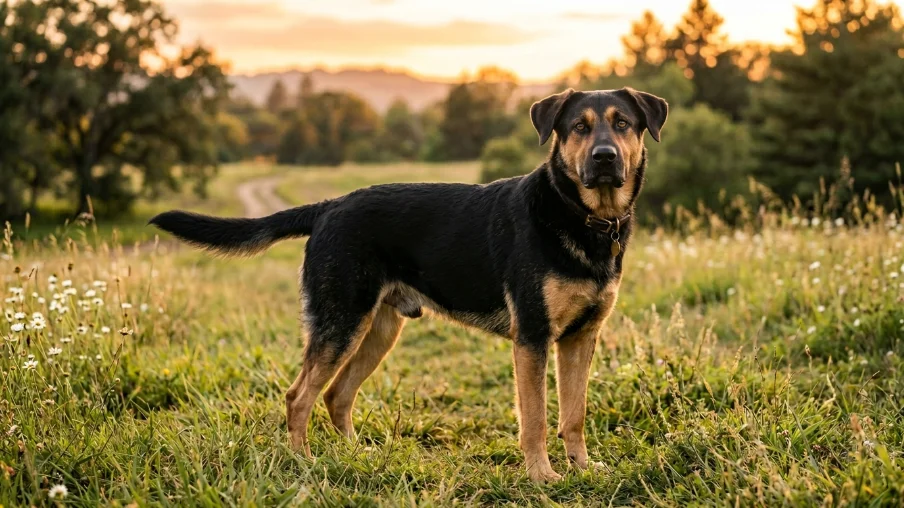
The German Shepherd Lab Mix, often called a Sheprador, is a large, intelligent hybrid that combines the trainability of the German Shepherd with the friendly nature of the Labrador Retriever. Most adults weigh between 50 and 90 pounds, require daily exercise, and thrive in active households. While they are often excellent family dogs, their energy level and mental stimulation needs are commonly underestimated.
Quick Facts
| Category | Details |
|---|---|
| Breed Type | German Shepherd and Labrador Retriever Mix |
| Common Name | Sheprador |
| Alternative Names | Lab Shepherd Mix, German Shepherd Lab Mix |
| Parent Breeds | German Shepherd Dog × Labrador Retriever |
| Breed Status | Hybrid / Designer Dog |
| Recognition Status | Not recognized as a purebred breed |
| Size | Large |
| Weight | 50–90 lbs |
| Height | 21–27 inches |
| Body Structure | Athletic, muscular, balanced |
| Coat Type | Dense double coat |
| Coat Length | Short to medium |
| Common Coat Colors | Black, black and tan, yellow, chocolate, sable, bi-color |
| Eye Color | Brown, amber, hazel |
| Lifespan | 10–14 years |
| Energy Level | High |
| Exercise Needs | 60–120+ minutes daily |
| Mental Stimulation Needs | High |
| Trainability | Excellent |
| Intelligence Level | Very high |
| Learning Speed | Fast learner with strong people focus |
| Temperament | Loyal, friendly, intelligent, eager to please |
| Family Friendly | Yes |
| Good With Children | Usually Excellent |
| Good With Other Dogs | Typically very good with proper socialization |
| Good With Other Pets | Usually manageable with early introductions |
| First-Time Owners | Possible with Commitment |
| Protective Instinct | Moderate to High |
| Watchdog Ability | Excellent |
| Guarding Ability | Moderate to High |
| Confidence Level | Generally confident and stable |
| Affection Level | High |
| Social Needs | High; thrives on family interaction |
| Apartment Friendly | Possible but not ideal |
| Yard Requirement | Benefits greatly from outdoor space |
| Separation Anxiety Risk | Moderate if left alone for long periods |
| Prey Drive | Moderate |
| Socialization Needs | Important during puppyhood |
| Barking Level | Moderate |
| Drooling Level | Low to moderate |
| Shedding | Moderate to Heavy |
| Seasonal Coat Blow | Heavy twice yearly |
| Grooming Needs | Moderate |
| Brushing Frequency | 2–4 times weekly |
| Working Ability | Excellent |
| Common Jobs | Service work, search and rescue, therapy work, scent detection, obedience sports |
| Sporting Potential | Excellent in agility, dock diving, tracking, and rally obedience |
| Climate Tolerance | Good adaptability to most climates |
| Heat Tolerance | Moderate with proper hydration |
| Cold Tolerance | Good due to double coat inheritance |
| Lifespan | 10–14 years |
| Common Health Issues | Hip dysplasia, elbow dysplasia, obesity, allergies, bloat, ear infections |
| Joint Health Risk | Moderate to high in poorly bred lines |
| Recommended Health Testing | Hip, elbow, eye, cardiac, and genetic screening of parent dogs |
| Diet Needs | High-quality protein-rich diet matched to activity level |
| Weight Management Importance | Critical to reduce joint stress and obesity risk |
| Average Puppy Price (2026) | $800–$3,500+ |
| Adoption Availability | Commonly available through rescues and shelters |
| Breeder Warning | Choose breeders who health-test both Labrador and German Shepherd parents |
| Ethical Concern | Avoid breeders focused solely on designer-dog demand rather than health and temperament |
| Veterinary Insight | Long-term health outcomes depend more on genetics and health screening than hybrid status alone |
| Behavior Expert Insight | Early training and socialization are major predictors of adult stability and reliability |
| Best For | Active families, outdoor enthusiasts, service-dog prospects, and owners seeking a loyal family companion |
| Expert Ownership Advice | The best Shepradors combine the Labrador’s friendliness with the German Shepherd’s intelligence and work ethic. Daily exercise, mental stimulation, and consistent training are essential for a well-balanced adult dog. |
Why So Many Families Choose a German Shepherd Lab Mix
Few mixed breeds have earned as much popularity as the German Shepherd Lab Mix.
The reason is simple.
This cross combines two of the most respected dog breeds in the world. German Shepherds are known for intelligence, loyalty, and working ability, while Labrador Retrievers are famous for their friendly personalities and adaptability.
When these traits come together successfully, the result is often a dog that is affectionate, trainable, athletic, and deeply devoted to its family.
However, here is where many people get it wrong.
They assume every Sheprador will have the perfect balance of both breeds.
The reality is that genetics do not work that way. One puppy may behave almost entirely like a Labrador, while another may strongly resemble a German Shepherd in personality, energy level, and protective instincts.
What Is a German Shepherd Lab Mix?
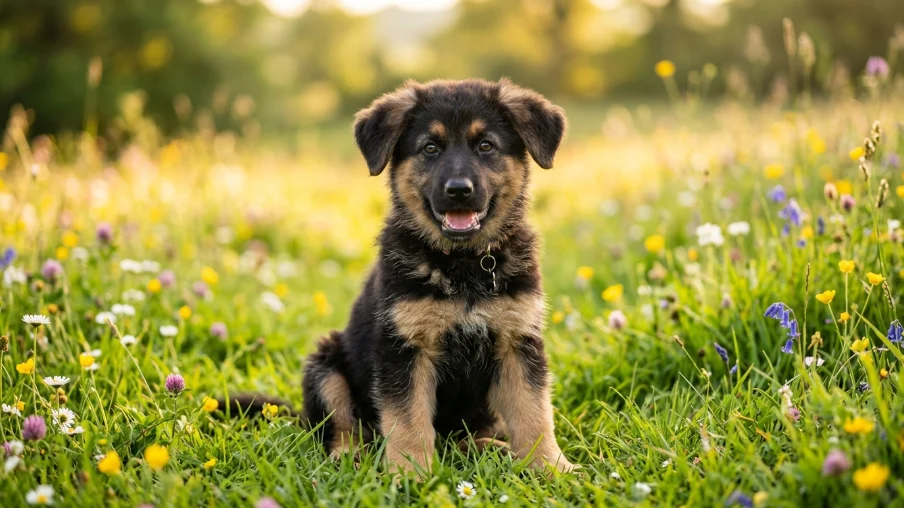
A German Shepherd Lab Mix is a hybrid dog produced by crossing a purebred German Shepherd with a purebred Labrador Retriever.
Because it is a mixed breed, there is no official breed standard.
This means appearance, temperament, coat color, and energy levels can vary significantly from one dog to another.
Most Shepradors inherit some combination of:
- Intelligence
- Loyalty
- Confidence
- Playfulness
- Trainability
- Strong family bonds
This combination is one reason the mix continues to grow in popularity among active households.
Appearance and Physical Characteristics
Size
German Shepherd Lab Mixes are large dogs.
Adult males typically stand between 23 and 27 inches tall and weigh between 60 and 90 pounds.
Females are usually slightly smaller, standing 21 to 25 inches tall and weighing 50 to 75 pounds.
Build
Most Shepradors inherit an athletic body structure.
Common physical traits include:
- Strong chest
- Muscular legs
- Deep rib cage
- Broad shoulders
- Balanced proportions
Coat Colors
The coat can vary widely depending on genetics.
Common colors include:
- Black
- Black and tan
- Yellow
- Chocolate
- Sable
- Silver
- Bi-color combinations
Some puppies strongly resemble German Shepherds, while others look more Labrador-like.
Temperament and Personality
Temperament is one of the strongest reasons people choose this mix.
Most German Shepherd Lab Mixes are:
- Loyal
- Affectionate
- Intelligent
- Energetic
- Family-oriented
These dogs generally enjoy being involved in family activities and often form deep bonds with their owners.
Protective Instincts
Many Shepradors inherit protective tendencies from the German Shepherd side.
This does not automatically mean aggression.
A well-socialized dog is typically:
- Confident
- Stable
- Friendly
- Observant
The real issue is proper socialization during puppyhood.
Without it, protective instincts can develop into fear-based reactivity.
Stranger Behavior
Some Shepradors welcome everyone immediately.
Others remain reserved until they feel comfortable.
Both behaviors can be normal depending on genetics.
Temperament Feature Image
Image Prompt
Realistic photography of a German Shepherd Lab Mix sitting beside its owner in a park, calm expression, attentive eye contact, natural lighting, family-friendly atmosphere, professional canine behavior photography.
Image Alt Text
German Shepherd Lab Mix sitting calmly beside its owner outdoors.
Puppy Development Timeline
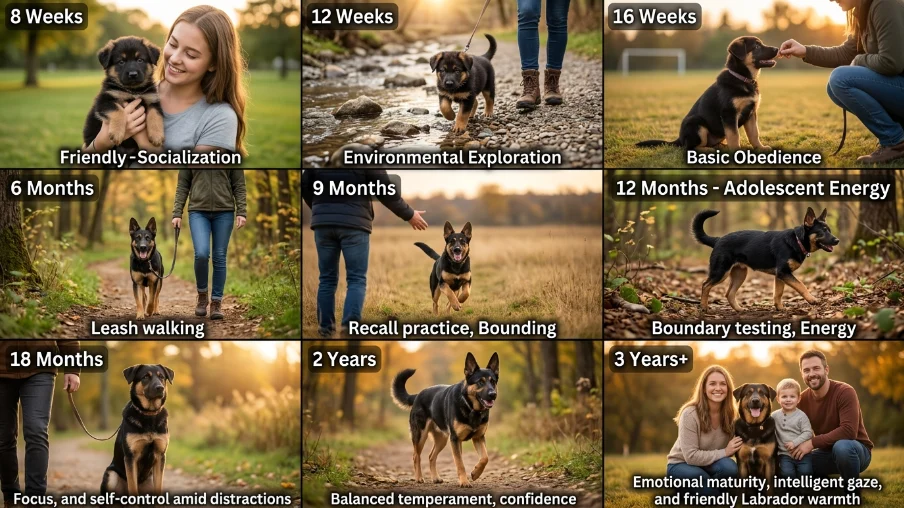
Most German Shepherd Lab Mix puppies develop rapidly during the first two years of life.
Growth Timeline
| Age | Development Stage |
|---|---|
| 8–12 Weeks | Socialization window begins |
| 3–6 Months | Confidence and curiosity increase |
| 6–12 Months | Adolescence and testing behaviors emerge |
| 12–18 Months | Improved focus and maturity |
| 18–24 Months | Adult temperament develops |
8–12 Weeks
This is one of the most important stages.
Puppies should experience:
- New environments
- Different surfaces
- Friendly people
- Positive experiences
Early socialization lays the foundation for adult confidence.
3–6 Months
Curiosity increases dramatically.
Many puppies begin showing stronger personality traits inherited from either parent breed.
Training should focus on:
- Basic obedience
- Recall
- Leash manners
- Confidence building
6–12 Months
This is often the most challenging stage.
Owners commonly notice:
- Increased energy
- Selective listening
- Boundary testing
- Excitement around distractions
Consistency becomes extremely important.
12–24 Months
Physical growth slows, but mental maturity continues developing.
Many owners are surprised to learn that true emotional maturity may not fully develop until two or three years of age.
Training and Intelligence
The German Shepherd Lab Mix is generally one of the easiest mixed breeds to train.
Both parent breeds rank among the most intelligent dogs in the world.
Most Shepradors excel in:
- Obedience
- Agility
- Service work
- Search and rescue
- Advanced trick training
Why They Learn So Quickly
They possess:
- Strong problem-solving ability
- High food motivation
- Desire to work with humans
- Excellent memory
However, intelligence alone is not enough.
Without consistent leadership, smart dogs often create their own entertainment.
That usually means chewing furniture, digging holes, or finding creative ways to cause trouble.
Best Training Methods
The most successful owners focus on:
- Positive reinforcement
- Consistency
- Structure
- Clear expectations
Training should continue throughout adulthood rather than ending after puppyhood.
Exercise Requirements
This is not a low-energy breed.
Most adult German Shepherd Lab Mixes require between 60 and 120 minutes of daily activity.
Physical Exercise
Popular activities include:
- Hiking
- Running
- Swimming
- Fetch
- Long walks
Mental Exercise
Mental stimulation is equally important.
Good options include:
- Puzzle toys
- Obedience training
- Scent games
- Interactive feeders
Here is what many people miss.
Mental exhaustion often tires these dogs faster than physical exercise alone.
Grooming and Shedding
Do German Shepherd Lab Mixes Shed?
Yes.
Both parent breeds possess double coats, which means shedding is almost guaranteed.
Owners should expect:
- Year-round shedding
- Seasonal coat blowouts
- Regular brushing requirements
Grooming Schedule
Weekly maintenance usually includes:
- Brushing
- Ear cleaning
- Nail trimming
- Dental care
Frequent brushing helps reduce loose fur throughout the home.
Health and Genetics
Like all dogs, Shepradors can inherit health conditions from either parent breed.
Common Health Concerns
| Condition | Risk Level |
|---|---|
| Hip Dysplasia | Moderate to High |
| Elbow Dysplasia | Moderate |
| Obesity | Common |
| Bloat | Serious |
| Allergies | Moderate |
| Arthritis | Possible |
Lifespan
Most German Shepherd Lab Mixes live between 10 and 14 years.
Good breeding practices, nutrition, exercise, and preventive veterinary care play a major role in longevity.
German Shepherd Lab Mix Cost
Puppy Price
The price of a German Shepherd Lab Mix puppy varies significantly.
Typical ranges include:
- $300–$1,500 from breeders
- Lower adoption fees through shelters
First-Year Costs
| Expense | Estimated Cost |
|---|---|
| Puppy Purchase | $300–$1,500 |
| Vaccinations | $100–$300 |
| Crate | $50–$200 |
| Supplies | $100–$400 |
Annual Costs
| Expense | Estimated Cost |
|---|---|
| Food | $500–$1,000 |
| Veterinary Care | $300–$1,200 |
| Grooming | $100–$500 |
German Shepherd Lab Mix Pros and Cons
| Pros | Cons |
|---|---|
| Highly Intelligent | Heavy Shedding |
| Loyal Family Companion | High Exercise Needs |
| Easy To Train | Can Become Destructive When Bored |
| Good With Children | Large Size |
| Versatile Working Ability | Requires Consistent Training |
German Shepherd Lab Mix vs German Shepherd
| Trait | Sheprador | German Shepherd |
|---|---|---|
| Friendliness | Higher | Moderate |
| Protection | Moderate | High |
| Trainability | Excellent | Excellent |
| Family Focus | High | High |
| Stranger Acceptance | Usually Better | More Reserved |
German Shepherd Lab Mix vs Labrador Retriever
| Trait | Sheprador | Labrador |
|---|---|---|
| Protection | Higher | Lower |
| Friendliness | High | Very High |
| Energy | High | High |
| Trainability | Excellent | Excellent |
| Guarding Ability | Moderate | Low |
Are They Good With Children?
Most Shepradors are excellent family dogs.
They are often:
- Patient
- Playful
- Affectionate
However, supervision is always recommended around young children due to the dog’s size and enthusiasm.
Are They Good With Other Dogs?
Generally yes.
Proper socialization greatly improves compatibility with other dogs.
Many Shepradors enjoy canine companionship and thrive in multi-dog households.
Are They Good With Cats?
Results vary.
Dogs introduced to cats during puppyhood often adapt well.
Strong prey drive inherited from some German Shepherd bloodlines may create challenges in certain individuals.
Common Mistakes Owners Make
Underestimating Exercise Needs
This is probably the most common mistake.
These dogs need far more than a short walk around the block.
Ignoring Mental Stimulation
Physical activity alone is rarely enough.
Mental enrichment is equally important.
Inconsistent Rules
Allowing behaviors one day and correcting them the next creates confusion.
Consistency produces better long-term results.
Insights Most Articles Miss
Mental Maturity Takes Time
Many Shepradors look fully grown by one year of age.
Mentally, however, they may still behave like adolescents.
Food Motivation Can Be Strong
The Labrador influence often creates a powerful interest in food.
This helps training but increases obesity risk.
Purpose Matters
These dogs thrive when given jobs to do.
Training, scent work, hiking, and interactive games help satisfy their need for engagement.
Buyer Warning Section
Red Flags
Be cautious if a breeder:
- Cannot provide health records
- Avoids discussing temperament
- Focuses only on appearance
- Sells puppies too young
What Responsible Breeders Do
Ethical breeders prioritize:
- Health testing
- Stable temperaments
- Early socialization
- Long-term health
Appearance alone tells you very little about the quality of a puppy.
Is a German Shepherd Lab Mix Right for You?
Best For
- Active families
- Outdoor enthusiasts
- Training-focused owners
- People wanting an involved companion
Not Ideal For
- Sedentary households
- Frequent travelers
- People wanting a low-maintenance dog
- Owners with limited time for training
Lifestyle Compatibility
| Lifestyle | Match Level |
|---|---|
| Active Family | Excellent |
| Outdoor Lifestyle | Excellent |
| Experienced Owner | Excellent |
| First-Time Owner | Good |
| Apartment Living | Fair |
| Sedentary Household | Poor |
Preparation Checklist
Before bringing a Sheprador home, make sure you can provide:
- Daily exercise
- Consistent training
- Mental stimulation
- Quality nutrition
- Veterinary care
- Socialization opportunities
Frequently Asked Questions
How big does a German Shepherd Lab Mix get?
Most adults weigh between 50 and 90 pounds and stand 21 to 27 inches tall.
Are German Shepherd Lab Mixes aggressive?
No. Properly bred and socialized Shepradors are typically friendly, confident, and stable.
Do German Shepherd Lab Mixes bark a lot?
They can be vocal, especially when bored or under-stimulated.
Can German Shepherd Lab Mixes be left alone?
Short periods are usually fine, but extended isolation may lead to boredom and destructive behavior.
Do Shepradors like water?
Many do. Labrador genetics often contribute a strong love of swimming.
How long do German Shepherd Lab Mixes live?
Most live between 10 and 14 years with proper care.
Conclusion
The German Shepherd Lab Mix combines many of the best qualities found in two exceptional breeds. Intelligence, loyalty, athleticism, and family friendliness make the Sheprador a popular choice for active households.
The key to success is understanding that these dogs require more than basic care. They need exercise, mental stimulation, structure, and ongoing training to reach their full potential.
For owners willing to invest the time and effort, the German Shepherd Lab Mix can become an incredibly loyal companion, capable working partner, and beloved family member for many years.