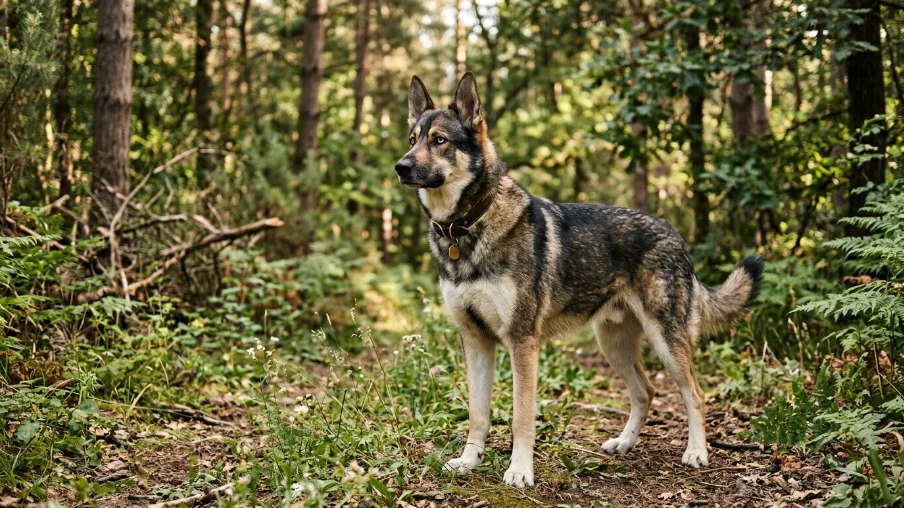
The German Shepherd Husky mix, also called the Shepsky, is a medium-to-large hybrid known for intelligence, stamina, and wolf-like looks. While admired for appearance, experts caution that exercise, health testing, and stable temperament matter far more than markings.
Quick Snapshot Table
| Category | Details |
|---|---|
| Breed Type | Hybrid Dog |
| Common Name | Shepsky |
| Parent Breeds | German Shepherd and Siberian Husky |
| Alternative Names | German Shepherd Husky Mix, Husky Shepherd Mix |
| Height | 20–26 inches |
| Weight | 45–90 lbs |
| Lifespan | 10–14 years |
| Energy Level | Extremely High |
| Trainability | High |
| Intelligence | Very High |
| Shedding | Heavy (Year-Round) |
| Coat Type | Double Coat |
| Coat Length | Medium to Long |
| Family Friendly | Yes |
| Child Friendly | Generally Good with Proper Socialization |
| Stranger Friendly | Moderate |
| Dog Friendly | Moderate to High |
| Apartment Friendly | Challenging |
| Exercise Needs | Very High |
| Mental Stimulation Needs | Very High |
| Guarding Ability | Moderate to High |
| Watchdog Ability | Excellent |
| Barking Level | Moderate |
| Independence Level | Moderate |
| Affection Level | High |
| Prey Drive | Moderate to High |
| Off-Leash Reliability | Low to Moderate |
| Beginner Owner Friendly | Not Ideal |
| Climate Preference | Thrives in Cool to Cold Climates |
| Heat Tolerance | Moderate |
| Cold Tolerance | Excellent |
| Grooming Needs | Moderate to High |
| Drooling | Low |
| Popular Colors | Black & Tan, Black & White, Gray, Sable, Red, Agouti |
| Eye Color | Brown, Blue, Amber, or Bi-Colored |
| Puppy Price Range | $500–$2,000+ |
| Adult Food Consumption | 2.5–4 Cups Daily (Varies by Size & Activity) |
| AKC Recognition | Not Recognized (Hybrid Breed) |
| Best For | Active Families, Hikers, Outdoor Enthusiasts |
| Not Ideal For | Sedentary Owners, Small Apartments, Low-Activity Households |
| Common Health Concerns | Hip Dysplasia, Elbow Dysplasia, Degenerative Myelopathy, Eye Disorders, Bloat |
| Daily Exercise Requirement | 90–120+ Minutes |
| First-Time Owner Suitability | Moderate to Difficult |
| Training Difficulty | Intermediate |
| Socialization Importance | Extremely Important |
| Escape Artist Potential | High |
| Working Ability | Excellent |
| Service Dog Potential | Moderate to High |
| Protection Dog Potential | Moderate |
| Companion Dog Rating | Excellent |
Why the German Shepherd Husky Mix Is So Popular
Few designer dogs attract as much attention as the German Shepherd Husky Mix.
The combination often produces:
• Wolf-like appearance
• Striking blue or amber eyes
• Athletic body structure
• High intelligence
• Strong loyalty
Many people fall in love with the look immediately.
Here is where most people get it wrong.
Living with a Shepsky is completely different from admiring one online.
These dogs combine two working breeds that were developed for demanding jobs. German Shepherds were bred for herding, protection, and service work. Siberian Huskies were bred to pull sleds over long distances while making independent decisions.
The result is a dog that is intelligent, athletic, and rewarding, but often more challenging than first-time owners anticipate.
What Is a German Shepherd Husky Mix?
The German Shepherd Husky Mix is a hybrid dog created by crossing a German Shepherd Dog with a Siberian Husky.
These dogs are known for:
• Intelligence
• Athletic ability
• Wolf-like appearance
• High exercise requirements
• Strong owner bonds
Most adult Shepskies weigh between 45 and 90 pounds and require experienced ownership to reach their full potential.
Why Every Shepsky Looks Different
Unlike purebred dogs, hybrids do not have a fixed appearance standard.
Some puppies inherit more German Shepherd traits.
Others strongly resemble their Husky parent.
Even puppies from the same litter can look surprisingly different.
Appearance and Size
How Big Does a German Shepherd Husky Mix Get?
| Gender | Weight | Height |
| Female | 45–75 lbs | 20–24 inches |
| Male | 55–90 lbs | 22–26 inches |
Most develop a lean, athletic body capable of impressive endurance.
Coat Colors
Common coat colors include:
• Black and tan
• Gray and white
• Black and white
• Sable
• Silver
• Red and cream
Eye Color Variations
Eye colors may include:
• Brown
• Blue
• Amber
• Bi-colored eyes
Not every Shepsky inherits the famous Husky blue eyes.
Temperament and Personality
Temperament is where this hybrid becomes especially interesting.
Most Shepskies inherit:
• Intelligence
• Confidence
• Curiosity
• Loyalty
• Independence
Typical Temperament Traits
| Trait | Rating |
| Intelligence | Very High |
| Loyalty | High |
| Energy | Extremely High |
| Trainability | High |
| Independence | Moderate to High |
| Sociability | Moderate |
| Protective Instinct | Moderate |
What Daily Life Feels Like
A well-raised Shepsky is constantly engaged with its environment.
These dogs enjoy:
• Exploring
• Learning
• Working
• Playing
• Participating in family activities
The real issue is boredom.
Without adequate stimulation, they frequently create their own entertainment through digging, chewing, escaping, or excessive vocalization.
Here Is Where Most Owners Struggle
German Shepherds naturally look to handlers for guidance.
Huskies were bred to make independent decisions while working far from humans.
A Shepsky often inherits both traits simultaneously.
This creates a dog that learns commands quickly but may choose not to obey if motivation is lacking.
That combination surprises many new owners.
Are German Shepherd Husky Mixes Good Family Dogs?
Yes, many become excellent family companions.
Success depends on:
• Early socialization
• Consistent training
• Daily exercise
• Structured routines
Families That Usually Thrive
• Active households
• Outdoor enthusiasts
• Experienced dog owners
• Training-focused families
Families That Often Struggle
• Sedentary households
• Frequent travelers
• People seeking low-maintenance pets
• Owners unwilling to train regularly
Training a German Shepherd Husky Mix
Is the Shepsky Easy to Train?
Yes and no.
These dogs learn commands quickly.
However, intelligence does not always guarantee compliance.
Many Shepskies understand exactly what is being asked but decide whether cooperation benefits them.
Best Training Methods
Focus on:
• Positive reinforcement
• Consistency
• Engagement
• Structure
• Impulse control
Training Mistakes to Avoid
• Repeating commands constantly
• Inconsistent rules
• Lack of mental stimulation
• Overreliance on punishment
Exercise Requirements
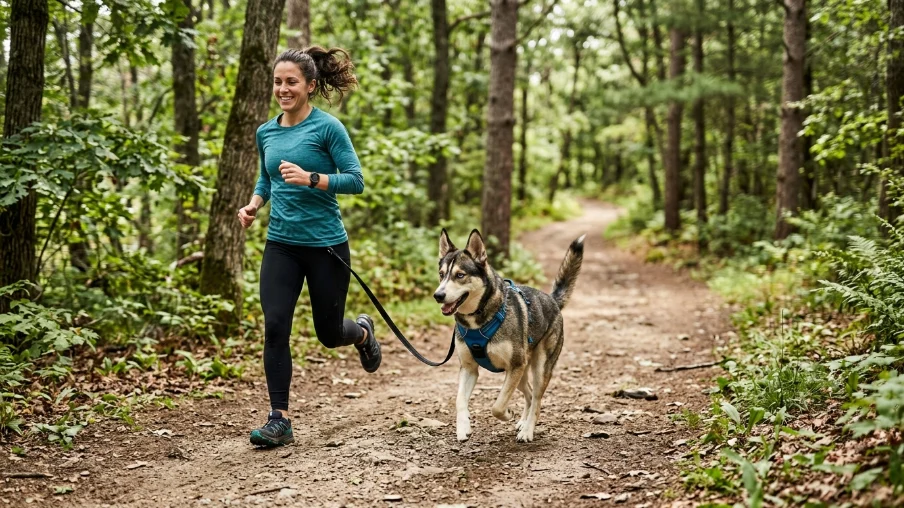
This is one of the highest-energy companion dogs available.
Daily Exercise Needs
Most adults require:
• 90–180 minutes of activity daily
• Structured walks
• Training sessions
• Mental enrichment
Best Activities
| Activity | Benefit |
| Hiking | Endurance |
| Running | Physical conditioning |
| Agility | Coordination |
| Tracking | Mental stimulation |
| Obedience | Focus |
| Canicross | Energy outlet |
What Happens Without Enough Exercise?
Insufficient activity often leads to:
• Digging
• Barking
• Escaping
• Destructive chewing
• Hyperactivity
Puppy Development Timeline
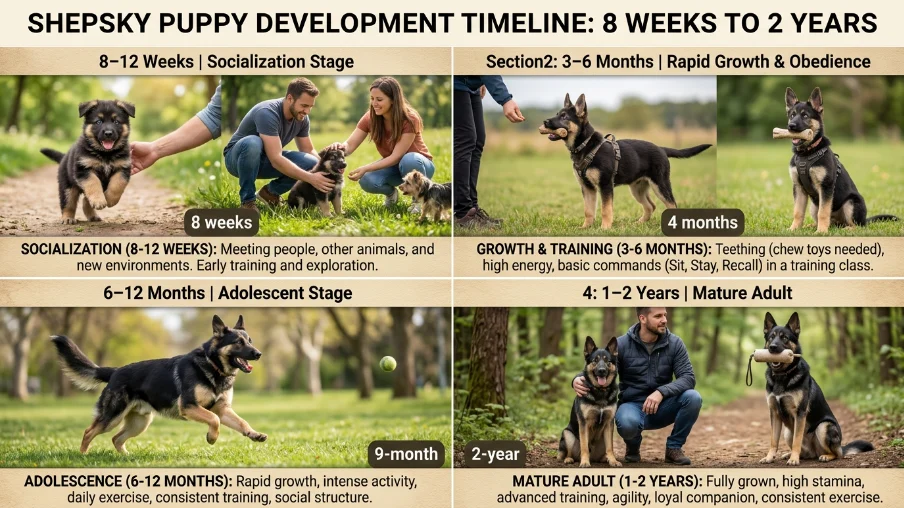
Most German Shepherd Husky Mix puppies experience rapid growth during their first two years.
Development varies depending on which parent breed influences the puppy more strongly.
Growth Timeline Table
| Age | Development Stage |
| 8–12 Weeks | Critical socialization period |
| 3–4 Months | Rapid learning phase |
| 5–6 Months | Teething and independence |
| 6–12 Months | Adolescent testing period |
| 12–18 Months | Physical maturity increases |
| 18–24 Months | Mental maturity improves |
| 2–3 Years | Full adult temperament develops |
The Most Important Growth Period
Most Shepsky puppies experience their most significant development between 3 and 12 months of age.
During this stage owners often notice:
• Increased confidence
• Stronger prey drive
• Rapid learning ability
• Boundary testing behavior
Many first-time owners mistake this stage for stubbornness when it is actually a normal part of canine adolescence.
Can a German Shepherd Husky Mix Live in an Apartment?
Short Answer
Yes, but only with exceptional commitment.
Apartment living becomes difficult when owners underestimate the breed’s activity requirements.
Successful apartment owners typically provide:
• Multiple daily walks
• Training sessions
• Mental enrichment
• Outdoor adventures
Without these outlets, behavioral issues often develop quickly.
Grooming and Shedding
Do Shepskies Shed a Lot?
Yes.
Most inherit a thick double coat and shed heavily throughout the year.
Seasonal coat blowouts can be especially intense.
Grooming Routine
Weekly care should include:
• Brushing
• Nail trimming
• Ear inspections
• Dental hygiene
More frequent brushing is often necessary during shedding seasons.
Health and Genetic Considerations
Common Health Concerns
| Condition | Risk |
| Hip Dysplasia | Moderate to High |
| Elbow Dysplasia | Moderate |
| Degenerative Myelopathy | Possible |
| Eye Disorders | Possible |
| Bloat | Serious |
| Allergies | Common |
What Responsible Breeders Test For
• Hip health
• Elbow health
• Eye health
• Temperament
• Genetic disorders
Appearance alone tells you very little about long-term health quality.
How Much Does a German Shepherd Husky Mix Cost?
Puppy Price
| Source | Typical Cost |
| Reputable Breeder | $800–$2,500 |
| Rescue Adoption | $100–$600 |
First-Year Expenses
Owners should budget for:
• Food
• Veterinary care
• Training classes
• Crates and equipment
• Grooming supplies
The first year is usually the most expensive.
Male vs Female German Shepherd Husky Mix
| Trait | Male | Female |
| Size | Larger | Smaller |
| Maturity Speed | Slightly Slower | Slightly Faster |
| Independence | Moderate | Often Higher |
| Trainability | Similar | Similar |
| Energy Level | Very High | Very High |
Individual personality matters far more than gender alone.
Pros and Cons
| Pros | Cons |
| Highly Intelligent | Heavy Shedding |
| Loyal Companion | High Exercise Needs |
| Athletic | Can Be Stubborn |
| Beautiful Appearance | Escape Tendencies |
| Versatile Working Ability | Not Ideal for Beginners |
Common Mistakes Owners Make
Choosing Based on Looks
Many buyers focus entirely on:
• Blue eyes
• Wolf-like appearance
• Social media photos
Appearance alone does not predict temperament.
Underestimating Exercise Needs
This is one of the most common reasons owners surrender Shepskies.
Skipping Early Socialization
Poor socialization can contribute to:
• Reactivity
• Fearfulness
• Overexcitement
Insights Most Articles Miss
Intelligence Can Create Problems
Smart dogs learn undesirable behaviors just as quickly as desirable ones.
Escape Behavior Is Common
Many inherit Husky tendencies to:
• Dig
• Climb
• Wander
Secure fencing is essential.
Energy Levels Vary Dramatically
Not all Shepskies behave the same.
Some strongly resemble German Shepherds.
Others inherit nearly endless Husky stamina.
Buyer Warning Section
Red Flags When Buying a Puppy
Be cautious if a breeder:
• Focuses only on eye color
• Promotes “rare” puppies
• Avoids health testing discussions
• Cannot explain temperament traits
• Refuses to show parent dogs
What Responsible Breeders Prioritize
Responsible breeders focus on:
• Temperament
• Structure
• Health
• Socialization
Those traits matter far more than appearance.
Who Should Avoid This Breed?
This breed may not be the best fit for:
• Sedentary households
• Frequent travelers
• Low-maintenance pet seekers
• Owners unwilling to train daily
The wrong environment often creates behavioral problems that are unfairly blamed on the dog.
Lifestyle Compatibility
| Lifestyle | Compatibility |
| Active Family | Excellent |
| Hiking Enthusiast | Excellent |
| Experienced Owner | Excellent |
| Apartment Living | Challenging |
| Sedentary Lifestyle | Poor |
| First-Time Owner | Often Difficult |
Preparation Checklist
You Are Probably Ready If
• You enjoy daily training
• You can provide significant exercise
• You understand working breeds
• You want an active companion
You May Want Another Breed If
• You prefer low-maintenance dogs
• You dislike shedding
• You travel frequently
• You want a calm household pet
Frequently Asked Questions
Is a German Shepherd Husky Mix a good dog?
Yes. They can become exceptional companions for active owners who meet their physical and mental needs.
How big does a Shepsky get?
Most adults weigh between 45 and 90 pounds and stand 20 to 26 inches tall.
Do German Shepherd Husky Mixes shed a lot?
Yes. Most are heavy shedders due to their dense double coats.
Are Shepskies aggressive?
Not typically. Temperament depends more on genetics, training, and socialization than the mix itself.
How much exercise do they need?
Most require at least 90 to 180 minutes of combined physical and mental activity daily.
Are German Shepherd Husky Mixes good for first-time owners?
They can be challenging because of their intelligence, energy, and independent nature.
Conclusion
The German Shepherd Husky Mix combines two remarkable working breeds into one athletic, intelligent, and visually impressive companion. Their striking appearance attracts attention, but long-term success depends on training, exercise, structure, and responsible ownership.
The owners who thrive with a Shepsky understand that these dogs need purpose, engagement, and daily challenges. When those needs are met, they become loyal, capable, and deeply rewarding lifelong companions.