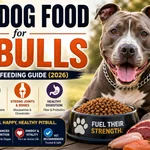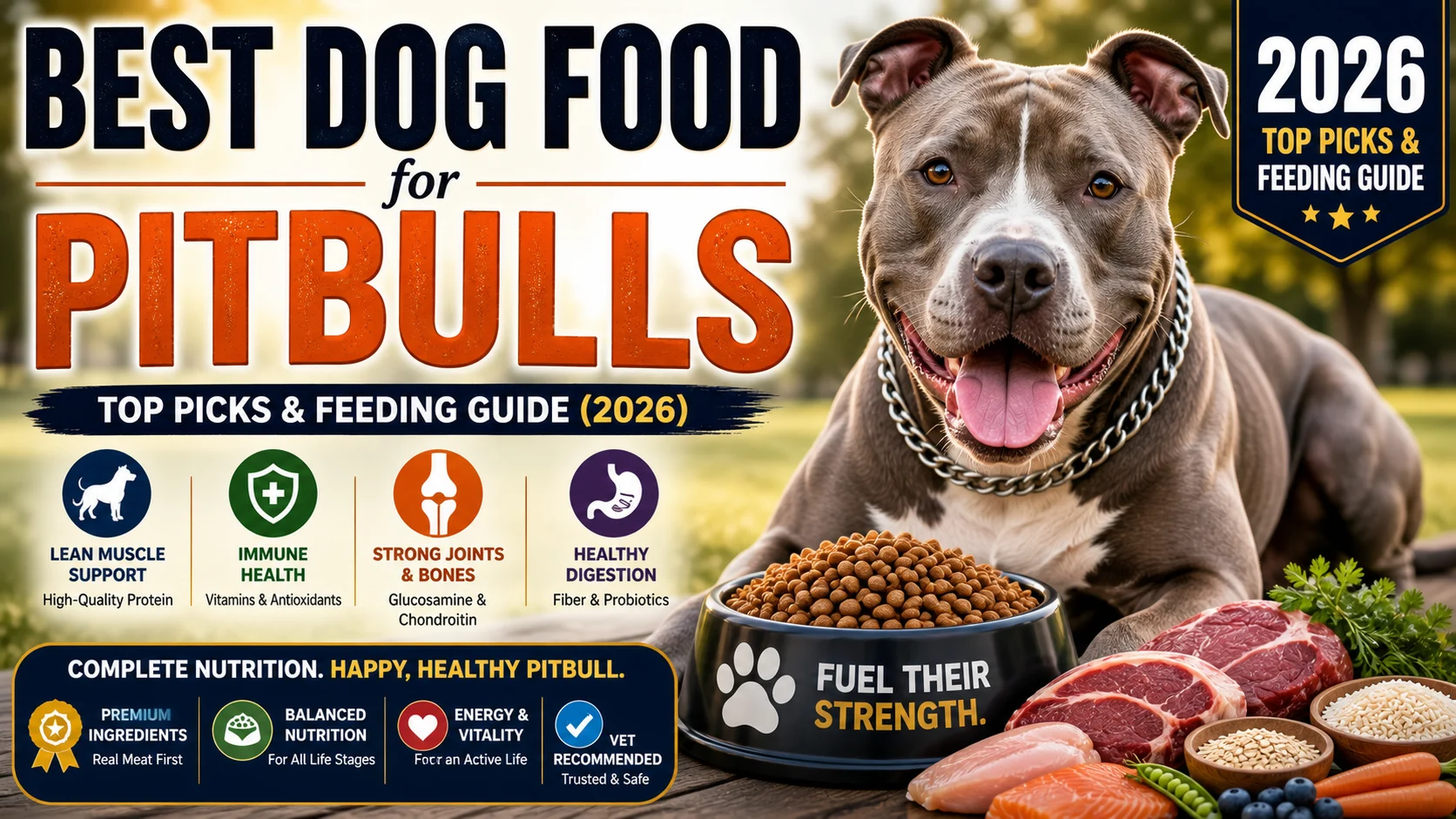
Strong muscles. Healthy skin. Better nutrition.
Pitbulls are energetic, muscular, and athletic dogs that need balanced nutrition to maintain healthy muscles, strong bones, good digestion, and a shiny coat. Choosing the right dog food is an important part of keeping your Pitbull healthy throughout every stage of life.
The best dog food is not necessarily the one with the highest protein content or the most expensive ingredients. It should provide complete and balanced nutrition while matching your dog’s age, activity level, body condition, and health needs.
Pitbull puppies need carefully balanced food for growth, adult dogs need nutrition that maintains lean muscle, and senior dogs may need adjustments to calories and other nutrients.
What Is the Best Dog Food for Pitbulls?
The best dog food for Pitbulls is a complete and balanced formula that provides appropriate protein, fat, carbohydrates, vitamins, minerals, and calories for the dog’s life stage.
There is no single formula that works perfectly for every Pitbull. A highly active dog may need more calories than a less active companion, while a dog with food allergies may need a veterinarian recommended diet.
Best Overall Dog Food
For most healthy adult Pitbulls, a complete adult maintenance formula from a reputable manufacturer is a practical choice.
Look for appropriate protein, balanced fat, essential nutrients, and calories suited to your dog’s daily activity.
Best Dog Food for Active Pitbulls
Active Pitbulls may need additional calories to support regular exercise and energy requirements. A performance formula may suit dogs doing demanding activities, but it is not necessary for every Pitbull.
Best Dog Food for Pitbulls With Sensitive Skin
Some Pitbulls experience itching, skin irritation, and recurring ear problems. A balanced food containing essential fatty acids may support normal skin and coat health.
Persistent itching can also result from fleas, environmental allergies, infections, or other medical conditions. A veterinarian can help identify the cause.
Understanding Pitbull Nutritional Requirements
Pitbulls need a balanced combination of nutrients to support their muscles, bones, immune system, skin, and digestive health.
Protein for Muscle Development and Maintenance
Protein supplies amino acids that help build and maintain muscles, repair tissues, and support normal body functions.
Common protein sources include chicken, turkey, beef, lamb, fish, and eggs.
The overall nutritional quality of the food matters more than simply looking at the first ingredient. A higher protein percentage does not automatically make a formula better.
Healthy Fats for Energy and Skin Health
Fat provides concentrated energy and essential fatty acids.
Its benefits include supporting healthy skin, maintaining a shiny coat, helping the body absorb fat soluble vitamins, and providing energy for daily activities.
Fish oil can provide omega 3 fatty acids, including EPA and DHA, which may support normal skin, coat, and joint health.
Carbohydrates for Daily Energy
Carbohydrates provide energy and can supply useful dietary fiber.
Common sources include rice, oats, barley, sweet potatoes, and other grains and vegetables.
Grains are not automatically harmful to Pitbulls. Most dogs can digest properly formulated foods containing grains.
Vitamins and Minerals for Overall Health
Important nutrients include calcium and phosphorus for bone health, zinc for normal skin function, vitamin E for antioxidant support, B vitamins for energy metabolism, and vitamin D for calcium regulation.
A complete and balanced dog food should provide essential nutrients in appropriate amounts. Avoid adding supplements without veterinary guidance.
Best Dog Food for Pitbull Puppies
Pitbull puppies need carefully balanced nutrition because they are growing and developing rapidly.
Their food should support healthy bones, muscles, brain development, and immune function. Adult maintenance food is not an appropriate substitute for a complete puppy formula.
What Should Pitbull Puppies Eat?
Choose a complete and balanced food specifically formulated for growth.
If your puppy is expected to become a larger dog, ask your veterinarian whether a large breed puppy formula is appropriate.
Look for a growth-stage nutritional adequacy statement, appropriate calcium and phosphorus levels, adequate protein and essential fatty acids, and suitable calories for steady growth.
Pitbull Puppy Development and Feeding Timeline
| Age | Development Stage | Feeding Guidance |
| 0 to 4 weeks | Nursing stage | Mother’s milk is the primary nutrition |
| 4 to 8 weeks | Weaning stage | Gradually introduce softened puppy food |
| 2 to 4 months | Rapid growth | Feed a complete puppy formula in several meals |
| 4 to 6 months | Active development | Continue balanced puppy nutrition |
| 6 to 12 months | Adolescent stage | Adjust portions as growth and activity change |
| 12 to 18 months | Approaching maturity | Discuss adult food transition with your veterinarian |
| 18 to 24 months | Later maturity in some larger dogs | Adult food may be suitable once growth is complete |
The exact growth period depends on the dog’s breed mix, adult size, and individual development.
How Often Should You Feed a Pitbull Puppy?
Young puppies generally need several small meals throughout the day. Puppies around 2 to 6 months commonly eat three meals daily, while older puppies may do well with two or three meals.
Follow the food packaging as a starting point and adjust portions according to growth, body condition, and veterinary advice.
Best Dog Food for Adult Pitbulls
Adult Pitbulls need balanced nutrition to maintain lean muscle, support daily activity, and prevent unnecessary weight gain.
What Should Adult Pitbull Food Contain?
A suitable adult formula should provide adequate digestible protein, balanced dietary fat, essential fatty acids, appropriate fiber, essential vitamins and minerals, and calories suited to your dog’s activity level.
How Much Food Should an Adult Pitbull Eat?
The correct amount depends on body weight, age, metabolism, activity, neuter status, and the calorie content of the food.
| Dog Type | Feeding Consideration |
| Less active adult | May need fewer daily calories |
| Moderately active adult | Needs calories suited to regular walks and play |
| Highly active adult | May require additional energy |
| Overweight adult | May need a veterinarian guided calorie reduction |
| Underweight adult | Needs an assessment before increasing food |
Use the calorie information on the packaging rather than relying only on cups. Different foods can contain very different amounts of calories per cup.
Measure meals consistently and monitor body condition. You should generally be able to feel your dog’s ribs without pressing hard, and your dog should have a visible waist when viewed from above.
Best Dog Food for Senior Pitbulls
As Pitbulls get older, their activity levels and nutritional needs may change. Healthy older dogs still require adequate protein to maintain muscle mass.
What Should Senior Pitbull Food Include?
Consider a complete formula that provides adequate high quality protein, calories matched to activity, digestible ingredients, essential fatty acids, and appropriate vitamins and minerals.
If your senior Pitbull has kidney disease, diabetes, arthritis, or another diagnosed condition, the best diet may differ from a standard senior formula.
Signs Your Senior Pitbull May Need a Diet Change
Watch for unexplained weight gain or loss, reduced appetite, difficulty chewing, changes in stool quality, reduced activity, or loss of muscle around the back and legs.
Sudden changes should be discussed with a veterinarian.
Recommended Dog Food Options for Pitbulls in 2026
The following products and ranges are options to compare, not a universal ranking. Formula availability, ingredients, and nutritional adequacy can vary by country and product version. Always check the exact packaging before purchasing.
Purina Pro Plan Adult Large Breed
This range may be worth comparing for Pitbull type dogs that are large enough to benefit from a large breed adult formula.
Check the exact formula’s calorie content, nutritional adequacy statement, and suitability for your dog’s adult size.
Hill’s Science Diet Adult Sensitive Stomach and Skin
This range may be worth considering when a dog experiences digestive or skin sensitivities. It offers formulas designed for sensitive stomachs and skin.
It is not a substitute for diagnosing food allergies or treating an underlying skin condition.
Royal Canin Medium Adult or Large Adult
Royal Canin offers size specific formulas that may be appropriate depending on your Pitbull type dog’s adult weight and nutritional needs.
Check the manufacturer’s weight guidance instead of choosing a size category based only on appearance.
Annamaet Ultra
Annamaet Ultra is another dry food option to compare for active adult dogs. Review its nutritional adequacy statement, calorie content, protein and fat levels, and suitability for your dog’s life stage.
The Farmer’s Dog
The Farmer’s Dog offers fresh food recipes for owners interested in fresh-food feeding. Verify that the selected recipe is complete and balanced for your dog’s life stage, and consider storage requirements, calorie recommendations, and cost.
Best Dog Food for Pitbulls With Skin Allergies
Some Pitbull-type dogs experience itching, redness, recurring ear infections, or excessive paw licking.
Common Signs of Food-Related Reactions
Possible signs include persistent itching, repeated ear inflammation, irritated skin, paw licking, recurrent skin infections, and digestive problems.
These symptoms cannot confirm a food allergy by themselves.
What Food Is Best for a Pitbull With Allergies?
A veterinarian may recommend a prescription hydrolyzed-protein diet or a carefully selected novel-protein diet.
A proper elimination diet trial requires feeding only the prescribed diet for the recommended period. Treats, table scraps, flavored medications, and other foods can interfere with the results.
Best Dog Food for Pitbulls With Sensitive Stomachs
Some dogs experience occasional digestive upset, while others have persistent gastrointestinal problems.
Signs of Digestive Sensitivity
Look for frequent soft stools, excessive gas, vomiting, reduced appetite, changes in bowel movements, or repeated stomach discomfort.
How to Support Better Digestion
Choose a complete and balanced food, feed consistent portions, avoid sudden diet changes, limit excessive treats, and keep fresh water available.
Persistent vomiting, bloody stool, severe diarrhea, dehydration, or unusual weakness requires prompt veterinary attention.
Dry Food vs Wet Food for Pitbulls
Both dry and wet dog food can provide complete nutrition when properly formulated.
| Feature | Dry Dog Food | Wet Dog Food |
| Convenience | Easy to measure and store | Requires careful storage after opening |
| Water content | Lower | Higher |
| Texture | Crunchy | Soft or moist |
| Cost per calorie | Often lower | Often higher |
| Portion control | Convenient when measured | Depends on packaging |
| Picky eaters | Some dogs prefer it | May appeal to some dogs |
Can You Mix Wet and Dry Food?
Yes, you can combine wet and dry food if both are suitable for your dog’s life stage and nutritional needs.
Count the calories from both foods. Adding wet food on top of a full dry-food portion can lead to overfeeding.
Grain-Free vs Grain-Inclusive Dog Food for Pitbulls
Grain-free food is not automatically healthier for Pitbulls.
Are Grains Bad for Pitbulls?
No. Ingredients such as rice, oats, and barley can provide energy and fiber. True grain allergies are considered uncommon in dogs.
What About Grain-Free Diets and Heart Health?
The FDA has investigated reports of diet-associated dilated cardiomyopathy, or DCM, in dogs. Some reports involved diets containing high proportions of peas, lentils, other legumes, or potatoes, including some grain-free products.
This does not mean every grain-free food causes heart disease. The relationship is complex, and the role of individual ingredients is not fully established.
Choose a nutritionally sound diet from a manufacturer with strong formulation expertise and quality-control practices.
Common Health Concerns That Can Affect Pitbull Nutrition
Good nutrition supports general health, but dog food cannot prevent or cure every medical condition.
Skin and Coat Problems
Some Pitbull-type dogs experience allergies or recurring skin irritation. Balanced essential fatty acids support normal skin function, but persistent itching requires veterinary investigation.
Joint and Mobility Problems
Hip and elbow conditions can affect some dogs, especially larger or heavier individuals.
Maintaining a healthy body weight is important because excess weight places additional stress on joints.
Obesity and Weight Gain
Pitbulls can gain weight when calorie intake exceeds their energy needs.
To support a healthy weight, measure daily food portions, limit high calorie treats, include regular exercise, and monitor body condition.
Digestive Problems
Repeated diarrhea, vomiting, or appetite changes may indicate more than a food preference issue. A veterinarian can assess whether the cause is dietary, infectious, parasitic, or related to another medical condition.
How to Choose the Best Dog Food for Your Pitbull
Choosing food becomes easier when you follow a consistent process.
Step 1: Identify Your Dog’s Life Stage
Determine whether your Pitbull is a puppy, adult, or senior. Choose a food that is complete and balanced for the appropriate life stage.
Step 2: Check the Nutritional Adequacy Statement
Look for a statement confirming that the food meets an established nutritional standard, such as AAFCO nutrient profiles, for the intended life stage.
Step 3: Review the Manufacturer
Consider whether the company has qualified nutrition experts, reliable ingredient sourcing, strong quality-control procedures, appropriate nutritional testing, and clear product information.
Step 4: Match Calories to Activity
An athletic Pitbull may need more calories than a dog that spends most of the day resting.
Use the package’s calorie information as a starting point. Adjust portions according to body condition and veterinary guidance.
Step 5: Consider Health Needs
If your dog has recurring skin, digestive, joint, or other medical problems, ask your veterinarian whether a specific diet is appropriate.
Step 6: Monitor the Results
After choosing a food, monitor body weight, stool consistency, appetite, energy, skin condition, and coat quality.
How to Transition Your Pitbull to a New Dog Food
Changing food too quickly can cause digestive upset. A gradual transition is usually better.
Seven-Day Food Transition Schedule
| Days | Old Food | New Food |
| Days 1 to 2 | 75% | 25% |
| Days 3 to 4 | 50% | 50% |
| Days 5 to 6 | 25% | 75% |
| Day 7 onward | 0% | 100% |
Some dogs need a slower transition, especially if they have a history of digestive sensitivity. Extend the process if needed and ask your veterinarian for guidance if symptoms develop.
Common Feeding Mistakes Pitbull Owners Should Avoid
Choosing Food Only Because It Has High Protein
Protein is important, but a high percentage does not guarantee that a food is complete, balanced, or suitable for your dog.
Feeding Adult Food to Growing Puppies
Puppies need growth-stage nutrition. An adult maintenance formula may not provide the appropriate balance for development.
Overfeeding to Build Muscle
Extra food does not automatically create healthy muscle. It can cause excessive weight gain and increase stress on the joints.
Adding Too Many Supplements
Combining multiple supplements with a complete diet may create nutrient imbalances. Use supplements only when there is a clear reason and veterinary guidance.
Switching Food Too Frequently
Repeated diet changes can make it difficult to identify which food suits your dog and may contribute to digestive upset.
Ignoring Treat Calories
Treats, chews, and table scraps all contribute to daily calorie intake. Keep extras limited and account for them when planning meals.
Important Nutrition Insights Many Pitbull Owners Overlook
A Muscular Dog Still Needs a Healthy Body Condition
A Pitbull may look naturally broad and powerful, but a healthy dog should not carry excessive body fat. You should be able to feel the ribs without pressing hard.
More Food Does Not Mean More Strength
Muscle development depends on appropriate nutrition, exercise, genetics, recovery, and overall health. Excess calories mainly increase the risk of weight gain.
Food Allergies Need a Proper Diagnosis
Changing from chicken to beef or fish without a structured plan may not solve persistent itching. Veterinary guidance can help identify the actual cause.
The Best Food Can Change With Age
A formula that works for an active young adult may not be ideal for an older dog with reduced activity or a medical condition.
Consistency Matters
A complete and balanced diet, measured portions, fresh water, and regular health checks are more useful than constantly chasing new food trends.
Feeding and Lifestyle Compatibility
Your Pitbull’s food should fit its daily routine.
| Lifestyle | Nutrition Consideration |
| Indoor companion | Monitor calories to avoid weight gain |
| Daily walking and play | Choose an appropriate adult maintenance formula |
| Highly active dog | Match calories to exercise demands |
| Growing puppy | Use a suitable growth formula |
| Senior companion | Monitor weight, appetite, and muscle condition |
| Dog with allergies | Follow a veterinarian-guided dietary plan |
Exercise should be appropriate for your dog’s age, fitness, and health. Avoid intense activity immediately after a large meal, and provide access to clean drinking water throughout the day.
Pitbull Feeding Checklist
- Food is complete and balanced for the correct life stage.
- The formula comes from a reputable manufacturer.
- Daily calories match my dog’s activity and body condition.
- Protein and fat levels are appropriate.
- Fresh water is always available.
- Portions are measured rather than guessed.
- Treats are included in the daily calorie plan.
- Food changes are introduced gradually.
- Weight and body condition are monitored.
- Ongoing health concerns are discussed with a veterinarian.
Frequently Asked Questions
What Is the Best Dog Food for Pitbulls in 2026?
The best dog food for Pitbulls in 2026 is a complete and balanced formula suited to the dog’s age, activity level, body condition, and health needs. Look for reputable manufacturers, appropriate calories, and reliable nutritional quality.
Do Pitbulls Need High-Protein Dog Food?
Pitbulls need adequate protein to maintain muscles and support normal body functions. However, the highest-protein food is not necessarily the best choice. Overall nutritional balance and calorie intake matter more than one number on the label.
What Is the Best Food for Pitbull Puppies?
Choose a complete and balanced puppy formula designed for growth. If your puppy is expected to become a large dog, ask your veterinarian whether a large-breed puppy formula is appropriate.
How Many Times a Day Should I Feed My Pitbull?
Most healthy adult Pitbulls do well with two measured meals daily. Puppies generally need more frequent meals, depending on their age and development.
Is Chicken Good for Pitbulls?
Chicken can be a nutritious protein source for dogs that tolerate it. However, some dogs have food sensitivities or allergies. If chicken appears to trigger symptoms, consult your veterinarian before changing the diet.
Is Grain-Free Food Better for Pitbulls?
Not necessarily. Grain-free food is not automatically healthier, and some diet-associated DCM reports have involved certain grain-free or legume-heavy diets. Choose a complete and balanced food based on nutritional quality rather than marketing labels.
What Is the Best Dog Food for Pitbulls With Skin Allergies?
The right diet depends on the cause of the skin problem. A veterinarian may recommend a hydrolyzed-protein or novel-protein diet for a controlled elimination trial. Omega fatty acids may support normal skin health but do not replace diagnosis and treatment.
Can Pitbulls Eat Rice Every Day?
Plain, properly cooked rice can be included in some dogs’ diets in appropriate amounts. However, rice alone does not provide complete nutrition and should not replace a balanced dog food.
Should Pitbulls Eat Wet or Dry Food?
Both can be suitable if they are complete and balanced for the dog’s life stage. Choose based on your dog’s preferences, hydration needs, health, and budget.
How Much Should I Feed My Pitbull?
The correct portion depends on body weight, age, activity, metabolism, and the calories in the food. Follow the package as a starting point, measure meals, and adjust according to body condition and veterinary advice.
Is a High-Fat Diet Good for Pitbulls?
Fat provides energy and essential fatty acids, but excessive dietary fat can contribute to weight gain. Choose a balanced formula with a fat level suited to your dog’s activity and health.
Can I Feed My Pitbull Homemade Food?
Homemade food can be appropriate when it is formulated to meet your dog’s nutritional requirements. Recipes made from meat, rice, and vegetables alone are usually not complete. Work with a board-certified veterinary nutritionist to formulate a balanced homemade diet.
Conclusion
The best dog food for Pitbulls is not simply the one with the most protein, the most expensive ingredients, or the strongest marketing claims. It is the food that provides complete and balanced nutrition while matching your dog’s age, activity, body condition, and health requirements.
Choose puppy food for growing dogs, an appropriate adult formula for mature dogs, and a suitable diet for seniors based on their individual needs. Pay attention to calories, skin health, digestion, and weight rather than focusing on a single ingredient.
With measured portions, consistent feeding, regular exercise, and veterinary guidance, you can help your Pitbull maintain healthy muscles, comfortable movement, good skin condition, and long-term wellbeing.