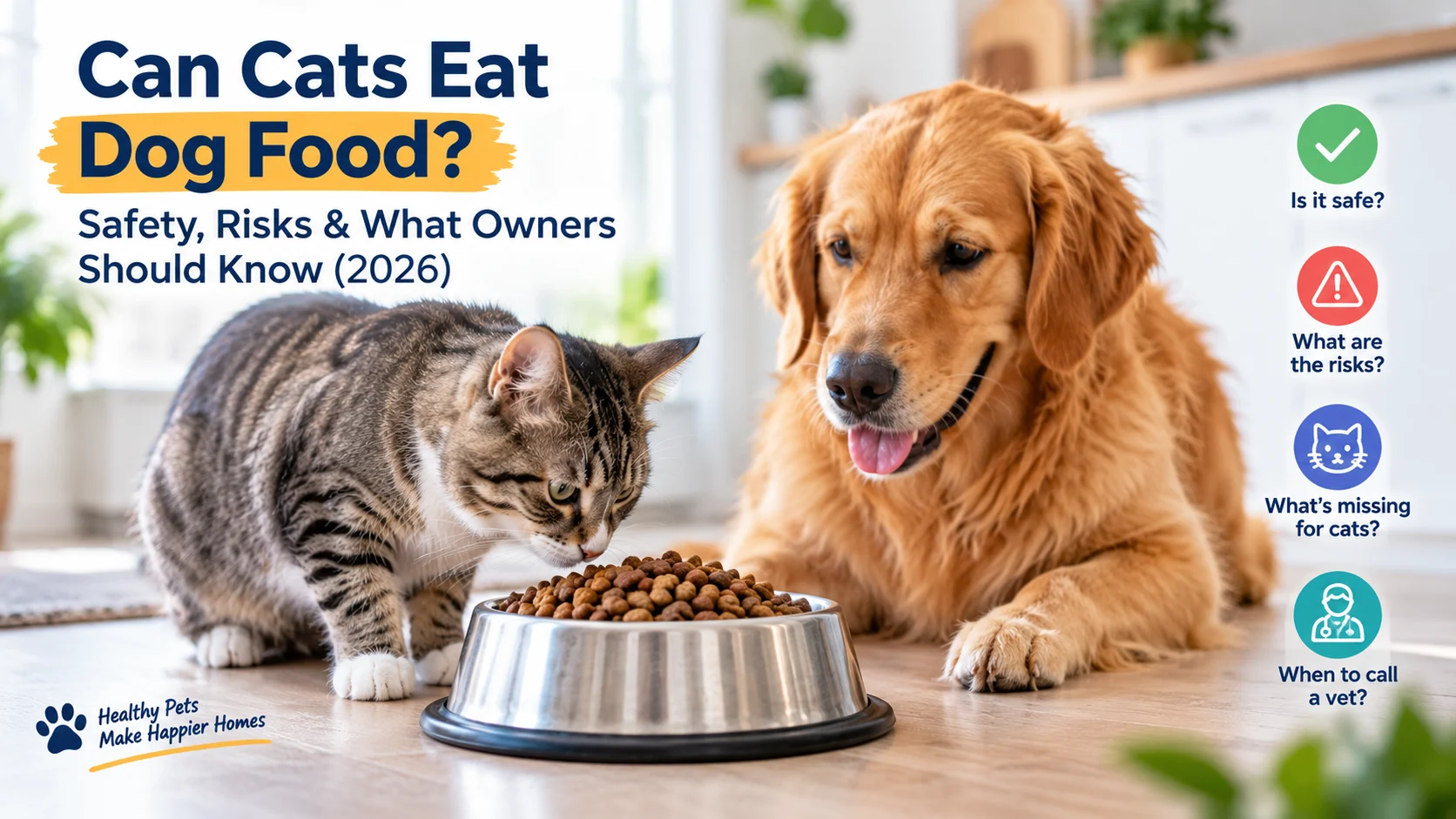
Dog food isn’t complete nutrition for cats. Cats may eat a small amount occasionally, but dog food cannot meet their long term nutritional needs.
Quick Snapshot Table
| Question | Short Answer |
|---|---|
| Can cats eat dog food? | A small accidental amount is generally harmless for most healthy cats. |
| Can cats eat dog food every day? | No, it does not meet their complete nutritional needs. |
| Is dry dog food safe for cats? | A small amount is usually not an emergency, but it is not suitable as their regular diet. |
| Can kittens eat dog food? | Kittens need food formulated for growth and development, so dog food is unsuitable. |
| What is missing from dog food? | It may not provide enough taurine and other nutrients cats require. |
| What if my cat eats dog food accidentally? | Remove access, offer its usual cat food, and monitor for unusual symptoms. |
| When should I call a vet? | If your cat develops symptoms, eats a large amount, or has a medical condition requiring a special diet. |
These recommendations reflect veterinary nutrition guidance from VCA Animal Hospitals and the European pet food industry association FEDIAF.
Can Cats Eat Dog Food?
Yes, most healthy cats can eat a small amount of ordinary dog food accidentally without developing serious problems. However, dog food should never replace a cat’s regular, nutritionally complete diet.
Cats are obligate carnivores with specific nutritional requirements that differ from those of dogs. They need adequate amounts of taurine, preformed vitamin A, arachidonic acid, and other essential nutrients that dog food may not supply in the right amounts.
If your cat has stolen a few pieces of kibble from the dog’s bowl, there is usually no need to panic. The bigger concern is repeated feeding or relying on dog food because it is cheaper or more convenient.
Is Dog Food Safe for Cats?
When a Small Amount Is Usually Fine
If a healthy adult cat eats a few pieces of standard commercial dog kibble, it will generally be fine.
You should:
- Remove the dog food and prevent further access.
- Make fresh water available.
- Return to your cat’s usual complete cat food.
- Watch for vomiting, diarrhea, unusual tiredness, or other changes.
The exact risk depends on the food’s ingredients, how much your cat ate, and its individual health.
When Dog Food May Be a Problem
Contact your veterinarian if your cat eats a large quantity, develops symptoms, or consumes a product containing an ingredient that could be harmful to cats.
Be particularly careful if your cat is a kitten, has an existing medical condition, or is on a prescription diet. Do not assume that all products marketed for dogs are safe for cats simply because they are pet foods.
Why Cats Cannot Live on Dog Food
Cats Have Different Nutritional Needs
Cats and dogs may share a home, but their nutritional requirements are not interchangeable.
| Nutrient | Why Cats Need It | Why Dog Food May Fall Short |
|---|---|---|
| Taurine | Supports normal heart, vision, and reproductive function | Dog food is not necessarily formulated to meet cats’ taurine requirements |
| Protein | Supports muscles, tissues, and normal metabolism | Many dog foods provide less protein than cats require |
| Vitamin A | Supports vision, skin, and normal body function | Cats need preformed vitamin A rather than relying on conversion from beta carotene |
| Arachidonic acid | An essential fatty acid involved in normal body function | Dog food may not provide enough for feline needs |
| Niacin | Supports energy metabolism | Cats have different requirements and cannot rely on the same synthesis pathways as dogs |
These differences are why a food formulated to be complete and balanced for dogs cannot automatically be considered complete and balanced for cats.
Why Taurine Is Especially Important
Taurine is one of the most important nutrients to understand when comparing cat food with dog food.
Cats cannot produce enough taurine on their own to meet their needs, so they must obtain it through their diet. Inadequate taurine intake can contribute to serious problems, including retinal degeneration and dilated cardiomyopathy, a disease affecting the heart muscle.
A cat eating dog food occasionally is not the same as a cat developing a nutritional deficiency. The risk increases when dog food becomes the primary diet over time.
Can Cats Eat Dry Dog Food?
Is Dry Dog Kibble Dangerous for Cats?
Dry dog food is not automatically toxic to cats. If your cat steals a few pieces, serious harm is unlikely in most healthy cats.
However, dry dog kibble is formulated around canine nutritional requirements, not feline needs. Even if it contains meat and protein, that does not mean it supplies all the nutrients your cat requires.
What About Wet Dog Food?
The same principle applies to wet dog food. Its texture, smell, or meat content does not make it a nutritionally complete cat food.
Check the product label, particularly if it is a specialized veterinary diet or contains unusual ingredients. If your cat regularly eats wet dog food instead of its own meals, consult your veterinarian about a suitable feline diet.
What Happens If a Cat Eats Dog Food Every Day?
Short Term Effects
A cat that eats dog food once or twice may show no noticeable symptoms. Some cats may experience digestive upset, including vomiting or diarrhea, depending on the food and the amount eaten.
Long Term Nutritional Risks
If dog food becomes the cat’s main diet, nutritional deficiencies can develop over time.
Potential consequences include:
- Poor coat condition and skin problems
- Weight loss and loss of muscle
- Vision problems associated with taurine deficiency
- Heart disease associated with inadequate taurine
- Other complications caused by an unbalanced diet
The timing and severity depend on the food, the cat’s health, and how long the diet continues. Do not wait for visible symptoms before correcting a long term feeding problem.
Can Kittens Eat Dog Food?
No. Dog food is not an appropriate regular diet for kittens.
Kittens grow rapidly and need carefully balanced nutrition to support their bones, muscles, brain, immune system, and overall development. Choose a complete kitten food formulated for growth.
If a kitten eats a few pieces of dog kibble accidentally, monitor it and contact a veterinarian if symptoms develop. Very young kittens are more vulnerable to inadequate food intake, so do not delay seeking advice if a kitten refuses its normal food.
What Should You Do If Your Cat Eats Dog Food?
Step by Step Guide
1. Check how much your cat ate
A few pieces of ordinary dog kibble are different from eating an entire bowl or consuming a product with potentially harmful ingredients.
2. Return to normal cat food
Offer your cat its usual complete and balanced feline diet. Do not make dog food a substitute meal.
3. Watch for symptoms
Look for vomiting, diarrhea, unusual tiredness, weakness, or changes in appetite.
4. Contact a veterinarian when needed
Seek advice for symptoms, substantial ingestion, questionable ingredients, or concerns involving a kitten or medically vulnerable cat.
Never induce vomiting or give human medication unless a veterinarian specifically instructs you to do so.
How to Stop Your Cat From Eating Dog Food
Feed Pets Separately
The simplest solution is to give your cat and dog separate feeding spaces. Supervise meals and remove leftover food when appropriate.
Use a Feeding Schedule
Scheduled meals make it easier to track how much each pet eats. If your dog grazes throughout the day, consider a feeding arrangement that prevents your cat from reaching the dog’s bowl.
Consider a Microchip Feeder
A compatible microchip activated feeder can help keep one pet’s food away from another, particularly in homes with multiple animals.
Keep Cat Food Accessible
Make sure your cat has access to its own appropriate food and fresh water. If your cat repeatedly refuses cat food, investigate the cause instead of allowing dog food to become a substitute.
Important: If your cat stops eating altogether, contact your veterinarian promptly. Cornell University’s Feline Health Center warns that sustained appetite loss can become serious within as little as 24 hours in an adult cat.
Common Mistakes Cat Owners Make
Assuming All Pet Food Is Interchangeable
Both products may look similar, but their nutrient profiles are different. A food being safe for dogs does not establish that it meets a cat’s needs.
Believing Meat Based Dog Food Is Enough
Cats need more than meat or protein alone. They require a complete balance of essential amino acids, fatty acids, vitamins, minerals, and energy.
Waiting for Deficiency Symptoms
Nutritional problems may develop gradually. A cat can appear normal for a period while its diet fails to provide the nutrients it needs.
Switching Food Without Checking the Label
Look for a nutritional adequacy statement indicating that the product is complete and balanced for cats at the appropriate life stage. A treat or complementary food is not necessarily suitable as a primary diet.
What Experienced Pet Owners Should Know
Occasional Eating Is Different From Regular Feeding
This is the most important distinction in the entire topic. An accidental mouthful of dog food is generally not a reason to panic, while long term feeding can create serious nutritional problems.
The Label Matters More Than the Appearance
Dry kibble, canned food, and fresh food can all vary substantially in nutritional composition. Judge a product by its suitability for cats, not by how similar it looks to cat food.
Special Diets Require Extra Care
If your cat has kidney disease, diabetes, food allergies, or another condition requiring a veterinary diet, even seemingly minor food substitutions may interfere with its feeding plan. Ask your veterinarian before making changes.
Frequently Asked Questions
Can cats eat dog food once?
Yes. Most healthy cats can tolerate a small amount of ordinary dog food without serious problems. Monitor your cat and seek veterinary advice if symptoms appear.
Can cats eat dog food for one day?
A healthy adult cat that accidentally eats dog food for a day is not necessarily in danger, but dog food should not be intentionally used as a replacement diet. Obtain appropriate cat food as soon as possible.
Can cats eat dog food in an emergency?
If you have temporarily run out of cat food, contact a veterinarian or local veterinary service for advice on a suitable short term alternative, especially for kittens or cats with medical conditions. Do not assume dog food is an adequate substitute.
Is dog food poisonous to cats?
Ordinary dog food is not inherently poisonous to cats. The primary concern is unsuitable ingredients in a particular product or nutritional inadequacy when dog food is fed regularly.
Can cats eat dog treats?
Dog treats should not routinely replace cat treats or meals. Check the ingredients and avoid products that contain potentially harmful ingredients. Choose treats specifically formulated for cats whenever possible.
Can cats eat dog food if it contains taurine?
Not necessarily. Even if a dog food contains some taurine, it may still fail to meet a cat’s requirements for other essential nutrients. Taurine alone does not make dog food complete for cats.
Why does my cat prefer dog food?
Your cat may prefer the smell, texture, novelty, or feeding environment. Persistent refusal of its usual food can also indicate a health problem, so consult a veterinarian if the behavior continues.
Conclusion
Cats can generally eat a small amount of ordinary dog food accidentally, but dog food is not a safe long term substitute for a complete and balanced feline diet. Cats have distinct nutritional requirements, including a dietary need for taurine and other nutrients that canine formulas may not supply adequately.
The best approach is straightforward: feed each pet food formulated for its species and life stage, prevent routine bowl sharing, and seek veterinary guidance if your cat develops symptoms or refuses its normal meals.
For cat owners, the goal is not simply to avoid a bad reaction today. It is to provide the balanced nutrition that supports healthy vision, heart function, muscle maintenance, and long term wellbeing.