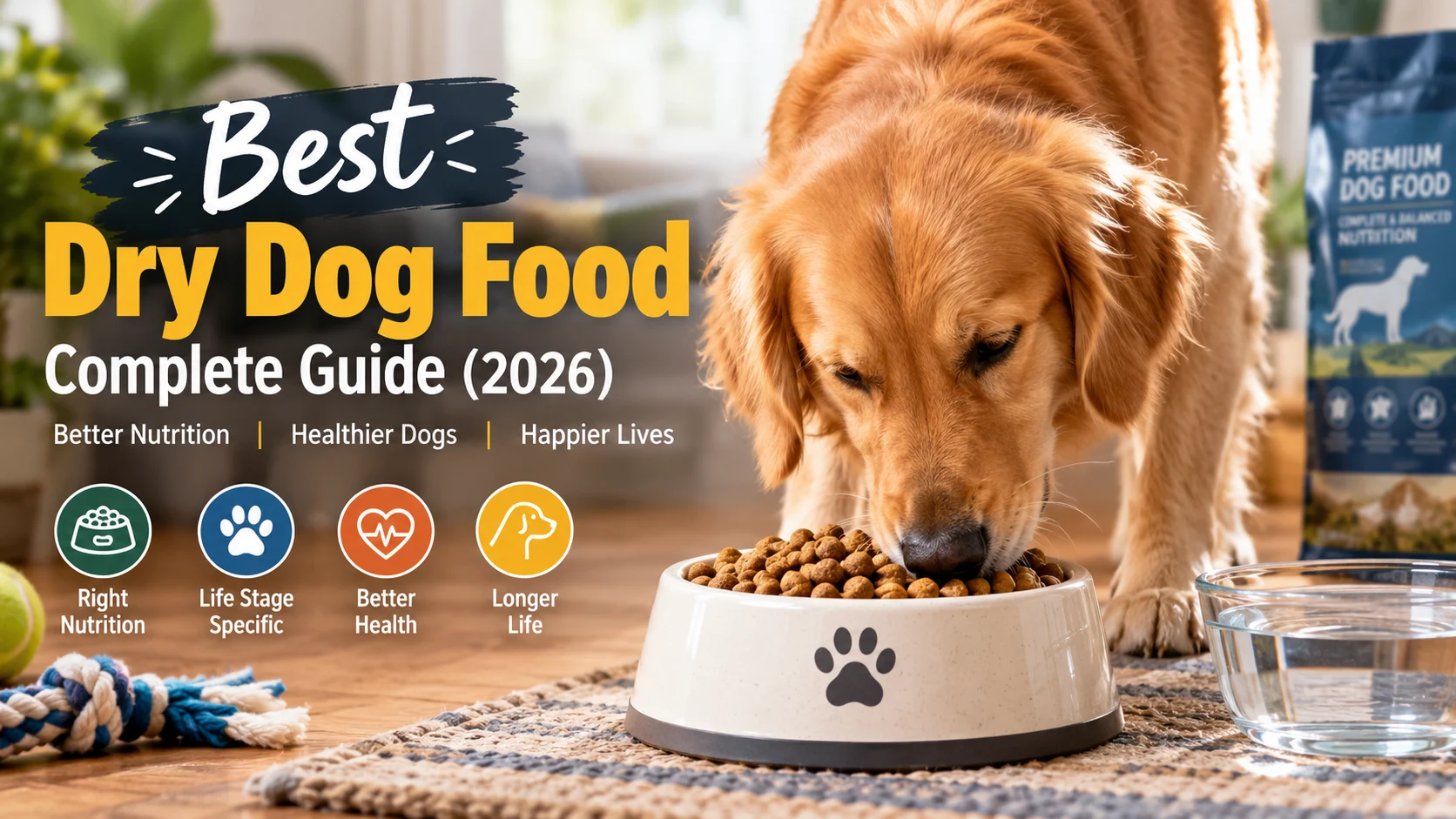
The best dry dog food is complete, balanced, and tailored to your dog’s needs not simply the most expensive or highly marketed option.
Quick Snapshot Table
| Category | Best Choice |
|---|---|
| Food Type | Complete and balanced dry dog food |
| Main Benefit | Convenient, nutritionally consistent feeding |
| Best For | Dogs whose nutritional needs suit a dry diet |
| Puppy Food | Choose a formula appropriate for growth |
| Adult Food | Choose a formula appropriate for maintenance |
| Senior Food | Match calories and nutrients to individual needs |
| Large Breeds | Consider an appropriately formulated large breed diet |
| Protein | Adequate high quality protein |
| Calories | Match intake to body condition and activity |
| Ingredients | Evaluate the complete nutritional profile, not just the first few ingredients |
| Feeding | Follow label guidance and adjust based on body condition |
| Veterinary Diets | Use when medically indicated and veterinarian recommended |
What Is the Best Dry Dog Food?
The best dry dog food is not necessarily the most expensive bag or the food with the longest ingredient list.
For most healthy dogs, the better choice is a complete and balanced dry diet that is appropriate for the dog’s life stage, condition, activity level, and individual needs. AAFCO identifies the nutritional adequacy statement as one of the most important parts of a pet food label because it helps determine whether the food is complete and balanced for its intended life stage.
That changes how you should shop.
Instead of asking only, “What brand is best?” ask:
“Is this food nutritionally appropriate for my particular dog?”
That is a much more useful question.
Why Dry Dog Food Remains Popular
Dry dog food, commonly called kibble, remains one of the easiest ways to provide a consistent daily diet.
Convenience
Kibble is:
- easy to measure
- simple to store
- convenient for busy households
- generally easy to portion
- practical for feeding routines
Nutritional Consistency
A properly formulated complete diet is designed to provide required nutrients in appropriate amounts and ratios.
AAFCO notes that “complete” means the food contains all required nutrients, while “balanced” means those nutrients are present in the correct proportions.
Easy Portion Control
Dry food also makes it relatively straightforward to measure daily calories and divide meals.
But there is an important catch.
A measured cup is not automatically a measured calorie target.
Different dry foods can have very different calorie densities.
How to Choose the Best Dry Dog Food
Start With the Nutritional Adequacy Statement
This should be one of the first things you check.
Look for a statement indicating that the food is complete and balanced for the appropriate:
- species
- life stage
- nutritional purpose
AAFCO specifically recommends using the nutritional adequacy statement to determine whether a food meets an appropriate nutrient profile or feeding protocol.
Match the Food to Life Stage
Puppies, adult dogs, pregnant dogs, and nursing dogs do not have identical nutritional requirements.
| Dog | What to Look For |
|---|---|
| Puppy | Growth appropriate nutrition |
| Adult | Maintenance nutrition |
| Senior | Individual calorie and health needs |
| Pregnant/Nursing | Reproduction appropriate nutrition |
| Large Breed Puppy | Appropriate growth formulation |
| Working Dog | Higher energy requirements when appropriate |
A food formulated for a sedentary adult may not provide the right nutritional profile for a highly active working dog. Conversely, calorie dense food can contribute to excess weight in dogs that do not need that much energy.
What About the Ingredient List?
This is where many dog owners get misled.
A beautiful ingredient list can look convincing, but it does not tell you everything about nutritional quality.
WSAVA specifically cautions that ingredient lists can be misleading because ingredient names alone do not establish the overall quality, digestibility, or bioavailability of the finished diet.
What You Should Check Instead
Look at the bigger picture:
- nutritional adequacy
- life stage
- calorie content
- manufacturer expertise
- quality control
- nutritional formulation
- feeding guidance
- your dog’s response to the food
The ingredient list still matters, but it should not be the only thing driving your decision.
Protein, Fat and Carbohydrates
Protein
Protein provides amino acids needed for:
- muscle maintenance
- tissue repair
- enzymes
- hormones
- other biological functions
The appropriate amount depends on the dog’s life stage and circumstances.
AAFCO’s nutrient profiles set minimum crude protein levels based on dry matter for different life stages, illustrating why comparing percentages directly from labels can be misleading when moisture differs between foods.
Fat
Dietary fat provides concentrated energy and essential fatty acids.
Active dogs may require considerably more energy than sedentary pets.
Carbohydrates
Dogs can digest and use carbohydrates effectively, and properly formulated diets can include carbohydrate sources.
The presence of grains or other carbohydrate ingredients does not automatically make a dry dog food poor quality.
The overall formulation matters more than a single ingredient.
Best Dry Dog Food for Puppies
Puppies have one of the most important nutritional requirements because their bodies are developing rapidly.
What Puppy Food Should Provide
Look for a diet specifically appropriate for:
- growth
- the puppy’s expected adult size
- the individual dog’s needs
Large breed puppies deserve particular attention because excessive or inappropriate nutrient intake during growth can create problems with skeletal development.
Puppy Feeding Mistake to Avoid
Do not simply keep increasing food because your puppy appears hungry.
Growing puppies need appropriate nutrition, but overfeeding can promote excessive weight gain.
Your veterinarian can help assess:
- body condition
- growth pattern
- calorie requirements
Best Dry Dog Food for Adult Dogs
Healthy adult dogs generally need a maintenance diet that supplies adequate nutrients without excessive calories.
The Goal Is Not Maximum Protein
More is not automatically better.
The goal is appropriate nutrition for the individual dog.
Consider:
- age
- body condition
- activity
- neuter status
- breed size
- health history
A couch loving companion and a highly active working dog may require very different feeding strategies.
Best Dry Dog Food for Senior Dogs
There is no single senior formula that is automatically best for every older dog.
As dogs age, their nutritional needs can change depending on:
- activity
- muscle condition
- body weight
- dental health
- kidney function
- digestive tolerance
When a Senior Formula Makes Sense
A senior diet may be useful when its nutritional profile fits the individual dog’s needs.
But age alone should not determine the food.
A healthy older dog in excellent body condition may need a different approach from a senior dog with a diagnosed medical condition.
Best Dry Dog Food for Active and Working Dogs
This is one area where generic recommendations can fail.
A German Shepherd, Border Collie, sporting dog, or working farm dog may burn significantly more calories than a typical household pet.
Signs Your Active Dog May Need More Energy
Watch for:
- unexplained weight loss
- declining stamina
- poor muscle condition
- persistent hunger
- difficulty maintaining healthy weight
However, simply feeding larger portions is not always the answer.
The food’s calorie density and nutrient profile matter too.
How Much Dry Dog Food Should You Feed?
There is no single amount that works for every dog.
Start with the manufacturer’s feeding directions, then evaluate the dog’s:
- body condition
- weight trend
- activity
- age
- reproductive status
AAFCO notes that feeding directions are guidelines and may need adjustment depending on whether a dog gains or loses weight.
A Better Way to Think About Portions
Instead of asking:
“How many cups should my dog eat?”
Ask:
“How many calories does my dog need, and how many calories are in this food?”
That distinction can prevent accidental overfeeding.
Dry Dog Food and Weight Management
Obesity is one of the biggest feeding problems owners can accidentally create.
The problem is often not that the food is inherently bad.
It is that:
- portions are too large
- treats are not counted
- multiple household members feed the dog
- calorie dense foods are underestimated
WSAVA’s nutrition guidance emphasizes individualized nutrition and calorie management as part of responsible feeding.
Body Condition Matters
Do not judge your dog’s weight only by the number on a scale.
Look for:
- a visible waist
- ribs that can be felt without excessive fat covering
- appropriate abdominal tuck
- healthy muscle condition
Your veterinarian can provide a more accurate body condition assessment.
How to Read a Dry Dog Food Label
Step 1: Check the Life Stage
Make sure the food is intended for your dog’s:
- growth
- maintenance
- reproduction
- or applicable life stage
Step 2: Find the Nutritional Adequacy Statement
This is one of the most important pieces of information on the package.
Step 3: Check Calories
Look for calorie information and compare it with your dog’s needs.
Step 4: Review Feeding Directions
Use them as a starting point rather than an unquestionable prescription.
Step 5: Investigate the Manufacturer
WSAVA recommends considering who formulates the food, whether qualified nutritionists are involved, the company’s quality control procedures, and what research supports its diets.
Dry Dog Food Comparison
| Factor | What Matters Most |
|---|---|
| Price | Value per appropriate calorie and nutrient profile |
| Ingredients | Overall formulation rather than marketing alone |
| Protein | Appropriate amount and quality |
| Fat | Suitable energy density |
| Calories | Appropriate for the dog’s lifestyle |
| Life Stage | Correct nutritional target |
| Manufacturer | Expertise and quality control |
| Palatability | Dog willingly eats it |
| Digestibility | Individual response |
| Health Needs | Veterinary guidance when required |
Common Mistakes When Buying Dry Dog Food
Choosing by Marketing Words
Words such as:
- premium
- natural
- holistic
- ancestral
- superfood
can sound impressive.
But marketing language should not replace nutritional evaluation. WSAVA specifically notes that terms such as “holistic” and “premium” may have little practical value when assessing nutritional quality.
Switching Food Too Frequently
Constantly changing diets can make it difficult to determine what works for your dog.
If a food is working well and your dog has:
- healthy stool
- stable weight
- good coat condition
- appropriate energy
there may be little reason to change it simply because another bag looks more attractive.
Ignoring Calories
Two foods can have similar feeding volumes but different calorie densities.
This is especially important for:
- small dogs
- inactive dogs
- neutered dogs
- weight prone dogs
Assuming Expensive Means Better
Price can reflect:
- ingredients
- manufacturing
- research
- packaging
- distribution
But a higher price does not automatically mean a food is better suited to your dog.
What Experienced Dog Owners Look For
Experienced owners tend to focus less on internet arguments about individual ingredients and more on measurable outcomes.
They watch:
- body condition
- stool quality
- appetite
- energy
- muscle condition
- coat and skin
- weight stability
They also pay attention to the company behind the food.
A reputable manufacturer should be able to provide meaningful information about formulation and quality control. WSAVA recommends asking about qualified nutritionists, formulation expertise, ingredient and finished product quality control, and research.
When Dry Dog Food May Not Be the Right Choice
Dry food is convenient, but it is not automatically appropriate for every dog.
Some dogs may need:
- therapeutic veterinary diets
- wet food
- mixed feeding
- specialized nutritional management
Dogs with diagnosed medical conditions may require diets specifically formulated for their condition.
Do not attempt to replace a veterinary therapeutic diet with an ordinary commercial food without discussing it with your veterinarian.
Buyer Checklist
Before buying a new dry dog food, check:
Nutrition
☐ Appropriate species
☐ Correct life stage
☐ Complete and balanced
☐ Suitable calorie density
☐ Appropriate nutrient profile
Manufacturer
☐ Qualified nutrition expertise
☐ Reliable quality control
☐ Clear contact information
☐ Transparent product information
☐ Appropriate research or nutritional substantiation
Your Dog
☐ Healthy body condition
☐ Good appetite
☐ Normal stool
☐ Stable weight
☐ Appropriate energy
Insights Most Articles Miss
The Best Food Is Individual
There is no universally best dry dog food.
A food that works beautifully for one dog may produce poor stool, weight gain, or intolerance in another.
Ingredient Lists Can Be Deceptive
The first few ingredients do not tell the entire nutritional story.
The finished diet and its nutrient profile matter.
Calories Deserve More Attention
Many owners compare protein percentages but never compare calorie density.
That can be a major mistake.
The Manufacturer Matters
Two bags can look similar on a shelf while coming from companies with very different approaches to formulation, testing, and quality control.
This is one of the most overlooked factors when choosing dry dog food.
Frequently Asked Questions
What is the best dry dog food?
The best dry dog food is a complete and balanced diet appropriate for your dog’s life stage, health status, activity level, and individual nutritional needs.
Is dry dog food healthy for dogs?
Yes. A properly formulated complete and balanced dry diet can provide appropriate nutrition for dogs when selected and fed according to their individual needs.
Is expensive dry dog food better?
Not necessarily. Price alone does not establish nutritional quality. Manufacturer expertise, formulation, quality control, nutritional adequacy, and suitability for your dog are more useful considerations.
Should I choose grain free dry dog food?
Grain free is not automatically healthier. Unless your veterinarian has identified a specific nutritional reason to avoid particular ingredients, focus on the complete formulation rather than assuming grain free means superior.
How often should I feed dry dog food?
Many adult dogs do well with one or two measured meals daily, while puppies often require more frequent feeding. Follow the food’s feeding guidance and adjust according to your dog’s age, body condition, and veterinary advice.
Can puppies eat adult dry dog food?
Adult maintenance food may not provide the nutritional profile required for growing puppies. Puppies should generally receive food appropriate for growth and their expected adult size.
How do I know if my dog food is complete and balanced?
Look for the nutritional adequacy statement on the package. AAFCO identifies this statement as a key tool for determining whether a food is complete and balanced for its intended life stage.
Should I trust the ingredient list?
Use it as one piece of information, not the entire decision. WSAVA warns that ingredient lists alone can be misleading when judging overall nutritional quality.
Conclusion
The best dry dog food is not the one with the most impressive marketing, the highest price, or the longest ingredient list.
It is the food that provides complete and balanced nutrition while fitting your dog’s life stage, calorie needs, activity level, health status, and individual tolerance.
Start with the nutritional adequacy statement. Check calories. Evaluate the manufacturer. Watch your dog’s body condition and response. And when a medical condition is involved, let your veterinarian guide the nutritional decision.
That approach is far more reliable than chasing whichever dry dog food is currently trending online.