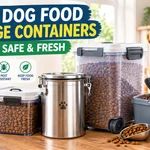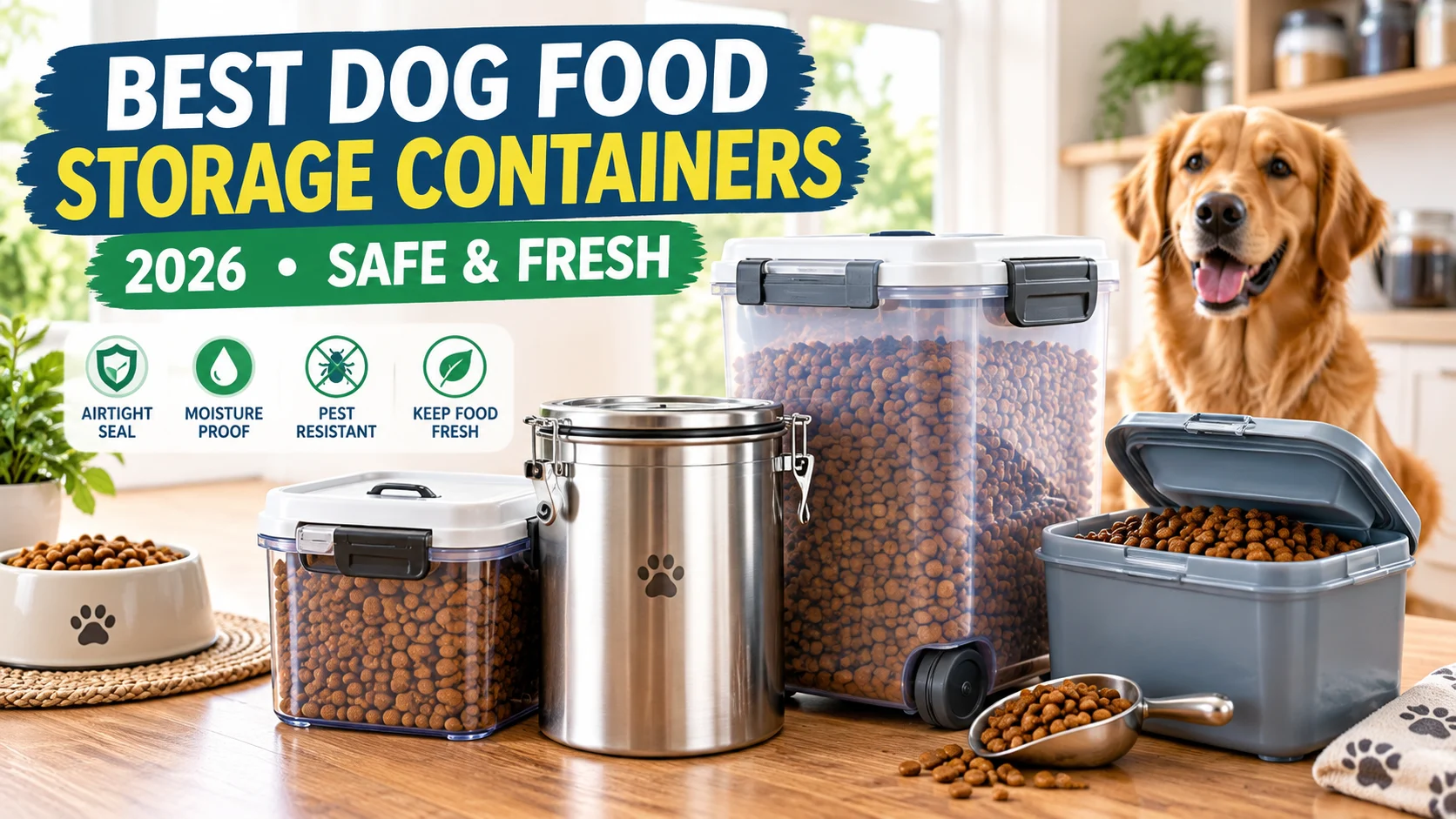
The best dog food storage containers are airtight, food safe, durable, easy to clean, and properly sized for your dog’s food bag. For the safest storage, keep the original bag inside the container and store it in a cool, dry place. AAFCO and WSAVA do not approve individual storage containers.
Quick Snapshot Table
| Feature | What to Look For |
|---|---|
| Best Overall | Airtight, durable, easy to clean |
| Best Material | Food grade stainless steel or quality food safe plastic |
| Best Seal | Tight silicone gasket or secure locking lid |
| Best for Large Bags | 30 to 50 lb capacity |
| Best for Small Dogs | Compact 5 to 15 lb container |
| Pest Protection | Secure airtight closure |
| Moisture Protection | Sealed lid and dry storage location |
| Cleaning | Wide opening and removable parts |
| Best Practice | Keep original food bag inside container |
| AAFCO Angle | Follow safe handling and storage guidance |
| WSAVA Angle | Evaluate the food separately for nutritional adequacy |
| Avoid | Open bins, damp areas, excessive heat |
What Is the Best Dog Food Storage Container?
The best dog food storage container is airtight, food safe, durable, easy to clean, and appropriately sized for the amount of kibble you buy.
For dry dog food, the safest approach is to keep the food in its original bag and place that bag inside a clean, dedicated airtight container. This preserves important product information such as the lot number and best by date while adding protection against air, moisture, pests, and accidental access.
That last point is easy to overlook.
A beautiful container is not necessarily a good container. The lid seal, material, capacity, cleaning routine, and storage location matter much more.
Why Proper Dog Food Storage Matters
Dry dog food is not shelf stable in the sense that you can leave it anywhere indefinitely.
Heat, humidity, oxygen, pests, and poor hygiene can gradually affect food quality. AAFCO recommends storing dry pet food in a cool, dry place below 80°F, while the FDA similarly recommends cool, dry storage and keeping the original bag information available.
What Poor Storage Can Cause
Improper storage can contribute to:
• Stale kibble
• Moisture exposure
• Mold growth
• Insect infestation
• Loss of freshness
• Rancid fats
• Accidental overeating
• Difficulty identifying recalled food
AAFCO specifically notes that storage insects can infest pet food when housekeeping, stock rotation, and handling are inadequate.
AAFCO and WSAVA: What Pet Owners Actually Need to Know
Is There an AAFCO Approved Dog Food Storage Container?
No.
AAFCO does not approve, certify, or endorse pet foods, and it does not provide an approval system for consumer dog food storage containers.
What AAFCO does provide is important guidance and nutritional standards used in pet food regulation and labeling.
For storage, AAFCO recommends keeping dry food in a cool, dry location and, if possible, placing the original food bag inside a clean dedicated container with a lid.
Is There a WSAVA Approved Dog Food Container?
No.
WSAVA does not approve individual dog food containers.
Its Global Nutrition Committee provides guidance for evaluating pet food and emphasizes factors such as nutritional adequacy, qualified nutritionists, formulation expertise, quality control, and whether the diet meets appropriate nutritional standards.
This distinction matters because the container protects the food, while WSAVA and AAFCO guidance helps you evaluate the food itself and its handling.
The Better Way to Use “WSAVA and AAFCO” in Your Buying Decision
When choosing a storage container:
For the food: look for appropriate nutritional adequacy information and a reputable manufacturer.
For the container: look for food safe construction, a reliable seal, easy cleaning, suitable capacity, and protection from heat and moisture.
That is a much more accurate approach than searching for a container labeled “WSAVA approved.”
What Makes a Dog Food Container Good?
1. Airtight Seal
A reliable seal is one of the most important features.
The lid should close firmly enough to reduce exposure to:
• air
• humidity
• insects
• household odors
An airtight container is particularly useful in warm or humid environments.
2. Food Safe Material
Look for containers specifically designed for food storage.
Common choices include:
• stainless steel
• food grade plastic
• BPA free plastic
Stainless steel is attractive because it is durable and nonporous, while quality food safe plastic can be lighter and easier to move.
3. Easy Cleaning
This is more important than many buyers realize.
Never simply keep topping up an old batch with new kibble.
Food residue can accumulate along:
• corners
• seams
• lid edges
• gaskets
AAFCO advises completely emptying, washing, and drying reusable storage containers between batches.
4. Correct Capacity
Bigger is not automatically better.
If you buy a 10 lb bag every few weeks, a massive 50 lb container may create unnecessary storage space and make cleaning more inconvenient.
Choose a container that comfortably fits your normal purchase size without forcing you to overfill it.
5. Secure Lid
A good lid should prevent your dog from helping itself.
This is especially important for:
• food motivated dogs
• puppies
• multi dog households
• homes with children
The FDA recommends keeping pet food securely stored so pets cannot access the entire supply at once.
Best Dog Food Storage Container Materials
| Material | Advantages | Potential Drawback |
|---|---|---|
| Stainless Steel | Durable, nonporous, odor resistant | Usually more expensive |
| BPA Free Plastic | Lightweight, affordable | Can scratch over time |
| Food Grade Polypropylene | Practical and lightweight | Quality varies by product |
| Glass | Nonporous and easy to clean | Heavy and breakable |
| Fabric Bags | Convenient for travel | Usually less protective |
For everyday dry kibble, a sturdy airtight stainless steel or food safe plastic container is usually the most practical choice.
Stainless Steel vs Plastic Dog Food Containers
Stainless Steel
Stainless steel makes sense if you want:
• durability
• easy surface cleaning
• resistance to odors
• long term use
Some premium models combine a stainless exterior with a removable plastic inner bucket.
Plastic
Plastic containers are often:
• cheaper
• lighter
• easier to carry
• available in more shapes and sizes
The key is choosing a product specifically intended for food storage rather than using an unsuitable household bin.
Keep the Original Dog Food Bag Inside the Container
This is one of the most useful storage tips in the entire article.
Instead of pouring kibble directly into the bin, place the entire original bag inside the airtight container whenever the container allows it.
The FDA specifically recommends this approach. It keeps the food’s:
• UPC code
• lot number
• product name
• manufacturer information
• best by date
readily available if there is ever a recall or food quality problem.
This is a small habit that can make a surprisingly big difference.
How to Store Dog Food Correctly
Step 1: Choose a Cool Location
Keep dry dog food away from:
• direct sunlight
• radiators
• ovens
• hot garages
• outdoor sheds
Step 2: Keep Moisture Away
Humidity can damage dry food quality.
Avoid storing kibble:
• beside sinks
• on damp floors
• in humid outdoor areas
Step 3: Keep the Bag Information
Do not throw away the original packaging immediately.
Keep the lot number and best by information accessible.
Step 4: Use a Dedicated Container
The container should be used primarily for pet food.
Step 5: Wash Between Bags
Empty the container completely before adding a new bag.
Wash it thoroughly and allow it to dry completely before refilling.
Step 6: Use a Clean Scoop
Use a dedicated scoop rather than grabbing kibble with your hands or using a dirty food bowl as the measuring utensil. The FDA recommends a clean scoop, spoon, or cup dedicated to pet food.
Best Dog Food Storage Containers by Household
| Household | Ideal Container |
|---|---|
| Small dog | 5 to 10 lb capacity |
| Medium dog | 10 to 20 lb capacity |
| Large dog | 20 to 40 lb capacity |
| Multiple dogs | 30 to 50+ lb capacity |
| Apartment | Compact airtight container |
| Garage storage | Strong pest resistant container kept in suitable temperatures |
| Frequent travelers | Smaller portable container |
| Humid climate | Strong airtight seal is especially important |
Best Features Worth Paying For
Not every premium feature is actually useful.
Features Worth It
• Airtight gasket
• Locking lid
• Food safe construction
• Easy cleaning
• Wide opening
• Included scoop
• Wheels for very large containers
• Removable inner bucket
Features You Can Usually Ignore
• Decorative graphics
• Complicated electronic displays
• Unnecessary smart features
• Oversized containers you will rarely fill
The best container is usually the one you can clean easily and close securely every day.
Common Dog Food Storage Mistakes
Pouring New Kibble Over Old Kibble
This is one of the biggest mistakes.
Old crumbs and oils remain at the bottom while fresh food gets added on top.
Empty and clean the container first.
Leaving the Bag Open
Even a good container cannot compensate for careless handling.
Fold the bag tightly if it is being stored separately, or keep the complete bag inside the container.
Storing Food in a Hot Garage
A garage can become much hotter than the recommended storage environment.
Heat can accelerate deterioration.
Buying a Container That Is Too Large
Extra space is not automatically beneficial.
Choose capacity based on your normal food bag size.
Using a Dirty Scoop
The scoop should remain clean and dry.
Do not leave a wet scoop buried inside the kibble.
What About Wet Dog Food?
Wet food needs a different storage strategy.
Once opened, unused wet or moist food should be promptly refrigerated or discarded. AAFCO recommends refrigerating unused portions, while the FDA recommends keeping refrigerated pet food at 40°F or below.
Best Container for Opened Wet Food
Use:
• an airtight food safe container
• a properly sealed pet food lid
• a clean refrigerator-safe container
Follow the specific product label for storage and use instructions.
Dog Food Storage for Puppies
Puppies deserve extra attention because their food is often formulated specifically for growth.
If you are feeding a complete and balanced puppy diet, protect its quality by storing it correctly.
AAFCO explains that nutritional adequacy statements identify whether food is intended for a particular species and life stage.
Puppy Food Storage Checklist
✓ Keep food cool
✓ Keep it dry
✓ Protect it from pests
✓ Keep the original bag
✓ Clean the container between bags
✓ Use a dedicated scoop
✓ Monitor the best by date
Dog Food Storage for Large Breed Dogs
Large breed dogs often consume substantial quantities of kibble.
That makes container capacity especially important.
A 30 to 50 lb bag can become difficult to handle when stored in a small container.
What Large Dog Owners Should Prioritize
Look for:
• 30 to 50+ lb capacity
• sturdy construction
• secure locking lid
• wheels if the container becomes heavy
• wide opening
• easy cleaning
For large bags, a wheeled container can be far more practical than repeatedly lifting a heavy bin.
Best Dog Food Storage Container Checklist
Before buying, ask:
Does It Have a Reliable Seal?
If the lid does not close securely, move on.
Is It Food Safe?
Choose a container designed for food storage.
Is It Easy to Clean?
A complicated design can become frustrating after months of use.
Does It Fit My Food Bag?
Check actual capacity rather than relying only on the product’s visual size.
Can I Keep the Original Bag Inside?
This is preferable when practical because it preserves important product information.
Is It Appropriate for My Storage Location?
A container sitting in excessive heat is not solving the underlying storage problem.
Buyer Warning: Don’t Confuse Marketing With Safety
Terms such as:
“premium”
“healthy”
“professional”
“WSAVA approved”
“AAFCO approved”
can sound impressive, but they do not automatically make a storage container better.
AAFCO itself warns consumers that it does not approve or endorse pet foods.
For a storage container, judge the actual construction and storage performance, not marketing language.
Insights Most Articles Miss
The Container Is Not the Whole Storage System
A great airtight container cannot fix a bad storage location.
If the container sits:
- next to a hot appliance
- in direct sunlight
- in excessive humidity
the food is still being exposed to an unfavorable environment.
Cleaning Matters as Much as Sealing
An airtight container filled with residue from previous batches is not truly clean storage.
The container should be emptied and thoroughly washed between bags.
Bigger Bags Require Better Organization
Buying larger bags may reduce cost per pound, but only if your household can use the food appropriately before quality declines.
Do not buy a huge bag simply because the price per pound looks attractive.
Your Dog’s Food Label Still Matters
Storage cannot improve poor nutrition.
WSAVA recommends looking beyond marketing claims and considering factors such as who formulates the diet, nutritional adequacy, quality control, and manufacturer transparency.
Top Container Styles to Consider in 2026
Current products show several practical designs, including stainless steel bins, airtight plastic containers, screw lid containers, wheeled bins, and containers with integrated scoops. The Center for Pet Safety’s 2025 evaluation included examples such as Simplehuman, IRIS, Bergan Stack-n-Stor, and Gamma2 Vittles Vault.
Best Premium Style
A stainless steel container with a secure airtight gasket is ideal for owners who want durability and a polished kitchen appearance.
Best Large Capacity Style
A large wheeled airtight bin is particularly useful for households purchasing 30 to 50 lb bags.
Best Practical Budget Style
A BPA free food storage container with a dependable latch can offer excellent everyday functionality without premium pricing.
Best for Small Spaces
Choose a narrow, compact container that fits your pantry rather than buying the largest possible model.
Preparation Checklist Before Buying
Measure Your Storage Area
Check:
- height
- width
- depth
- lid clearance
Check Your Typical Bag Size
Know whether you normally buy:
- 5 lb
- 10 lb
- 20 lb
- 30 lb
- 40 lb
- 50 lb bags
Check the Seal
Look for:
- gasket
- locking mechanism
- tight fitting lid
Check Cleaning Instructions
Avoid designs with inaccessible corners where food residue can accumulate.
Think About Weight
A full large container can become surprisingly heavy.
Wheels or handles can make a major difference.
Frequently Asked Questions
What is the best dog food storage container?
The best dog food storage container is one that is airtight, food safe, easy to clean, appropriately sized, and suitable for your storage environment.
Should dog food stay in the original bag inside the container?
Yes, when practical. The FDA recommends placing the entire bag inside the storage container because the packaging preserves important information such as the lot number and best by date.
Are stainless steel dog food containers better than plastic?
Not automatically. Stainless steel is durable and nonporous, while quality food safe plastic can be lighter and more affordable. The seal and cleanability are equally important.
Is an airtight container necessary for dog food?
It is strongly preferable for dry kibble because it helps protect food from air, moisture, pests, and accidental access.
Does WSAVA approve dog food containers?
No. WSAVA provides nutritional guidance and does not operate an approval system for individual storage containers.
Does AAFCO approve dog food storage containers?
No. AAFCO states that it does not approve, certify, or endorse pet foods, and “AAFCO approved” is not an appropriate certification claim for a storage container.
What temperature should dry dog food be stored at?
AAFCO and FDA guidance recommends keeping dry pet food in a cool, dry location, with AAFCO specifying less than 80°F.
How often should a dog food container be washed?
Wash and completely dry the container between bags of food rather than continuously topping up old kibble with new food.
Can I store dog food in the garage?
It depends on the conditions. A garage that becomes hot or humid is not a good location for dry dog food. A cool, dry indoor storage area is generally preferable.
How long does dry dog food stay fresh after opening?
Follow the manufacturer’s instructions. As a practical rule, buy an amount your dog can consume in a reasonable period rather than storing opened kibble for many months.
Conclusion
The best dog food storage containers are not necessarily the biggest or most expensive. The winning combination is simple: a secure airtight seal, food safe construction, easy cleaning, correct capacity, and proper storage conditions.
For the safest routine, keep the original dog food bag inside the container whenever practical, store it somewhere cool and dry, clean the container between bags, and retain the product’s lot and date information.
And one important SEO and consumer education point should remain clear: there is no such thing as an “AAFCO approved” or “WSAVA approved” dog food storage container. AAFCO and WSAVA are useful references for understanding pet food nutrition and handling, but the container itself should be judged by its materials, seal, hygiene, durability, and design.
That distinction makes the guide more accurate, more trustworthy, and much stronger from an EEAT perspective.