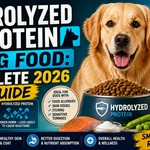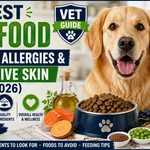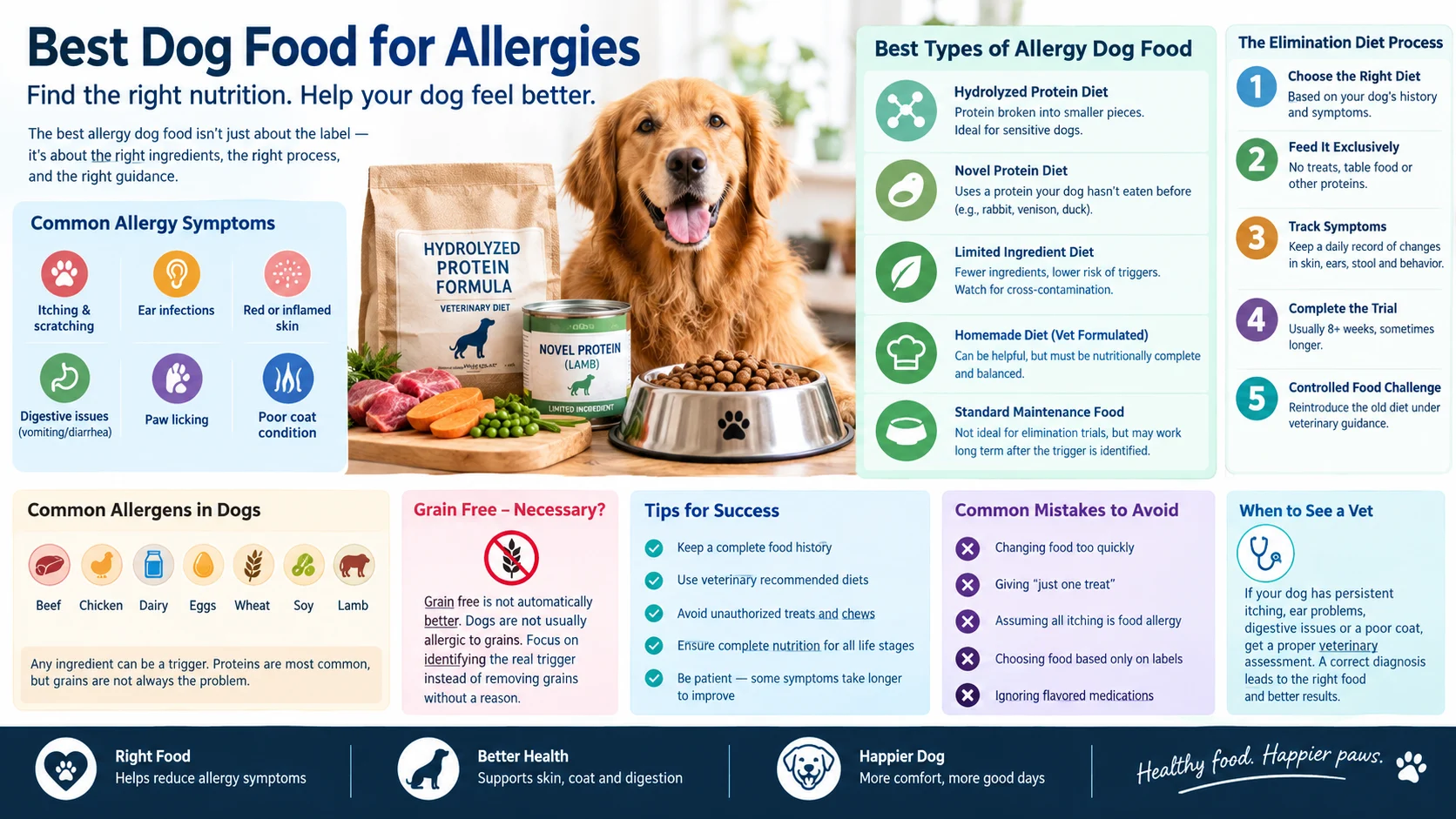
The best dog food for allergies is usually a veterinary hydrolyzed protein diet or a novel protein diet selected with your veterinarian. These diets help identify and avoid ingredients that trigger reactions in dogs. Common food allergens include beef, dairy, and chicken. A strict elimination diet, typically lasting at least 8 weeks, can help confirm a food allergy. Avoid unapproved treats and table scraps during the trial, and remember that itching may also result from environmental allergies, fleas, or skin infections.
Quick Snapshot Table
| Category | Best Approach |
|---|---|
| Best dog food for allergies | Veterinary hydrolyzed or appropriate novel protein diet |
| Most common food allergens | Beef, dairy, chicken and other proteins |
| Main allergy symptoms | Itching, recurrent ear or skin problems, gastrointestinal signs |
| Best diagnostic method | Elimination diet followed by controlled food challenge |
| Typical food trial | At least 8 weeks, often longer depending on symptoms |
| Hydrolyzed protein | Protein broken into smaller fragments |
| Novel protein | Protein the dog has not previously eaten |
| Grain-free required? | No, unless a specific ingredient is identified as a problem |
| Treats during food trial | Only veterinarian approved options |
| Homemade allergy diet | Should be formulated by a veterinary nutrition professional |
| Long-term management | Strict avoidance of confirmed trigger ingredients |
What Is the Best Dog Food for Allergies?
For dogs with a suspected food allergy, the best diet is usually a veterinary therapeutic food containing hydrolyzed protein or a carefully selected novel protein, rather than simply choosing a food labeled “sensitive,” “natural,” or “limited ingredient.”
That distinction matters.
A dog can react to almost any dietary ingredient, although proteins are common triggers. Beef, dairy and chicken are among the frequently reported allergens in dogs.
So the goal is not to find the most fashionable allergy dog food.
The goal is to identify what your individual dog reacts to and then remove that trigger consistently.
Understanding Food Allergies in Dogs
What Is a Food Allergy?
A food allergy is an immune reaction to an ingredient in a dog’s diet, commonly involving a protein.
It is different from simply having a sensitive stomach.
A dog with a food allergy may develop:
- persistent itching
- red or inflamed skin
- recurrent ear infections
- paw licking
- hair loss from scratching or chewing
- vomiting
- diarrhea
- poor coat condition
Food allergies can occur at different ages and are not restricted to one particular breed.
Food Allergy vs Food Intolerance
These terms are often mixed together.
| Food Allergy | Food Intolerance |
|---|---|
| Involves an immune response | Does not necessarily involve an immune response |
| Often causes itching or skin problems | More commonly associated with digestive upset |
| Requires identifying and avoiding the trigger | Management depends on the specific intolerance |
| Needs proper veterinary diagnosis | May also require dietary investigation |
The symptoms can overlap, which is why changing foods repeatedly without a clear plan can become frustrating.
Signs Your Dog May Need Allergy Dog Food
Skin Symptoms
Skin problems are among the biggest clues.
Watch for:
- constant scratching
- chewing paws
- rubbing the face
- red skin
- recurrent hot spots
- hair loss
- repeated skin infections
Ear Problems
Recurring ear inflammation can also occur alongside food allergy.
A dog that repeatedly develops itchy or inflamed ears deserves a proper veterinary assessment rather than simply another bag of dog food.
Digestive Symptoms
Some dogs with adverse food reactions experience:
- loose stools
- diarrhea
- vomiting
- excessive gas
- changes in appetite
- poor body condition
Not every dog with digestive problems has a food allergy.
That is an important distinction.
Why Choosing Dog Food for Allergies Can Be Confusing
Walk into a pet store and you may see:
“Limited ingredient.”
“Sensitive skin.”
“Hypoallergenic.”
“Grain free.”
“Natural.”
“Novel protein.”
These terms do not all mean the same thing.
The Label Is Not the Diagnosis
A retail food may appear appropriate because it contains one primary protein, yet manufacturing cross contamination can still complicate an elimination trial. Veterinary therapeutic diets use additional manufacturing controls designed to reduce this problem.
This is why a veterinarian may recommend a prescription allergy diet even when a cheaper retail product looks similar on paper.
Hydrolyzed Protein Dog Food
What Does Hydrolyzed Protein Mean?
Hydrolyzed protein is protein that has been broken into much smaller fragments.
The purpose is to make the protein less recognizable to the immune system and therefore reduce the likelihood of triggering a reaction.
When Is It Useful?
Hydrolyzed diets are particularly useful when:
- your dog’s previous diet contains many protein sources
- the dietary history is unclear
- several ingredients may be suspected
- a reliable elimination trial is needed
However, not every dog responds identically to every hydrolyzed formula.
The degree of hydrolysis varies between diets, so veterinary selection matters.
Novel Protein Dog Food
What Is a Novel Protein?
A novel protein is a protein your dog has not previously consumed.
Depending on the dog’s dietary history, a veterinarian might consider ingredients such as:
- rabbit
- venison
- duck
But “novel” is individual.
A protein that is unusual for one dog may be completely unsuitable for another if that dog has already eaten it.
Why Diet History Matters
Before selecting dog food for allergies, write down everything your dog has eaten, including:
- previous dog foods
- treats
- table scraps
- dental chews
- supplements
- flavored medications
This information helps the veterinarian choose a genuinely appropriate trial diet.
Best Types of Dog Food for Dogs With Allergies
| Food Type | Best Use | Important Consideration |
|---|---|---|
| Hydrolyzed protein | Suspected food allergy | Usually veterinary supervised |
| Novel protein | Controlled elimination trial | Must be genuinely novel |
| Limited ingredient retail food | Sometimes useful after diagnosis | Cross contamination can be an issue |
| Homemade diet | Specific dietary investigation | Must be nutritionally balanced |
| Standard maintenance food | Healthy dogs without confirmed allergy | Not designed specifically for elimination trials |
Which Is Usually the Best Choice?
For a dog undergoing an actual allergy investigation, a veterinary hydrolyzed or carefully selected novel-protein diet is generally the most reliable starting point.
Once the offending ingredient has been identified, your veterinarian can help determine whether a suitable commercial maintenance food can be used long term.
How an Elimination Diet Works
Step 1: Choose the Trial Diet
Your veterinarian selects a nutritionally complete diet based on your dog’s medical and dietary history.
Step 2: Feed It Exclusively
This is where many owners accidentally ruin an otherwise useful trial.
During the trial, the dog generally cannot have:
- regular treats
- table food
- flavored supplements
- rawhide
- unauthorized chews
- flavored medications
Even small amounts of another protein can interfere with the results.
Step 3: Track Symptoms
Keep a simple daily record of:
- itching
- paw licking
- ear condition
- stool quality
- vomiting
- skin redness
- medications
This gives your veterinarian something much more useful than “he seems better.”
Step 4: Complete the Trial
An elimination trial commonly lasts at least 8 weeks, while some veterinary references recommend longer periods depending on the clinical signs.
Skin symptoms can take longer to settle than gastrointestinal symptoms.
Step 5: Controlled Food Challenge
If the dog improves, the previous diet or suspected ingredients may be reintroduced under veterinary guidance.
A return of the original symptoms supports the diagnosis of a food allergy.
Why Grain Free Is Not Automatically Better
This is one of the biggest misconceptions in the allergy dog food market.
Dogs are not automatically allergic to grains.
A dog may react to wheat or another grain ingredient, but grains are not inherently responsible for most canine food allergies. Proteins are more commonly involved.
So don’t choose grain free simply because your dog is itchy.
Find the actual trigger.
Common Food Allergens in Dogs
Ingredients Frequently Associated With Reactions
Commonly reported triggers include:
- beef
- dairy
- chicken
- eggs
- wheat
- soy
- lamb
However, virtually any dietary ingredient can cause a reaction in an individual dog.
Does Chicken Always Cause Allergies?
No.
Chicken is a common allergen, but that does not mean every itchy dog should automatically be switched away from chicken.
The correct diet depends on the individual dog’s history and diagnostic trial.
Puppy Development and Allergy Nutrition
Puppies Need More Than an Allergy Friendly Label
If the affected dog is a puppy, nutritional adequacy becomes especially important.
A puppy’s food should be appropriate for:
- growth
- skeletal development
- expected adult size
During an elimination diet, the selected food still needs to provide complete and balanced nutrition for the puppy’s life stage.
This is one reason homemade elimination diets should not be improvised from internet recipes.
Homemade Dog Food for Allergies
Can You Make Allergy Food at Home?
Yes, but it should be professionally formulated.
A homemade diet can be useful when a veterinarian and qualified veterinary nutrition professional need precise control over ingredients.
The danger is nutritional imbalance.
Simply cooking:
- one meat
- rice
- vegetables
does not automatically create a complete diet.
Long term homemade feeding should be formulated to meet the dog’s nutritional requirements. Vca
Common Mistakes When Feeding Dogs With Allergies
Changing Food Too Quickly
Switching between five different foods makes it difficult to identify the actual trigger.
Giving “Just One Treat”
This is perhaps the most common elimination diet mistake.
One bite of another food can compromise a strict trial.
Assuming Itching Means Food Allergy
Environmental allergies, fleas, parasites and skin infections can create similar symptoms.
Choosing a Food Because It Says “Hypoallergenic”
Marketing terminology does not replace veterinary diagnosis.
Ignoring Flavored Medications
Some oral medications and supplements contain proteins or flavorings that can interfere with an elimination trial.
Insights Most Dog Food Articles Miss
The Best Food Is Not the Same for Every Allergic Dog
There is no single universally best allergy dog food.
The right choice depends on:
- suspected trigger
- previous diet
- age
- medical history
- digestive symptoms
- skin symptoms
- nutritional requirements
Food Allergy Is Less Common Than Many Owners Assume
Dogs can certainly have food allergies, but environmental allergies are also important causes of itching.
That means an expensive food change may accomplish little if the actual problem is:
- pollen
- flea allergy
- mites
- secondary infection
Improvement Does Not Always Prove an Allergy
A dog may improve after switching foods without actually having a confirmed food allergy.
A controlled dietary challenge helps distinguish a true food reaction from coincidence or another simultaneous change.
Buyer Warning Section
Be Careful With “Miracle Allergy Foods”
Avoid products marketed with claims such as:
- “cures allergies”
- “permanently eliminates itching”
- “works for every allergic dog”
Food can be an important part of managing a confirmed food allergy, but it is not a universal cure for canine itching.
What a Responsible Food Choice Looks Like
Look for:
- complete and balanced nutrition
- appropriate life stage formulation
- clearly understood protein sources
- veterinary guidance when conducting an elimination trial
- reputable manufacturing standards
The cheapest food is not necessarily the least expensive option if repeated diet changes fail to solve the underlying problem.
Step by Step Feeding Guide
Before Starting
Create a complete food history.
Write down:
- current food
- previous foods
- treats
- chews
- supplements
- medications
- table food
During the Trial
Feed only the prescribed diet unless your veterinarian approves something else.
Keep:
- fresh water available
- feeding times consistent
- symptom records
- treats restricted
After Improvement
Do not immediately return to the old routine.
Discuss the next diagnostic step with your veterinarian, particularly if the goal is to identify the specific offending ingredient.
Lifestyle Compatibility
| Dog Situation | Recommended Approach |
|---|---|
| Mild suspected food sensitivity | Veterinary evaluation and diet history |
| Chronic itchy dog | Allergy workup plus dietary trial if indicated |
| Recurrent ear infections | Veterinary examination and possible elimination trial |
| Dog with diarrhea | Nutritional evaluation and veterinary guidance |
| Puppy with suspected allergy | Growth appropriate therapeutic diet |
| Confirmed food allergy | Strict avoidance of identified trigger |
| Multiple suspected ingredients | Hydrolyzed veterinary diet may be useful |
Preparation Checklist
Before beginning a food allergy trial, make sure you have:
Food
☐ Veterinary selected diet
☐ Correct life stage formula
☐ Enough food for the entire trial
Household
☐ No unauthorized treats
☐ No table scraps
☐ Separate feeding if other pets have different food
Health Tracking
☐ Itching record
☐ Stool record
☐ Ear and skin observations
☐ Medication list
Veterinary Planning
☐ Complete diet history
☐ Follow up appointment
☐ Clear instructions for the food challenge
Frequently Asked Questions
What is the best dog food for allergies?
For a suspected food allergy, a veterinarian may recommend a hydrolyzed protein or genuinely novel protein diet. The best choice depends on what the dog has previously eaten and its individual symptoms.
What is the best dog food for dogs with allergies?
There is no single food that works for every allergic dog. A controlled elimination diet is usually more useful than randomly trying multiple commercial formulas.
Is hydrolyzed dog food better than limited ingredient food?
For a formal elimination trial, veterinary hydrolyzed diets can offer advantages because they are designed and manufactured specifically for this purpose and reduce concerns about undeclared or contaminating proteins.
What foods are dogs most commonly allergic to?
Beef, dairy and chicken are frequently reported allergens, although dogs can develop reactions to many different ingredients.
Should I give my allergic dog grain free food?
Not automatically. Grain free does not mean allergy free, and grains are not the most common cause of canine food allergies.
How long should a dog stay on allergy dog food?
A diagnostic elimination trial commonly lasts at least 8 weeks, with some cases requiring a longer period. Your veterinarian should determine the appropriate duration.
Can food allergies in dogs be cured?
There is generally no cure that makes a confirmed food allergy disappear. Long term management focuses on identifying and avoiding the triggering ingredient.
Can I give treats during an elimination diet?
Only if they are specifically compatible with the trial diet and approved by your veterinarian. Ordinary treats, chews and flavored medications can interfere with the trial.
Conclusion
The best dog food for allergies is not necessarily the food with the most impressive ingredient list or the biggest “hypoallergenic” label.
For dogs with suspected food allergies, the smarter approach is diagnostic rather than experimental: establish a detailed diet history, work with a veterinarian, use an appropriate elimination diet, and identify the actual trigger through a controlled challenge when appropriate.
Hydrolyzed protein and carefully selected novel protein diets can be valuable tools, but neither is a universal solution.
Most importantly, remember this: a dog that is itchy is not automatically a dog with a food allergy. Environmental allergies, fleas, infections and other conditions can produce similar signs. Getting the diagnosis right is what ultimately leads to the right food, the right treatment, and a more comfortable dog.