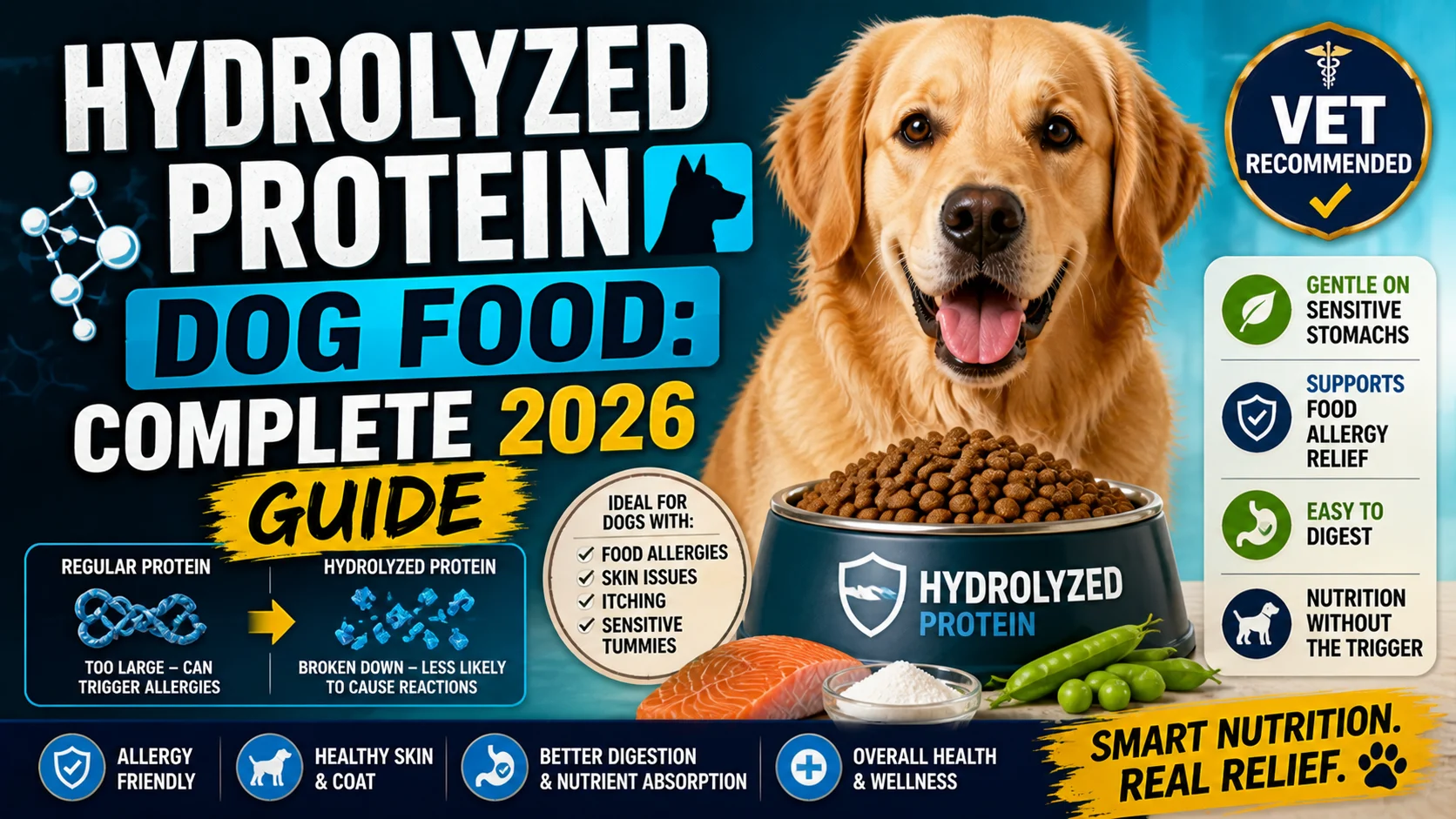
Hydrolyzed protein dog food is a specialized diet in which proteins are broken into smaller peptides to reduce the chance of triggering food related immune reactions. It is commonly used under veterinary guidance for dogs with suspected food allergies or certain digestive problems.
Quick Snapshot
| Category | Key Information |
|---|---|
| Also Called | Hydrolyzed dog food |
| Main Purpose | Managing suspected food allergies or adverse food reactions |
| How It Works | Protein is broken into smaller peptide fragments |
| Common Protein Sources | Hydrolyzed chicken, soy, salmon and other proteins |
| Best Known Use | Veterinary elimination diet trials |
| Helps With | Some food related skin and digestive problems |
| Allergy Cure | No |
| Requires Vet Guidance | Often recommended |
| Typical Trial | About 6 to 10 weeks, depending on veterinary protocol |
| Main Challenge | Strict dietary compliance |
| Cost | Usually higher than standard dog food |
What Is Hydrolyzed Protein Dog Food?
Hydrolyzed protein dog food is a specialized diet in which intact dietary proteins are broken down into much smaller peptide fragments through hydrolysis. The goal is to make those protein fragments less likely to trigger an immune response in a dog with a suspected adverse food reaction.
In simple terms, hydrolyzed dog food changes the size of the protein rather than simply removing protein from the diet.
This distinction is important.
A hydrolyzed diet can still contain protein. The difference is that the protein has been processed into smaller components that are less likely to be recognized as the original allergenic protein.
How Does Hydrolyzed Dog Food Work?
The Protein Is Broken Down
Normal dog food contains intact proteins from ingredients such as:
- chicken
- beef
- fish
- dairy
- soy
During hydrolysis, these proteins are broken into smaller peptide fragments.
The smaller fragments are less likely to connect with immune receptors in the same way as larger intact proteins.
Why Protein Size Matters
Protein is commonly involved in adverse food reactions because the immune system can recognize particular protein structures.
Hydrolysis reduces the size of those structures.
That does not mean every hydrolyzed diet is completely incapable of causing a reaction. The degree of hydrolysis differs between products, and some dogs can still react to particular formulations.
Why Do Veterinarians Recommend Hydrolyzed Protein Dog Food?
The most important use is investigating or managing suspected food allergies and other adverse food reactions.
Dogs with food related problems may develop:
- chronic itching
- recurrent ear problems
- skin inflammation
- paw licking
- gastrointestinal upset
- vomiting
- diarrhea
The challenge is that these symptoms can also have other causes.
That is why simply switching foods randomly is rarely a reliable diagnostic strategy.
Hydrolyzed Food as an Elimination Diet
A veterinarian may recommend a hydrolyzed diet as part of an elimination diet trial.
During the trial, the dog must eat the prescribed diet exclusively for the recommended period. Treats, table food, flavored medications and other edible products can interfere with the result.
This is where many owners unintentionally make the trial fail.
Hydrolyzed Protein Dog Food vs Regular Dog Food
| Feature | Hydrolyzed Protein Dog Food | Standard Dog Food |
|---|---|---|
| Protein | Hydrolyzed into smaller peptides | Usually intact |
| Primary Purpose | Therapeutic nutrition | General nutrition |
| Food Allergy Trials | Commonly used | Usually unsuitable |
| Ingredient Control | Typically strict in veterinary diets | Varies |
| Veterinary Supervision | Often recommended | Not normally required |
| Price | Usually higher | Usually lower |
| Suitable for Every Dog | No | Many healthy dogs |
A hydrolyzed diet is not automatically “better” than ordinary dog food.
It is more specialized.
For a healthy dog without a medical reason to use one, there may be no advantage to paying more for a therapeutic hydrolyzed formula.
Hydrolyzed Dog Food for Food Allergies
Does It Actually Help Allergic Dogs?
It can.
Veterinary hydrolyzed diets are commonly used when a food allergy or adverse food reaction is suspected. Their purpose is to reduce the likelihood that the immune system recognizes dietary proteins strongly enough to produce clinical signs.
However, a hydrolyzed diet should not be viewed as a universal allergy cure.
If the dog continues receiving another food containing a problematic protein, the elimination trial may become difficult to interpret.
Common Signs That May Improve
Depending on the underlying condition, improvement may involve:
- reduced itching
- healthier skin
- fewer recurrent ear problems
- improved stool quality
- reduced vomiting
- fewer gastrointestinal episodes
Improvement does not automatically prove a food allergy.
A properly managed dietary challenge may be needed to confirm that food was actually responsible.
Hydrolyzed Protein Dog Food for Sensitive Stomachs
Hydrolyzed diets are also used in some dogs with gastrointestinal problems.
A dog with chronic digestive issues may show:
- loose stools
- vomiting
- excessive gas
- poor appetite
- inconsistent bowel movements
But “sensitive stomach” is a broad description rather than a diagnosis.
The real question is why the dog has digestive problems.
Parasites, infections, pancreatitis, inflammatory disease, dietary indiscretion and other medical conditions can produce similar symptoms.
A hydrolyzed diet may be useful in selected cases, but it should not replace veterinary investigation.
What Ingredients Are in Hydrolyzed Dog Food?
Hydrolyzed diets can use different protein sources.
Depending on the formulation, you may see:
- hydrolyzed chicken
- hydrolyzed chicken liver
- hydrolyzed soy
- hydrolyzed salmon
- other hydrolyzed proteins
Commercial veterinary formulas differ considerably.
For example, some current veterinary diets use hydrolyzed soy, while others use hydrolyzed chicken or salmon.
This is why reading only the front of the bag can be misleading.
Look Beyond the Word “Hydrolyzed”
Check:
- protein source
- carbohydrate sources
- fat sources
- flavoring
- treats used with the diet
- medication ingredients
A strict elimination trial requires attention to the entire dietary exposure, not just the main protein listed on the bag.
Hydrolyzed vs Novel Protein Dog Food
These two approaches are often confused.
Hydrolyzed Protein Diet
The original protein is broken down into smaller peptides.
Novel Protein Diet
The dog receives an intact protein source that it has not previously eaten.
| Factor | Hydrolyzed | Novel Protein |
|---|---|---|
| Protein form | Broken into peptides | Intact |
| Previous diet history | Less critical | Very important |
| Food allergy trial | Yes | Yes |
| Cross reaction | Reduced but not eliminated | Possible |
| Ingredient control | Important | Important |
| Best Choice | Depends on the individual dog | Depends on the individual dog |
Veterinary nutrition specialists may choose one approach based on the dog’s previous diet, symptoms and medical history.
Puppy Development and Hydrolyzed Dog Food
Can Puppies Eat Hydrolyzed Protein Dog Food?
Some hydrolyzed diets are specifically formulated for adult maintenance, while others may be appropriate for growth.
This distinction matters.
A puppy should not automatically be placed on an adult veterinary diet simply because it has digestive or skin problems.
The nutritional requirements of growing puppies are different.
What Owners Should Check
Before feeding a hydrolyzed diet to a puppy, confirm:
- life stage suitability
- complete and balanced nutritional status
- calorie requirements
- growth rate
- veterinarian recommendation
For large breed puppies, calcium, phosphorus, energy density and controlled growth are particularly important considerations.
How Long Does a Dog Need Hydrolyzed Food?
There is no single answer for every dog.
For a diagnostic elimination trial, veterinary sources commonly describe periods around 6 to 10 weeks, while some protocols use longer periods depending on the clinical problem.
The important part is consistency.
A dog cannot complete a meaningful elimination trial if the owner gives:
- chicken treats
- table scraps
- flavored chews
- another brand of food
- protein containing supplements
Even small dietary exposures can complicate interpretation.
Step by Step Guide to Feeding Hydrolyzed Dog Food
Step 1: Discuss Symptoms With Your Veterinarian
Do not assume itching or diarrhea means food allergy.
First establish whether dietary investigation makes sense.
Step 2: Record the Dog’s Previous Diet
Write down:
- current food
- previous foods
- treats
- chews
- supplements
- table foods
- flavored medications
A detailed diet history can make choosing an elimination diet much easier.
Step 3: Choose the Appropriate Diet
Your veterinarian may recommend:
- hydrolyzed protein
- novel protein
- another therapeutic diet
Step 4: Feed It Exclusively
This is the step owners most often underestimate.
- No random treats.
- No leftovers.
- No “just one bite.”
Step 5: Monitor Clinical Changes
Track:
- itching
- ear inflammation
- stool consistency
- vomiting
- appetite
- skin condition
Step 6: Follow the Veterinary Rechallenge Plan
If signs improve, the veterinarian may recommend reintroducing individual ingredients to determine whether the dog truly has a food related reaction.
Hydrolyzed Dog Food Common Mistakes
Giving Regular Treats
A hydrolyzed diet trial can be undermined by treats containing intact proteins.
Using Flavored Medication Without Checking
Chewable medications and supplements may contain protein ingredients that interfere with an elimination trial.
Switching Between Multiple Foods
Constant food changes make it difficult to determine what actually helped.
Assuming Grain Free Means Hydrolyzed
It does not.
A grain free food can contain multiple intact animal proteins and is not automatically hypoallergenic or hydrolyzed.
Stopping Too Early
Skin symptoms may take time to improve. Abandoning the trial after a few days can produce an inaccurate conclusion.
What Most Articles Miss About Hydrolyzed Dog Food
Hydrolyzed Does Not Mean Allergen Free
This is one of the most important distinctions.
Hydrolysis reduces immune recognition, but it does not guarantee that every dog will tolerate every hydrolyzed formula.
Manufacturing Quality Matters
For diagnostic elimination trials, veterinary therapeutic diets are generally preferred because manufacturing controls help reduce the possibility of unintended protein contamination.
The Dog’s History Changes the Decision
A dog that has eaten chicken, beef, lamb, fish and multiple commercial foods has a very different dietary history from a dog that has only eaten one protein.
That history can influence whether a veterinarian chooses hydrolyzed or novel protein nutrition.
Is Hydrolyzed Dog Food Expensive?
Usually, yes.
Hydrolyzed veterinary diets are specialized products and commonly cost more than ordinary maintenance dog foods.
The higher price reflects:
- specialized protein processing
- therapeutic formulation
- quality control
- veterinary nutrition research
- controlled manufacturing
The cost should therefore be judged against the medical purpose, not compared directly with ordinary supermarket kibble.
Choosing a Hydrolyzed Protein Dog Food
Look for These Qualities
A suitable veterinary diet should have:
- clearly identified hydrolyzed protein
- appropriate nutritional adequacy
- controlled formulation
- appropriate life stage
- veterinary suitability
Be Careful With Marketing Claims
Words such as:
- hypoallergenic
- sensitive
- limited ingredient
- natural
- grain free
do not automatically mean the food is appropriate for a diagnostic elimination trial.
The formulation and manufacturing process matter more than marketing language.
Buyer Warning Section
Do Not Buy a Hydrolyzed Diet Simply Because It Sounds Healthier
Hydrolyzed protein dog food is a therapeutic nutritional strategy, not a premium upgrade that every dog needs.
If your dog is healthy and thriving on a complete and balanced conventional diet, there is generally no reason to switch to hydrolyzed food solely because it sounds more advanced.
When Veterinary Guidance Is Especially Important
Speak with a veterinarian if your dog has:
- persistent itching
- recurrent ear infections
- chronic diarrhea
- repeated vomiting
- unexplained weight loss
- severe skin problems
- poor appetite
These signs deserve proper diagnosis rather than repeated food experimentation.
Lifestyle Compatibility
| Dog Situation | Hydrolyzed Diet May Be Appropriate? |
|---|---|
| Confirmed food allergy | Often |
| Suspected food allergy | Often considered |
| Chronic food responsive GI disease | Sometimes |
| Healthy dog with no symptoms | Usually unnecessary |
| Puppy | Depends on formulation |
| Senior dog | Depends on health status |
| Multiple previous diets | Often useful during elimination testing |
Preparation Checklist
Before starting a hydrolyzed diet trial, prepare:
Food
□ Veterinary recommended diet
□ Measuring cup or kitchen scale
□ Clean food and water bowls
Treats
□ Approved compatible treats
□ No table scraps
□ No unauthorized chews
Medication
□ Check flavored medications
□ Check supplements
□ Ask about protein containing products
Monitoring
□ Record itching level
□ Track stool quality
□ Monitor vomiting
□ Photograph skin changes when useful
□ Keep veterinary follow up appointments
Frequently Asked Questions
What is hydrolyzed protein dog food?
It is dog food containing proteins that have been broken into smaller peptide fragments to reduce the likelihood of an immune reaction.
Is hydrolyzed dog food good for dogs with allergies?
It can be very useful for dogs with suspected food allergies or adverse food reactions, particularly as part of a veterinarian supervised elimination diet.
Does hydrolyzed dog food stop allergies?
No. It helps manage dietary reactions by reducing exposure to recognizable protein structures. It does not cure a dog’s underlying tendency to develop allergies.
Can a dog still react to hydrolyzed protein?
Yes. Hydrolysis does not guarantee zero allergenicity, and the degree of protein breakdown differs among diets.
How long should a dog eat hydrolyzed food?
For an elimination trial, approximately 6 to 10 weeks is commonly used, although the appropriate duration depends on the dog’s condition and veterinary protocol.
Is hydrolyzed dog food the same as limited ingredient food?
No. Limited ingredient food generally uses intact proteins with fewer ingredients, while hydrolyzed food uses proteins that have been broken into smaller peptides.
Is hydrolyzed dog food grain free?
Not necessarily. Hydrolyzed and grain free describe different characteristics of a diet and should not be treated as interchangeable terms.
Can puppies eat hydrolyzed protein dog food?
Some formulas are suitable for growing dogs, while others are designed for adult maintenance. Puppies should receive a formula appropriate for their growth stage under veterinary guidance.
Does hydrolyzed dog food help with diarrhea?
It can help some dogs when dietary sensitivity or food responsive gastrointestinal disease is involved, but diarrhea has many possible causes and should not automatically be attributed to food allergy.
Can I give treats during a hydrolyzed diet trial?
Only treats approved as compatible with the trial should be used. Ordinary treats can introduce proteins that interfere with the diagnostic process.
Conclusion
Hydrolyzed protein dog food is best understood as a specialized veterinary nutrition tool, not simply another type of premium dog food.
Its defining feature is protein hydrolysis: intact dietary proteins are broken into smaller fragments that are less likely to trigger an immune response in susceptible dogs.
For dogs with suspected food allergies, chronic skin problems or certain gastrointestinal conditions, a properly managed hydrolyzed diet trial can be extremely useful. But success depends on strict compliance, appropriate product selection and veterinary interpretation.
The most important takeaway is simple: hydrolyzed dog food works best when there is a clear medical reason for using it. Choosing the right formula matters, but so does eliminating every unintended dietary exposure that could compromise the trial.