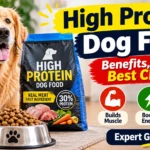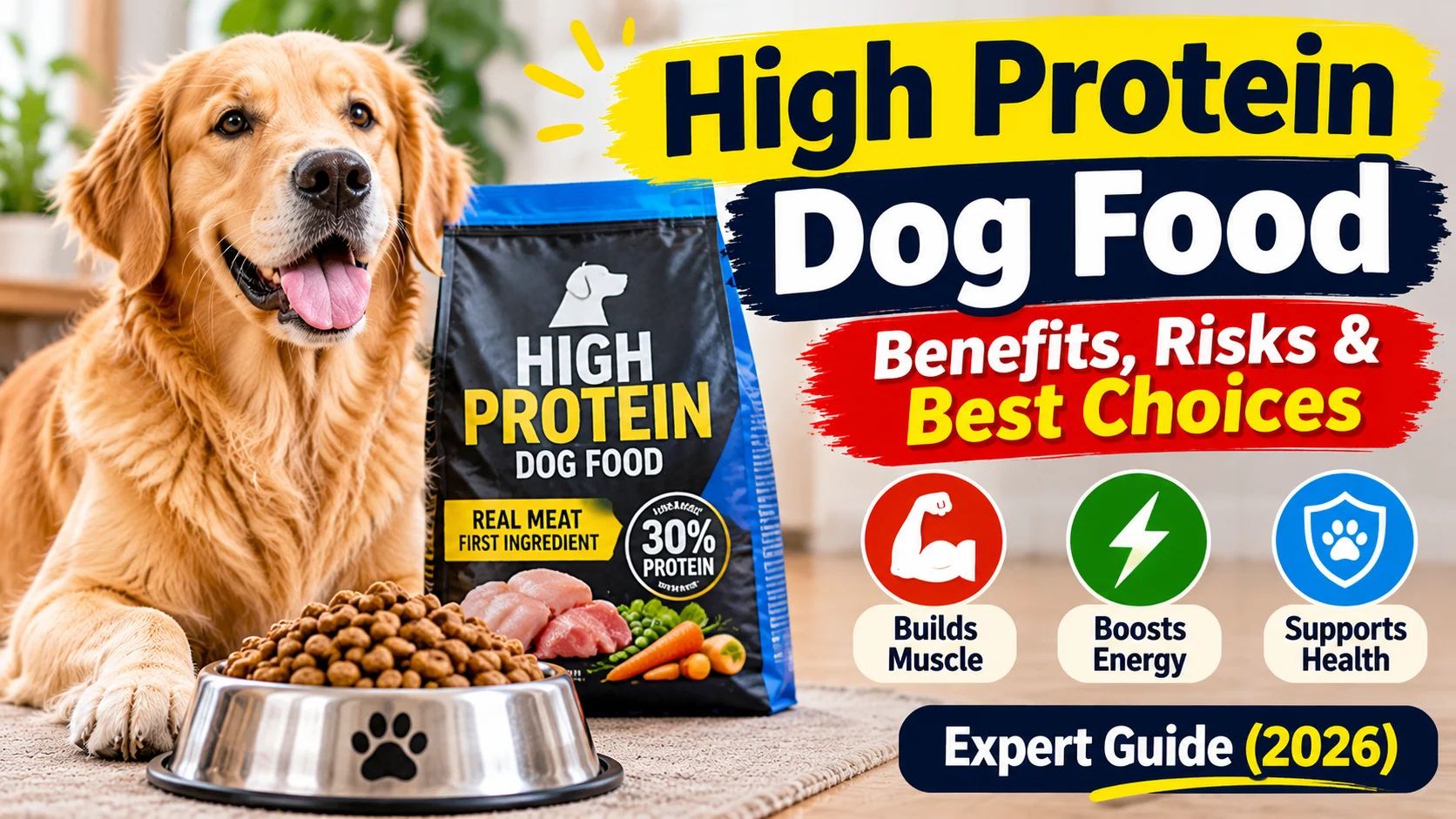
High-protein dog food contains increased levels of animal or plant-based protein to support muscle development, tissue repair, energy, and overall health. The best high-protein dog food provides complete and balanced nutrition with quality protein sources such as chicken, beef, fish, or lamb. The ideal protein level depends on your dog’s age, activity level, size, and health needs.
Protein is one of the most important nutrients in a dog’s diet. It supports muscle development, tissue repair, healthy skin, coat condition, immune function, and many essential processes throughout the body. Because of these benefits, high protein dog food has become increasingly popular among pet owners.
These diets are often marketed for active dogs, growing puppies, working breeds, senior dogs, and pets that need to maintain lean muscle mass. Many formulas contain animal-based ingredients such as chicken, beef, fish, lamb, and eggs, alongside plant-based protein sources.
But does every dog need high protein dog food?
Not necessarily. While adequate protein is essential for all dogs, feeding more protein than a dog needs does not automatically improve health, strength, or energy. The right amount depends on age, activity level, body condition, calorie intake, protein quality, and overall health.
This guide explains what high protein dog food is, its potential benefits and risks, popular food options, and how to choose a balanced formula for your dog.
What Is High Protein Dog Food?
High protein dog food contains a higher proportion of crude protein than many standard maintenance formulas.
There is no single universally accepted regulatory definition of high protein dog food. In everyday pet-food discussions, adult formulas containing approximately 25% to 30% or more protein on a dry-matter basis are often described as high protein.
However, the percentage printed on a dog food label can be misleading because dry kibble and wet food contain different amounts of water.
For a meaningful comparison, consider protein on a dry-matter basis or, better still, grams of protein per 1,000 calories.
Common Protein Sources
High protein dog food may contain ingredients such as:
- Chicken and chicken meal.
- Beef and beef meal.
- Lamb.
- Turkey.
- Salmon and other fish.
- Eggs.
- Pork.
- Peas and lentils.
- Other plant-based protein ingredients.
Animal-based ingredients can provide essential amino acids in useful proportions. Plant ingredients can also contribute protein and other nutrients when the overall recipe is properly balanced.
The quality of a protein source depends on its amino acid profile, digestibility, processing, and contribution to the complete diet not simply whether it comes from an animal.
Best High Protein Dog Food Options in 2026
Several established brands offer formulas with relatively high protein levels. The products below are examples to compare, not a universal ranking. Exact recipes, protein percentages, and availability can vary by country.
| Dog Food | Main Protein Sources | Best Suited For |
| Orijen Original | Poultry, fish, eggs | Owners comparing protein-rich adult formulas |
| Acana High-Protein Recipes | Animal proteins and selected plant ingredients | Dogs whose owners prefer protein-focused recipes |
| Taste of the Wild High Prairie | Beef, bison, and other animal proteins, depending on formula | Adult dogs needing an alternative protein-rich recipe |
| Wellness CORE Original | Turkey, chicken, and other ingredients | Adult dogs on a protein-focused diet |
| Merrick Grain Free Real Texas Beef | Beef and other animal and plant ingredients | Dogs suited to the specific grain-free formulation |
| Purina Pro Plan Sport Performance | Poultry-based protein sources, depending on formula | Active and sporting dogs |
| Victor Hi-Pro Plus | Beef, chicken, pork, and fish ingredients, depending on formulation | Active adult dogs |
Always check the current nutritional adequacy statement, calorie content, ingredient list, and life-stage suitability before purchasing.
1. Orijen Original
Orijen Original is a protein-focused dog food made with multiple animal-derived ingredients, including poultry, fish, and eggs.
Potential benefits:
- Includes several animal protein sources.
- Provides a relatively high protein concentration.
- Offers a variety of animal-derived ingredients.
- May suit adult dogs that tolerate its ingredient profile.
Considerations:
Its multiple protein sources may not be appropriate for dogs with certain food allergies. Check the complete formulation and calorie density, particularly if your dog needs weight management.
2. Acana High-Protein Recipes
Acana offers several recipes designed around animal protein ingredients. The exact protein content and ingredients depend on the product line.
Potential benefits:
- Offers different animal protein combinations.
- Provides options for owners comparing protein-focused diets.
- Includes recipes with different ingredient profiles.
Considerations:
Do not assume every Acana formula has the same nutritional composition. Compare the specific product’s protein content, calories, and life-stage statement.
3. Taste of the Wild High Prairie
Taste of the Wild High Prairie is a protein-focused formula featuring animal ingredients such as beef and bison, depending on the current regional recipe.
Potential benefits:
- Provides multiple protein ingredients.
- Offers an alternative to some traditional chicken-focused recipes.
- Available in selected dry food formats.
Considerations:
A recipe containing less common animal proteins is not automatically hypoallergenic. Dogs can react to many different proteins, and the formula’s full ingredient list should be reviewed before feeding.
4. Wellness CORE Original
Wellness CORE Original is a protein-focused formula that uses ingredients such as turkey and chicken.
Potential benefits:
- Includes animal-based protein sources.
- Offers a concentrated dry-food option.
- Provides a formula designed for adult maintenance, depending on the specific product.
Considerations:
Check the exact life-stage designation and calorie content. It may not be suitable for dogs with poultry allergies.
5. Merrick Grain Free Real Texas Beef
Merrick’s Real Texas Beef recipes are marketed as protein-focused, grain-free options.
Potential benefits:
- Features beef as a prominent protein ingredient.
- Provides an alternative recipe for dogs that tolerate its ingredients.
- Offers a grain-free formulation.
Considerations:
Grain-free does not automatically mean healthier or more digestible. Discuss grain-free diets with your veterinarian, especially if your dog has cardiac risk factors or a history of heart disease.
6. Purina Pro Plan Sport Performance
Purina Pro Plan Sport Performance includes formulas designed for dogs with demanding activity requirements.
Potential benefits:
- Designed for active and sporting dogs.
- Offers nutrient-dense formulas.
- May be useful for dogs with higher energy requirements.
Considerations:
Protein is only one part of an athletic dog’s diet. Fat, total calories, hydration, digestibility, and feeding schedules also matter.
7. Victor Hi-Pro Plus
Victor Hi-Pro Plus is marketed as a nutrient-dense food for active dogs and dogs with higher energy requirements.
Potential benefits:
- Contains multiple animal-derived protein ingredients.
- Designed for dogs with greater energy demands.
- Offers a protein-focused feeding option.
Considerations:
Check the current nutritional adequacy statement and verify whether the specific product is suitable for your dog’s life stage. Formulations and availability can change.
Benefits of High Protein Dog Food
Protein plays several essential roles in canine health. A diet that supplies adequate high-quality protein can help support a dog’s physical condition and normal body functions.
1. Supports Muscle Development
Protein supplies amino acids needed to build and maintain muscle tissue.
Dogs that exercise regularly, participate in sports, or perform physically demanding work need sufficient protein to support muscle maintenance and recovery.
However, muscle development also depends on appropriate exercise, adequate calories, genetics, and overall nutrition.
2. Helps Maintain Lean Body Mass
Dogs can lose muscle when they consume insufficient protein or calories, experience illness, or become less active.
A balanced diet with adequate digestible protein can help maintain lean body mass.
This is particularly important for senior dogs, dogs recovering from certain illnesses, and pets undergoing supervised weight management.
3. Supports Skin and Coat Health
Protein provides amino acids required to produce keratin and other structural components of the skin and coat.
A diet with adequate protein and essential nutrients can help maintain normal skin condition and coat quality.
However, a dull coat or excessive shedding does not automatically mean a dog needs more protein. Parasites, allergies, endocrine disorders, and other nutritional deficiencies may also be responsible.
4. Supports Tissue Repair
Protein is required for the maintenance and repair of body tissues.
Adequate dietary protein helps supply the amino acids needed for normal tissue renewal and recovery.
Dogs recovering from injuries or certain medical conditions may have different nutritional requirements, which should be assessed by a veterinarian.
5. Supports Immune Function
Many components of the immune system depend on proteins and amino acids.
A complete diet with adequate protein helps support the production and maintenance of immune-related cells and molecules.
High protein alone does not guarantee stronger immunity. Overall nutritional balance and good health remain essential.
6. May Help With Weight Management
Protein-focused diets may help some dogs preserve lean muscle while losing excess body fat when used as part of a properly designed weight-management plan.
Protein can also contribute to satiety, although the effect depends on the complete food formulation.
For weight loss, total calorie intake and portion control remain essential. A high protein food can still cause weight gain if a dog consumes too many calories.
How Much Protein Does a Dog Need?
Protein requirements vary according to life stage, activity, body condition, reproductive status, health, and protein quality.
The Association of American Feed Control Officials (AAFCO) nutrient profiles provide minimum crude-protein levels for complete dog foods:
| Life Stage | Minimum Crude Protein on a Dry-Matter Basis |
| Adult maintenance | 18% |
| Growth and reproduction | 22.5% |
These are minimum formulation values, not personalized feeding targets or definitions of optimal protein intake.
A dog’s actual needs may differ depending on its calorie consumption, body size, activity, and health.
Understanding Protein Percentages
Dry food usually contains much less moisture than canned food. As a result, comparing the guaranteed protein percentages directly can give an inaccurate impression.
For example, a dry food with 28% protein and a wet food with 10% protein cannot be compared fairly without accounting for moisture.
Dry-matter protein can be calculated as:
Dry-matter protein percentage = (Crude protein percentage ÷ dry matter percentage) × 100
If a food contains 28% protein and 10% moisture:
- Dry matter = 90%.
- Protein on a dry-matter basis = 28 ÷ 90 × 100.
- Result = approximately 31.1%.
For a more practical nutritional comparison, grams of protein per 1,000 calories can also be useful.
High Protein Dog Food for Different Life Stages
Dogs need different nutrient levels as they grow, mature, and age. A high protein formula should always be appropriate for the dog’s life stage.
High Protein Dog Food for Puppies
Puppies need protein to support rapid growth and the development of muscles, organs, skin, and other tissues.
However, choosing a puppy food based only on its protein percentage is a mistake.
A suitable puppy diet should provide:
- Complete and balanced growth nutrition.
- Appropriate essential amino acids.
- Adequate calories.
- Correct calcium and phosphorus levels.
- Nutrients suited to the puppy’s expected adult size.
Large-breed puppies need particular attention to mineral balance and controlled growth. Choose a formula specifically appropriate for large-breed puppy development when necessary.
High Protein Dog Food for Adult Dogs
Healthy adult dogs need enough protein to maintain muscle, repair tissues, and support normal body functions.
Active adult dogs may need more calories and sometimes different nutrient concentrations than less active pets.
However, an ordinary adult dog does not necessarily benefit from a very high protein formula. A complete diet that meets its individual needs is more important than maximizing protein intake.
High Protein Dog Food for Senior Dogs
Senior dogs can gradually lose muscle mass as they age. Adequate protein and appropriate calorie intake can help support muscle maintenance.
Some healthy older dogs may benefit from a relatively protein-rich diet, especially when they are losing lean body mass.
However, senior dogs are not all alike. Kidney disease, liver disease, heart conditions, appetite changes, and other medical issues can affect dietary recommendations.
Do not automatically choose a low-protein senior food simply because a dog is older. Equally, do not start a high-protein formula without considering its medical history.
High Protein Dog Food for Active and Working Dogs
Dogs that participate in demanding physical activities may have greater nutritional needs than household pets.
Examples include:
- Hunting dogs.
- Herding dogs.
- Sled dogs.
- Search-and-rescue dogs.
- Agility competitors.
- Endurance and sporting dogs.
These dogs may benefit from a diet with suitable protein and fat levels to support muscle maintenance, recovery, and energy requirements.
Why Protein Matters for Active Dogs
During exercise, muscles undergo normal wear and repair processes. Dietary amino acids help maintain and rebuild body tissues.
Dogs with sustained high activity levels may also need more total calories and a carefully balanced supply of other nutrients.
A high-protein formula alone will not compensate for insufficient energy, poor conditioning, dehydration, or inadequate recovery.
High Protein Dog Food for Weight Loss
Protein can play a useful role in weight-management diets.
When dogs lose weight, preserving lean muscle is important. A carefully formulated diet with adequate protein and controlled calories can help reduce body fat while supporting muscle maintenance.
Look for:
- Appropriate calorie density.
- Adequate digestible protein.
- Suitable fiber levels.
- Complete and balanced nutrition.
- A feeding plan based on ideal body weight.
Do not simply feed a high-protein performance food to an overweight dog. Some performance formulas are calorie-dense and may make weight loss more difficult.
A veterinarian can calculate an appropriate calorie target and monitor changes in body condition.
Is High Protein Dog Food Safe?
For many healthy dogs, a properly formulated diet with higher protein levels can be safe.
Dogs use dietary protein to build body tissues, produce essential compounds, and provide energy when needed. Excess amino acids that are not used for protein synthesis can be metabolized, with nitrogen-containing waste products processed and excreted.
However, more protein is not always better.
The appropriate amount depends on the dog’s health, calorie intake, and nutritional needs. A high protein formula should never be used as a substitute for a diet designed to manage a specific medical condition.
Can High Protein Dog Food Cause Kidney Problems?
There is no strong evidence that high-protein food causes kidney disease in otherwise healthy dogs with normal kidney function.
However, dogs with chronic kidney disease may need a specially formulated diet that controls phosphorus and adjusts protein according to the disease stage and individual condition.
Protein restriction should not be applied automatically to every dog with kidney disease. The quality and amount of protein, phosphorus intake, calorie needs, and clinical condition all matter.
If your dog has been diagnosed with kidney disease, choose its food with veterinary guidance.
Can High Protein Dog Food Affect the Liver?
Protein metabolism involves the liver, but healthy dogs generally process dietary protein effectively.
Dogs with certain liver conditions, particularly those involving impaired ammonia handling or hepatic encephalopathy, may require a carefully selected protein source and amount.
Do not assume every dog with liver disease needs low protein. Inappropriate restriction can contribute to muscle loss and poor nutritional status.
A veterinarian should determine the correct dietary approach.
Can High Protein Dog Food Cause Weight Gain?
Protein provides calories, just like carbohydrates and fat.
If a dog eats more calories than it uses, it can gain weight regardless of whether those calories come from protein, fat, or carbohydrates.
Check the food’s calorie density and adjust the portion according to your dog’s body condition.
Animal Protein vs. Plant Protein in Dog Food
Protein sources differ in their amino acid profiles and digestibility.
Animal ingredients such as meat, fish, and eggs can provide highly digestible protein with useful essential amino acid combinations.
Plant ingredients such as peas, lentils, soy, and grains can also contribute protein. They may be used alongside animal ingredients to help create a nutritionally balanced recipe.
| Protein Source | Potential Nutritional Contribution |
| Chicken | Essential amino acids and digestible protein |
| Beef | Protein and several essential amino acids |
| Fish | Protein and, depending on the fish, omega-3 fatty acids |
| Eggs | Highly digestible protein |
| Lamb | Protein and essential amino acids |
| Peas | Plant protein and fiber |
| Lentils | Plant protein and carbohydrates |
| Soy | Plant protein and essential amino acids |
A high crude-protein percentage does not tell you how well the dog can digest the protein or whether the amino acids are present in appropriate proportions.
Look for a manufacturer that can explain its formulation and nutritional quality-control procedures.
Wet vs. Dry High Protein Dog Food
High protein diets are available in both wet and dry forms.
| Feature | Dry High Protein Food | Wet High Protein Food |
| Moisture | Low | High |
| Storage | Convenient when sealed | Refrigeration needed after opening |
| Protein concentration by weight | Often appears higher | Often appears lower because of water |
| Portion measurement | Easy to measure | Depends on packaging |
| Texture | Usually crunchy | Soft or moist |
| Calorie density | Varies | Varies |
Do not compare wet and dry foods by guaranteed protein percentage alone. Convert the values to a dry-matter basis or compare protein per 1,000 calories.
Some dogs may benefit from a combination of wet and dry food, provided the overall diet remains nutritionally balanced.
How to Choose the Best High Protein Dog Food
Selecting a suitable formula requires more than looking for the highest protein number on the package.
1. Check the Nutritional Adequacy Statement
Choose a complete and balanced food appropriate for your dog’s life stage.
A product intended only for supplemental feeding should not replace a complete daily diet unless a veterinarian has designed the feeding plan.
2. Evaluate Protein Quality
Consider the complete protein profile, ingredient digestibility, and essential amino acid balance.
A food with several protein sources may provide complementary amino acids, but ingredient variety alone does not prove superior nutritional quality.
3. Consider Calorie Content
A high-protein food can also be high in calories.
Compare calories per cup, can, or kilogram and select a portion appropriate for your dog’s body condition and activity level.
4. Choose According to Activity Level
An athletic working dog may have different energy requirements from a dog that spends most of the day indoors.
Choose a formula that matches actual activity rather than assuming every dog needs performance nutrition.
5. Consider Existing Health Conditions
Dogs with kidney disease, certain liver disorders, or other medical conditions may need specific dietary modifications.
Discuss a high-protein formula with your veterinarian before feeding it to a dog with a diagnosed health problem.
6. Review the Manufacturer’s Quality Controls
Look for a company that can provide information about:
- Qualified nutrition professionals involved in formulation.
- Ingredient quality and supplier controls.
- Finished-product testing.
- Nutritional research.
- Manufacturing consistency.
- Procedures for handling product recalls and safety concerns.
7. Monitor Your Dog’s Body Condition
After changing food, monitor:
- Body weight.
- Muscle condition.
- Appetite.
- Stool quality.
- Energy levels.
- Skin and coat condition.
Adjust feeding portions when necessary with veterinary guidance.
How Much High Protein Dog Food Should You Feed?
The correct portion depends on the food’s calorie content and your dog’s daily energy requirements.
Factors include:
- Current and ideal body weight.
- Age.
- Activity level.
- Breed and body composition.
- Neutering status.
- Health conditions.
- Whether the dog needs to gain, maintain, or lose weight.
Start with the manufacturer’s feeding guide, then adjust according to body condition and veterinary recommendations.
Avoid feeding extra food simply because a formula contains more protein. The goal is to meet nutritional requirements without providing unnecessary calories.
How to Transition to High Protein Dog Food
Changing food gradually may reduce the risk of digestive upset.
A typical seven-day transition may look like this:
| Days | New Food | Previous Food |
| 1–2 | 25% | 75% |
| 3–4 | 50% | 50% |
| 5–6 | 75% | 25% |
| 7 onward | 100% | 0% |
Monitor your dog’s stool, appetite, and energy during the transition.
If vomiting, persistent diarrhea, or other concerning symptoms develop, contact your veterinarian. Dogs with existing digestive conditions may need a slower or different transition plan.
Common Mistakes When Choosing High Protein Dog Food
Choosing the Highest Protein Percentage
The highest protein number does not necessarily indicate the best food. Amino acid balance, digestibility, calorie density, and overall nutritional adequacy are more important.
Ignoring Calories
Some high-protein formulas are also high in fat and calories. This can lead to weight gain if portions are not adjusted.
Assuming All Dogs Need Performance Food
Most household dogs do not need the same nutrient density as highly active working dogs.
Confusing Protein With Muscle Growth
Protein supplies the building blocks for muscle, but exercise, genetics, recovery, and total energy intake also influence muscle development.
Automatically Avoiding Plant Protein
Plant proteins can contribute useful nutrients when included in a carefully formulated diet. Their presence does not automatically make a dog food low quality.
Giving Extra Protein Supplements
Adding protein powders, meat supplements, or other concentrated products can unbalance an otherwise complete diet.
Consult a veterinarian before adding supplements, especially if your dog has an existing medical condition.
Buying Checklist for High Protein Dog Food
Before purchasing a formula, check the following:
- The food is complete and balanced for your dog’s life stage.
- Its protein level is appropriate for your dog’s individual needs.
- The protein sources provide a suitable amino acid profile.
- The formula has appropriate nutritional quality controls.
- Its calorie content matches your dog’s energy requirements.
- It is suitable for your dog’s breed size and growth stage.
- Existing medical conditions have been considered.
- The current ingredient list and nutritional analysis have been checked.
- The food is available consistently and fits your feeding budget.
Frequently Asked Questions
What is considered high protein dog food?
There is no universally accepted regulatory definition. Adult dog foods containing approximately 25% to 30% or more protein on a dry-matter basis are often described as high protein, but the percentage alone does not determine whether a food is appropriate.
Is high protein dog food good for dogs?
It can be beneficial when it supplies the amount and quality of protein a dog needs. It may help support muscle maintenance and tissue repair, particularly in growing, active, or certain senior dogs. However, every dog does not need an especially high-protein formula.
Can puppies eat high protein dog food?
Puppies need adequate protein for growth, but their food must also provide balanced calories, minerals, and other nutrients. Choose a complete formula designed for growth rather than relying on protein percentage alone.
Is high protein dog food good for senior dogs?
Some senior dogs benefit from adequate or relatively higher-quality protein to help maintain muscle mass. However, their overall health and medical history must be considered before selecting a diet.
Does high protein dog food cause kidney failure?
There is no strong evidence that a high-protein diet causes kidney disease in healthy dogs with normal kidney function. Dogs with existing kidney disease may need a specially formulated diet under veterinary supervision.
Can high protein dog food help dogs gain weight?
It may help support muscle development when combined with adequate calories and appropriate exercise. However, dogs that need to gain weight may require a more calorie-dense diet rather than simply more protein.
Is high protein dog food good for weight loss?
A suitable higher-protein, calorie-controlled diet may help preserve lean muscle during weight loss. Total calorie intake and portion control remain the most important factors.
What is the best protein source for dogs?
Chicken, beef, fish, eggs, lamb, and other ingredients can provide valuable protein. The best source depends on digestibility, amino acid balance, food allergies, and individual tolerance.
Can too much protein hurt a dog?
Excess protein is not automatically harmful to a healthy dog, but feeding more than necessary offers no guaranteed benefit. Dogs with certain medical conditions may need carefully adjusted protein levels.
Is high protein dog food suitable for inactive dogs?
An inactive dog can eat a high-protein food if it is nutritionally appropriate and its calorie intake is controlled. However, a high-protein performance formula may contain more calories than the dog needs.
Final Thoughts
High protein dog food can be a useful option for dogs that need adequate protein to support growth, muscle maintenance, physical activity, or certain weight-management plans. However, a higher protein percentage does not automatically make a food healthier.
The most important factors are protein quality, essential amino acid balance, digestibility, calorie content, and complete nutritional adequacy. A healthy adult dog may do perfectly well on a standard maintenance formula, while an active working dog or a dog losing muscle may need a different nutritional approach.
Choose food according to your dog’s life stage, body condition, activity level, and health status. If your dog has kidney disease, liver disease, or another medical condition, consult your veterinarian before switching to a high-protein diet.
The best dog food is not necessarily the one with the most protein. It is the one that provides the right balance of nutrients for your individual dog’s needs.