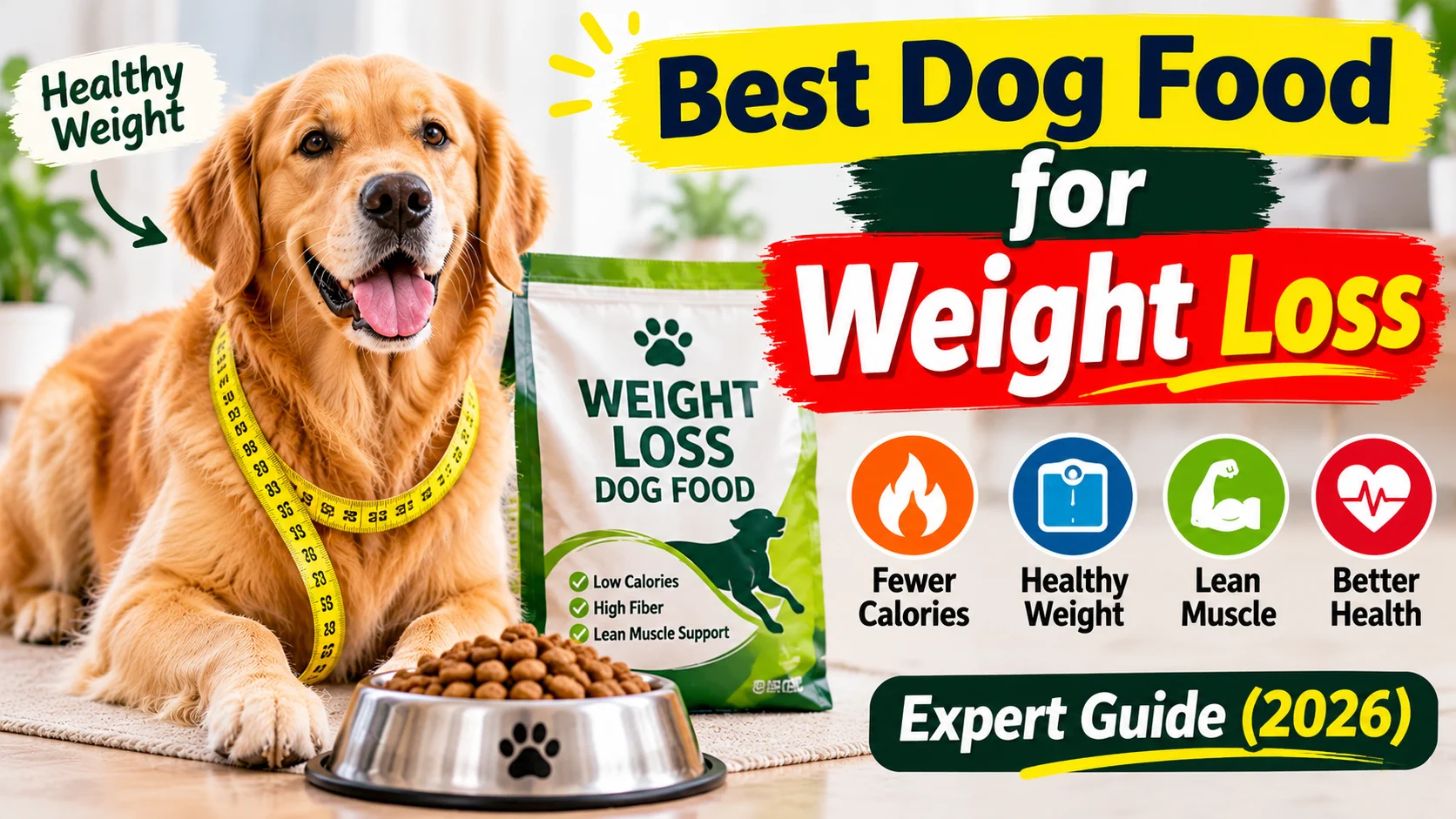
The best dog food for weight loss is a calorie-controlled, high-protein, fiber-rich formula that helps dogs lose excess fat while maintaining muscle and feeling full. Look for balanced nutrition, measured calorie portions, and veterinary-approved weight management recipes. The right food depends on your dog’s age, weight, activity level, and overall health.
Helping an overweight dog lose weight is about more than reducing food portions. The right diet should provide fewer calories while supplying enough protein, vitamins, minerals, and other essential nutrients to maintain good health.
Excess weight can increase the risk of joint problems, diabetes, breathing difficulties, reduced mobility, and other health conditions. Even a modest reduction in excess body fat can improve a dog’s comfort and quality of life.
The best dog food for weight loss is usually a carefully formulated weight-management diet with controlled calories, adequate protein, and an appropriate amount of fiber. Veterinary therapeutic formulas are particularly useful for dogs that need to lose a significant amount of weight because they are designed to provide essential nutrients even when daily calories are restricted.
This guide compares popular weight-management dog foods, explains what ingredients and nutrients matter, and provides practical advice for helping your dog reach a healthier body condition.
What Is Weight Loss Dog Food?
Weight loss dog food is formulated to help overweight dogs reduce body fat while maintaining muscle and receiving essential nutrients.
Compared with many standard maintenance foods, weight-management formulas commonly have:
- Lower calorie density.
- Controlled fat levels.
- Adequate or increased protein.
- Added dietary fiber in many formulas.
- Adjusted vitamin and mineral concentrations.
- Feeding recommendations designed around weight management.
These features help dogs consume fewer calories without necessarily reducing their food volume dramatically.
It is important to distinguish veterinary therapeutic weight-loss diets from ordinary foods labeled light, healthy weight, or weight management. Retail marketing terms do not necessarily mean a product is formulated to support substantial calorie restriction without nutritional deficiencies.
Best Dog Food for Weight Loss in 2026
Several established veterinary diets are designed specifically for canine weight management. The best option depends on your dog’s current weight, target weight, appetite, health conditions, and nutritional needs.
| Dog Food | Main Features | Best Suited For |
| Hill’s Prescription Diet Metabolic | Controlled calories and specialized weight-management formulation | Dogs needing structured weight reduction |
| Royal Canin Veterinary Satiety | High-fiber weight-management approach | Dogs that frequently seem hungry |
| Purina Pro Plan Veterinary Diets OM | Weight-management nutrition with controlled calories | Overweight dogs needing veterinary dietary support |
| Hill’s Prescription Diet r/d | Therapeutic weight-reduction formula | Selected dogs requiring intensive weight management |
| Royal Canin Veterinary Weight Management | Controlled energy and nutrient formulation | Dogs needing veterinary-supervised weight control |
| Purina Pro Plan Veterinary Diets OM Wet | Moist therapeutic weight-management food | Dogs that prefer canned food |
Product names, availability, and formulations may differ by country. Confirm the exact regional product and its nutritional suitability with your veterinarian.
1. Hill’s Prescription Diet Metabolic
<badge color=”success”>Veterinary weight-management option</badge>
Hill’s Prescription Diet Metabolic is designed for dogs that need help losing excess weight and maintaining a healthier body condition.
Its formulation focuses on calorie control while providing balanced nutrition. It is intended to support a structured weight-management program rather than simply reducing the amount of an ordinary maintenance food.
Potential benefits:
- Formulated specifically for weight management.
- Helps manage daily calorie intake.
- Provides nutrients needed during weight reduction.
- Available in selected dry and wet formats, depending on the market.
- Can be used as part of a veterinarian-supervised plan.
Considerations:
The correct daily portion depends on your dog’s target weight and response to feeding. Follow the veterinary feeding plan rather than estimating portions from current body weight alone.
2. Royal Canin Veterinary Satiety
Royal Canin Veterinary Satiety is designed for overweight dogs that need controlled calorie intake and support with appetite management.
Its formulation uses a fiber-focused approach intended to help dogs feel satisfied while consuming fewer calories.
Potential benefits:
- Designed for veterinary weight management.
- Supports portion-controlled feeding.
- Helps address food-seeking behavior in some dogs.
- Provides a therapeutic alternative to simply feeding less maintenance food.
Considerations:
Some dogs respond better to different fiber levels or textures. Your veterinarian can help determine whether this formula is appropriate for your dog’s digestive health and nutritional needs.
3. Purina Pro Plan Veterinary Diets OM
Purina Pro Plan Veterinary Diets OM is a therapeutic weight-management diet designed for dogs that need to reduce excess body fat.
It provides controlled energy while supporting nutritional requirements during calorie restriction.
Potential benefits:
- Specifically designed for weight management.
- Offers a veterinary dietary option.
- Helps support lean body mass during weight reduction.
- Available in selected dry and wet formulations.
Considerations:
The amount fed should be based on an individualized calorie target. It should not be treated as an ordinary maintenance food with unrestricted portions.
4. Hill’s Prescription Diet r/d
Hill’s Prescription Diet r/d is a therapeutic formula designed for weight reduction in selected dogs.
It uses a controlled-calorie approach and nutritional modifications intended to support weight loss.
Potential benefits:
- Formulated for weight reduction.
- Provides a specialized nutritional profile.
- Can be useful for dogs requiring a structured dietary program.
- Offers an alternative to other veterinary weight-management formulas.
Considerations:
It is not necessarily suitable for every overweight dog or for indefinite feeding without veterinary direction. Your veterinarian should determine whether it is appropriate and how long it should be used.
5. Royal Canin Veterinary Weight Management
Royal Canin offers veterinary weight-management products designed to help dogs maintain appropriate body condition.
Different products in the range may serve different nutritional purposes, so check the exact formulation.
Potential benefits:
- Provides a controlled-energy dietary option.
- Supports structured weight management.
- Offers different formats depending on regional availability.
- Can be incorporated into a veterinary feeding plan.
Considerations:
Do not assume all products labeled weight management are interchangeable. Check whether the specific food is intended for active weight loss or long-term maintenance.
6. Purina Pro Plan Veterinary Diets OM Wet
Some dogs prefer wet food or find it easier to eat than dry kibble. Purina’s veterinary OM range includes selected wet formulations for weight management.
Potential benefits:
- Provides a moist food option.
- Can help with portion-controlled feeding.
- May improve acceptance in dogs that dislike dry food.
- Can be useful as part of a complete therapeutic feeding plan.
Considerations:
Check the calorie content and whether the wet product is intended to be fed alone or alongside another approved food. Mixing ordinary wet food with a therapeutic weight-loss diet can change the total calorie and nutrient balance.
What Makes a Good Dog Food for Weight Loss?
The best weight-loss formula should help reduce calories without sacrificing essential nutrition.
1. Lower Calorie Density
A food with fewer calories per gram or cup allows a dog to eat a reasonable volume while consuming fewer calories.
This is important because simply reducing the amount of regular food can leave some dogs hungry and may reduce their intake of essential nutrients.
2. Adequate Protein
Protein helps maintain lean muscle during weight loss.
When a dog loses weight, the goal is to reduce excess body fat while preserving as much healthy muscle as possible.
A properly formulated weight-loss diet supplies adequate protein and essential amino acids even when total calories are restricted.
3. Appropriate Fiber
Fiber can increase food volume and help some dogs feel fuller between meals.
Different types of fiber have different effects on digestion and stool quality, so the complete formulation matters more than simply choosing the food with the highest crude-fiber percentage.
4. Controlled Fat Content
Fat is calorie-dense, so reducing dietary fat can help lower the total energy content of a food.
However, dogs still need essential fatty acids for normal skin, coat, and body functions. A weight-loss formula should provide the appropriate balance rather than eliminating fat.
5. Essential Vitamins and Minerals
Dogs losing weight need fewer calories, not fewer essential nutrients.
Therapeutic weight-loss diets are designed to provide appropriate amounts of vitamins, minerals, and other nutrients while calories are restricted.
This is one reason they are often preferable when substantial weight reduction is needed.
How to Know If Your Dog Needs Weight Loss Food
An overweight dog may not always look obviously obese. Extra body fat can develop gradually, making changes difficult for owners to notice.
A body condition assessment is more useful than relying only on the number displayed on a weighing scale.
Signs Your Dog May Be Overweight
Look for these common indicators:
- Ribs are difficult to feel beneath the fat.
- Waistline is difficult to see from above.
- Abdomen does not tuck upward when viewed from the side.
- Excess fat is visible around the back, chest, or tail base.
- Your dog becomes tired more quickly during walks.
- Your dog has difficulty jumping or climbing.
- Movement appears slower or less comfortable.
Understanding Body Condition Score
Veterinarians commonly use a nine-point body condition score (BCS) to assess body fat.
| Body Condition Score | General Description |
| 1–3 | Underweight |
| 4–5 | Ideal body condition |
| 6 | Slightly overweight |
| 7 | Overweight |
| 8–9 | Obese |
An ideal dog generally has ribs that can be felt without excessive pressure, a visible waist from above, and an abdominal tuck from the side.
Your veterinarian can assess both body condition and muscle condition to establish a realistic target weight.
How Much Weight Should a Dog Lose?
Weight loss should be gradual and monitored.
A commonly used target for many dogs is approximately 1–2% of starting body weight per week, although the appropriate rate depends on the individual dog’s health and circumstances. Some dogs need a slower plan.
For example, a dog weighing 30 kg might have an initial weekly target of approximately 0.3–0.6 kg under an appropriate veterinary plan.
Rapid weight loss can increase the risk of muscle loss and nutritional problems. Very slow progress may mean that calorie intake or activity needs adjustment.
Your veterinarian should establish the target weight and review progress regularly.
How to Calculate Daily Calories for Weight Loss
The number of calories your dog needs depends on more than its current weight.
Important factors include:
- Ideal or target body weight.
- Age.
- Breed and body composition.
- Activity level.
- Neutering status.
- Medical conditions.
- Current calorie intake.
A veterinarian can calculate an initial calorie allowance using your dog’s weight and clinical assessment, then adjust it according to progress.
A common resting energy requirement equation is:
[
RER = 70 \times (\text{body weight in kg})^{0.75}
]
This calculates resting energy needs, not a personalized weight-loss feeding allowance. It should not be used alone to determine how much an overweight dog should eat.
Individual calorie needs vary considerably, so a calculated value must be monitored and adjusted.
Best Dog Food for Weight Loss by Life Stage
Dogs have different nutritional needs depending on their age and development.
Weight Loss Food for Adult Dogs
Adult dogs are often the main candidates for veterinary weight-management diets.
A suitable formula should provide:
- Controlled calories.
- Adequate protein.
- Appropriate fiber.
- Essential fatty acids.
- Complete vitamins and minerals.
The food should support gradual fat loss while maintaining muscle and normal body functions.
Weight Loss Food for Senior Dogs
Senior dogs may become less active and lose muscle mass as they age. These changes can make weight management more challenging.
A senior dog may benefit from a therapeutic weight-loss diet that provides adequate protein while controlling calories.
However, older dogs may also have kidney disease, heart disease, arthritis, or other medical conditions that influence food selection.
Do not automatically choose a low-protein senior formula for an overweight older dog. Nutritional needs should be assessed individually.
Weight Management for Puppies
Puppies should not be placed on an adult weight-loss diet simply because they appear heavier than expected.
Growing dogs need sufficient calories and balanced nutrients for normal development.
If a puppy is gaining excessive weight, consult a veterinarian to check growth rate, feeding portions, treats, and body condition. A growth-appropriate diet and feeding plan are usually more suitable than adult calorie-restriction formulas.
Best Dog Food for Weight Loss by Breed Size
Breed size can influence calorie needs, feeding portions, and the practical choice of food.
Small Dogs
Small dogs require relatively small daily portions, so calorie-dense treats and table scraps can quickly increase their total intake.
Choose a suitable weight-management formula and measure food carefully. Small kibble may also be easier for some dogs to eat.
Medium-Sized Dogs
Medium-sized dogs benefit from a consistent feeding schedule, appropriate portions, and regular exercise.
Choose a complete weight-management formula based on their target weight and activity level rather than breed size alone.
Large and Giant Dogs
Large dogs may need to lose a substantial amount of weight, particularly if excess body fat is affecting joint comfort and mobility.
A veterinary weight-loss diet can help control calories while supplying nutrients needed to preserve lean muscle.
For dogs with arthritis or reduced mobility, a veterinarian may recommend low-impact exercise such as controlled walking or swimming.
Wet vs. Dry Dog Food for Weight Loss
Both wet and dry food can be used in a weight-management plan.
| Feature | Dry Weight-Loss Food | Wet Weight-Loss Food |
| Moisture | Lower | Higher |
| Portion measurement | Easy to weigh | Easy to divide by can or pouch |
| Calorie density | Depends on formula | Often lower per gram because of water |
| Storage | Convenient when sealed | Refrigerate after opening |
| Texture | Crunchy | Soft |
| Feeding flexibility | Can be used in food toys | May suit dogs preferring moist food |
Wet food often contains more water and may provide a larger portion by weight for a similar number of calories. However, not every wet food is low in calories.
Always compare the actual calorie content rather than assuming wet food automatically promotes weight loss.
Healthy Treats for Dogs on a Weight-Loss Diet
Treats can make weight management difficult because small extras add up quickly.
Veterinary nutrition guidance commonly recommends keeping treats and other non-complete foods below 10% of total daily calories. For dogs undergoing a strict weight-loss plan, the veterinarian may recommend an even smaller allowance.
Lower-Calorie Treat Options
Depending on your dog’s health and dietary plan, possible options include:
- Small pieces of cucumber.
- Small pieces of carrot.
- Green beans without added salt or seasoning.
- Small pieces of apple without seeds or core.
- A few pieces of the dog’s approved daily kibble.
- Veterinary-approved low-calorie treats.
Introduce new foods in small amounts and check that they are safe for your dog.
Avoid grapes, raisins, onions, garlic, chocolate, and foods containing xylitol, which can be dangerous to dogs.
If your dog is on a veterinary elimination diet or therapeutic feeding plan, use only approved treats.
How to Help Your Dog Lose Weight Without Feeling Hungry
Dogs may beg for food more frequently when their calorie intake is reduced. A thoughtful feeding routine can make the process easier.
1. Divide Food Into Multiple Meals
Instead of feeding the entire daily allowance in one meal, divide it into two or more portions.
This can help create a consistent routine and make food portions last throughout the day.
2. Use Food Puzzles
Food puzzles and slow feeders can make meals more engaging.
Use part of the dog’s measured daily food allowance rather than adding extra calories.
3. Replace Food Rewards With Attention
Dogs often enjoy attention, play, and interaction as much as food.
Try:
- Short training sessions.
- Brushing.
- Gentle play.
- Sniffing activities.
- Calm outdoor exploration.
4. Measure Every Meal
A digital kitchen scale is generally more accurate than estimating portions by eye.
Measure the daily food allowance and divide it between meals.
5. Coordinate With Everyone in the Household
Every family member should understand the feeding plan.
Extra treats from several people can easily undo a calorie deficit.
Exercise and Weight Loss for Dogs
Diet is the main tool for creating a calorie deficit, but regular physical activity supports fitness, mobility, and muscle maintenance.
The appropriate exercise routine depends on age, breed, fitness, joint health, and existing medical conditions.
Walking
Start with manageable walks and gradually increase duration as your dog becomes fitter.
Avoid suddenly increasing exercise in dogs that have been inactive or are carrying substantial excess weight.
Swimming
Swimming may be suitable for some dogs with joint discomfort because it reduces impact on the limbs.
However, not every dog enjoys or tolerates swimming. Supervision and safe access are essential.
Interactive Play
Gentle games, supervised fetch, and indoor activity can help increase daily movement.
Keep sessions short at first and allow rest when needed.
Sniffing Walks
Allowing dogs to explore scents can provide mental stimulation while encouraging movement at a comfortable pace.
How to Transition to Weight-Loss Dog Food
If your veterinarian recommends a new formula, a gradual transition may help reduce digestive upset.
| Days | New Food | Previous Food |
| 1–2 | 25% | 75% |
| 3–4 | 50% | 50% |
| 5–6 | 75% | 25% |
| 7 onward | 100% | 0% |
Follow your veterinarian’s instructions if a different transition schedule is recommended.
Once the new diet is established, measure the exact daily allowance. Avoid adding unapproved treats, toppers, or table scraps.
Common Mistakes When Choosing Dog Food for Weight Loss
Simply Feeding Less of Regular Food
Reducing an ordinary maintenance food too much can also reduce the intake of essential vitamins, minerals, protein, and fatty acids.
For significant weight loss, a properly formulated therapeutic diet is often a better option.
Choosing Food Based Only on the Label
Words such as light, lean, healthy weight, and weight control do not necessarily mean the food is appropriate for substantial calorie restriction.
Check calories, nutritional adequacy, and the product’s intended use.
Ignoring Treat Calories
Biscuits, dental chews, table scraps, and training rewards all contribute calories.
Include them in the daily allowance.
Reducing Protein Too Much
Weight loss should focus on reducing excess body fat while preserving muscle.
Adequate protein is important during calorie restriction.
Exercising Too Aggressively
Overweight dogs may have reduced fitness or joint discomfort. Suddenly increasing activity can cause injury.
Build exercise gradually and seek veterinary advice if your dog has mobility problems.
Expecting Immediate Results
Healthy weight reduction takes time. Monitor progress over several weeks and adjust the plan with veterinary guidance.
Buying Checklist for Dog Food for Weight Loss
Before choosing a product, consider the following:
- The food is complete and balanced for the dog’s life stage.
- It is specifically formulated for weight management or prescribed by a veterinarian.
- Its calorie content is clearly stated.
- It provides adequate protein to support lean muscle.
- Its fiber and fat levels are appropriate.
- It meets the dog’s individual nutritional requirements.
- The feeding amount is based on a target weight and calorie plan.
- The formula is compatible with any existing medical conditions.
- Your dog accepts the food and can eat it consistently.
- The product is available in sufficient quantities for the feeding plan.
Frequently Asked Questions
What is the best dog food for weight loss?
Veterinary diets such as Hill’s Prescription Diet Metabolic, Royal Canin Veterinary Satiety, and Purina Pro Plan Veterinary Diets OM are established options. The best choice depends on your dog’s health, appetite, target weight, and calorie requirements.
Can I help my dog lose weight without changing food?
Some dogs with only a small amount of weight to lose may succeed through carefully measured portions and treat adjustments. However, substantial calorie restriction using ordinary maintenance food can create nutrient deficiencies. Ask your veterinarian whether a therapeutic weight-loss diet is more appropriate.
How long does it take for a dog to lose weight?
It depends on how much weight needs to be lost and the dog’s response to the feeding and exercise plan. Some dogs need several months, while those with substantial excess weight may require a year or longer.
How much should I feed an overweight dog?
The correct amount should be calculated using a target weight and individualized calorie allowance. Do not automatically use the feeding guide for your dog’s current weight.
Is high-protein dog food good for weight loss?
Adequate protein can help preserve lean muscle during calorie restriction. However, a high-protein food is not necessarily low in calories. Choose a complete weight-management formula with an appropriate calorie level.
Is wet dog food better for weight loss?
Wet food may provide a larger portion by weight for fewer calories because it contains more water. However, calorie content varies considerably between products. Compare the actual calories per serving.
Can I give rice to my overweight dog?
Rice can contribute calories and carbohydrates. Small amounts may fit into some feeding plans, but adding rice without adjusting the complete diet can interfere with weight loss. Follow your veterinarian’s instructions.
Are vegetables good treats for overweight dogs?
Some plain vegetables, such as green beans, cucumber, and carrots, can be used in small amounts if your dog tolerates them. They should still be included in the daily calorie allowance.
Can senior dogs eat weight-loss food?
Some senior dogs can benefit from veterinary weight-management diets. The formula should provide adequate protein and be appropriate for any age-related medical conditions.
Should I stop giving treats while my dog loses weight?
You may not need to eliminate every treat, but treats should be measured and included in the calorie plan. For some dogs, using part of their regular daily food as rewards is a practical solution.
What is a healthy weekly weight-loss rate for dogs?
Many dogs can safely lose approximately 1–2% of their starting body weight per week under veterinary supervision. The appropriate rate varies, and some dogs need a slower plan.
Final Thoughts
The best dog food for weight loss is a complete, balanced formula that controls calories while providing enough protein, vitamins, minerals, and other essential nutrients to maintain good health.
Veterinary therapeutic diets such as Hill’s Metabolic, Royal Canin Satiety, and Purina Pro Plan Veterinary Diets OM are useful options to discuss with your veterinarian. They are designed to support calorie restriction more effectively than simply feeding much smaller portions of ordinary maintenance food.
However, food alone is not the entire solution. Accurate portion measurement, controlled treats, regular activity, and consistent weight monitoring all contribute to successful weight management.
Start with a veterinary assessment, establish a realistic target weight, and follow an individualized feeding plan. Gradual, monitored progress is safer and more sustainable than rapid weight loss.