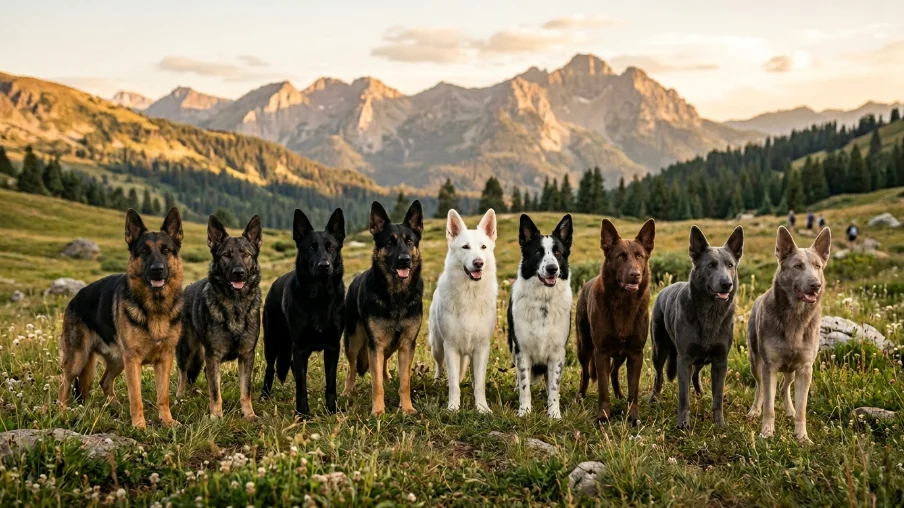
German Shepherd colors range from common black and tan and sable coats to rare colors such as blue, liver, panda, and Isabella. Color affects appearance but does not determine intelligence, temperament, trainability, or working ability. Experienced breeders prioritize health testing, structure, temperament, and genetic quality far above coat color.
What Are German Shepherd Colors?
German Shepherd colors are the various coat colors and patterns found within the breed. Common colors include black and tan, sable, black, and bi-color, while rarer colors include white, blue, liver, panda, and Isabella. Coat color is determined by inherited genes and has little impact on behavior or working ability.
Are German Shepherd Colors Rare?
Some German Shepherd colors are very common, while others are extremely rare. Black and tan and sable are the most frequently seen. Isabella, panda, blue, and liver German Shepherds are much less common because they require specific genetic combinations.
How Much Do Rare German Shepherd Colors Cost?
Rare-colored German Shepherd puppies often cost between $2,500 and $6,000 or more. However, responsible breeding practices, health testing, and pedigree quality are far more important than rarity when evaluating a puppy’s value.
Is Coat Color Linked to Temperament?
No. Temperament is influenced primarily by genetics, breeding practices, socialization, and training. There is no reliable evidence showing that one German Shepherd color is smarter, calmer, or more aggressive than another.
Do Certain Colors Have More Health Problems?
Most health issues in German Shepherds are unrelated to color. However, some rare color genes can be associated with additional risks when bred irresponsibly. Overall health depends far more on responsible breeding and health screening.
Quick Snapshot Table
| Category | Details |
|---|---|
| Breed | German Shepherd Dog |
| Breed Group | Herding Group |
| Common Colors | Black & Tan, Sable, Black, Bi-Color |
| Rare Colors | White, Blue, Liver, Panda, Isabella |
| Rarest Color | Isabella |
| Most Popular Color | Black & Tan |
| Original Color | Sable |
| AKC Recognition | Multiple Accepted Colors |
| FCI Recognition | Multiple Standard Colors Accepted |
| Coat Type | Double Coat |
| Coat Length | Short, Medium, or Long Coat |
| Color Changes With Age | Common |
| Puppy Coat Changes | Frequently Occur During First 2 Years |
| Temperament Impact | None Proven |
| Working Ability Impact | None Proven |
| Intelligence Impact | None Proven |
| Health Impact by Color | Usually None (Except Certain Dilute Color Concerns) |
| Genetic Basis of Color | Controlled by Multiple Color Genes |
| Pigment Type | Eumelanin and Pheomelanin |
| Nose Color | Typically Black (Varies in Some Rare Colors) |
| Eye Color | Usually Brown to Dark Brown |
| Coat Pattern Variations | Saddle, Blanket, Solid, Bi-Color, Agouti |
| Most Common Working-Line Color | Sable |
| Most Common Show-Line Color | Black & Tan |
| Long-Haired Color Availability | Most Colors Possible |
| Shedding Level | Heavy |
| Grooming Needs | Moderate to High |
| Breed Standard Preference | Functional Structure Over Color |
| AKC Fault Colors | White, Blue, Liver (for Conformation Showing) |
| Color Linked to Breed Origin | Sable |
| Color Popularity Trend | Black & Tan Remains Most Popular |
| Color Predictability | Depends on Parent Genetics |
| Breeding Considerations | Color Should Not Override Health and Temperament |
| Color Rarity Influence on Price | Often Significant |
| Most Expensive Color | Typically Isabella or Panda |
| Most Affordable Color | Black & Tan or Sable |
| Eye Color Variations | Brown, Amber, Hazel (Rare) |
| Puppy Color Accuracy | Final Adult Color May Differ |
| Seasonal Coat Changes | Common |
| Undercoat Color Variation | Often Different from Topcoat |
| Color Registration Importance | Required for Kennel Club Records |
| Health Screening Importance | Far More Important Than Coat Color |
| Working Dog Suitability | Determined by Genetics and Training, Not Color |
| Companion Suitability | Determined by Temperament, Not Color |
| Best Color for Working Lines | Sable Often Preferred |
| Best Color for Family Pets | Any Healthy Color |
| Color and Lifespan Correlation | No Proven Connection |
| Overall Expert Recommendation | Prioritize Health, Structure, and Temperament Over Color Selection |
German Shepherd Color Chart
| Color | Rarity | AKC Status | Typical Price |
|---|---|---|---|
| Black & Tan | Very Common | Accepted | $800–$3,500 |
| Sable | Common | Accepted | $1,000–$4,000 |
| Black | Less Common | Accepted | $1,500–$4,500 |
| Bi-Color | Less Common | Accepted | $1,000–$4,000 |
| White | Rare | Not Preferred by Some Standards | $1,500–$4,000 |
| Blue | Rare | Faulted in Some Standards | $2,000–$5,000 |
| Liver | Rare | Faulted in Some Standards | $2,000–$5,000 |
| Panda | Very Rare | Unique Genetic Mutation | $3,000–$6,000+ |
| Isabella | Extremely Rare | Faulted in Some Standards | $4,000–$8,000+ |
What Are German Shepherd Colors?
German Shepherds are among the most color-diverse purebred dog breeds in the world.
Most people recognize the classic black and tan coat, but the breed appears in a surprisingly wide variety of colors and patterns.
These colors are produced by complex genetic interactions that affect how pigment is distributed throughout the coat.
Appearance alone tells you very little.
A rare color may attract attention, but it does not automatically indicate better genetics, superior working ability, or higher-quality breeding.
Here is where most people get it wrong.
Many puppy buyers spend months searching for a specific color while ignoring health testing, pedigree quality, temperament, and structure. Experienced breeders focus on something else entirely.
They prioritize:
- Temperament stability
- Health testing
- Working ability
- Structure and conformation
- Genetic diversity
before considering coat color.
Breed History and Origin
The German Shepherd breed originated in Germany during the late nineteenth century.
Its creator, Captain Max von Stephanitz, aimed to develop the ideal working dog rather than a visually uniform breed.
As a result, early German Shepherds displayed considerable color variation.
Sable dogs were particularly common and are widely believed to represent one of the breed’s original color patterns.
The founding philosophy of the breed was simple:
“Utility and intelligence before appearance.”
That principle still influences responsible breeders today.
Appearance
German Shepherds are large, athletic, and highly functional working dogs.
Regardless of color, they should possess:
- Strong muscular structure
- Balanced movement
- Dense double coat
- Erect ears
- Deep chest
- Intelligent expression
Average Size
| Sex | Height | Weight |
|---|---|---|
| Male | 24–26 Inches | 65–90 Pounds |
| Female | 22–24 Inches | 50–70 Pounds |
Color does not significantly influence overall size or structure.
Genetics and Color Explanation
German Shepherd coat colors are controlled by multiple genes that influence pigment production.
Two primary pigments create all coat colors:
Eumelanin
Responsible for:
- Black pigment
- Blue pigment (diluted black)
- Liver pigment (modified black)
Pheomelanin
Responsible for:
- Tan
- Red
- Cream
- Gold coloration
Different combinations of these pigments create the many colors seen within the breed.
German Shepherd Color Genetics Table
| Color | Dominant or Recessive | Primary Genetic Influence |
|---|---|---|
| Sable | Dominant | Agouti Locus |
| Black & Tan | Agouti Pattern | Agouti Locus |
| Bi-Color | Recessive Pattern | Agouti Locus |
| Black | Recessive | K Locus |
| Liver | Recessive | B Locus |
| Blue | Recessive Dilution | D Locus |
| Isabella | Double Recessive | B + D Locus |
| White | Recessive | White Masking Gene |
| Panda | Mutation | KIT Gene Mutation |
Why Genetics Matter
Understanding genetics helps explain why certain colors are common while others are exceptionally rare.
For example:
- Sable requires only dominant inheritance.
- Isabella requires multiple recessive genes.
- Panda coloration results from a rare mutation.
The more complex the inheritance pattern, the rarer the color typically becomes.
AKC Recognized German Shepherd Colors
The American Kennel Club recognizes multiple German Shepherd coat colors, although not all colors are equally preferred within breed standards.
AKC Color Recognition Table
| Color | AKC Accepted |
|---|---|
| Black & Tan | Yes |
| Sable | Yes |
| Black | Yes |
| Bi-Color | Yes |
| Black & Red | Yes |
| Black & Cream | Yes |
| White | Registration Allowed but Not Preferred |
| Blue | Faulted |
| Liver | Faulted |
| Isabella | Faulted |
| Panda | Not Standard |
Faulted does not mean mixed breed.
It simply means the color is considered undesirable within certain conformation standards.
German Shepherd Colors Ranked by Popularity
Most Common to Rarest
- Black and Tan
- Sable
- Bi-Color
- Solid Black
- White
- Liver
- Blue
- Panda
- Isabella
Popularity varies by country, breeder goals, and working versus show-line preferences.
Black and Tan German Shepherd
The black and tan German Shepherd is the breed’s most recognizable color.
Characteristics
- Black saddle pattern
- Tan legs
- Tan chest
- Traditional appearance
Popularity
This color dominates many show lines and family homes.
Price Range
Typically:
$800–$3,500
Breeder Insight
Many people incorrectly assume black and tan is the “default” German Shepherd color.
Historically, sable likely appeared first in the breed’s development.
Sable German Shepherd
Many working-dog enthusiasts consider sable the most iconic working color.
Characteristics
- Multi-colored individual hairs
- Wolf-like appearance
- Variable shading
- Often changes with age
Working Line Popularity
Sable dogs are frequently seen in:
- Police breeding programs
- Sport dog programs
- Working kennels
Price Range
Typically:
$1,000–$4,000
Experienced Breeder Observation
Many sable puppies change dramatically as they mature.
A light sable puppy may become significantly darker by adulthood.
Solid Black German Shepherd
The solid black German Shepherd possesses an entirely black coat.
Characteristics
- Uniform black pigmentation
- Striking appearance
- Recognized within breed standards
Rarity
Less common than black and tan.
Price Range
Typically:
$1,500–$4,500
Common Myth
Many people believe black German Shepherds are more aggressive.
There is no evidence supporting this claim.
Temperament comes from breeding and training, not color.
Bi-Color German Shepherd
Bi-color German Shepherds are often confused with solid black German Shepherds because they appear predominantly black.
However, careful examination reveals small tan markings, usually on:
- Feet
- Lower legs
- Under the tail
- Face
Characteristics
- Mostly black coat
- Minimal tan markings
- Dark overall appearance
- Frequently seen in working lines
Rarity
Less common than black and tan but not exceptionally rare.
Price Range
Typically:
$1,000–$4,000
Breeder Insight
Many high-drive working-line German Shepherds happen to be bi-color, which has led some owners to assume the color itself creates stronger working ability.
This is misleading.
The breeding program not the color is responsible for those traits.
White German Shepherd
The White German Shepherd remains one of the most debated colors within the breed.
White coloration is caused by a recessive gene that masks normal pigmentation patterns.
Characteristics
- Pure white coat
- Dark eyes
- Dark nose
- Standard German Shepherd structure
Common Misconception
White German Shepherds are not albino.
Albino dogs lack pigment entirely.
White German Shepherds possess normal skin and eye pigmentation.
Price Range
Typically:
$1,500–$4,000
Breeder Perspective
The controversy surrounding white German Shepherds stems primarily from historical breed standard preferences rather than evidence of poor temperament or reduced intelligence.
Blue German Shepherd
Blue German Shepherds possess a diluted version of black pigmentation.
The coat often appears:
- Steel gray
- Smoky blue
- Charcoal silver
Characteristics
- Distinct gray-blue appearance
- Lighter nose pigmentation
- Unique visual appeal
Rarity
Rare.
Price Range
Typically:
$2,000–$5,000+
Important Consideration
Some breeders focus heavily on producing blue coloration.
Responsible buyers should verify that health testing remains a priority rather than color production alone.
Liver German Shepherd
Liver German Shepherds possess a recessive gene affecting black pigment production.
Instead of black pigmentation, affected areas appear chocolate brown.
Characteristics
- Brown nose
- Brown eye rims
- Chocolate-colored coat areas
- Warm overall appearance
Rarity
Rare.
Price Range
Typically:
$2,000–$5,000+
Breeder Insight
Liver coloration is visually striking but offers no functional advantage over standard colors.
Panda German Shepherd
The Panda German Shepherd is among the rarest color patterns in the breed.
Unlike many color variations, panda coloration results from a specific genetic mutation.
Characteristics
- White markings
- Black pigment
- Tan pigment
- Distinct piebald appearance
Rarity
Very rare.
Price Range
Typically:
$3,000–$6,000+
Important Fact
Many people mistakenly assume panda German Shepherds are mixed breeds.
Genetic testing has confirmed that purebred panda German Shepherds can exist.
Breeder Perspective
Because panda coloration is so unusual, buyers should carefully evaluate breeding ethics and health testing rather than becoming focused solely on rarity.
Isabella German Shepherd
The Isabella German Shepherd is widely considered the rarest German Shepherd color.
This color occurs when both liver and dilution genes combine.
Characteristics
- Pale lavender tones
- Silver-gray appearance
- Light brown pigmentation
- Extremely unusual coloring
Rarity
Extremely rare.
Price Range
Typically:
$4,000–$8,000+
Breeder Insight
The rarity of Isabella coloration often drives prices dramatically higher.
However, experienced breeders focus on health and temperament first because rarity does not equal quality.
Which German Shepherd Color Is Best?
This question is searched thousands of times each year.
The honest answer is simple:
There is no universally “best” German Shepherd color.
Best Color Depends On Your Goals
| Goal | Common Choice |
|---|---|
| Family Companion | Any Well-Bred Color |
| Conformation Shows | Black & Tan |
| Working Sports | Sable, Bi-Color, Black |
| Personal Preference | Individual Choice |
Appearance is subjective.
Temperament, health, and trainability are not.
Responsible breeders evaluate far more than color.
What Is the Rarest German Shepherd Color?
Most experts consider Isabella the rarest German Shepherd color.
Rarest Color Ranking
| Rank | Color |
|---|---|
| 1 | Isabella |
| 2 | Panda |
| 3 | Blue |
| 4 | Liver |
| 5 | White |
The rarity results from genetic inheritance patterns rather than superior quality.
What Is the Most Expensive German Shepherd Color?
The most expensive colors are usually:
- Isabella
- Panda
- Blue
- Liver
Price Comparison
| Color | Typical Premium |
|---|---|
| Isabella | Highest |
| Panda | Very High |
| Blue | High |
| Liver | High |
| Black | Moderate |
| Sable | Moderate |
The real issue is not color.
The real issue is breeder quality.
A well-bred black-and-tan puppy may be far more valuable than an expensive rare-colored puppy from poor breeding stock.
German Shepherd Color Myths
The internet contains many myths regarding German Shepherd colors.
Myth vs Reality Table
| Myth | Reality |
|---|---|
| Black German Shepherds are more aggressive | False |
| Sable German Shepherds are smarter | False |
| White German Shepherds are weaker | False |
| Rare colors are healthier | False |
| Blue German Shepherds are superior | False |
| Color predicts working ability | False |
What Actually Influences Temperament?
- Genetics
- Socialization
- Training
- Environment
- Breeding selection
Color is not a reliable predictor.
Do German Shepherd Puppies Change Color?
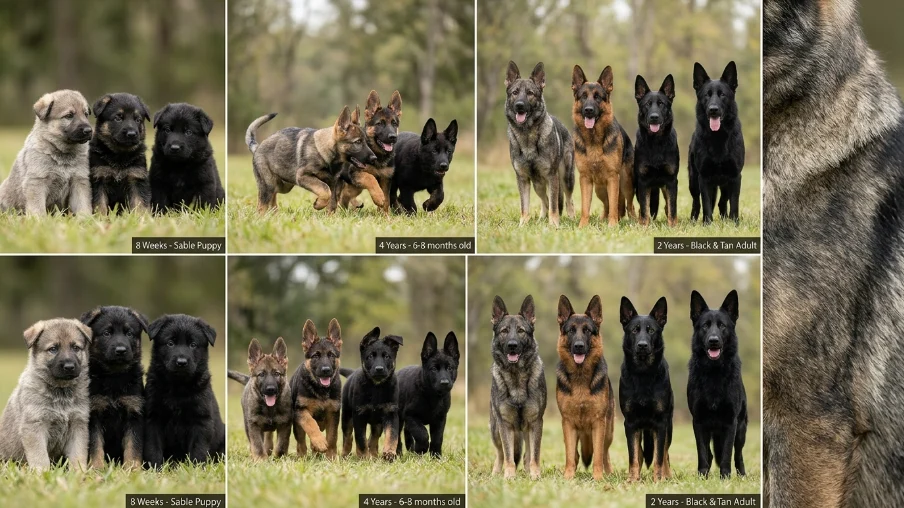
Yes.
Many German Shepherd puppies undergo significant color changes as they mature.
This is especially common in:
- Sable puppies
- Black and tan puppies
- Bi-color puppies
Puppy Color Change Table
| Puppy Color | Typical Adult Outcome |
|---|---|
| Light Sable | Darker Sable |
| Dark Sable | More Defined Pattern |
| Black & Tan | Saddle Develops Further |
| Bi-Color | Darkens With Age |
| Black | Usually Remains Black |
Why Color Changes Happen
Puppy coats differ from adult coats.
As guard hairs develop, pigmentation patterns often become more visible.
Experienced Breeder Observation
Many first-time buyers panic when a puppy’s coat begins changing.
In reality, these changes are often completely normal and expected.
Temperament and Personality
One of the most important facts prospective owners should understand is this:
Color does not determine temperament.
A black German Shepherd is not automatically more protective.
A sable German Shepherd is not automatically smarter.
A white German Shepherd is not automatically calmer.
These assumptions are myths.
Traits Responsible Breeders Prioritize
- Stable nerves
- Confidence
- Trainability
- Social stability
- Environmental resilience
- Appropriate working drives
Ideal German Shepherd Temperament
A well-bred German Shepherd should be:
- Confident
- Loyal
- Intelligent
- Courageous
- Adaptable
- Responsive to training
What Experienced Breeders Actually Evaluate
Experienced breeders focus on something else.
Rather than coat color, they evaluate:
- Temperament testing
- Pedigree history
- Working ability
- Structural soundness
- Health certifications
Those factors have a far greater impact on a puppy’s future than appearance alone.
Family Compatibility
German Shepherds can make exceptional family dogs when:
- Properly socialized
- Adequately exercised
- Consistently trained
Ownership Reality
Many articles focus heavily on appearance.
What they often overlook is that living with a German Shepherd requires:
- Daily exercise
- Ongoing training
- Mental stimulation
- Long-term commitment
The color of the coat does not change those responsibilities.
Color vs Working Ability Comparison
| Color | Working Advantage? |
|---|---|
| Black & Tan | No Proven Advantage |
| Sable | No Proven Advantage |
| Black | No Proven Advantage |
| White | No Proven Advantage |
| Blue | No Proven Advantage |
| Liver | No Proven Advantage |
| Panda | No Proven Advantage |
| Isabella | No Proven Advantage |
Working ability is inherited through selective breeding, not coat color.
This distinction separates experienced breeders from marketing-focused sellers.
Intelligence and Trainability
German Shepherds are widely recognized as one of the most intelligent dog breeds in the world.
Their combination of problem-solving ability, trainability, memory, and work ethic has made them successful in:
- Police work
- Military service
- Search and rescue
- Service dog programs
- Detection work
- Competitive obedience
- Protection sports
Does Color Affect Intelligence?
No.
One of the most common myths surrounding German Shepherd colors is that certain colors are smarter than others.
There is no scientific evidence showing that:
- Sable German Shepherds are more intelligent
- Black German Shepherds learn faster
- White German Shepherds are less capable
Intelligence is influenced by genetics, breeding selection, environment, and training not coat color.
Why German Shepherds Learn So Quickly
German Shepherds possess several traits that make training easier than many other breeds:
- Strong desire to work
- Excellent memory retention
- High handler focus
- Fast problem-solving ability
- Adaptability
Training Priorities
Responsible owners should focus on:
Early Socialization
Exposure to:
- People
- Dogs
- Sounds
- Surfaces
- New environments
Basic Obedience
Teaching:
- Sit
- Down
- Stay
- Recall
- Leash manners
Impulse Control
Many behavioral problems result from poor impulse control rather than aggression.
Breeder Insight
Experienced working-dog breeders often evaluate puppies for:
- Environmental confidence
- Recovery from stress
- Food drive
- Toy drive
- Curiosity
- Human engagement
These traits frequently predict future trainability better than appearance.
Exercise Requirements
German Shepherds are an active working breed.
Many first-time owners underestimate the breed’s exercise requirements.
Daily Exercise Needs
| Age | Recommended Activity |
|---|---|
| Young Puppy | Short supervised sessions |
| 4–6 Months | Moderate activity |
| Adolescents | Increased structured exercise |
| Adults | 1–2+ Hours Daily |
Physical Exercise Examples
- Walking
- Hiking
- Running
- Fetch
- Swimming
- Agility
Mental Exercise Examples
- Scent work
- Puzzle toys
- Obedience training
- Tracking
- Advanced commands
Signs of Insufficient Exercise
- Excessive barking
- Destructive chewing
- Hyperactivity
- Restlessness
- Digging
- Frustration behaviors
Working-Line vs Show-Line Energy
| Type | Energy Level |
|---|---|
| Working Line | Very High |
| Show Line | Moderate to High |
| Companion Line | Moderate |
Important Ownership Reality
The real issue is not coat color.
The real issue is whether an owner can consistently meet the breed’s mental and physical needs.
A beautifully colored German Shepherd that lacks adequate exercise may develop more behavioral issues than a less visually striking dog receiving proper care.
Health Problems and Genetic Risks
German Shepherd health should always take priority over color preferences.
Responsible breeders spend far more time evaluating health than discussing coat color.
Common Health Conditions
Hip Dysplasia
Hip dysplasia remains one of the most common orthopedic concerns in the breed.
Potential signs include:
- Stiffness
- Reduced mobility
- Difficulty standing
- Reluctance to exercise
Elbow Dysplasia
Elbow dysplasia affects front limb function and can contribute to long-term discomfort.
Degenerative Myelopathy
Degenerative myelopathy is a progressive neurological disease affecting the spinal cord.
DNA testing helps breeders reduce risk.
Gastric Dilatation-Volvulus (Bloat)
Bloat is a life-threatening emergency requiring immediate veterinary care.
Allergies
Some German Shepherds may develop:
- Environmental allergies
- Food sensitivities
- Chronic skin irritation
Common Health Conditions Table
| Condition | Frequency | Screening Available |
|---|---|---|
| Hip Dysplasia | Common | Yes |
| Elbow Dysplasia | Common | Yes |
| Degenerative Myelopathy | Moderate | Yes |
| Bloat | Moderate | No Predictive Test |
| Allergies | Moderate | Limited |
Does Color Affect Health?
Generally, no.
Most health problems are unrelated to coat color.
However, some rare color breeding programs may unintentionally reduce genetic diversity when breeders prioritize appearance over health.
Responsible breeders focus on:
- Health testing
- Genetic diversity
- Temperament
- Structural soundness
before selecting for color.
OFA Testing and Health Screening
One of the strongest indicators of responsible breeding is health testing.
What Is OFA?
The Orthopedic Foundation for Animals (OFA) maintains health screening databases used by responsible breeders.
Common OFA Evaluations
Hip Evaluation
Helps identify dogs with healthy hip structure.
Elbow Evaluation
Assesses elbow health and soundness.
Cardiac Evaluation
Screens for heart-related issues.
Eye Examination
Evaluates hereditary eye conditions.
Recommended Health Testing Table
| Test | Purpose |
|---|---|
| OFA Hips | Hip Health |
| OFA Elbows | Elbow Health |
| DM DNA Test | Neurological Risk |
| Cardiac Exam | Heart Health |
| Eye Exam | Vision and Eye Health |
Here Is Where Most People Get It Wrong
Many buyers become fascinated by rare colors such as:
- Isabella
- Panda
- Blue
- Liver
but never ask for OFA certifications.
A responsible breeder should be able to provide documentation proving health testing has been completed.
Puppy Development Timeline
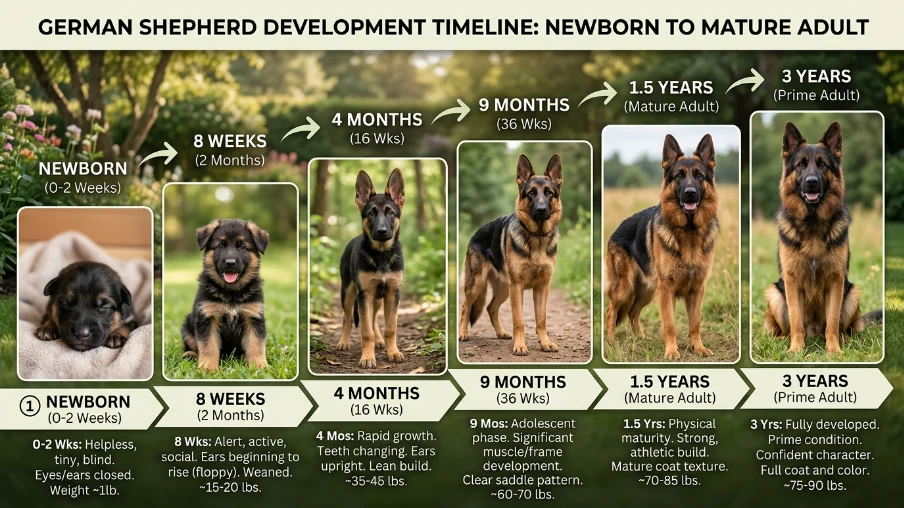
German Shepherd puppies mature slowly compared to many breeds.
Mental maturity often continues until two to three years of age.
Development Timeline Table
| Age | Development Stage |
|---|---|
| Birth–8 Weeks | Early social development |
| 2–4 Months | Critical socialization |
| 4–6 Months | Teething and confidence building |
| 6–12 Months | Adolescence |
| 12–18 Months | Physical maturity increases |
| 18–24 Months | Mental maturity develops |
| 2–3 Years | Full adult temperament |
Birth to 8 Weeks
Responsible breeders focus on:
- Early neurological stimulation
- Human interaction
- Environmental exposure
2 to 4 Months
This period is often considered the most important socialization window.
Puppies should experience:
- New environments
- Different people
- Household sounds
- Controlled positive experiences
4 to 6 Months
Owners commonly observe:
- Teething
- Increased curiosity
- Rapid learning
6 to 12 Months
Adolescence often surprises first-time owners.
Common changes include:
- Selective listening
- Increased independence
- Higher energy levels
12 to 24 Months
Many German Shepherds continue developing both physically and mentally.
2 to 3 Years
Most dogs finally display their mature adult temperament.
Feeding and Nutrition
Nutrition plays a critical role in:
- Growth
- Joint health
- Muscle development
- Coat quality
- Long-term wellness
Nutritional Priorities
German Shepherd diets should emphasize:
- High-quality animal protein
- Healthy fats
- Appropriate calcium levels
- Balanced vitamins and minerals
Feeding Schedule
| Age | Meals Per Day |
|---|---|
| 8–12 Weeks | 4 |
| 3–6 Months | 3 |
| 6–12 Months | 2–3 |
| Adults | 2 |
Foods to Avoid
- Chocolate
- Grapes
- Raisins
- Xylitol
- Alcohol
- Cooked bones
Coat Color and Nutrition
Many owners ask whether nutrition can change coat color.
Nutrition may improve:
- Coat quality
- Shine
- Pigment richness
However, genetics determine the actual color itself.
Grooming Guide
All German Shepherd colors share similar grooming requirements because coat structure matters more than color.
Shedding Level
German Shepherds are heavy shedders.
Many owners describe them as “year-round shedders with seasonal explosions.”
Brushing Requirements
| Coat Maintenance Task | Frequency |
|---|---|
| Brushing | 2–4 Times Weekly |
| Heavy Shedding Season | Daily |
| Nail Trimming | Monthly |
| Ear Checks | Monthly |
| Dental Care | Multiple Times Weekly |
Bathing
Most German Shepherds require bathing every:
- 8–12 weeks
- Or when genuinely dirty
Overbathing may remove natural oils.
Grooming Tools
Recommended equipment:
- Undercoat rake
- Slicker brush
- Nail grinder
- Dog toothbrush
- Grooming comb
Advanced EEAT Breeder Insights
Experienced breeders focus on something else.
They rarely choose breeding pairs based primarily on coat color.
Instead, they evaluate:
Temperament
Stable temperament remains one of the most important breeding priorities.
Structure and Conformation
Good structure supports:
- Movement
- Endurance
- Long-term joint health
Health Testing
Ethical breeders screen for:
- Hip dysplasia
- Elbow dysplasia
- Degenerative myelopathy
Working Ability
Many breeders value:
- Nerve strength
- Trainability
- Recovery from stress
- Environmental confidence
Genetic Diversity
Responsible breeding programs work to preserve long-term breed health rather than simply producing fashionable colors.
Final Breeder Perspective
Appearance attracts attention.
Temperament keeps dogs in homes.
Health determines longevity.
Working ability reflects breeding quality.
Color is simply one piece of a much larger picture.
That perspective separates responsible breeding from color-focused marketing.
Step-by-Step Care Guide
Choosing a German Shepherd color is easy.
Providing proper care for the next 10–13 years is the real commitment.
A successful ownership experience depends on consistency rather than coat color.
Daily Care Checklist
Exercise
Provide:
- Physical activity
- Structured walks
- Training sessions
- Mental stimulation
Most adult German Shepherds require at least 1–2 hours of combined activity daily.
Training
Spend 10–20 minutes daily practicing:
- Obedience
- Recall
- Leash manners
- Impulse control
Health Monitoring
Watch for:
- Changes in appetite
- Limping
- Ear irritation
- Skin issues
- Behavioral changes
Weekly Care Checklist
- Brush coat thoroughly
- Inspect ears
- Review body condition
- Check paw pads
- Clean training equipment
Monthly Care Checklist
- Trim nails
- Deep grooming session
- Weight assessment
- Preventive health review
Annual Care Checklist
- Veterinary examination
- Vaccination review
- Health screenings
- Dental evaluation
Common Owner Mistakes
Many ownership problems have nothing to do with color.
They result from unrealistic expectations.
Choosing Color Over Temperament
This remains the biggest mistake buyers make.
A rare-colored puppy may attract attention, but temperament determines whether the dog becomes a successful companion.
Ignoring Health Testing
Some buyers spend weeks researching colors and never ask for:
- OFA hips
- OFA elbows
- DM testing
Responsible breeders evaluate these factors long before discussing coat color.
Underestimating Exercise Needs
German Shepherds are working dogs.
Insufficient activity often leads to:
- Destructive chewing
- Barking
- Anxiety
- Frustration
Poor Socialization
Socialization should begin early and continue throughout development.
Waiting Too Long to Train
Training starts the day the puppy arrives home.
Delaying training often creates avoidable behavioral challenges.
Insights Most Articles Miss
Most online articles focus heavily on appearance.
Experienced breeders focus on something else.
Color Does Not Predict Quality
A beautifully colored dog can still possess:
- Poor structure
- Weak nerves
- Health concerns
- Low trainability
Rare Does Not Mean Better
Many buyers mistakenly assume rarity equals quality.
In reality:
- Health matters more
- Temperament matters more
- Structure matters more
- Genetic diversity matters more
Color Trends Change
Popular colors today may become less desirable in future breeding trends.
Stable temperament never goes out of style.
Working Ability Is Separate From Appearance
Some of the most successful working German Shepherds in history possessed completely ordinary coat colors.
Function has always mattered more than appearance in serious working programs.
Price Guide and Ownership Costs
German Shepherd prices vary significantly depending on breeding quality and pedigree.
Puppy Price Table
| Type | Typical Price |
|---|---|
| Pet Quality | $800–$2,000 |
| Health-Tested Puppy | $1,500–$3,500 |
| Working Line Puppy | $2,000–$5,000+ |
| Rare Color Puppy | $2,500–$6,000+ |
| Imported Bloodlines | $4,000–$10,000+ |
Color Price Comparison
| Color | Typical Price Range |
|---|---|
| Black & Tan | $800–$3,500 |
| Sable | $1,000–$4,000 |
| Black | $1,500–$4,500 |
| White | $1,500–$4,000 |
| Blue | $2,000–$5,000+ |
| Liver | $2,000–$5,000+ |
| Panda | $3,000–$6,000+ |
| Isabella | $4,000–$8,000+ |
First-Year Costs
| Expense | Estimated Cost |
|---|---|
| Puppy Purchase | $800–$8,000+ |
| Veterinary Care | $300–$1,000 |
| Vaccinations | $100–$300 |
| Food | $500–$1,200 |
| Training | $300–$2,000 |
| Supplies | $300–$800 |
| Insurance | $300–$900 |
Lifetime Ownership Costs
Many owners spend:
$15,000–$30,000+
over a German Shepherd’s lifetime.
The purchase price is often the smallest expense.
How to Find a Reputable Breeder
The quality of the breeder matters far more than the color of the puppy.
Signs of a Responsible Breeder
- Health testing completed
- OFA certifications available
- Transparent pedigree information
- Temperament evaluations
- Puppy socialization program
- Lifetime breeder support
Positive Breeder Practices
Responsible breeders typically:
- Ask buyers questions
- Screen potential homes
- Offer contracts
- Provide health guarantees
- Remain available after purchase
Red Flags
Avoid breeders who:
- Prioritize color above everything else
- Cannot provide health testing
- Refuse to show documentation
- Always advertise “rare colors”
- Guarantee unrealistic traits
Questions to Ask Before Buying
- About Health
- Have both parents passed OFA evaluations?
- Have genetic tests been completed?
- What health conditions exist in the pedigree?
- About Temperament
- What are the parents like around strangers?
- How are the parents trained?
- Have they earned working titles?
- About Development
- What socialization has been completed?
- What training foundation exists?
- What color changes might occur as the puppy matures?
- About Support
- Do you provide ongoing guidance?
- What happens if the placement fails?
- Can previous buyers provide references?
Buyer Warning Section
Beware of Marketing Tactics
Color-focused marketing can sometimes distract buyers from more important issues.
Be cautious when sellers use phrases such as:
- Ultra rare
- Exclusive genetics
- One-of-a-kind color
- Guaranteed protection dog
- Superior bloodline because of color
Warning Signs
| Red Flag | Why It Matters |
|---|---|
| No Health Testing | Increased risk |
| No Pedigree Information | Limited transparency |
| Multiple Rare Litters Constantly Available | Potential profit-driven breeding |
| Unrealistic Claims | Misleading marketing |
Remember
A standard black-and-tan puppy from excellent breeding may be a far better choice than an expensive rare-colored puppy from an irresponsible breeder.
Lifestyle Compatibility
Lifestyle Compatibility Table
| Lifestyle Factor | Suitable? | Notes |
|---|---|---|
| Families | Yes | Excellent with training |
| Children | Yes | Supervision recommended |
| Apartments | Sometimes | Requires significant exercise |
| Active Owners | Excellent | Ideal environment |
| Working Homes | Excellent | Natural fit |
| First-Time Owners | Sometimes | Depends on commitment |
Best Match
German Shepherds generally thrive with:
- Active individuals
- Experienced dog owners
- Families committed to training
- Working and sport enthusiasts
Poor Match
They may struggle with:
- Sedentary lifestyles
- Minimal exercise routines
- Owners seeking low-maintenance pets
Frequently Asked Questions
What is the most common German Shepherd color?
Black and tan is the most common and recognizable German Shepherd color worldwide.
What is the rarest German Shepherd color?
Isabella is generally considered the rarest due to the genetic combinations required to produce it.
Are rare colors healthier?
No. Health depends on breeding quality and health testing rather than coat color.
Which German Shepherd color is best?
There is no universally best color. Health, temperament, and suitability matter far more than appearance.
Are black German Shepherds purebred?
Yes. Solid black German Shepherds are purebred and recognized within the breed.
Are white German Shepherds albino?
No. White German Shepherds possess normal pigmentation and are not albino.
Do German Shepherd puppies change color?
Many do. Sable, bi-color, and black-and-tan puppies often change noticeably during development.
Are sable German Shepherds smarter?
No evidence supports this claim. Intelligence is not determined by coat color.
Does color affect working ability?
No. Working ability depends on genetics, breeding goals, and training.
Should I pay more for a rare color?
Only if the breeder also demonstrates excellent health testing, temperament evaluation, and ethical breeding practices.
Conclusion
German Shepherd colors are one of the breed’s most fascinating features. From the classic black-and-tan coat to rare colors such as blue, liver, panda, and Isabella, the variety within the breed is remarkable.
However, appearance should never become the primary decision-making factor.
Here is where most people get it wrong.
They focus heavily on finding the perfect color while overlooking the factors that truly determine a dog’s long-term success.
Experienced breeders focus on something else:
- Temperament
- Health
- Structure
- Working ability
- Genetic soundness
These qualities influence how a German Shepherd lives, learns, performs, and adapts throughout its life.
Appearance attracts attention.
Temperament keeps dogs in homes.
Health determines longevity.
Training develops potential.
Color simply makes the dog unique.
When choosing a German Shepherd, appreciate the beauty of different coat colors but let responsible breeding, health testing, and temperament guide your final decision.