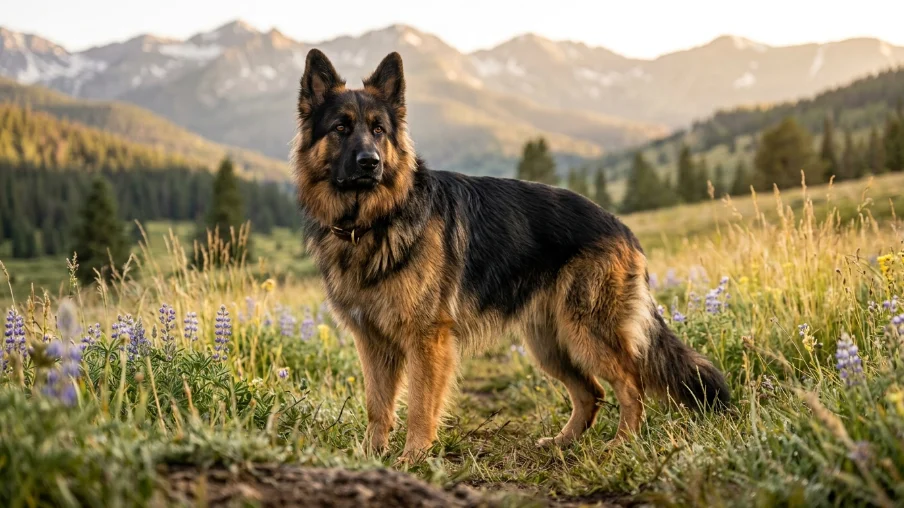
A Fluffy German Shepherd is a long-haired variation of the German Shepherd Dog caused by a naturally occurring recessive gene. The extra coat creates a softer, fuller appearance, but temperament, intelligence, and working ability depend far more on genetics and breeding quality than coat length. Responsible breeders prioritize health, structure, temperament, and working aptitude not fluffiness alone.
Quick Snapshot Table
| Trait | Details |
|---|---|
| Breed | German Shepherd Dog |
| Coat Type | Long-Haired |
| Coat Gene | Recessive Long-Hair Gene |
| Breed Group | Herding Group |
| Size | Large |
| Weight | 50–90 lbs |
| Height | 22–26 Inches |
| Lifespan | 9–13 Years |
| Energy Level | High |
| Intelligence | Extremely High |
| Trainability | Excellent |
| Family Friendly | Usually Yes |
| Good With Children | Usually Yes |
| Good With Other Dogs | Generally Good When Socialized |
| Stranger Friendly | Moderate |
| Loyalty Level | Exceptional |
| Affection Level | High |
| Protective Instinct | Strong |
| Watchdog Ability | Excellent |
| Guard Dog Ability | Excellent |
| Shedding | Heavy |
| Seasonal Shedding | Very Heavy |
| Grooming Needs | Moderate to High |
| Brushing Frequency | 3–5 Times Per Week |
| Professional Grooming | Occasionally Helpful |
| Coat Length | Medium-Long to Long |
| Coat Texture | Soft, Dense, and Feathered |
| Undercoat | Present in Most Long-Haired Dogs |
| Drooling | Low |
| Barking Level | Moderate |
| Apartment Friendly | Usually No |
| Exercise Needs | High |
| Daily Exercise Requirement | 60–120 Minutes |
| Mental Stimulation Needs | Very High |
| Prey Drive | Moderate to High |
| Off-Leash Reliability | Moderate to High with Training |
| Adaptability | High |
| Working Ability | Excellent |
| Service Dog Potential | High |
| Therapy Dog Potential | High |
| Search & Rescue Potential | High |
| Protection Dog Potential | High |
| First-Time Owner Friendly | Sometimes |
| Experience Level | Beginner to Intermediate |
| Socialization Importance | Critical |
| Training Difficulty | Moderate |
| Heat Tolerance | Moderate |
| Cold Tolerance | Excellent |
| Climate Preference | Cool to Moderate Climates |
| Food Consumption | 2.5–5 Cups Daily |
| Common Colors | Black & Tan, Sable, Black, Bi-Color |
| Rare Colors | White, Blue, Liver, Panda, Isabella |
| Eye Color | Brown, Dark Brown, Amber |
| Puppy Price Range | $800–$3,500+ |
| AKC Recognition | Yes |
| FCI Recognition | Yes |
| Original Purpose | Herding and Livestock Management |
| Modern Roles | Family Companion, Service Dog, Protection Dog, Working Dog |
| Common Health Concerns | Hip Dysplasia, Elbow Dysplasia, Degenerative Myelopathy, Bloat, Allergies |
| Health Screening Importance | Extremely High |
| Lifelong Training Need | Moderate to High |
| Escape Artist Potential | Moderate |
| Maintenance Level | High |
| Best For | Active Families, Working Homes, Experienced Owners |
| Not Ideal For | Sedentary Households |
| Distinguishing Feature | Long Feathering Around Ears, Tail, Chest, and Legs |
| Companion Dog Rating | Excellent |
| Family Protection Rating | Excellent |
| Overall Suitability | A Loyal, Intelligent, and Beautiful German Shepherd Variant That Thrives in Active Homes |
Why Are Fluffy German Shepherds So Popular?
Many people are drawn to the striking appearance of the long coat. However, experienced breeders focus on something else.
The real issue is not coat length.
Temperament stability, health testing, nerve strength, and sound structure determine whether a German Shepherd becomes a great companion, working dog, or family protector.
Appearance alone tells you very little about overall quality.
What Is a Fluffy German Shepherd?
A Fluffy German Shepherd is simply a long-coated German Shepherd Dog.
The long coat results from a recessive genetic trait inherited from both parents.
Historically, long-coated puppies occasionally appeared in litters of standard-coated German Shepherds. Today, many breeders intentionally preserve long-coat lines due to growing popularity.
Important facts:
- Same breed
- Same intelligence
- Same working instincts
- Same training requirements
- Different coat length
The coat does not create a different breed.
Breed History and Origin
The German Shepherd originated in Germany during the late 1800s.
Breed founder Captain Max von Stephanitz aimed to develop the ideal working dog.
His focus included:
- Intelligence
- Utility
- Athleticism
- Herding ability
- Trainability
Long-haired puppies occasionally appeared due to recessive genetics.
Historically, many kennel organizations considered the long coat less practical for working conditions because it collected dirt, moisture, and debris more easily.
Today, long-coated German Shepherds are widely recognized and appreciated.
Appearance
Physical Characteristics
| Feature | Description |
|---|---|
| Head | Wedge-shaped |
| Eyes | Almond-shaped |
| Ears | Upright |
| Tail | Long and bushy |
| Build | Athletic and powerful |
| Coat | Long and feathered |
Coat Features
Common fluffy areas include:
- Neck ruff
- Chest
- Legs
- Tail
- Ears
The undercoat may vary depending on genetics.
Some fluffy German Shepherds appear almost lion-like because of their dense mane.
Genetics and Color Explanation
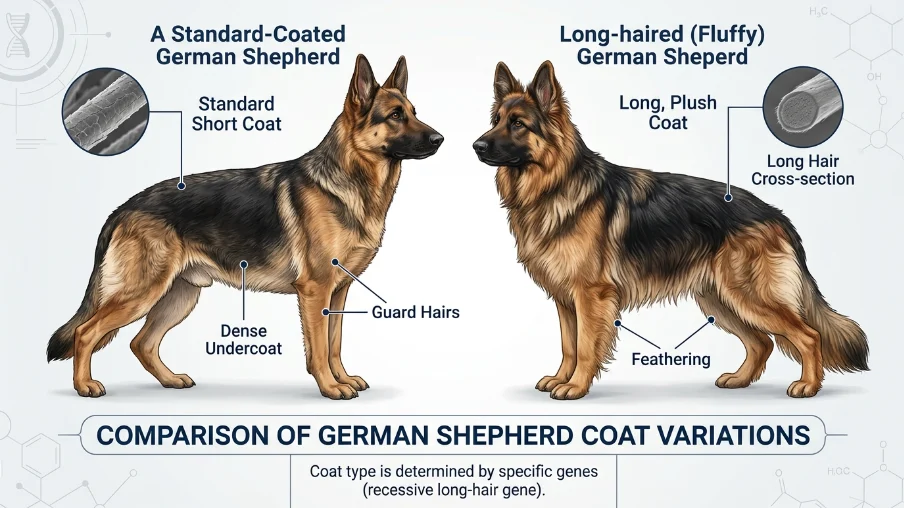
Understanding the Long-Hair Gene
The fluffy coat is caused by a recessive gene.
A puppy must inherit the gene from both parents.
| Parent Status | Possible Outcome |
|---|---|
| Carrier + Carrier | Some fluffy puppies |
| Carrier + Long Coat | Higher chance |
| Long Coat + Long Coat | All puppies long-haired |
Responsible breeders evaluate far more than color.
Health testing, temperament assessment, and genetic diversity remain far more important.
Temperament and Personality
Typical traits include:
- Loyal
- Confident
- Intelligent
- Protective
- Alert
- Eager to learn
Well-bred dogs should display stable nerves and environmental confidence.
Poor breeding can create:
- Fearfulness
- Anxiety
- Reactivity
- Excessive suspicion
Many first-time owners mistake nervousness for protectiveness.
These are not the same thing.
Intelligence and Trainability
German Shepherds rank among the world’s most trainable dog breeds.
They excel in:
- Obedience
- Tracking
- Protection sports
- Search and rescue
- Service work
- Detection work
Training should begin early.
Consistency matters more than harsh corrections.
Exercise Requirements
Most adult Fluffy German Shepherds require:
| Activity | Daily Amount |
|---|---|
| Physical Exercise | 1–2 Hours |
| Mental Stimulation | 30–60 Minutes |
| Training | Daily |
Good activities include:
- Structured walks
- Hiking
- Obedience
- Tracking games
- Nose work
- Fetch
Insufficient exercise often leads to behavioral issues.
Health Problems and Genetic Risks
Common concerns include:
- Hip Dysplasia
- Elbow Dysplasia
- Degenerative Myelopathy
- Bloat (GDV)
- Allergies
- Pancreatic disorders
Health Screening Responsible Breeders Use
- OFA Hip Testing
- OFA Elbow Testing
- DM Testing
- Cardiac Screening
- Genetic Panels
Here is where most people get it wrong.
A fluffy coat does not indicate health quality.
Health testing matters far more.
Puppy Development Timeline
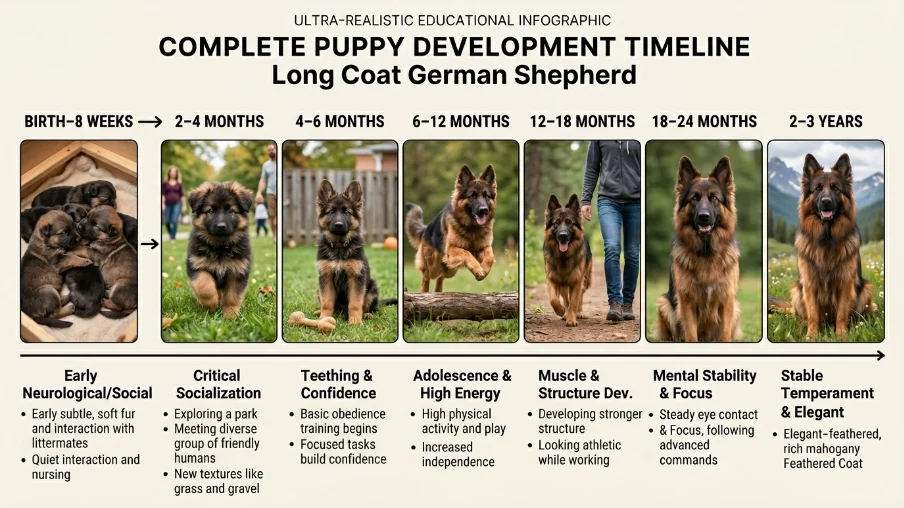
| Age | Development Stage |
|---|---|
| Birth–8 Weeks | Early neurological and social development |
| 2–4 Months | Critical socialization period |
| 4–6 Months | Teething and confidence building |
| 6–12 Months | Adolescence begins |
| 12–18 Months | Physical maturity increases |
| 18–24 Months | Mental maturity develops |
| 2–3 Years | Full adult temperament emerges |
Many owners underestimate adolescence.
This period often brings testing behaviors and selective listening.
Feeding and Nutrition
Quality nutrition should support:
- Growth
- Joint health
- Muscle development
- Energy demands
Avoid excessive calorie intake during growth.
Rapid growth may increase orthopedic risks.
Grooming Guide
Fluffy German Shepherds require more grooming than standard-coated dogs.
Recommended Schedule
| Task | Frequency |
|---|---|
| Brushing | 3–5 Times Weekly |
| Nail Trimming | Monthly |
| Ear Checks | Weekly |
| Bathing | Every 6–10 Weeks |
Seasonal shedding can be substantial.
Step-by-Step Care Guide
Daily
- Exercise
- Training
- Mental enrichment
- Fresh water
Weekly
- Brushing
- Ear inspection
- Paw checks
Monthly
- Nail trimming
- Weight assessment
Annually
- Veterinary examination
- Health review
Common Owner Mistakes
- Choosing appearance over temperament.
- Underestimating exercise needs.
- Poor socialization.
- Delayed training.
- Buying from untested breeders.
- Overfeeding puppies.
- Ignoring mental stimulation.
Insights Most Articles Miss
Experienced breeders focus on:
- Nerve stability
- Recovery from stress
- Confidence
- Structure
- Working ability
Not coat length.
A beautiful coat cannot compensate for poor temperament or weak health.
Price Guide and Ownership Costs
| Expense | Estimated Cost |
|---|---|
| Puppy Purchase | $1,000–$4,000+ |
| Food | $600–$1,200 Yearly |
| Veterinary Care | $300–$1,500 Yearly |
| Training | $200–$2,000+ |
| Grooming Supplies | $100–$300 Yearly |
How to Find a Reputable Breeder
Look for breeders who:
- Perform OFA testing
- Provide pedigrees
- Allow facility visits
- Discuss temperament honestly
- Prioritize health over coat
Avoid breeders marketing only “rare fluffy puppies.”
Questions to Ask Before Buying
- Are both parents health tested?
- Can I see OFA results?
- How are puppies socialized?
- What working or sport titles exist?
- What health guarantees are offered?
- Can I meet the parents?
Buyer Warning Section
Avoid breeders who:
- Refuse health documentation
- Guarantee temperament
- Emphasize rarity over quality
- Sell puppies too early
- Avoid discussing health risks
Lifestyle Compatibility
| Lifestyle Factor | Suitable? | Notes |
|---|---|---|
| Families | Yes | With training |
| Children | Yes | Supervision required |
| Apartments | Sometimes | Needs extensive exercise |
| Active Owners | Excellent | Ideal |
| Working Homes | Excellent | Thrives |
| First-Time Owners | Sometimes | Requires commitment |
Fluffy German Shepherd vs Standard German Shepherd
| Trait | Fluffy | Standard |
|---|---|---|
| Breed | Same | Same |
| Temperament | Similar | Similar |
| Intelligence | Similar | Similar |
| Working Ability | Similar | Similar |
| Grooming | Higher | Moderate |
| Shedding | Heavy | Heavy |
The primary difference is coat length.
Preparation Checklist
Before bringing one home:
- Secure breeder research
- Budget for veterinary care
- Purchase grooming tools
- Enroll in training classes
- Puppy-proof the home
- Plan exercise routines
- Establish socialization goals
FAQs
Are Fluffy German Shepherds purebred?
Yes, they can be fully purebred German Shepherd Dogs.
Why are some German Shepherds fluffy?
A recessive long-coat gene causes the longer coat.
Do Fluffy German Shepherds shed more?
They often appear to shed more because of longer fur.
Are they recognized by kennel clubs?
Many kennel organizations recognize long-coated German Shepherds.
Do they need professional grooming?
Not always, but regular maintenance helps.
Are they good with children?
Usually yes when properly socialized.
Can they be working dogs?
Yes. Coat length does not eliminate working ability.
Do they have different health problems?
No. They generally share the same breed-related risks.
Are they suitable for apartments?
Only if exercise and training needs are met.
How long do they live?
Typically 9–13 years.
Conclusion
The Fluffy German Shepherd combines the intelligence, loyalty, trainability, and versatility of the German Shepherd breed with a striking long-haired appearance. While the luxurious coat attracts attention, experienced breeders know that health, temperament, structure, and working ability matter far more.
If you choose a puppy from health-tested parents, invest in training, and provide adequate exercise and grooming, a Fluffy German Shepherd can become an exceptional family companion, sport dog, or working partner.