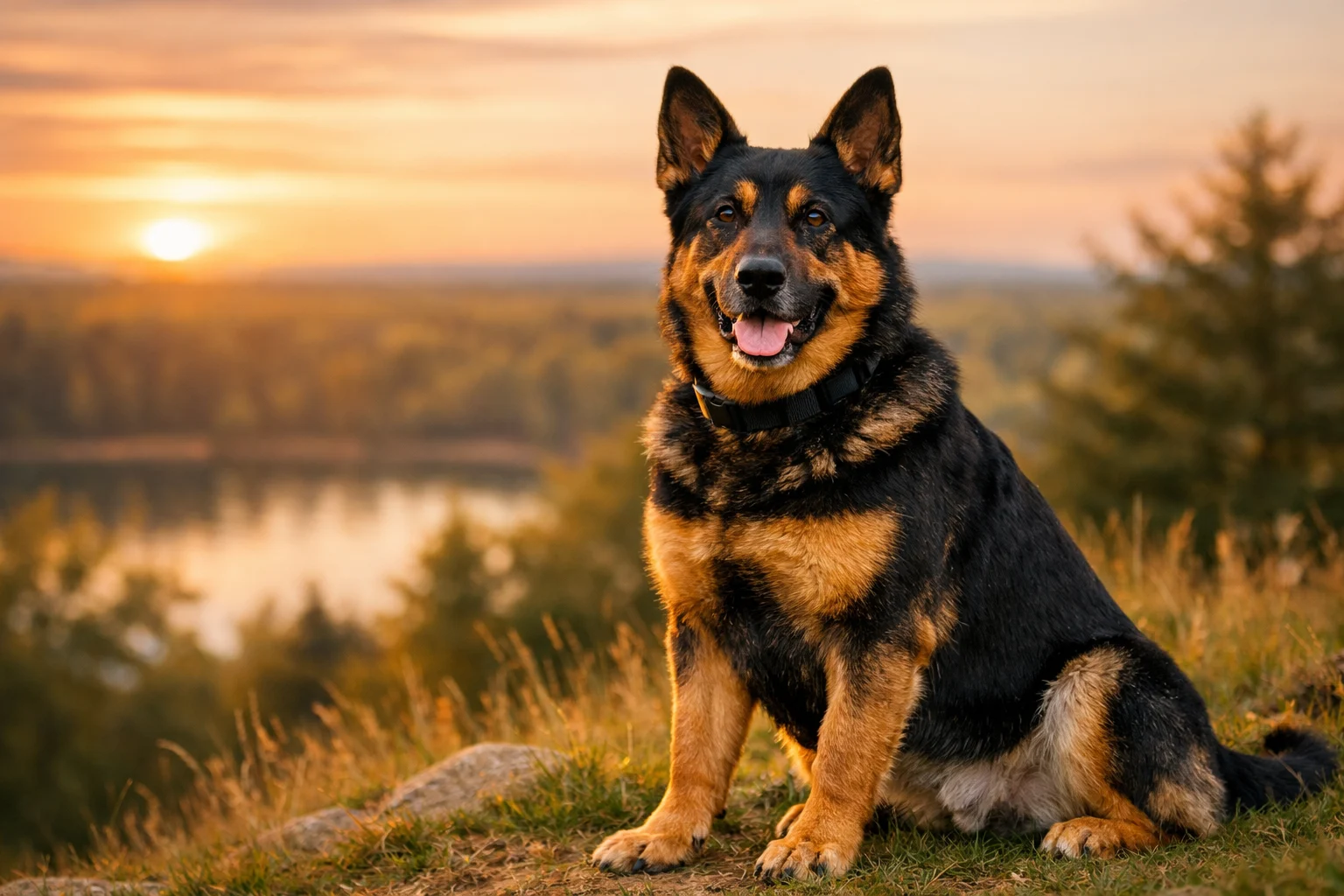
The German Shepherd Rottweiler Mix (Shepweiler) is a large, intelligent, and loyal hybrid known for its protective nature and strong work ethic. Combining the German Shepherd‘s trainability with the Rottweiler’s confidence, this energetic breed thrives with experienced owners who provide consistent training, early socialization, and plenty of daily exercise.
Quick Snapshot Table
| Category | Key Details |
|---|---|
| Breed Type | German Shepherd and Rottweiler Mix |
| Common Name | Shepweiler |
| Alternative Names | Rottweiler Shepherd Mix, German Shepherd Rottweiler Mix |
| Size | Large |
| Weight | 75–120 lbs |
| Height | 22–27 inches |
| Lifespan | 9–13 years |
| Energy Level | High |
| Intelligence | Very High |
| Trainability | Excellent |
| Protective Instinct | Strong |
| Family Friendly | Yes with Proper Training |
| Good With Children | Usually Yes When Socialized |
| Good With Other Dogs | Moderate |
| Stranger Friendly | Moderate to Low |
| Affection Level | High |
| Loyalty Level | Exceptional |
| Shedding | Moderate to Heavy |
| Coat Type | Double Coat |
| Grooming Needs | Moderate |
| Drooling | Low to Moderate |
| Barking Level | Moderate |
| Apartment Friendly | Generally Not Recommended |
| Exercise Needs | 60–120 Minutes Daily |
| Mental Stimulation Needs | High |
| Guard Dog Ability | Excellent |
| Watchdog Ability | Excellent |
| Prey Drive | Moderate |
| Off-Leash Reliability | Moderate with Training |
| Working Ability | Excellent |
| Service Dog Potential | Moderate to High |
| Protection Dog Potential | High |
| Beginner Owner Friendly | No |
| Experience Level | Intermediate to Advanced Owners |
| Climate Preference | Moderate to Cool Climates |
| Heat Tolerance | Moderate |
| Cold Tolerance | Good |
| Socialization Importance | Extremely Important |
| Training Difficulty | Moderate |
| Food Consumption | 3–5 Cups of Quality Food Daily |
| Common Coat Colors | Black & Tan, Black, Sable, Mahogany, Bi-Color |
| Common Eye Colors | Brown, Dark Brown, Amber |
| Puppy Price Range | $500–$2,500+ |
| AKC Recognition | Not Recognized (Hybrid Breed) |
| Best For | Active Families, Experienced Owners, Home Protection |
| Not Ideal For | First-Time Owners, Sedentary Households |
| Common Health Concerns | Hip Dysplasia, Elbow Dysplasia, Bloat, Heart Conditions, Degenerative Myelopathy |
| Daily Exercise Requirement | 1–2 Hours Minimum |
| Lifelong Training Need | High |
| Escape Artist Potential | Moderate |
| Adaptability | Moderate |
| Overall Maintenance Level | Moderate to High |
Why So Many People Want This Mix
The German Shepherd Rottweiler Mix combines two of the most respected working breeds in the world.
Many buyers are attracted by the idea of having the intelligence of a German Shepherd and the confidence of a Rottweiler in a single dog.
That combination can be remarkable.
However, appearance alone tells you very little.
Here is where most people get it wrong.
They focus on:
- size
- muscle
- protection potential
Experienced breeders focus on:
- genetic health
- nerve stability
- environmental confidence
- trainability
- recovery from stress
Those traits determine whether a dog becomes a dependable companion or a difficult project.
What Is a German Shepherd Rottweiler Mix?
A German Shepherd Rottweiler Mix is a hybrid dog produced by crossing a purebred German Shepherd with a purebred Rottweiler.
The resulting puppies can inherit traits from either parent breed.
Some look more like German Shepherds.
Others resemble Rottweilers.
Most display a combination of both.
Because genetics vary significantly, no two Shepweilers are exactly alike.
Parent Breed Influence
German Shepherd Traits
German Shepherds often contribute:
- intelligence
- athletic ability
- trainability
- environmental awareness
- working drive
Rottweiler Traits
Rottweilers often contribute:
- confidence
- physical strength
- loyalty
- territorial instincts
- calm seriousness
The final dog is often powerful, intelligent, and highly bonded to its family.
Appearance and Physical Characteristics
Size Expectations
Most adult Shepweilers are large dogs.
| Gender | Typical Weight |
| Female | 75–100 lbs |
| Male | 85–120 lbs |
Height typically ranges between:
- 22 and 27 inches
Coat Colors
Common colors include:
- black and tan
- black and rust
- sable
- black
- bi-color
Most inherit dense double coats that shed throughout the year.
Physical Build
Most Shepweilers develop:
- broad chests
- muscular shoulders
- strong necks
- athletic frames
- intelligent expressions
They often look powerful without appearing bulky.
German Shepherd Rottweiler Mix vs German Shepherd
| Trait | Shepweiler | German Shepherd |
| Size | Larger | Slightly Smaller |
| Guarding Ability | Stronger | Moderate to Strong |
| Confidence | Very High | High |
| Trainability | Excellent | Excellent |
| Energy Level | High | Very High |
| Family Protection | Excellent | Excellent |
| First-Time Owners | Challenging | Challenging |
Many owners find the Shepweiler physically more powerful, while German Shepherds often show slightly higher work drive.
Temperament and Personality
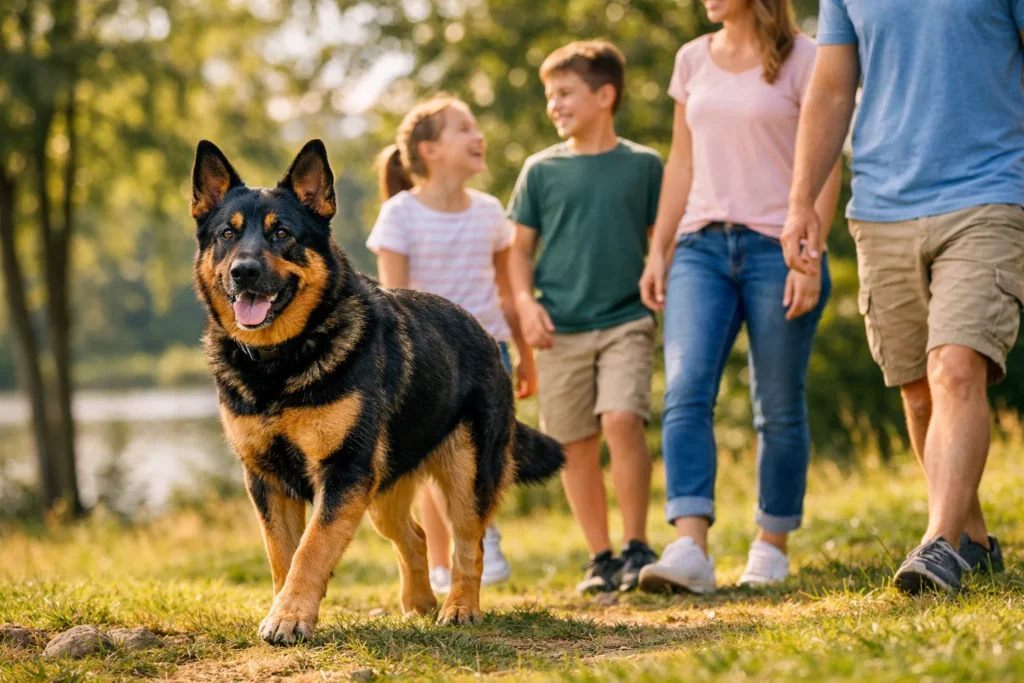
Temperament is the most important factor when evaluating this mix.
A well-bred Shepweiler is typically:
- loyal
- confident
- intelligent
- affectionate with family
- naturally protective
Protective Instincts
Both parent breeds were developed for working roles.
As a result, many Shepweilers naturally:
- monitor their environment
- notice unusual activity
- remain alert around strangers
The real issue is not aggression.
The challenge is teaching the dog how to respond appropriately.
Emotional Maturity
Here is something many articles overlook.
A physically powerful 12-month-old Shepweiler may still lack adult emotional maturity.
Many owners mistake physical size for mental development.
This often creates frustration during adolescence.
Are They Good Family Dogs?
Yes.
Many become excellent family companions.
However, success depends on:
- socialization
- training
- leadership
- exercise
Most thrive in homes where owners actively participate in their development.
These dogs generally do not perform well when left alone for long periods or treated as backyard pets.
Training Difficulty
Intelligent but Strong Willed
The Shepweiler learns commands quickly.
That does not mean instant obedience.
Many adolescents test:
- boundaries
- household rules
- leadership consistency
Best Training Approach
Focus on:
- positive reinforcement
- engagement
- impulse control
- confidence building
- obedience foundations
Avoid:
- inconsistent rules
- harsh punishment
- poor socialization
What Experienced Trainers Prioritize
Many trainers worry more about emotional stability than obedience speed.
A calm, neutral dog is often easier to live with than a highly obedient dog that reacts poorly to stress.
Puppy Development Timeline
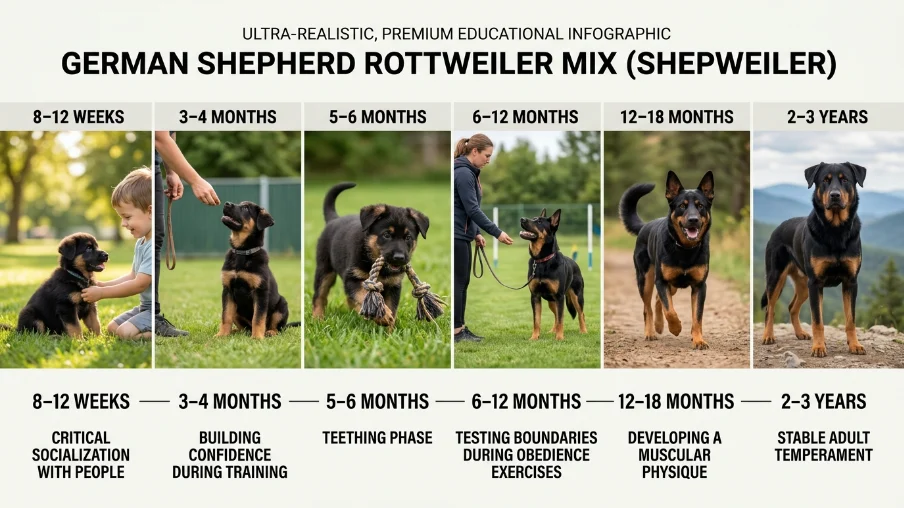
Most German Shepherd Rottweiler Mix puppies grow rapidly during their first two years.
Growth Timeline Table
| Age | Development Stage |
| 8–12 Weeks | Critical socialization window |
| 3–4 Months | Confidence building period |
| 5–6 Months | Teething begins |
| 6–12 Months | Adolescent testing phase |
| 12–18 Months | Physical maturity increases |
| 18–24 Months | Mental maturity improves |
| 2–3 Years | Adult temperament stabilizes |
The Most Challenging Stage
Between 6 and 18 months many Shepweilers become:
- stronger
- more independent
- more confident
- less responsive temporarily
This stage surprises many first-time owners.
However, it is a normal part of development.
Fear Periods
Some puppies experience temporary fear periods during adolescence.
Owners should focus on:
- confidence building
- calm exposure
- positive experiences
Rather than forcing interactions.
First-Year Challenges Most Owners Face
The first year is often more difficult than expected.
Common struggles include:
- leash pulling
- jumping on people
- overexcitement
- adolescent regression
- selective listening
- guarding behaviors
The good news is that most issues improve dramatically with consistent training.
Exercise Requirements
Energy Level
This is not a low-energy breed mix.
Most adults require:
- 1.5 to 3 hours of daily activity
- mental stimulation
- structured exercise
Best Activities
| Activity | Benefit |
| Obedience | Mental stimulation |
| Hiking | Physical conditioning |
| Tracking | Scent work |
| Agility | Athletic outlet |
| Tug Work | Controlled drive expression |
Common Exercise Mistake
Many owners create athletes instead of balanced dogs.
Endless physical activity without calmness training can increase arousal and frustration.
Grooming and Shedding
Most Shepweilers shed year-round.
Seasonal shedding can be substantial.
Weekly grooming should include:
- brushing
- nail trimming
- ear cleaning
- dental care
Regular grooming also allows owners to monitor skin and coat health.
Health and Genetic Concerns
Common Health Risks
| Condition | Risk Level |
| Hip Dysplasia | High |
| Elbow Dysplasia | Moderate |
| Bloat | Serious |
| Degenerative Myelopathy | Moderate |
| Heart Disease | Moderate |
| Obesity | Common |
Why Responsible Breeding Matters
Ethical breeders typically screen for:
- hips
- elbows
- temperament
- structural quality
Appearance alone tells you very little about long-term health.
How Much Does a German Shepherd Rottweiler Mix Cost?
Purchase price is only one part of ownership.
Initial Puppy Cost
| Expense | Typical Cost |
| Puppy | $500–$2,500 |
| Initial Supplies | $200–$600 |
| Veterinary Care | Variable |
| Training Classes | $100–$1,000+ |
Ongoing Costs
Owners should budget for:
- food
- grooming
- veterinary care
- insurance
- training
Large working dogs are rarely inexpensive to maintain.
Common Mistakes Owners Make
Choosing Based on Appearance
Size and muscle do not predict temperament.
Delaying Training
Behavioral habits become harder to change as the dog matures.
Skipping Socialization
Poor socialization often contributes to:
- fearfulness
- reactivity
- excessive territorial behavior
Insights Most Articles Miss
Working Ability Often Remains Strong
Many Shepweilers inherit serious working potential.
They frequently excel in:
- obedience
- tracking
- protection sports
- service work
Confidence Requires Balance
Too little confidence creates fear.
Too much unmanaged confidence creates control problems.
Experienced breeders evaluate confidence before drive.
Structure Matters More Than Size
Oversized dogs are not automatically superior.
Balanced structure often predicts better mobility and longevity.
Buyer Warning Section
Red Flags
Be cautious if a breeder:
- markets aggression as desirable
- lacks health testing
- refuses to discuss temperament
- cannot explain lineage
- focuses only on appearance
What Responsible Breeders Prioritize
Ethical breeders emphasize:
- health
- stability
- temperament
- trainability
- structural quality
Those factors matter far more than size.
Who Should Not Own This Dog?
This mix may not be ideal if:
- you want a low-energy companion
- you dislike training
- you travel frequently
- you have limited time for exercise
- you prefer naturally social breeds
These dogs require involvement.
Passive ownership rarely works.
Lifestyle Compatibility
| Lifestyle | Match Level |
| Active Family | Excellent |
| Experienced Owner | Excellent |
| Rural Property | Excellent |
| Apartment Living | Challenging |
| Sedentary Lifestyle | Poor |
| First-Time Owner | Often Difficult |
Preparation Checklist
You May Be Ready If
- you enjoy training
- you have time for daily exercise
- you understand working breeds
- you want an involved companion
You May Want Another Breed If
- you prefer low-maintenance dogs
- you travel constantly
- you dislike shedding
- you want minimal responsibility
Frequently Asked Questions
What is a German Shepherd Rottweiler Mix called?
The mix is commonly known as a Shepweiler.
How big does a Shepweiler get?
Most adults weigh between 75 and 120 pounds.
Are Shepweilers aggressive?
No. Temperament depends on genetics, socialization, and training rather than breed mix alone.
Are they good with children?
Many are excellent family dogs when properly trained and supervised.
How much exercise do they need?
Most require 1.5 to 3 hours of daily physical and mental activity.
Are German Shepherd Rottweiler Mixes easy to train?
Yes. They are highly intelligent but require consistent leadership.
Conclusion
The German Shepherd Rottweiler Mix combines two legendary working breeds into one powerful companion. Their intelligence, loyalty, and protective instincts can make them exceptional family guardians and training partners.
However, success with this mix depends on far more than appearance. Responsible breeding, early socialization, consistent training, and realistic expectations ultimately determine whether a Shepweiler becomes a stable lifelong companion.
Owners who embrace the breed’s intelligence and energy are often rewarded with one of the most devoted and capable dogs they will ever own.