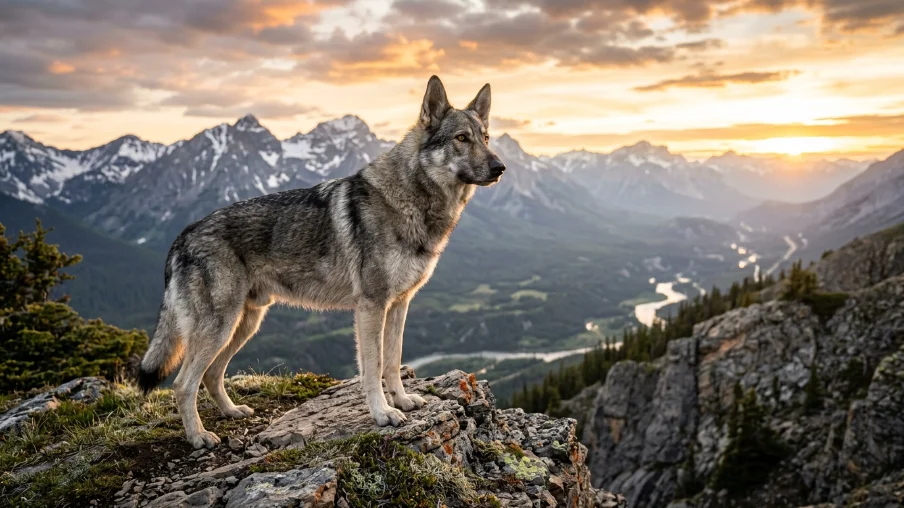
The German Shepherd Wolf Mix, often referred to as a Wolfdog, is a powerful hybrid created by crossing a German Shepherd with a wolf. Known for its intelligence, athleticism, and strong natural instincts, this hybrid can be challenging to manage due to its high prey drive, independence, and unpredictable temperament. German Shepherd Wolf Mixes require experienced owners, extensive socialization, secure containment, and a significant commitment to training and daily enrichment.
Quick Snapshot Table
| Category | Key Details |
|---|---|
| Breed Type | Wolfdog Hybrid |
| Common Name | German Shepherd Wolf Mix |
| Parentage | German Shepherd × Wolf |
| Recognition | Not Recognized as a Pure Breed |
| Size | Large to Giant |
| Weight | 50–120+ lbs |
| Height | 24–34 Inches |
| Lifespan | 10–14 Years |
| Temperament | Variable and Unpredictable |
| Intelligence | Very High |
| Trainability | Moderate to Difficult |
| Energy Level | Extremely High |
| Prey Drive | Very High |
| Family Suitability | Often Challenging |
| Social Behavior | Depends on Wolf Content |
| Loyalty Level | Strong with Trusted Handlers |
| Affection Level | Variable |
| Protective Instinct | Moderate to High |
| Watchdog Ability | Excellent |
| Guard Dog Ability | Variable |
| Stranger Friendly | Often Reserved or Wary |
| Good With Children | Generally Not Recommended |
| Good With Other Dogs | Variable |
| Small Pet Compatibility | Often Poor Due to High Prey Drive |
| Shedding | Heavy |
| Coat Type | Dense Double Coat |
| Coat Length | Medium to Long |
| Grooming Needs | Moderate to High |
| Drooling | Low |
| Barking Level | Low to Moderate |
| Howling Tendency | High |
| Apartment Friendly | No |
| Exercise Needs | Extremely High |
| Daily Exercise Requirement | 2–4+ Hours |
| Mental Stimulation Needs | Extremely High |
| Off-Leash Reliability | Very Low |
| Escape Artist Potential | Extremely High |
| Containment Needs | Very High |
| Fence Requirement | Secure 8+ Foot Fencing Often Recommended |
| Adaptability | Low to Moderate |
| Working Ability | High |
| First-Time Owner Friendly | No |
| Experience Level | Expert Handlers Only |
| Socialization Importance | Critical |
| Training Difficulty | Difficult |
| Food Consumption | 3–6+ Cups Daily |
| Common Coat Colors | Gray, Sable, Black, Silver, Agouti, White |
| Eye Color | Amber, Brown, Yellow, Hazel |
| Heat Tolerance | Moderate |
| Cold Tolerance | Excellent |
| Climate Preference | Cool to Cold Climates |
| Legal Restrictions | Common in Some Regions |
| Ownership Regulations | May Require Permits or Be Prohibited |
| AKC Recognition | Not Eligible |
| Best For | Experienced Wolfdog Enthusiasts |
| Not Ideal For | Families, Apartments, Novice Owners |
| Common Health Concerns | Hip Dysplasia, Elbow Dysplasia, Degenerative Myelopathy, Bloat, Joint Disorders |
| Veterinary Care Access | Can Be Challenging in Some Areas |
| Lifelong Training Need | Very High |
| Overall Maintenance Level | Very High |
| Companion Dog Rating | Moderate |
| Family Pet Rating | Low to Moderate |
| Safety Considerations | Requires Specialized Handling and Management |
| Overall Suitability | Best for Experienced Owners with Extensive Space, Secure Containment, and Wolfdog Knowledge |
Why the German Shepherd Wolf Mix Fascinates So Many People
Few canines capture attention like a German Shepherd Wolf Mix.
Their appearance often resembles the wolves seen in wildlife documentaries. Thick coats, intense eyes, and a powerful athletic build create an image many dog lovers find irresistible.
However, appearance can be misleading.
Here is where most people get it wrong.
Many assume a wolfdog behaves like a German Shepherd with a more exotic appearance. In reality, wolf genetics can dramatically influence behavior, independence, trainability, and social interactions.
The real challenge is not managing their size. It is managing their instincts.
What Is a German Shepherd Wolf Mix?
Basic Definition
A German Shepherd Wolf Mix is a hybrid created by breeding a German Shepherd Dog with a wolf.
Depending on the breeding program, wolves involved may include:
- Gray Wolf
- Timber Wolf
- Arctic Wolf
- Eurasian Wolf
The resulting offspring are commonly called:
- Wolfdogs
- Shepherd Wolf Hybrids
- German Shepherd Wolf Mixes
Why No Two Wolfdogs Are Identical
Unlike purebred dogs, wolfdog hybrids can vary dramatically.
Even puppies from the same litter may show differences in:
- confidence
- prey drive
- sociability
- trainability
- physical appearance
This unpredictability is one reason ownership can be difficult.
Understanding Wolf Content Levels
Low Content Wolfdogs
Low-content hybrids generally display:
- more domestic dog traits
- easier training
- greater adaptability
These dogs often resemble German Shepherds with stronger ancient instincts.
Mid Content Wolfdogs
Mid-content animals frequently show:
- increased independence
- stronger prey drive
- reduced reliability off leash
- greater environmental awareness
These are often the hybrids people underestimate.
High Content Wolfdogs
High-content wolfdogs may display:
- significant wolf behavior
- extreme caution around strangers
- limited obedience reliability
- intense escape tendencies
Many are unsuitable for traditional pet homes.
Genetics and Physical Appearance
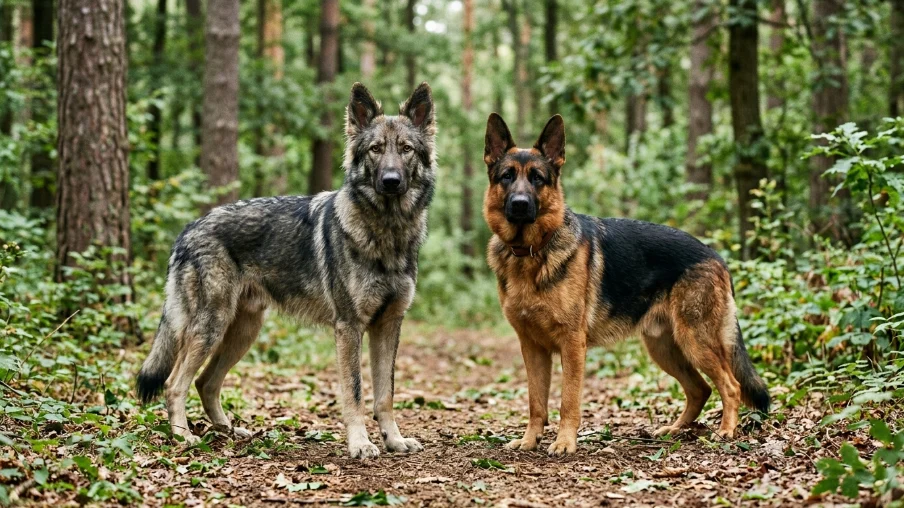
What Does a German Shepherd Wolf Mix Look Like?
Physical appearance depends heavily on genetics.
Common features include:
- long legs
- narrow chest
- amber eyes
- thick double coat
- elongated muzzle
- wolf-like movement
Some individuals appear almost entirely wolf-like.
Others strongly resemble German Shepherds.
Coat Colors
Common colors include:
- gray
- silver
- sable
- black
- cream
- agouti
Wolf coloration often becomes more noticeable as the dog matures.
Temperament and Personality
The Most Misunderstood Aspect
Temperament is where wolfdogs differ most from traditional German Shepherds.
Many owners expect:
- loyalty like a shepherd
- obedience like a working dog
- companionship like a family pet
Wolf genetics can alter all three.
Common Behavioral Traits
Many German Shepherd Wolf Mixes display:
- strong independence
- cautious behavior
- environmental sensitivity
- intense curiosity
- territorial awareness
They often think differently than domestic dogs.
Social Behavior
Some hybrids form strong bonds with owners but remain reserved around:
- strangers
- visitors
- unfamiliar environments
This behavior is frequently mistaken for aggression when it is actually caution.
Are German Shepherd Wolf Mixes Good Family Dogs?
The Honest Answer
For most families, no.
While exceptions exist, wolfdogs generally require more experience than traditional companion breeds.
Challenges often include:
- high prey drive
- escape behavior
- limited tolerance for chaos
- unpredictable social responses
Homes That May Succeed
These owners typically perform best:
- experienced working dog handlers
- wolfdog enthusiasts
- rural property owners
- individuals with secure enclosures
Homes That Often Struggle
Problems commonly occur in:
- apartments
- busy suburban households
- first-time owner homes
- homes with small pets
The real issue is not aggression.
It is management complexity.
Training Challenges
Why Training Can Be Difficult
German Shepherds are known for cooperation.
Wolves are known for independence.
A wolfdog can inherit traits from either side.
Effective Training Approaches
Successful owners focus on:
- relationship building
- consistency
- positive reinforcement
- environmental exposure
- impulse control
What Usually Fails
Avoid:
- harsh punishment
- repetitive drilling
- unrealistic expectations
- dominance-based methods
Trust often matters more than control.
Puppy Development Timeline
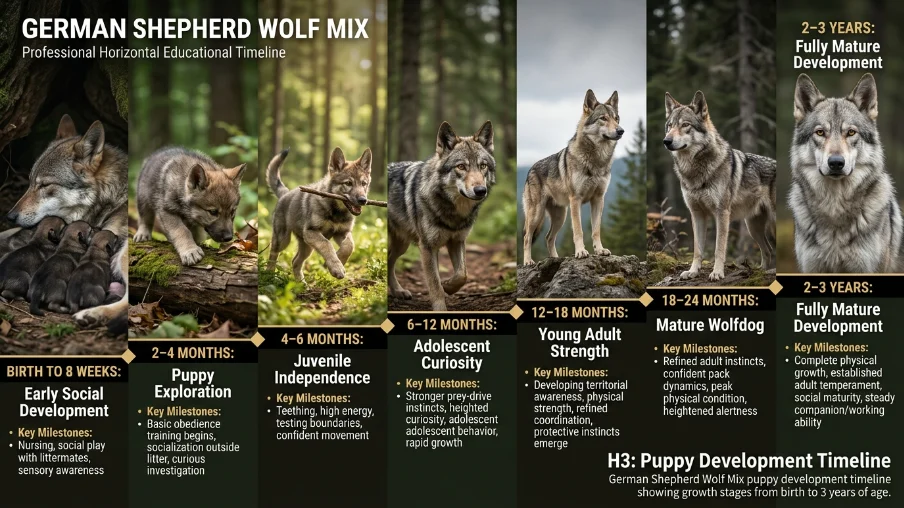
Most German Shepherd Wolf Mix puppies appear relatively social during early development. As they mature, wolf-related instincts may become increasingly noticeable.
Growth Timeline Table
| Age | Development Stage |
|---|---|
| Birth to 8 Weeks | Early social development |
| 2 to 4 Months | Exploration and learning |
| 4 to 6 Months | Independence increases |
| 6 to 12 Months | Prey drive becomes stronger |
| 12 to 18 Months | Territorial behaviors emerge |
| 18 to 24 Months | Adult instincts become clearer |
| 2 to 3 Years | Full maturity develops |
The Stage Most Owners Underestimate
Between:
- 6 and 24 months
Many hybrids become:
- less dependent
- more cautious
- harder to recall
- more environmentally aware
This developmental period often determines long-term success.
Exercise and Mental Stimulation
Daily Requirements
Most German Shepherd Wolf Mixes require:
- extensive exercise
- environmental enrichment
- mental challenges
- large secure spaces
A simple backyard is rarely enough.
Ideal Activities
Many thrive with:
- scent work
- tracking
- hiking
- structured exploration
- advanced enrichment
Mental stimulation is often as important as physical activity.
Health and Lifespan
Common Health Concerns
Potential issues include:
- hip dysplasia
- elbow dysplasia
- degenerative joint disease
- digestive sensitivity
- injury from escape attempts
Health depends heavily on breeding quality.
Average Lifespan
Most German Shepherd Wolf Mixes live:
- approximately 10 to 14 years
Proper nutrition and veterinary care play major roles.
Legal Considerations
Are Wolfdogs Legal Everywhere?
No.
Many jurisdictions regulate or prohibit:
- ownership
- breeding
- transport
Regulations vary significantly by location.
Why Laws Exist
Common concerns involve:
- public safety
- containment requirements
- liability issues
- wildlife regulations
Always verify local laws before considering ownership.
Common Mistakes Owners Make
Buying for Appearance
Many buyers focus on the wolf-like look rather than behavioral realities.
Underestimating Containment Needs
Wolfdogs are skilled climbers, diggers, and escape artists.
Expecting German Shepherd Obedience
Some hybrids inherit far more independence than anticipated.
Ignoring Legal Restrictions
Ownership issues can become serious if local regulations are overlooked.
Insights Most Articles Miss
Wolf Content Matters More Than Appearance
A wolf-looking dog may have relatively low wolf content.
A shepherd-looking dog may possess stronger wolf traits.
Appearance alone tells you very little.
Socialization Does Not Remove Genetics
Proper socialization helps significantly.
However, it cannot eliminate inherited instincts.
Many Wolfdogs Are Surrendered During Adolescence
Behavioral challenges often become more noticeable after puppyhood.
This is why impulse purchases frequently fail.
Buyer Warning Section
Red Flags When Buying a German Shepherd Wolf Mix
Be cautious if a seller:
- guarantees temperament
- cannot verify lineage
- avoids discussing wolf content
- lacks veterinary records
- markets hybrids as easy family pets
What Responsible Breeders and Rescues Do
Ethical programs:
- educate buyers honestly
- discuss challenges openly
- verify genetics when possible
- prioritize long-term placement success
Lifestyle Compatibility
| Lifestyle | Suitable? |
|---|---|
| Experienced handler | Excellent |
| Rural property owner | Good |
| Active outdoor enthusiast | Good |
| Apartment resident | Poor |
| First-time owner | Poor |
| Home with small pets | Often difficult |
Preparation Checklist
You May Be Ready If:
- you understand wolfdog behavior
- you have secure containment
- you can provide extensive enrichment
- you have experience with challenging canines
You May Want Another Breed If:
- you want predictable obedience
- you need an easy family pet
- you live in a small apartment
- you lack time for advanced management
Frequently Asked Questions
Is a German Shepherd Wolf Mix a good pet?
For most households, no. They require significantly more experience and management than traditional dogs.
Are German Shepherd Wolf Mixes aggressive?
Not necessarily. Most issues stem from fear, caution, prey drive, or poor management rather than outright aggression.
How big does a German Shepherd Wolf Mix get?
Most adults weigh between 60 and 120 pounds, depending on genetics and wolf content.
Can a German Shepherd Wolf Mix be trained?
Yes, but training is usually more challenging and less predictable than with purebred German Shepherds.
Are German Shepherd Wolf Mixes legal?
Legality varies by country, state, province, and municipality.
Do wolfdogs make good guard dogs?
Not always. Many wolfdogs are naturally cautious and may avoid confrontation rather than engage with threats.
Conclusion
The German Shepherd Wolf Mix combines the intelligence of the German Shepherd with the instincts of a wild canine. Their appearance is undeniably impressive, but successful ownership requires far more than admiration for their looks.
Experienced handlers understand that temperament, containment, genetics, and legal considerations matter far more than coat color or wolf-like features.
For the right owner, a well-managed wolfdog can be a fascinating companion. For the average household, however, the challenges often outweigh the appeal.