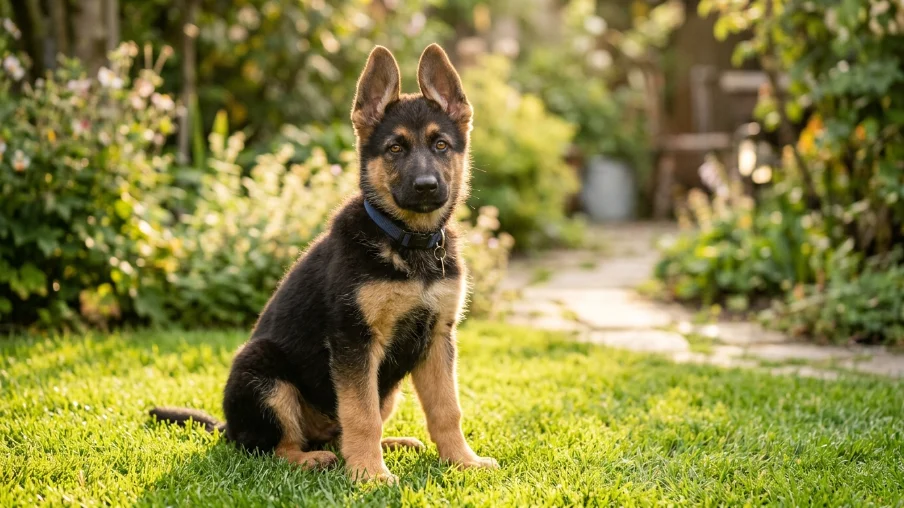
A German Shepherd puppy is one of the most intelligent, loyal, and versatile dogs you can own and one of the most demanding. They are working dogs that thrive on structure, consistent training, and daily mental and physical exercise from the very first week. Without proper socialization in the first 12 weeks and committed ownership, they become one of the most surrendered breeds in rescue.
Quick Snapshot Table
| Feature | Details |
|---|---|
| Breed Group | Herding (AKC) |
| Origin | Germany (1899) |
| Breed Purpose | Herding, Protection, Working Dog |
| Average Weight Adult Male | 65–90 lbs |
| Average Weight Adult Female | 50–70 lbs |
| Height | Males: 24–26 in / Females: 22–24 in |
| Lifespan | 9–13 years |
| Coat Type | Double coat, medium length |
| Undercoat | Dense seasonal undercoat |
| Common Colors | Black and tan, sable, black, black and red, white, bicolor |
| Temperament | Loyal, intelligent, confident, protective |
| Intelligence Level | Very High (Top working breed intelligence) |
| Energy Level | High |
| Trainability | Excellent |
| Working Drive | Very High |
| Protective Instinct | Strong |
| Loyalty Level | Exceptional |
| Good With Children | Yes with socialization and supervision |
| Good With Other Pets | Moderate to good with early training |
| Stranger Behavior | Reserved to cautious |
| Shedding Level | Heavy, year-round |
| Grooming Needs | Moderate (increases during shedding seasons) |
| Exercise Needs | 90–120+ minutes daily (adult) |
| Mental Stimulation Needs | Very High |
| Apartment Friendly | Possible only with strict exercise routine |
| First-Time Owner Friendly | Moderate (better with guidance) |
| Training Difficulty | Moderate |
| Socialization Window | Critical 8–16 weeks |
| Puppy Development Speed | Rapid first 18–24 months |
| Bite Inhibition Training | Essential in puppy stage |
| Off-Leash Reliability | Moderate to High with advanced training |
| Prey Drive | Moderate to High |
| Guard Dog Ability | Excellent |
| Police/Military Use | Common globally |
| Service Dog Potential | Very High |
| Search & Rescue Potential | Very High |
| Herding Ability | Excellent |
| Adaptability | High |
| Heat Tolerance | Moderate |
| Cold Tolerance | High |
| Health Concerns | Hip dysplasia, elbow dysplasia, degenerative myelopathy, bloat |
| Lifespan Factors | Genetics, diet, exercise, veterinary care |
| Average Puppy Price | $800–$3,000 (reputable breeder) |
| Adoption Availability | High in shelters and rescues |
| AKC Rank (Popularity) | Consistently Top 5 in the United States |
| FCI Recognition | Yes |
| Training Success Rate | Very High with consistency |
| Behavioral Challenges | Reactivity, separation anxiety if under-stimulated |
| Best Owner Type | Active, experienced, or committed beginners |
| Not Ideal For | Sedentary lifestyles |
| Overall Suitability | Highly versatile working and family companion dog |
What Is a German Shepherd Puppy?
A German Shepherd puppy is a young dog of one of the world’s most recognized working breeds developed in Germany in the late 19th century specifically for intelligence, trainability, and physical capability.
These are not decorative companion dogs that happen to look impressive. German Shepherds were purpose-built working animals, and that working heritage shows up in every puppy born today in their drive, their need for mental stimulation, their bond with their handler, and their requirement for consistent structure from day one.
Here is where most people get it wrong: they see the puppy fluffy, playful, manageable at 8 weeks and do not prepare for the 85-pound adolescent that arrives at 9 months, still full of energy, testing every rule, and needing two hours of daily engagement to stay calm indoors.
A well-bred, well-raised German Shepherd puppy is one of the most rewarding dogs a person can own. An under-socialized, under-exercised, or under-trained one is a serious management problem. The difference is almost entirely in what the owner does in the first 18 months.
Breed History and Origin
The German Shepherd breed was formally established by Captain Max von Stephanitz in Germany in 1899. His goal was not a show dog or a companion it was the ideal working dog: stable in temperament, physically sound, highly trainable, and capable of sustained work.
Von Stephanitz founded the Verein für Deutsche Schäferhunde (SV), still the world’s largest single-breed dog club, and established the foundational standard that shapes the breed today. The breed standard prioritized utility over appearance a principle that many modern breeding programs have moved away from, with significant consequences.
German Shepherds entered police and military work during World War I, cementing their reputation internationally. They arrived in the United States in large numbers during the early 20th century and became one of the most popular working and family breeds in American history.
Today two distinct genetic populations exist within the breed working lines and show lines and understanding this distinction is essential for anyone choosing a German Shepherd puppy.
Appearance
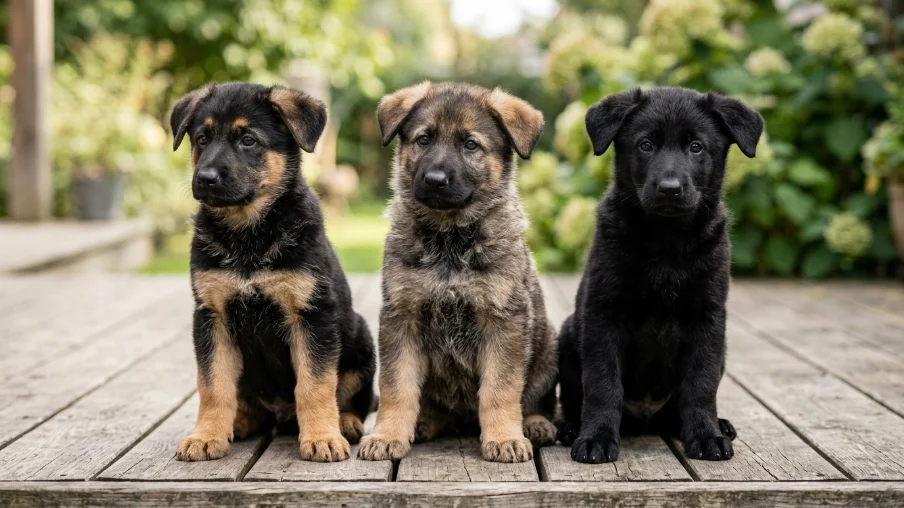
German Shepherd puppies at 8 weeks are compact, fluffy, and proportionate with oversized paws and ears that may still be folded or beginning to rise.
Adult appearance targets (puppy development toward these):
- Head: Strong, chiseled, clean stop, slightly domed forehead. Longer, wedge-shaped skull. Muzzle strong and parallel to skull line.
- Eyes: Almond-shaped, medium-sized, dark brown. Lighter eyes are acceptable but darker is preferred in the breed standard.
- Ears: Large, erect, moderately pointed, open to the front. Puppy ears fold, rise, and may go back down before fully standing typically between 8 and 20 weeks.
- Body: Slightly longer than tall (ratio approximately 10:8.5), well-muscled, deep chest, level topline. Significant angulation in the hindquarters, particularly in show-line dogs.
- Tail: Bushy, reaches to hock, carried in a slight downward curve at rest.
- Coat: Dense double coat, straight or slightly wavy outer layer, thick undercoat. Long-coat variety also exists (long, flowing coat without undercoat density a recessive trait).
- Colors: Black and tan most common; also sable, all-black, black and red, bicolor, and white (white disqualified in conformation showing).
What a puppy’s appearance can tell you and what it cannot:
Ear set, coat quality, and color are visible at 8 weeks. Structural soundness the angulation, hip and elbow quality, back length cannot be fully assessed until 18–24 months. Appearance alone tells you very little about what you are actually buying. A beautiful 8-week-old puppy from untested parents is a gamble. Experienced breeders focus on far more than how the puppy looks.
Working Line vs. Show Line The Most Important Decision Most Buyers Don’t Know They’re Making
This section does not appear in most German Shepherd puppy guides. It should.
The modern German Shepherd exists in two broadly different genetic populations:
| Feature | Working Line GSD | Show Line GSD (American/German) |
|---|---|---|
| Primary breeding goal | Drive, trainability, physical capability | Conformation, gait, temperament for family life |
| Common bloodlines | Czech, DDR (East German), West German working | American show, West German show (Schutzhund-titled) |
| Energy level | Very high | High to moderate |
| Prey drive | High to very high | Moderate |
| Handler intensity | High very handler-focused | Moderate |
| Physical structure | Straighter topline, more moderate angulation | More angulated hindquarters (especially American show) |
| Best for | Sport, police, military, protection, experienced active owners | Active families, performance sports, experienced owners |
| Typical puppy price | $1,500–$4,000+ | $800–$3,000 |
Why this matters for buyers:
A working-line German Shepherd puppy placed in a family that cannot provide 2+ hours of structured daily activity and consistent training is not going to thrive. It is not a temperament flaw it is a mismatch. The dog was bred for more than the owner planned to provide.
If you want a German Shepherd as a family companion with manageable energy who will also do well in obedience or agility: a quality show-line puppy from health-tested parents is likely the better fit.
If you want a driven performance or sport dog and have experience: a working-line puppy from a working-dog breeder is appropriate.
A reputable breeder will ask you enough questions to guide this honestly. If they do not ask how you plan to keep and train the dog, that is a red flag.
Temperament and Personality
The German Shepherd’s temperament is defined by three core qualities: loyalty, intelligence, and confidence. When these are properly balanced and developed, the result is a dog that is both deeply bonded to its family and reliably controlled in any environment.
Core temperament traits:
- Loyalty: German Shepherds form intense, lasting bonds with their primary handlers and families. This loyalty is a strength and a responsibility. A GSD that has bonded deeply and then experiences an unstable or neglectful environment suffers significantly.
- Intelligence: This breed does not just learn commands it learns patterns, reads human behavior, and anticipates outcomes. This is exceptional for training. It also means an under-stimulated GSD will apply that intelligence to things owners do not want.
- Confidence: A well-bred German Shepherd should move through the world with calm assurance. It should be able to encounter new environments, people, and animals without fear or inappropriate aggression.
- Aloofness with strangers: Here is something most people misread. A German Shepherd that is reserved or watchful around unfamiliar people is displaying correct breed temperament not aggression, not shyness. What you do not want is either extreme: the dog that threatens every stranger (poor socialization or nervy genetics) or the dog that greets everyone ecstatically (likely poor breed character).
- Sensitivity: German Shepherds read their handlers more deeply than most breeds. They respond poorly to harsh, inconsistent handling and can become anxious or defensively reactive under pressure-heavy training methods.
What should concern you in a puppy:
- Excessive cowering, tail-tucking, or inability to recover from mild stress at 8 weeks
- Aggression toward the breeder, litter mates, or handler at 8 weeks (beyond normal play)
- Inability to explore a new, mild environment without panic
These behaviors in a young puppy often point to poor genetic nerve strength something no amount of training fully overcomes.
Intelligence and Trainability
German Shepherds rank third in Stanley Coren’s canine intelligence research for working and obedience intelligence capable of learning new commands in under five repetitions and obeying known commands on the first instruction over 95% of the time.
In the field, this translates to police and military service, search and rescue operations, explosive and narcotic detection, disability assistance, and competitive protection sport. No breed with a compromised capacity for learning holds these roles consistently across the world.
For the average owner, this intelligence means:
The dog will learn everything the rules you set intentionally, and the patterns you establish accidentally. If the puppy learns that jumping gets attention sometimes, it will jump consistently. If it learns that pulling on the leash eventually gets it to the smell it wants, it will pull. Consistency in the owner is the most important variable in training any German Shepherd.
Training approach that works:
- Positive reinforcement as the foundation. Food, toys, and praise work extremely well with this breed. Force-based methods produce compliance under pressure but often create avoidance, anxiety, or aggression in a dog wired this sensitively.
- Short, frequent sessions over long, infrequent ones. Five to ten minutes, three to four times daily, outperforms one 45-minute session significantly.
- Clear structure. A German Shepherd functions best when the rules are consistent and the hierarchy in the household is clear not through dominance theory, but through predictability and follow-through.
- Progress to real-world distractions early. Training in the backyard and failing in the park is a common experience with this breed. Introduce distraction systematically as early as the training foundation allows.
Recommended formal training milestones:
| Age | Training Goal |
|---|---|
| 8–12 weeks | Sit, down, come, name recognition, crate introduction, leash introduction |
| 3–6 months | Puppy obedience class, stay, leave it, loose leash walking |
| 6–12 months | Adolescent obedience class, reliable recall in distraction, impulse control |
| 12–18 months | Advanced obedience, CGC (Canine Good Citizen) preparation, introduce sport or working activity |
| 18–24 months | CGC, rally, agility, Schutzhund foundation, therapy dog evaluation as appropriate |
Exercise Requirements
Daily exercise needs by age:
| Age | Exercise Type | Duration |
|---|---|---|
| 8–12 weeks | Free play in safe, enclosed area | 10–15 min sessions, 3–4x daily |
| 3–6 months | Structured short walks, free play | 15–20 min walks, 2x daily |
| 6–12 months | Leash walks, controlled play, training | 30–40 min walks, 2x daily |
| 12–18 months | Longer walks, beginning running | 45–60 min, 2x daily |
| 18 months+ (adult) | Full exercise program | 90–120+ min daily, varied |
The growth plate rule: German Shepherd growth plates do not close until 12–18 months. Sustained high-impact exercise long runs, repetitive jumping, extended fetch on hard surfaces before closure increases hip and elbow dysplasia risk. This is not about being overly cautious; it is about protecting a joint system that is already one of this breed’s primary vulnerabilities.
What mental exercise looks like:
- Obedience training sessions (structured, demanding)
- Nose work and scent tracking
- Puzzle feeders and interactive food toys
- Structured problem-solving games
- New environments, surfaces, and experiences
Physical and mental exercise are not interchangeable. A German Shepherd that runs five miles daily but has no mental stimulation is still an under-exercised German Shepherd.
Health Problems and Genetic Risks
German Shepherds are a magnificent breed with serious, documented health vulnerabilities. Understanding these before buying not after the first vet emergency is what separates prepared owners from overwhelmed ones.
Primary health concerns:
Hip Dysplasia
A malformation of the hip joint in which the ball and socket do not develop or fit together properly. Results in pain, reduced mobility, and progressive arthritis. One of the most common orthopedic conditions in the breed.
- OFA statistics consistently place German Shepherds in the higher-risk category among large breeds
- Both parents should have OFA Good or Excellent ratings, or PennHIP scores showing low distraction index
- Genetic contribution is significant, but environmental factors rapid weight gain, excessive exercise during growth, inappropriate nutrition also influence severity
Elbow Dysplasia
Developmental abnormalities of the elbow joint, often occurring alongside hip problems. A significant cause of front-limb lameness in large breed dogs, typically presenting between 4–18 months.
Degenerative Myelopathy (DM)
A progressive, fatal neurological disease of the spinal cord, leading to gradual paralysis of the hindquarters. Typically presents in dogs 8 years and older. German Shepherds are one of the most affected breeds in the world.
- Caused by a mutation in the SOD1 gene
- DNA testing identifies dogs as Clear (no copies of the mutation), Carrier (one copy), or At Risk (two copies)
- Two At Risk parents will always produce At Risk offspring
- There is no treatment; management focuses on quality of life
- Every buyer should ask for SOD1 test results on both parents
Bloat (Gastric Dilatation-Volvulus / GDV)
The stomach fills with gas and twists on itself, cutting off blood supply. It is uniformly fatal without emergency surgery and can progress from first symptoms to death in hours.
- Deep-chested, large breeds are at highest risk
- Risk factors include large single meals, vigorous exercise immediately before or after eating, eating too quickly
- Preventive gastropexy surgery is available and may be recommended by your veterinarian, particularly if a parent or grandparent has had GDV
Perianal Fistulas
Chronic, painful inflammatory lesions around the anus. More common in German Shepherds than in any other breed. Management is possible but often requires long-term medication and sometimes surgery.
Exocrine Pancreatic Insufficiency (EPI)
Failure of the pancreas to produce sufficient digestive enzymes. Results in severe weight loss, large loose stools, and poor condition despite adequate food intake. Requires lifelong enzyme supplementation manageable but expensive.
Health Testing Breeders Should Provide:
| Test | Organization | What It Screens |
|---|---|---|
| Hip evaluation | OFA or PennHIP | Hip dysplasia |
| Elbow evaluation | OFA | Elbow dysplasia |
| DM (SOD1) DNA test | OFA/VetGen/Embark | Degenerative myelopathy risk |
| Cardiac exam | OFA (cardiologist) | Heart health |
| Ophthalmologist exam | OFA (CAER) | Inherited eye conditions |
All OFA results are publicly searchable at ofa.org. If a breeder provides paperwork but you cannot find the dog listed in the OFA database, ask why.
Puppy Development Timeline
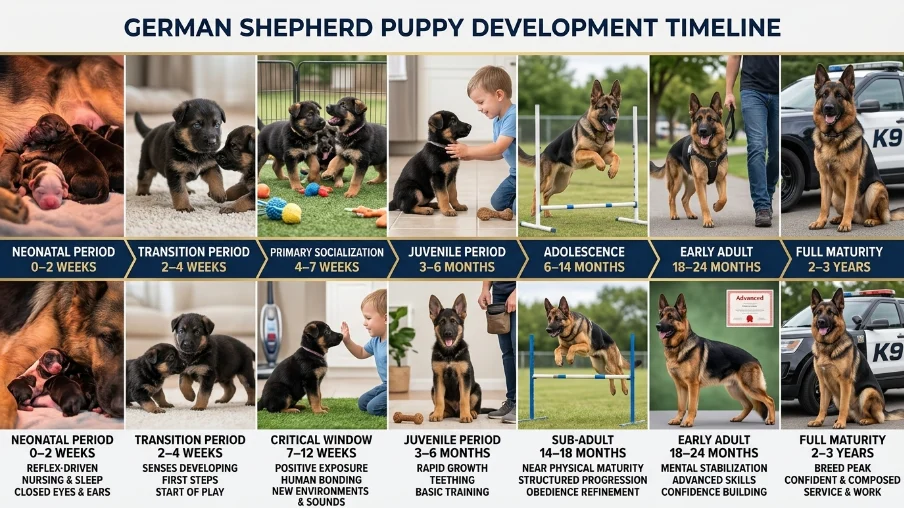
| Age | Development Stage | Key Milestones | Owner Priority |
|---|---|---|---|
| Birth–2 weeks | Neonatal | Eyes and ears closed; sleeps, nurses, eliminates with mother’s help | Leave entirely with mother and breeder |
| 2–4 weeks | Transition | Eyes open, ears begin functioning; first unsteady steps | Gentle daily handling by breeder |
| 4–7 weeks | Primary socialization | Rapid learning; dog communication from littermates; fear threshold forming | Breeder provides environmental exposure |
| 7–12 weeks | Critical socialization | Human bonding; new experiences received most positively; fear imprint window opens | Maximum positive socialization by new owner this window closes |
| 3–6 months | Juvenile | Rapid growth; teeth changing; first testing of rules | Puppy class; leash manners; crate training |
| 6–14 months | Adolescence | Sexual maturity; rule-testing peaks; some dogs regress in training | Consistent daily training; structure is critical here |
| 14–18 months | Sub-adult | Physical near-maturity; growth plates closing | Progress to advanced training; introduce working sport |
| 18–24 months | Early adult | Mental maturity beginning | Stable routine; advanced work |
| 2–3 years | Full maturity | Complete physical and mental development | Reliable, trained, integrated adult dog |
The 7–12 week window is the single most important period in your dog’s life.
Research by Dr. John Paul Scott and Dr. John Fuller, foundational in canine behavioral science, identified this as the primary socialization window when positive exposure to people, environments, sounds, surfaces, and animals has the most lasting impact on adult temperament. Missing this window does not make a dog untrainable, but it makes the trainer’s job significantly harder and the outcome less predictable.
Feeding and Nutrition
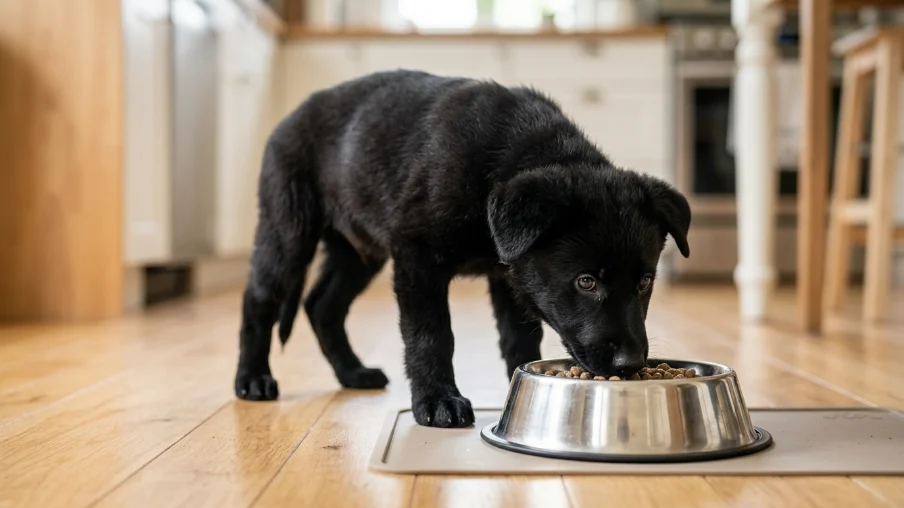
Feeding schedule by age:
| Age | Meals Per Day | Food Type |
|---|---|---|
| 8–12 weeks | 3–4 meals | High-quality large-breed puppy kibble |
| 3–6 months | 3 meals | Large-breed puppy formula |
| 6–12 months | 2–3 meals | Large-breed puppy formula |
| 12 months+ | 2 meals | Large-breed adult formula |
| 7+ years | 2 meals | Senior or joint-support formula |
Critical nutritional guidelines:
- Use large-breed puppy food specifically. Standard puppy formulas are calorie-dense and promote rapid growth a documented risk factor for hip and elbow dysplasia in large breeds. Large-breed puppy formulas are calibrated for controlled, steady growth.
- Feed to body condition, not the bag. Feeding guidelines on packaging are starting points. Adjust portions so you can feel the ribs without pressing but cannot see them, and the waist is visible from above.
- Do not free-feed. Scheduled meals allow you to monitor appetite changes often the first sign of a developing health problem and reduce the risk of bloat.
- Avoid calcium supplementation unless prescribed. Excess calcium during puppyhood disrupts the calcium-phosphorus ratio and can worsen orthopedic development in growing large-breed dogs. Quality large-breed puppy food provides sufficient calcium.
- Omega-3 fatty acids support coat and joints. Fish oil supplementation or DHA-enriched food is beneficial, particularly in a breed predisposed to joint problems.
Monitoring body condition:
A German Shepherd puppy that is visibly ribs from across the room is too thin. A puppy with a round belly and no discernible waist is overweight. Both extremes create problems underweight dogs lack the nutrition for healthy development; overweight dogs stress developing joints and increase adult obesity risk.
Grooming Guide
German Shepherds are heavy shedders year-round with two major seasonal coat blows in spring and fall when they lose their undercoat in significant volumes. This is not negotiable and not reduced by diet or grooming products. It is a breed characteristic.
Grooming schedule:
| Task | Frequency |
|---|---|
| Brushing (standard maintenance) | 3–4 times per week |
| Brushing (seasonal coat blow) | Daily |
| Bathing | Every 6–8 weeks or as needed |
| Nail trimming | Every 3–4 weeks |
| Ear inspection and cleaning | Monthly; check weekly for odor or redness |
| Teeth brushing | Daily ideally; 3x per week minimum |
| Full de-shedding brush-out | Weekly year-round; 2x weekly during coat blows |
Tools worth owning:
- Undercoat rake — most effective tool for loose undercoat removal
- Slicker brush — surface debris and daily maintenance
- Pin brush — long-coat German Shepherds
- High-velocity dryer — dramatically reduces grooming time during coat blows; blows loose coat out before it lands on every surface in your home
- Nail grinder or clippers — whichever the dog tolerates; start handling paws from day one to build acceptance
Grooming as a health check:
Weekly grooming is also an opportunity to check for lumps, skin changes, ear infections, dental disease, and paw pad injuries. Trained early, a German Shepherd will accept grooming as routine. Introduced abruptly to an adult dog that has never been handled, it becomes a battle.
Common Owner Mistakes
1. Missing the socialization window This is the most consequential mistake a German Shepherd owner can make. Owners who isolate new puppies waiting for vaccine completion frequently produce fearful or reactive adults. Work with your veterinarian to balance disease exposure risk against socialization puppy classes in controlled environments, carried outings in public, visits to friends’ homes, and brief exposure to urban environments all work before full vaccination.
2. Underestimating the commitment German Shepherds are the number-one or number-two most surrendered breed in American shelters consistently. They are not surrendered because they are bad dogs. They are surrendered because owners chose them for their appearance and discovered the reality of ownership unprepared. This breed needs 90–120 minutes of structured daily engagement, consistent training, and mental stimulation throughout its life. If that is not sustainable for your lifestyle, choose a different breed honestly.
3. Inconsistent rules in the household German Shepherds test rules especially during adolescence (6–18 months). An owner who allows jumping when they are happy to see the dog but corrects it on other days is teaching the dog that rules are situational. For a breed this intelligent, situational rules become no rules at all.
4. Choosing a puppy based on appearance Color, markings, and fluffy appeal at 8 weeks have no bearing on structure, temperament, or health. Responsible breeders evaluate far more than color. A puppy from health-tested, temperament-stable parents in a socialized environment will outlast and outperform a beautiful puppy from untested stock in almost every category that matters.
5. Skipping professional training “I trained my last dog myself” is a phrase experienced dog trainers hear regularly. German Shepherds benefit enormously from structured group puppy classes not primarily for obedience, but for controlled socialization with other dogs, humans, and distracting environments under skilled supervision.
6. Reacting to normal adolescent behavior as a permanent problem Between 6 and 18 months, German Shepherds commonly regress in previously reliable behaviors, become more reactive, test boundaries actively, and seem less responsive to training. This is normal adolescent neurological development. Owners who give up on training, rehome, or switch to harsh methods during this phase frequently create the permanent problems they were trying to avoid. Consistency through adolescence is what produces a reliable adult.
7. Ignoring health testing when choosing a breeder “The parents are healthy” from a seller who has never done OFA testing means almost nothing. Hip and elbow dysplasia do not present clinically in many carriers. The only way to know is testing. This is not optional in a breed with this level of orthopedic and neurological risk.
Insights Most Articles Miss
The topline controversy in American show lines
American show-line German Shepherds have been selectively bred for a dramatically sloped topline a dramatically angled back that produces the characteristic “flowing trot” in the show ring. This structure is controversial within the breed community, with many working dog experts and orthopedic veterinarians arguing it places abnormal stress on the hindquarters and contributes to the breed’s high rate of hip problems. West German show lines and working lines typically show a more level, functional topline. This is worth researching before choosing a puppy it is not a cosmetic preference.
Male vs. female — what the data actually suggests
Males are typically larger, more physically imposing, and in some individuals more dominant or territorial. Females often mature faster mentally, can be more handler-focused in training, and typically show less inter-dog aggression. These are tendencies, not rules. Individual variation within both sexes is enormous, and the breeding quality behind the dog outweighs the sex in nearly every behavioral variable.
The real issue with “papers”
AKC registration means the breeder registered a litter with the AKC. It does not mean the dog is healthy, well-bred, or from tested parents. AKC papers confirm parentage registration nothing more. This is one of the most misunderstood aspects of dog buying, and breeders who use “AKC registered” as a primary selling point without mentioning health testing are often relying on buyers not knowing the difference.
Puppy selection within a litter matters less than most people think
Buyers often agonize over picking the “right” puppy in a litter. The most important variable is not which puppy you pick it is the quality of the litter overall. Puppies from a well-bred, health-tested, socialized litter are all likely to develop into good dogs given appropriate ownership. Puppies from a poorly-bred or under-socialized litter will all face challenges regardless of individual selection.
Price Guide and Ownership Costs
Puppy Purchase Prices (2026):
| Breeder Type | Price Range | Notes |
|---|---|---|
| Reputable health-tested (show/family) | $1,000–$2,500 | OFA-tested parents, health guarantee, socialized litters |
| Reputable working-line breeder | $1,500–$4,000+ | Imported bloodlines, titled parents, sport/working placement |
| Backyard breeder (untested) | $400–$1,000 | Variable quality; limited to no health testing |
| Rescue / shelter adoption | $50–$400 | Adults more common; puppies available occasionally |
| Puppy mills / brokers / pet stores | $800–$2,500 | Avoid entirely; price does not indicate quality |
First Year Ownership Costs (estimate):
| Expense | Estimated Cost (USD) |
|---|---|
| Puppy purchase | $1,000–$2,500 |
| Initial setup (crate, bowls, leash, bedding, ID) | $300–$600 |
| First vet visit, vaccines, heartworm test | $200–$400 |
| Spay/neuter (if applicable) | $250–$600 |
| Puppy food (first year) | $700–$1,200 |
| Puppy classes and basic training | $200–$600 |
| Flea, tick, heartworm prevention | $200–$400 |
| Routine vet care (annual exam + boosters) | $300–$500 |
| Grooming tools | $100–$300 |
| Toys, enrichment, incidentals | $200–$400 |
| First Year Total Estimate | $3,450–$7,500 |
Ongoing annual costs (Year 2+): $2,500–$5,500
Emergency veterinary costs: Orthopedic surgery (hip dysplasia) $3,000–$8,000+. Bloat/GDV surgery $3,000–$6,000+. These are reasons to carry pet insurance from day one.
How to Find a Reputable Breeder
Appearance and price are the two factors buyers typically use to evaluate breeders. Neither is meaningful without the following:
What a reputable German Shepherd breeder does:
- Completes OFA hip and elbow evaluations on both parents before breeding
- Tests both parents for DM (SOD1 gene mutation)
- Provides OFA numbers that buyers can verify independently at ofa.org
- Raises puppies in the home with regular human interaction and environmental exposure from birth
- Begins basic socialization, handling, and environmental exposure before puppies leave
- Places puppies at 8 weeks minimum 8 to 10 weeks is the standard; never 6–7 weeks
- Asks detailed questions about the buyer’s lifestyle, experience, and plans before placing a puppy
- Offers a written health guarantee and a return policy if the buyer cannot keep the dog
- Remains contactable and helpful throughout the dog’s life
- Typically has a waitlist rather than puppies always available
What to ask in your first conversation:
“Can I have the OFA numbers for both parents so I can look them up myself?” The answer tells you immediately whether you are speaking with a health-testing breeder.
Where to search:
- German Shepherd Dog Club of America (GSDCA) gsdca.org breeder referrals
- Working dog organizations: AWDF (American Working Dog Federation), USCA (United Schutzhund Clubs of America)
- AKC Marketplace use health testing filters
- Regional German Shepherd clubs
Questions to Ask Before Buying
- Can I see and verify OFA results independently for both parents?
- What is the DM/SOD1 status of both parents?
- Have there been any health issues orthopedic, neurological, digestive in previous litters?
- At what age will the puppies go to their new homes, and why?
- How are the puppies socialized before placement?
- What does your health guarantee cover and for how long?
- What is your policy if I can no longer keep the dog?
- How many litters do you produce per year, and how many breeds?
- Can I visit your facility and meet the dam in person before committing?
- What type of owner and home are you looking for what makes someone a good match for your puppies?
Buyer Warning Section
Situations to avoid entirely:
The “always available” breeder. Quality German Shepherd litters are planned, waitlisted, and placed thoughtfully. A breeder with multiple litters always ready represents volume production, not quality breeding.
Puppies offered at 6 or 7 weeks. Weeks 7 and 8 include critical learning from littermates bite inhibition, dog communication, play behavior. Early removal has documented behavioral consequences. It is also illegal to sell puppies under 8 weeks in many U.S. states.
Sellers who cannot or will not provide OFA paperwork. “The vet said they look fine” is not health testing. “We’ve never had any hip problems” is anecdote, not data. Without OFA or PennHIP documentation, you have no evidence of testing.
“Champion bloodlines” without health testing. Conformation championships test movement and appearance not hip, elbow, or neurological health. A champion-sired litter from untested parents is still an untested litter.
Imported puppies sold as superior based on origin alone. Czech, German, or DDR imports can be excellent dogs from reputable breeders with verified working titles and health testing. Import papers alone prove nothing about the individual dog’s quality or the breeder’s practices.
Pressure tactics. “This is the last puppy,” “someone else is looking at it today,” “the price goes up next week” these are sales tactics. A responsible breeder’s priority is finding the right home, not closing the transaction.
Lifestyle Compatibility
| Lifestyle Factor | Suitable? | Notes |
|---|---|---|
| Families with children | Yes | Excellent with socialization; teach children appropriate interaction |
| Young children (under 5) | Caution | Size, energy, and herding instinct requires supervision and management |
| Single active owner | Excellent | Bonds intensely; thrives with consistent one-on-one engagement |
| Apartment living | Possible | Exercise commitment non-negotiable; yard is helpful but not required |
| Active/outdoor lifestyle | Excellent | Running, hiking, camping this breed thrives in active environments |
| Working owners (8+ hours away) | Challenging | Separation anxiety risk; dog walker, daycare, or enrichment plan required |
| Multi-dog household | Generally yes | Early socialization matters; same-sex pairs can develop tension |
| Cats and small pets | Possible | Varies by individual prey drive; careful introductions and management |
| First-time dog owners | Possible with commitment | More demanding than average; structured support (trainer) strongly recommended |
| Experienced dog owners | Excellent | Highly rewarding; this breed returns what you invest |
| Cold climates | Excellent | Double coat provides substantial insulation |
| Hot climates | Manageable | Shift exercise to cooler hours; provide shade and hydration; monitor for heat stress |
| Sport or working homes | Outstanding | One of the most versatile working breeds; excels in virtually every dog sport |
Preparation Checklist
Before puppy comes home:
Supplies:
- [ ] Large-breed crate (big enough for adult size divide for puppy to prevent toilet habits)
- [ ] Crate pad or bedding
- [ ] Exercise pen (X-pen) for a puppy-safe zone
- [ ] Stainless steel food and water bowls
- [ ] Flat collar, properly fitted (check weekly puppies grow fast)
- [ ] ID tag with your phone number
- [ ] 4–6 foot standard leash (no retractable leashes for training)
- [ ] Large-breed puppy food (confirm current brand with breeder to avoid digestive upset during transition)
- [ ] Multiple appropriate chew toys (puppies need to chew; give them legal options)
- [ ] Puzzle feeder or Kong for mental enrichment
- [ ] Grooming brush (slicker and undercoat rake)
Appointments and planning:
- [ ] Veterinarian appointment within 72 hours of pickup
- [ ] Puppy obedience class researched and enrolled or waitlisted (start as soon as vaccines allow)
- [ ] 24-hour emergency veterinary clinic identified before you need it
- [ ] Household rules agreed upon: furniture access, feeding schedule, sleeping location, who is responsible for what
Documentation from breeder:
- [ ] AKC registration paperwork
- [ ] Written health guarantee
- [ ] Parent OFA certification numbers
- [ ] DM/SOD1 test results for both parents
- [ ] Vaccination and deworming record with dates and products used
- [ ] Current food brand and feeding schedule
- [ ] Breeder contact information for post-purchase questions
FAQs
Q: How much does a German Shepherd puppy cost? From a reputable health-tested breeder, expect $1,000–$2,500 for a family/companion puppy and $1,500–$4,000+ for working-line or imported bloodlines. Prices significantly below $800 from breeders with no health testing should be approached with serious caution the savings typically transfer to your veterinary bill.
Q: What is the best age to bring a German Shepherd puppy home? 8 weeks is the standard, and for good reason. The primary socialization window opens at 4 weeks and begins to close around 12 weeks. Getting the puppy at 8 weeks gives you maximum time in that critical window while ensuring adequate development with the litter. Puppies placed before 8 weeks miss important learning; puppies placed significantly later miss socialization time.
Q: Are German Shepherds good with children? Yes, when properly socialized from puppyhood and when children are taught appropriate behavior around the dog. German Shepherds are protective, loyal, and patient with children they are raised with. Supervision is always required with young children and a large, energetic breed not because the breed is dangerous, but because the combination of a toddler’s unpredictability and a puppy’s energy requires management.
Q: How long does it take to train a German Shepherd puppy? Basic obedience sit, down, stay, come, leash manners is achievable within the first 3–6 months with consistent daily training. Reliable obedience in high-distraction environments takes 12–18 months of consistent work. Full mental maturity, when the dog’s behavior becomes truly stable and predictable, typically arrives at 2–3 years.
Q: Do German Shepherd puppies bark a lot? More than average. German Shepherds are vocal, alert dogs. Excessive or inappropriate barking is almost always a symptom of under-stimulation, anxiety, or lack of training not a fixed breed characteristic. A well-exercised, mentally engaged, properly trained GSD has appropriate bark control. The breed is also highly trainable for “quiet” on command.
Q: Are German Shepherds aggressive? A properly bred and socialized German Shepherd is confident, controlled, and discerning not aggressive. The breed has protective instincts and will act on them when it perceives a real threat, which is distinct from aggression. Fear-based reactivity, which can appear aggressive, is almost always the result of poor genetics, missed socialization, or inadequate training not inherent aggression.
Q: How much does a German Shepherd shed? Continuously, with two significant seasonal increases. “German Shedder” is a phrase used within the community for good reason. If pet hair on furniture and clothing is a serious concern for you, German Shepherd is not the right breed choice. Regular brushing manages the volume but does not eliminate it.
Q: Can a German Shepherd live in an apartment? Yes, with a genuine commitment to daily exercise. German Shepherds that receive adequate physical and mental engagement will settle calmly indoors regardless of space. German Shepherds that do not receive adequate exercise will be destructive and anxious regardless of yard size. Square footage is not the variable daily engagement is.
Q: When do German Shepherd puppy ears stand up? Typically between 8 and 20 weeks, though some ears are slower and may not fully stand until 5–6 months. Ears frequently go through stages up, then down, then one up one down especially during teething. This is normal. Supplementing calcium or taping before 20 weeks is generally premature. Quality nutrition is sufficient for most puppies.
Q: At what age is a German Shepherd fully grown? Physically, most reach full height by 12–18 months. Full muscle mass develops by 18–24 months. Mental maturity the settling of drive, confidence, and behavioral stability typically arrives between 2 and 3 years. A German Shepherd is not a fully mature dog at 12 months, even if it looks like one.
Conclusion
A German Shepherd puppy is not a beginner’s impulse purchase or a statement piece for your backyard. It is a long-term relationship with one of the most capable, sensitive, and demanding dogs ever developed a breed that will give you absolute loyalty, remarkable intelligence, and genuine working partnership if you meet it halfway.
The owners who struggle with German Shepherds almost always made one of two mistakes: they chose the puppy for the wrong reasons, or they were not honest with themselves about what the breed actually requires.
- The owners who thrive who look back after ten years with a dog that has been their closest companion and never caused them a day of genuine regret are the ones who went in with open eyes. Who found a reputable breeder. Who did the work in those critical early weeks of socialization. Who showed up every day with consistency, exercise, and training. Who treated the dog like what it is: a working animal that became a family member.
If that describes you, a German Shepherd puppy will be one of the best decisions of your life.