The German Shepherd Husky Mix (Shepsky) is a large, intelligent hybrid that combines the German Shepherd’s loyalty with the Siberian Husky’s endurance and independence. These dogs are highly trainable and athletic, but their exercise needs and strong personalities make them best suited for active, experienced owners.
Is a German Shepherd Husky Mix a Good Family Dog?
Yes, a German Shepherd Husky Mix can be an excellent family dog for active households. They are loyal, intelligent, and protective, but require significant daily exercise, structured training, and early socialization. Most Shepskies thrive with experienced owners who can meet their physical and mental needs.
Quick Snapshot Table
| Category | Key Details |
|---|---|
| Breed Type | German Shepherd × Siberian Husky Mix |
| Common Name | Shepsky |
| Alternative Names | Gerberian Shepsky, Husky Shepherd Mix |
| Parent Breeds | German Shepherd Dog and Siberian Husky |
| Breed Status | Hybrid / Designer Dog |
| Recognition Status | Not recognized as a purebred breed |
| Size | Large |
| Weight | 45–90 lbs |
| Height | 20–26 inches |
| Body Structure | Athletic, muscular, agile |
| Coat Type | Dense double coat |
| Coat Length | Medium to long |
| Common Colors | Black and tan, sable, gray, black, white, silver, bi-color |
| Eye Color | Brown, blue, amber, or heterochromia (two different eye colors) |
| Lifespan | 10–14 years |
| Energy Level | Extremely high |
| Exercise Needs | 2–3+ hours daily |
| Mental Stimulation Needs | Extremely high |
| Trainability | High but challenging |
| Intelligence Level | Very high |
| Learning Speed | Fast learner but can be independent-minded |
| Temperament | Loyal, intelligent, energetic, alert |
| Protective Instinct | Moderate to high |
| Watchdog Ability | Excellent |
| Guard Dog Potential | Moderate depending on genetics |
| Family Friendly | Yes with proper training |
| Good With Children | Usually yes |
| Good With Other Pets | Possible with early socialization |
| Good for First-Time Owners? | Usually not recommended |
| Apartment Friendly | Rarely ideal |
| Outdoor Space Preference | Thrives with access to large yards and active lifestyles |
| Socialization Needs | Very important from an early age |
| Prey Drive | Moderate to high |
| Wandering Tendency | Higher than average due to Husky influence |
| Barking Level | Moderate |
| Vocalization Level | Moderate to high; may howl like a Husky |
| Drooling Level | Low |
| Shedding | Heavy |
| Seasonal Coat Blow | Extremely heavy twice yearly |
| Grooming Needs | Moderate to high |
| Brushing Frequency | 3–5 times weekly |
| Working Ability | Excellent |
| Common Activities | Obedience, agility, scent work, hiking, canicross, protection sports |
| Climate Tolerance | Excellent in cold climates |
| Heat Tolerance | Moderate; requires caution in hot weather |
| Health Outlook | Generally robust when responsibly bred |
| Common Health Issues | Hip dysplasia, elbow dysplasia, eye disorders, degenerative myelopathy, bloat |
| Recommended Health Tests | Hip, elbow, eye, and genetic screening of both parent breeds |
| Diet Needs | High-quality, protein-rich diet for active dogs |
| Average Puppy Price (2026) | $800–$3,500+ |
| Adoption Availability | Commonly found in shelters and breed-specific rescues |
| Breeder Warning | Verify health testing, temperament evaluations, and working history of both parents |
| Ethical Concern | Some breeders focus on appearance rather than stable temperament and health |
| Popularity | One of the most popular German Shepherd hybrid mixes |
| Best For | Highly active owners, hikers, runners, and experienced dog handlers |
| Expert Ownership Advice | A Shepsky requires extensive daily exercise, advanced training, and consistent leadership. Without sufficient mental and physical stimulation, behavioral issues such as destructiveness, excessive vocalization, and escape attempts can develop. |
Why the German Shepherd Husky Mix Has Become So Popular
Few mixed breeds attract attention like the German Shepherd Husky Mix.
They often inherit:
- wolf-like features
- piercing eyes
- athletic build
- striking coat patterns
Social media has helped fuel demand because many Shepskies look almost unreal in photographs.
However, appearance alone tells you very little.
Experienced owners know the true challenge lies in balancing two highly intelligent working breeds that were originally developed for very different jobs.
German Shepherd Husky Mix Appearance
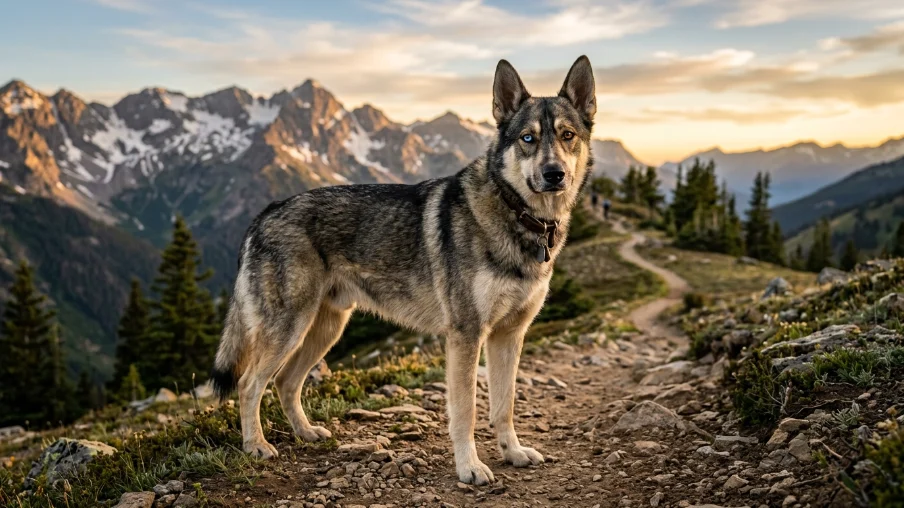
The appearance of a German Shepherd Husky Mix can vary dramatically, even among puppies from the same litter. Some inherit the classic saddle markings and body structure of the German Shepherd, while others strongly resemble a Siberian Husky.
This unpredictability is one reason the Shepsky remains such a popular hybrid.
Size and Build
Most adult Shepskies develop:
- athletic bodies
- deep chests
- strong legs
- excellent endurance
- balanced muscle development
They are typically leaner than many German Shepherds but more substantial than most Huskies.
Eye Colors
One of the breed’s most recognizable features is eye color variation.
Possible eye colors include:
- brown
- amber
- blue
- greenish-blue
- heterochromia (two different eye colors)
Blue eyes often attract buyers, but they should never be considered more important than temperament and health.
Coat Colors
Common coat colors include:
- black and tan
- sable
- black and white
- gray and white
- silver
- bi-color
Coat patterns vary significantly depending on inherited genetics.
Why No Two Shepskies Look Identical
Unlike purebred dogs, Shepskies can inherit traits from either parent breed.
As a result:
- sibling puppies may look completely different
- adult appearance can change dramatically during growth
- predicting final coat color is often difficult
Many owners are surprised by how much their puppy’s appearance changes during the first two years.
What Is a German Shepherd Husky Mix?
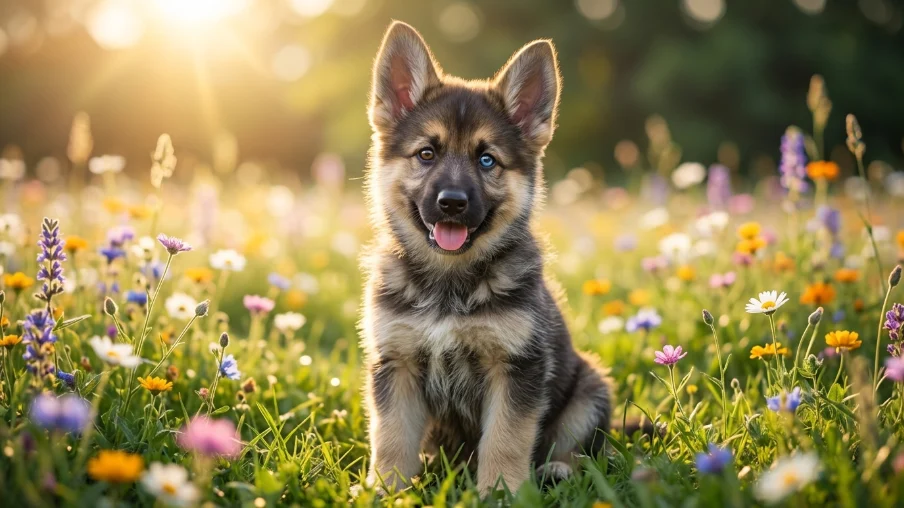
A German Shepherd Husky Mix is a cross between a German Shepherd and a Siberian Husky.
The goal is often to combine:
- German Shepherd intelligence
- Husky endurance
- strong athleticism
- family companionship
Because this is a mixed breed, no two puppies are exactly alike.
Some lean heavily toward the German Shepherd side.
Others inherit more Husky characteristics.
Understanding the Genetics Behind the Shepsky
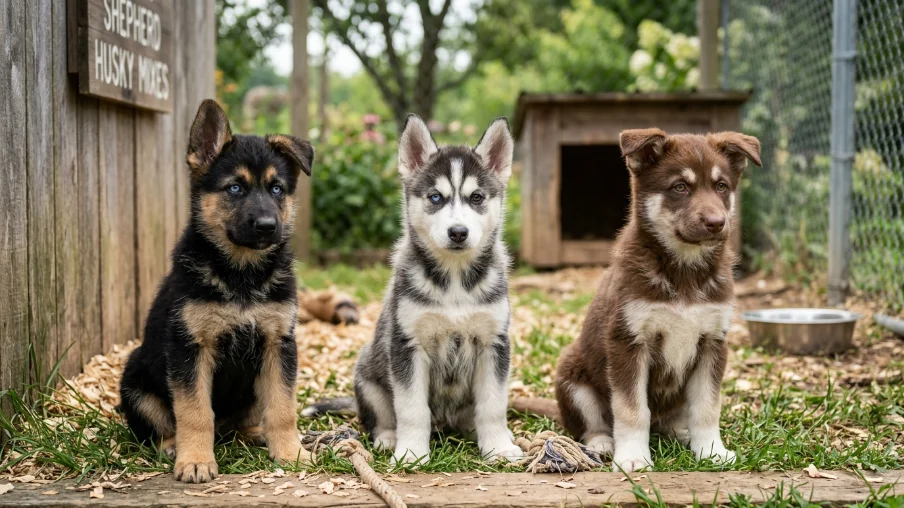
Why Appearance Varies So Much
Unlike purebred dogs, mixed breeds can inherit a wide variety of traits.
Within the same litter, puppies may differ in:
- size
- coat color
- eye color
- temperament
- energy levels
Some resemble German Shepherds almost entirely.
Others look like oversized Huskies.
Common Coat Colors
Popular coat combinations include:
- black and tan
- sable
- gray and white
- black and white
- silver
- red and cream
Blue eyes are possible but never guaranteed.
Many adult Shepskies develop one blue eye and one brown eye.
Temperament and Personality
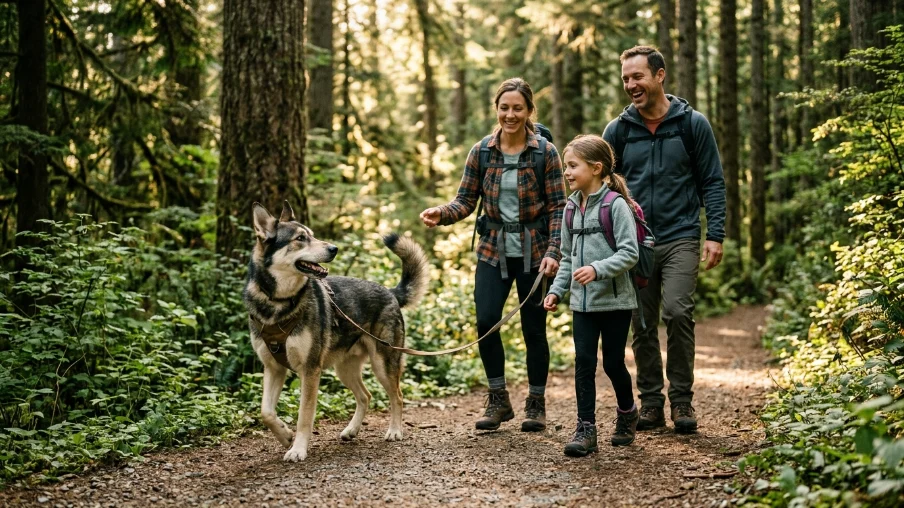
The Shepsky is often intelligent, affectionate, energetic, and highly observant.
However, this combination can also produce:
- stubbornness
- independence
- excessive energy
- vocal behavior
Typical Temperament Traits
| Trait | Common Expression |
|---|---|
| Intelligence | Very high |
| Loyalty | Strong |
| Trainability | High |
| Independence | Moderate to high |
| Energy | Extremely high |
| Confidence | High |
| Protective Nature | Moderate |
| Vocalization | Common |
What Living With One Feels Like
Most owners describe Shepskies as:
- constantly engaged
- mentally active
- eager for adventure
These dogs rarely enjoy being inactive for long periods.
Without proper outlets, boredom develops quickly.
German Shepherd Husky Mix Pros and Cons
Every breed mix has strengths and challenges.
The Shepsky offers exceptional intelligence and athleticism, but those traits can create difficulties for unprepared owners.
| Pros | Cons |
|---|---|
| Extremely intelligent | Requires extensive daily exercise |
| Loyal and affectionate | Heavy shedding year-round |
| Excellent adventure companion | Can become destructive when bored |
| Highly trainable | May inherit stubborn Husky traits |
| Strong working ability | Not ideal for sedentary homes |
| Beautiful appearance | Escape behavior can be common |
The best owners appreciate both sides of the equation before bringing one home.
Are German Shepherd Husky Mixes Good Family Dogs?
Yes, but only in the right environment.
They often thrive with:
- active families
- experienced dog owners
- outdoor lifestyles
They typically form strong bonds with:
- children
- parents
- household members
However, their energy level can overwhelm younger children if training is neglected.
Families That Usually Succeed
The best matches often include:
- hikers
- runners
- active families
- experienced working dog owners
Families That Often Struggle
Challenges arise when owners expect:
- low exercise requirements
- easy obedience
- calm indoor behavior all day
These expectations rarely align with reality.
Male vs Female German Shepherd Husky Mix
While individual personality matters more than gender, there are some commonly observed differences.
| Trait | Male | Female |
|---|---|---|
| Size | Larger | Slightly smaller |
| Maturity Rate | Slower | Faster |
| Independence | Often higher | Often lower |
| Territorial Behavior | Moderate | Moderate |
| Training Response | Excellent | Excellent |
| Family Bonding | Strong | Strong |
Most owners should focus on temperament, genetics, and socialization rather than choosing solely based on gender.
Training Difficulty
Training a Shepsky is both rewarding and frustrating.
The intelligence level is extremely high.
The willingness to obey is less predictable.
Why Training Can Be Challenging
German Shepherds are generally eager to work with people.
Huskies were bred to make independent decisions.
The result can be a dog that:
- understands commands quickly
- chooses whether to follow them
Best Training Methods
Focus on:
- consistency
- positive reinforcement
- engagement games
- impulse control
Avoid:
- harsh punishment
- repetitive drills
- inconsistent rules
These dogs respect structure but become bored easily.
Puppy Development Timeline
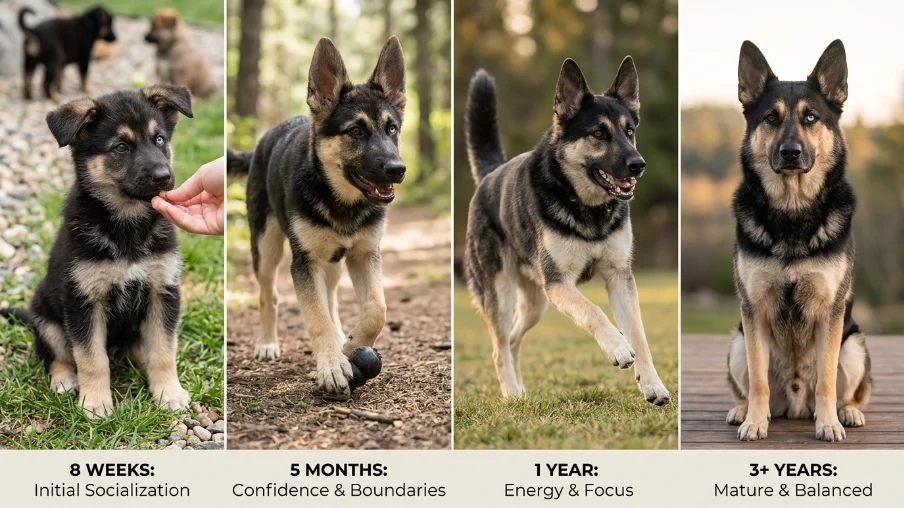
Most German Shepherd Husky Mix puppies develop rapidly during the first year, but their physical and mental maturity often occur at different speeds. Owners frequently underestimate how challenging adolescence can become once confidence and energy levels increase.
Growth Timeline Table
| Age | Development Stage |
|---|---|
| 8–12 Weeks | Socialization window begins |
| 3–4 Months | Confidence and curiosity increase |
| 5–6 Months | Teething and testing boundaries |
| 6–12 Months | Adolescent energy peaks |
| 12–18 Months | Protective instincts emerge |
| 18–24 Months | Improved emotional maturity |
| 2–3 Years | Full adult temperament develops |
The Most Challenging Stage
The period between:
- 6 and 18 months
is often the most demanding.
Many Shepskies become:
- more independent
- more energetic
- more vocal
- more easily distracted
This stage requires patience and consistent training.
The First Fear Period
Many puppies experience a fear period between:
- 8 and 14 weeks
During this stage, harmless objects or situations may suddenly seem frightening.
Owners should focus on building confidence rather than forcing interactions.
The Teenage Phase
Between:
- 8 and 18 months
many Shepskies become:
- more independent
- more vocal
- less reliable off-leash
- more interested in distractions
This is often the most frustrating stage of ownership.
Why Many Shepskies Are Rehomed
A significant number of German Shepherd Husky Mixes are surrendered during adolescence.
Common reasons include:
- excessive energy
- lack of training
- escape attempts
- destructive behavior
- unrealistic owner expectations
The dogs themselves are rarely the problem.
More often, owners underestimate the commitment required.
Socialization Matters More Than Most Owners Realize
Proper socialization should include:
- people
- environments
- sounds
- surfaces
- controlled dog interactions
Good socialization creates confidence rather than excitement.
Cost of Owning a German Shepherd Husky Mix
Many buyers focus on puppy price while overlooking long-term ownership costs.
The real expense comes after bringing the dog home.
Initial Purchase Cost
In 2026, Shepsky puppies typically range from:
- $800 to $3,500+
Prices vary based on:
- breeder reputation
- location
- health testing
- pedigree quality
Monthly Ownership Costs
| Expense | Estimated Monthly Cost |
|---|---|
| Food | $50–$150 |
| Preventive Care | $20–$60 |
| Training | $50–$200 |
| Toys and Enrichment | $20–$75 |
| Grooming Supplies | $10–$40 |
Large active dogs often cost significantly more than new owners expect.
Exercise Requirements
This is one of the highest-energy mixed breeds.
Most adult Shepskies require:
- 1.5 to 3 hours of activity daily
- structured mental stimulation
- problem-solving challenges
Excellent Activities
| Activity | Benefit |
|---|---|
| Hiking | Endurance |
| Running | Energy outlet |
| Agility | Coordination |
| Obedience Training | Mental engagement |
| Scent Work | Problem solving |
| Backpacking | Physical challenge |
The Mistake Many Owners Make
Too much physical exercise without mental work often creates:
- frustration
- hyperactivity
- destructive behavior
Mental stimulation is equally important.
Grooming and Shedding
Most Shepskies inherit a thick double coat.
This means:
- heavy shedding
- seasonal coat blowouts
- regular brushing requirements
Grooming Routine
Weekly care typically includes:
- brushing
- ear checks
- nail trimming
- dental care
During shedding season:
- daily brushing may be necessary
Health and Genetic Considerations
Mixed breeds can benefit from genetic diversity, but health concerns still exist.
Common Health Risks
| Condition | Risk Level |
|---|---|
| Hip Dysplasia | Moderate |
| Elbow Dysplasia | Moderate |
| Bloat | Serious |
| Degenerative Myelopathy | Possible |
| Eye Conditions | Possible |
| Allergies | Common |
Responsible Breeding Matters
Ethical breeders prioritize:
- health testing
- temperament stability
- structural quality
Appearance should never be the primary focus.
Common Mistakes Owners Make
Choosing Based on Looks Alone
Many buyers fall in love with:
- blue eyes
- wolf-like appearance
- dramatic coat colors
Temperament should always come first.
Underestimating Exercise Needs
A bored Shepsky can quickly develop:
- digging
- chewing
- excessive barking
- escape behaviors
Ignoring Training Early
Small behavioral problems become much harder to fix later.
Insights Most Articles Miss
Intelligence Does Not Equal Easy Ownership
Many Shepskies are smart enough to learn commands quickly but independent enough to ignore them.
Escape Behavior Is Common
Both parent breeds are known for:
- curiosity
- problem solving
- exploration
Secure fencing is often essential.
Adolescence Lasts Longer Than Expected
Many owners expect maturity by one year.
Full mental maturity often takes:
- 2 to 3 years
Patience matters.
Buyer Warning Section
Red Flags When Buying a Shepsky Puppy
Be cautious if a breeder:
- focuses only on eye color
- advertises wolf-like traits excessively
- skips health testing
- cannot discuss temperament
What Good Breeders Prioritize
Responsible breeders evaluate:
- health
- confidence
- structure
- trainability
Not just appearance.
Rescue vs Breeder: Which Is Better?
Both options can lead to excellent companions when approached responsibly.
Choosing a Rescue Dog
Rescue organizations often provide:
- temperament evaluations
- medical history
- lower adoption costs
Many Shepskies end up in shelters due to owners underestimating their exercise requirements.
Choosing a Breeder
A reputable breeder should provide:
- health testing records
- parent information
- temperament evaluations
- lifelong support
Avoid breeders who focus primarily on appearance, eye color, or “wolf-like” marketing.
Lifestyle Compatibility
| Lifestyle | Good Match? |
|---|---|
| Active Family | Excellent |
| Outdoor Enthusiast | Excellent |
| Experienced Dog Owner | Excellent |
| Apartment Living | Difficult |
| Sedentary Lifestyle | Poor |
| First-Time Owner | Often Challenging |
Preparation Checklist
You May Be Ready If:
- you enjoy daily training
- you live an active lifestyle
- you can provide mental stimulation
- you have time for exercise
You May Want Another Breed If:
- you prefer low-maintenance dogs
- you dislike shedding
- you want a calm companion
- you have limited time for training
Expert Ownership Insight
Experienced working-dog owners often describe the German Shepherd Husky Mix as one of the most capable companion dogs available.
However, capability and manageability are not the same thing.
A dog that can:
- hike for hours
- learn advanced obedience
- excel in canine sports
- solve problems independently
can also become difficult to live with if mental stimulation is neglected.
The most successful owners focus on fulfilling both the mind and body rather than relying solely on physical exercise.
Frequently Asked Questions
How big does a German Shepherd Husky Mix get?
Most adults weigh between 45 and 90 pounds and stand 20 to 26 inches tall.
Are German Shepherd Husky Mixes Good for First-Time Owners?
Generally, German Shepherd Husky Mixes are not considered ideal for first-time owners. Their high energy levels, intelligence, and strong-willed nature require consistent training, leadership, and daily engagement. Experienced dog owners usually have greater success with this breed mix.
Are Shepskies aggressive?
No. Temperament depends on genetics, socialization, and training rather than the breed mix itself.
Do German Shepherd Husky Mixes shed a lot?
Yes. Most inherit a heavy double coat and shed heavily throughout the year.
Are they good with children?
Generally yes, especially when raised with children and properly socialized.
Can they live in apartments?
They can, but their exercise and stimulation needs make apartment living challenging.
How long do Shepskies live?
Most healthy German Shepherd Husky Mixes live between 10 and 14 years.
Conclusion
The German Shepherd Husky Mix combines beauty, intelligence, endurance, and loyalty into one highly capable companion. Their wolf-like appearance may attract attention, but successful ownership depends on understanding their mental and physical needs.
The owners who thrive with this mix are usually those who embrace:
- daily training
- consistent structure
- active lifestyles
- long-term commitment
When given proper guidance, a well-bred Shepsky can become an extraordinary family companion, adventure partner, and lifelong friend.