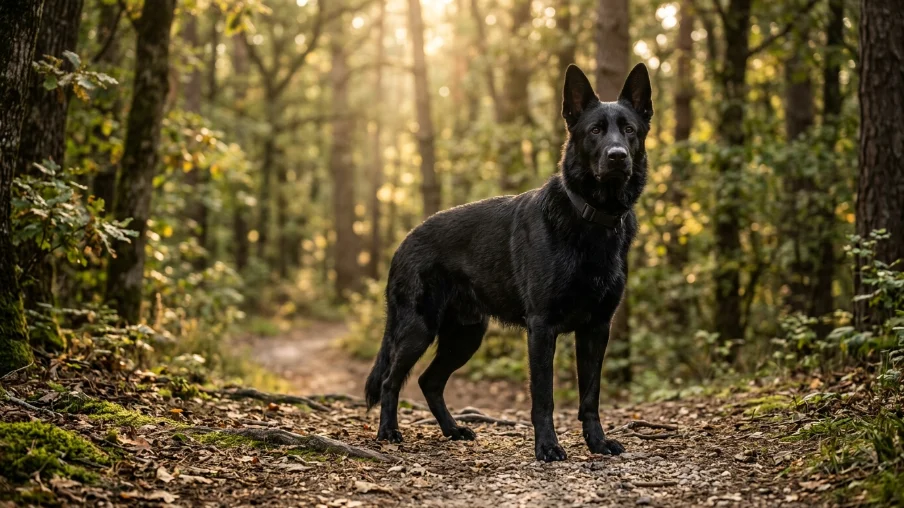
The All Black German Shepherd is a purebred German Shepherd Dog with a solid black coat caused by recessive genetics. Its striking appearance is rare compared to traditional black-and-tan German Shepherds, but temperament, intelligence, and working ability remain the same. Responsible breeders prioritize health, structure, temperament, and working ability far above coat color.
Quick Snapshot Table
| Trait | Details |
|---|---|
| Breed | German Shepherd Dog |
| Color | Solid Black |
| Color Classification | Naturally Occurring Color Variant |
| Size | Large |
| Height | 22–26 Inches |
| Weight | 50–90 lbs |
| Lifespan | 9–13 Years |
| Coat Type | Double Coat |
| Coat Length | Short, Medium, or Long Coat |
| Shedding | High |
| Seasonal Shedding | Very Heavy During Coat-Blowing Seasons |
| Trainability | Excellent |
| Intelligence | Extremely High |
| Family Friendly | Yes |
| Good With Children | Usually Yes |
| Good With Other Dogs | Generally Good When Socialized |
| Stranger Friendly | Moderate |
| Loyalty Level | Exceptional |
| Affection Level | High |
| Protective Nature | High |
| Watchdog Ability | Excellent |
| Guard Dog Ability | Excellent |
| Energy Level | Very High |
| Exercise Needs | Very High |
| Daily Exercise Requirement | 60–120+ Minutes |
| Mental Stimulation Needs | Very High |
| Prey Drive | Moderate to High |
| Working Drive | High |
| Service Dog Potential | Excellent |
| Search & Rescue Potential | Excellent |
| Protection Dog Potential | Excellent |
| Police K9 Potential | High |
| Apartment Friendly | Usually No |
| Adaptability | High |
| First-Time Owner Friendly | Sometimes |
| Experience Level | Beginner to Intermediate |
| Socialization Importance | Critical |
| Training Difficulty | Moderate |
| Grooming Needs | Moderate |
| Brushing Frequency | 3–5 Times Weekly |
| Drooling | Low |
| Barking Level | Moderate |
| Heat Tolerance | Moderate |
| Cold Tolerance | Excellent |
| Climate Preference | Cool to Moderate Climates |
| Common Eye Color | Dark Brown |
| Nose Color | Black |
| AKC Recognition | Yes |
| FCI Recognition | Yes |
| Rarity | Less Common Color Variant |
| Original Purpose | Herding and Livestock Management |
| Modern Roles | Family Companion, Service Dog, Working Dog, Protection Dog |
| Puppy Price Range | $800–$4,000+ |
| Most Common Bloodlines | Working and Show Lines |
| Color Genetics | Recessive Gene Expression |
| Temperament Difference from Standard GSD | None Proven |
| Intelligence Difference | None Proven |
| Working Ability Difference | None Proven |
| Common Health Concerns | Hip Dysplasia, Elbow Dysplasia, Degenerative Myelopathy, Bloat, Allergies |
| Health Screening Importance | Extremely High |
| Lifelong Training Need | Moderate to High |
| Escape Artist Potential | Moderate |
| Maintenance Level | Moderate to High |
| Companion Dog Rating | Excellent |
| Family Protection Rating | Excellent |
| Working Dog Rating | Exceptional |
| Best For | Active Families, Working Homes, Experienced Owners |
| Not Ideal For | Sedentary Households |
| Distinguishing Feature | Solid Jet-Black Coat from Nose to Tail |
| Popularity | Highly Sought After Due to Striking Appearance |
| Overall Suitability | An Intelligent, Loyal, and Powerful German Shepherd Variant That Excels as Both a Family Companion and Working Dog |
What Is an All Black German Shepherd?
The All Black German Shepherd is simply a color variation of the German Shepherd Dog.
Despite common misconceptions:
- It is not a separate breed.
- It is not a wolf hybrid.
- It is not inherently larger.
- It is not naturally more aggressive.
The only significant difference is coat color.
A black German Shepherd possesses the same breed characteristics that made German Shepherds famous worldwide:
- Intelligence
- Trainability
- Courage
- Versatility
- Loyalty
- Working ability
These dogs excel in:
- Police work
- Military service
- Search and rescue
- Protection sports
- Service dog work
- Family companionship
Breed History and Origin
The German Shepherd originated in Germany during the late 1800s.
Captain Max von Stephanitz sought to create the ultimate herding and working dog.
From the beginning, breeders prioritized:
- Intelligence
- Structure
- Athleticism
- Work ethic
- Temperament
Color was considered secondary.
Black-coated puppies have existed since the earliest German Shepherd bloodlines.
Many people mistakenly assume black coloration was introduced later, but historical records show black dogs have always been part of German Shepherd genetics.
Appearance
Physical Characteristics
| Feature | Description |
|---|---|
| Build | Athletic and muscular |
| Head | Wedge-shaped |
| Ears | Upright |
| Eyes | Dark brown |
| Tail | Long and bushy |
| Coat | Dense double coat |
| Color | Solid black |
Coat Types
An All Black German Shepherd may have:
- Short coat
- Medium coat
- Long coat
The coat should remain uniformly black throughout the body.
Genetics and Color Explanation
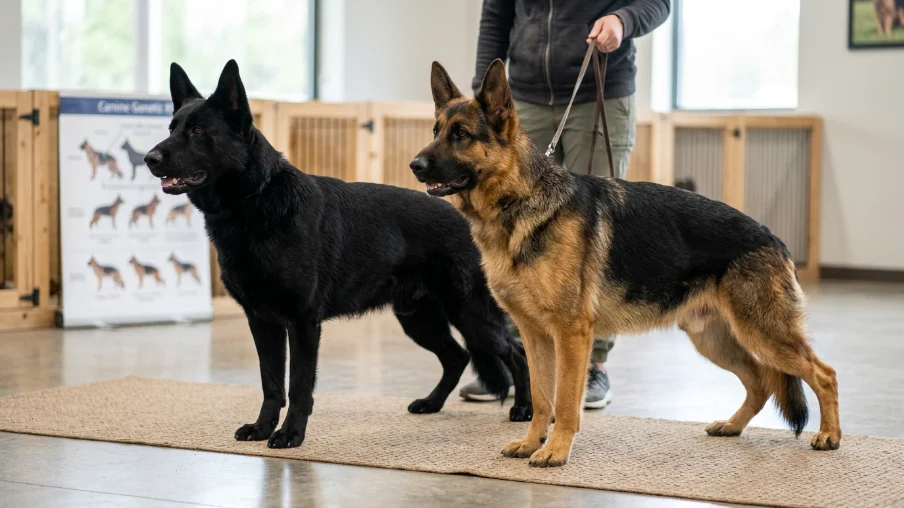
How the Black Coat Is Inherited
The black coat is generally produced by recessive genetic inheritance.
For a puppy to be solid black:
- Both parents must carry the gene.
- The puppy must inherit the appropriate gene combination.
Here is where most people get it wrong:
Many assume a black puppy automatically comes from black parents.
In reality:
- Two black-and-tan carriers can produce black puppies.
- Two black dogs typically produce black puppies.
- Color inheritance can be complex.
Does Black Color Affect Temperament?
No.
Scientific evidence does not support claims that black German Shepherds are:
- Smarter
- More aggressive
- More protective
- More trainable
Temperament is influenced primarily by:
- Genetics
- Breeding selection
- Socialization
- Training
- Environment
Temperament and Personality
The ideal All Black German Shepherd is:
- Confident
- Loyal
- Intelligent
- Courageous
- Trainable
- Stable
Typical Temperament Traits
| Trait | Rating |
|---|---|
| Loyalty | Very High |
| Intelligence | Very High |
| Trainability | Very High |
| Protectiveness | High |
| Energy | Very High |
| Affection | High |
The real issue is not coat color.
The real issue is whether the dog comes from stable, health-tested bloodlines.
Intelligence and Trainability
German Shepherds consistently rank among the most trainable dog breeds.
They learn rapidly and excel in:
- Obedience
- Tracking
- Protection sports
- Agility
- Search and rescue
- Service work
Training Priorities
- Socialization
- Recall training
- Impulse control
- Leash manners
- Confidence building
Common owner mistake:
Relying on intelligence alone without providing structure.
Smart dogs become difficult dogs when mentally understimulated.
Exercise Requirements
Most adult All Black German Shepherds need:
- 90–120 minutes daily activity
- Structured exercise
- Mental stimulation
Recommended activities:
- Hiking
- Tracking
- Obedience work
- Scent games
- Agility
- Fetch
Health Problems and Genetic Risks
Responsible breeders evaluate far more than color.
Common Health Conditions
| Condition | Risk |
|---|---|
| Hip Dysplasia | Moderate |
| Elbow Dysplasia | Moderate |
| Degenerative Myelopathy | Possible |
| Bloat | Serious |
| Allergies | Common |
| Arthritis | Possible |
Recommended Health Testing
- OFA Hip Evaluation
- OFA Elbow Evaluation
- DM Testing
- Cardiac Screening
- Genetic Panels
Appearance alone tells you very little about future health.
Puppy Development Timeline
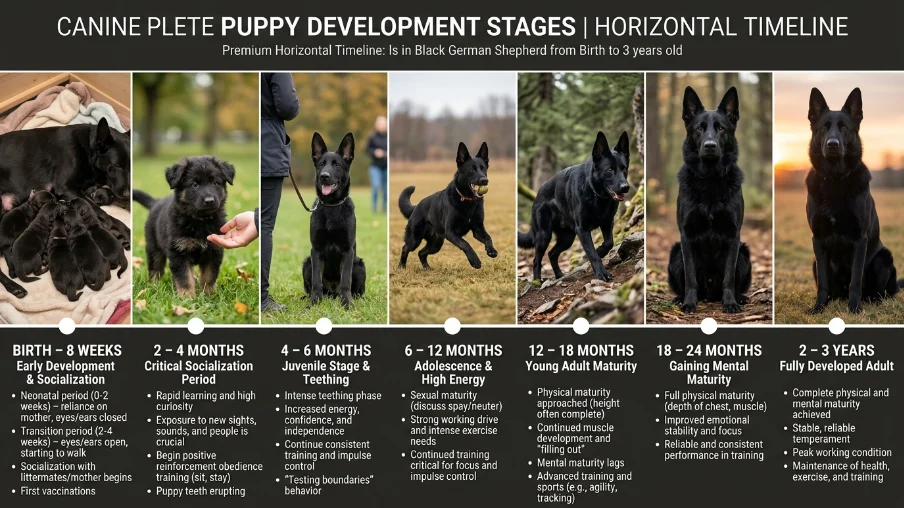
| Age | Development Stage |
|---|---|
| Birth–8 Weeks | Early neurological and social development |
| 2–4 Months | Critical socialization period |
| 4–6 Months | Teething and confidence building |
| 6–12 Months | Adolescence begins |
| 12–18 Months | Physical maturity increases |
| 18–24 Months | Mental maturity develops |
| 2–3 Years | Full adult temperament emerges |
Feeding and Nutrition
A quality diet should prioritize:
- Animal protein
- Balanced fats
- Controlled calories
- Joint support nutrients
Avoid:
- Chronic overfeeding
- Rapid growth promotion
- Excessive supplements without veterinary guidance
Grooming Guide
Grooming Schedule
| Task | Frequency |
|---|---|
| Brushing | 2–4 Times Weekly |
| Nail Trimming | Monthly |
| Ear Checks | Weekly |
| Dental Care | Several Times Weekly |
| Bathing | Every 6–8 Weeks |
Expect seasonal shedding regardless of coat length.
Step-by-Step Care Guide
Daily
- Exercise
- Training
- Mental enrichment
Weekly
- Grooming
- Weight monitoring
Monthly
- Nail trimming
- Health inspection
Annually
- Veterinary examination
- Preventive health screening
Common Owner Mistakes
- Choosing color over temperament
- Skipping socialization
- Underestimating exercise needs
- Purchasing from backyard breeders
- Neglecting mental stimulation
- Expecting automatic protection behavior
Insights Most Articles Miss
Experienced breeders focus on something else.
Many buyers become obsessed with black coloration.
However, responsible breeders evaluate:
- Nerve strength
- Working ability
- Structure
- Health testing
- Stability
before considering color.
A beautiful black coat cannot compensate for poor genetics.
Price Guide and Ownership Costs
| Expense | Estimated Cost |
|---|---|
| Puppy | $1,000–$4,000+ |
| Food | $600–$1,200/year |
| Vet Care | $300–$1,000/year |
| Training | $200–$2,000+ |
| Insurance | Variable |
How to Find a Reputable Breeder
Look for breeders who:
- Perform OFA testing
- Provide pedigrees
- Temperament test puppies
- Socialize litters properly
- Offer contracts
- Prioritize health over color
Avoid breeders marketing puppies primarily as “rare.”
Questions to Ask Before Buying
- Are parents OFA certified?
- What health testing has been completed?
- Can I meet the parents?
- What socialization program is used?
- What working titles exist in the pedigree?
- Are health guarantees offered?
Buyer Warning Section
Red flags include:
- No health testing
- No pedigree records
- Extremely low prices
- Claims of “ultra rare genetics”
- Refusal to answer health questions
Lifestyle Compatibility
| Lifestyle Factor | Suitable? | Notes |
|---|---|---|
| Families | Yes | Excellent with training |
| Children | Yes | Supervision recommended |
| Apartments | Sometimes | Requires significant exercise |
| Active Owners | Excellent | Ideal match |
| Working Homes | Excellent | Thrives with jobs |
| First-Time Owners | Moderate | Needs commitment |
Breed Comparisons
| Trait | All Black GSD | Black & Tan GSD |
|---|---|---|
| Temperament | Similar | Similar |
| Intelligence | Similar | Similar |
| Trainability | Similar | Similar |
| Working Ability | Similar | Similar |
| Coat Color | Solid Black | Traditional Pattern |
| Availability | Less Common | More Common |
Preparation Checklist
Before bringing home a puppy:
- Secure a reputable breeder
- Schedule a veterinarian
- Purchase quality food
- Prepare a crate
- Puppy-proof the home
- Enroll in training classes
- Plan socialization experiences
FAQs
Are All Black German Shepherds purebred?
Yes, when bred from registered German Shepherd parents.
Are they rare?
Less common than black-and-tan dogs but not extremely rare.
Do they cost more?
Often yes, due to demand and availability.
Are they more aggressive?
No. Temperament depends on breeding and training.
Do they shed?
Yes, heavily during seasonal coat blows.
Are they good with children?
Generally yes when properly socialized.
Can they live in apartments?
Possible but challenging due to energy levels.
How long do they live?
Typically 9–13 years.
Are they suitable for first-time owners?
Sometimes, but they require dedication.
Do black coats create health issues?
No known health issues are directly caused by black coloration.
Conclusion
The All Black German Shepherd combines the intelligence, loyalty, athleticism, and working ability that have made German Shepherds one of the world’s most respected breeds. While the striking black coat attracts attention, experienced breeders understand that health, temperament, structure, and stability matter far more than color.
For owners prepared to meet their exercise, training, and socialization needs, an All Black German Shepherd can be an exceptional family companion and working partner.