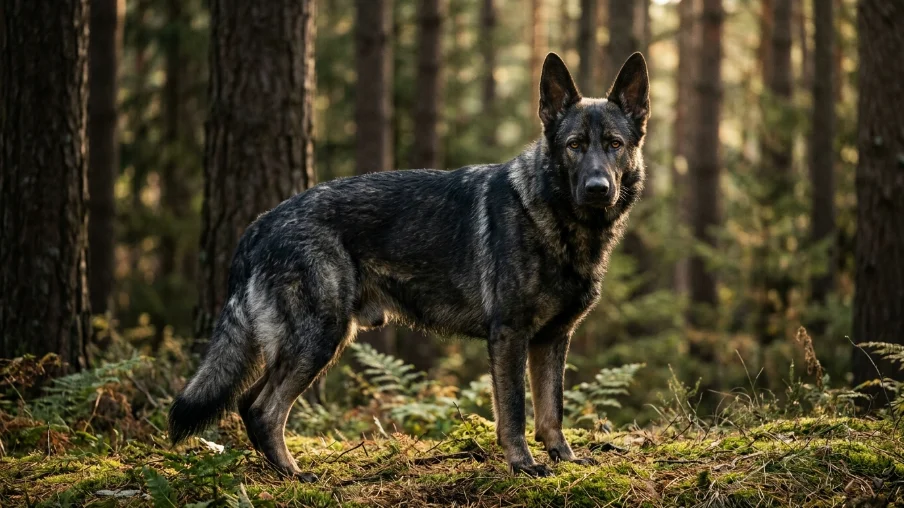
The Dark Sable German Shepherd is a striking sable-coated variation of the German Shepherd Dog known for its deep wolf-like pigmentation, intelligence, and intense working ability. While many people are drawn to the dramatic black overlay and dark facial features, experienced breeders focus far more on nerve stability, structure, and balanced temperament than color alone.
These dogs are often highly driven and mentally demanding. Proper socialization, structured training and ethical breeding matter far more than appearance.
Quick Snapshot Table
| Category | Key Details |
|---|---|
| Breed Type | German Shepherd color variation |
| Common Name | Dark Sable German Shepherd |
| Coat Pattern | Dark sable |
| Coat Appearance | Black-tipped hairs over gray, tan, or brown undercoat |
| Overall Color Tone | Wolf-like dark blended coloration |
| Rarity | Uncommon |
| Genetics | Dominant sable gene |
| Breed Purity | Purebred German Shepherd |
| Recognition Status | Accepted in major kennel clubs |
| Bloodline Popularity | Common in working-line German Shepherds |
| Size | Large working dog |
| Height | 22–26 inches |
| Weight | 50–95 pounds |
| Build | Athletic, muscular, agile |
| Eye Color | Brown to dark brown |
| Nose Color | Black |
| Coat Type | Dense double coat |
| Hair Length | Medium or long coat possible |
| Shedding Level | Heavy seasonal shedding |
| Grooming Needs | Moderate to high maintenance |
| Brushing Frequency | 3–5 times weekly |
| Temperament | Intelligent, loyal, alert |
| Protective Instinct | Very strong |
| Energy Level | Extremely high |
| Exercise Needs | 2+ hours daily preferred |
| Mental Stimulation Needs | Extremely demanding |
| Trainability | Advanced |
| Learning Ability | Extremely fast learner |
| Working Drive | Very high prey and defense drive |
| Family Friendly | Yes with proper structure |
| Good With Children | Usually excellent when socialized |
| Good With Other Pets | Possible with early exposure |
| Good for First-Time Owners? | Usually not recommended |
| Socialization Needs | Early and ongoing socialization critical |
| Working Ability | Exceptional |
| Common Roles | Police, military, protection, scent work, Schutzhund |
| Apartment Friendly? | Usually not ideal |
| Barking Level | Moderate to high |
| Drooling Level | Low |
| Climate Tolerance | Excellent in cold climates |
| Heat Tolerance | Moderate with proper care |
| Lifespan | 9–13 years |
| Common Health Issues | Hip dysplasia, elbow dysplasia, bloat, degenerative myelopathy |
| Color-Related Health Risks | No known major issues tied to sable coloration |
| Diet Needs | High-protein performance diet |
| Average Price (2026) | $1,500–$5,000+ |
| Breeder Warning | Avoid unstable or overly aggressive working lines |
| Popularity | Highly respected among working-dog enthusiasts |
| Best For | Active experienced handlers and working homes |
Why the Dark Sable Coat Gets So Much Attention
The Dark Sable German Shepherd has one of the most dramatic appearances in the breed. The coat often appears nearly black from a distance but reveals layered sable banding under sunlight.
This creates a rugged, wolf-like look that many enthusiasts prefer over traditional black and tan shepherds.
However, appearance alone tells you very little about the dog itself.
Here is where most people get it wrong.
Many buyers focus entirely on coat color while ignoring:
- temperament quality
- nerve stability
- structural health
- environmental confidence
- breeder ethics
An impressive coat cannot compensate for weak genetics or unstable behavior.
What Is a Dark Sable German Shepherd?
A Dark Sable German Shepherd is a sable-patterned German Shepherd with heavy black pigmentation across the coat. Unlike lighter sable variations, dark sable dogs often have:
- stronger black overlay
- deeper charcoal tones
- reduced tan visibility
- darker facial pigmentation
The sable pattern comes from the agouti gene, which creates multiple pigment bands on individual hairs.
Most dark sable dogs remain genetically sable even when they appear almost solid black.
Understanding Dark Sable Genetics
How the Sable Gene Works
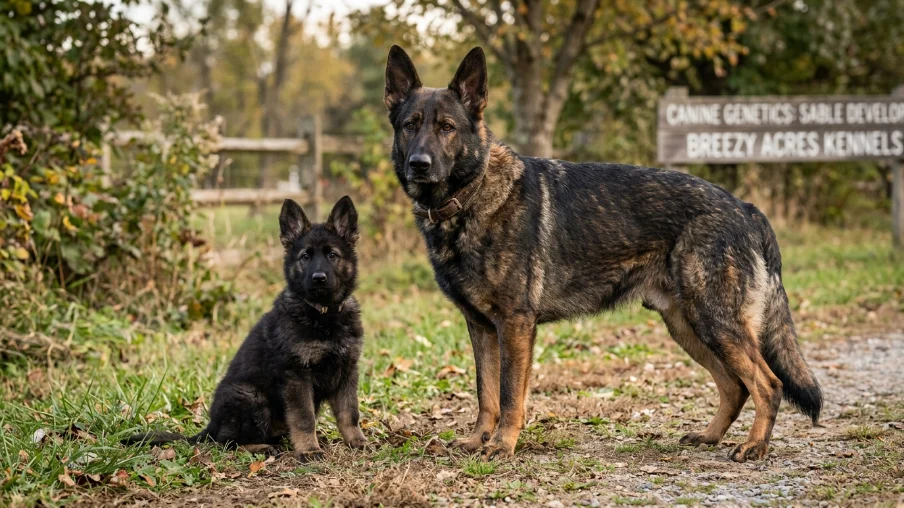
The sable gene is dominant in German Shepherds.
This means a sable-patterned parent can easily pass sable coloration to offspring.
In dark sable shepherds:
- black tipping is heavier
- pigment concentration is stronger
- coat contrast becomes more dramatic with maturity
Why Puppies Change Color
Dark sable puppies rarely look identical as adults.
Many puppies begin with:
- heavy black masking
- smoky gray tones
- muted brown undercoat
By adulthood:
- guard hairs deepen
- sable layering becomes clearer
- silver or charcoal accents may emerge
Some dogs become darker during adolescence before lightening slightly later.
Temperament and Personality
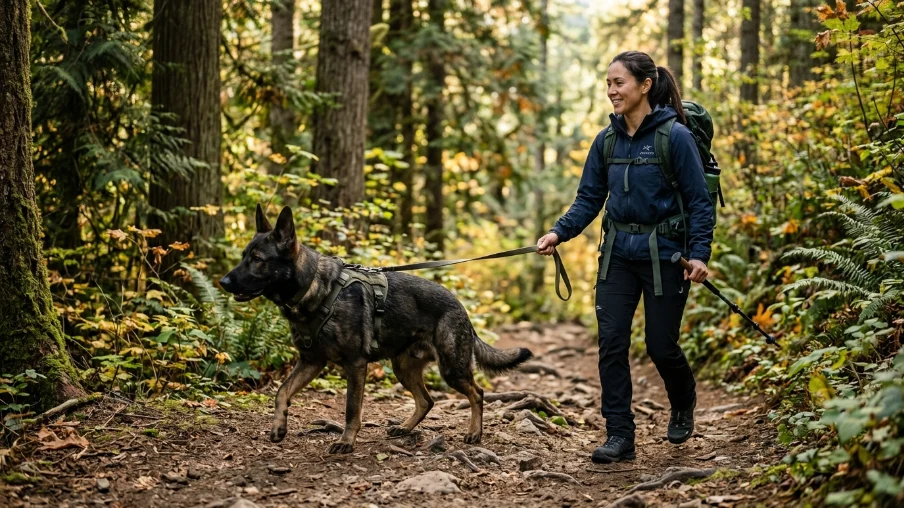
Dark sable coloration does not create personality traits directly. Bloodline quality matters far more.
That said, dark sable shepherds are commonly found in working-line pedigrees where breeders prioritize:
- drive
- confidence
- endurance
- trainability
- working ability
As a result, these dogs often display:
- intense focus
- strong prey drive
- exceptional intelligence
- high environmental awareness
Typical Temperament Traits
| Trait | Common Expression |
|---|---|
| Loyalty | Extremely strong |
| Intelligence | Very high |
| Trainability | Excellent |
| Protective Instinct | Moderate to high |
| Energy Level | Demanding |
| Confidence | Depends on breeding |
| Emotional Sensitivity | High |
| Social Neutrality | Preferred in working lines |
Living With a Dark Sable German Shepherd
These dogs are mentally active almost all the time.
A stable Dark Sable German Shepherd usually behaves:
- observant
- engaged
- highly responsive
- eager to work
Without structure, problems can develop quickly.
The real issue is usually overstimulation rather than aggression.
Poorly managed shepherds may develop:
- leash reactivity
- frustration barking
- destructive habits
- obsessive pacing
- poor impulse control
Training Difficulty and Intelligence
Dark sable shepherds learn commands very quickly.
But intelligence does not automatically create stability.
Many owners accidentally create behavioral problems by focusing only on obedience while ignoring emotional control.
Best Training Priorities
Experienced handlers focus on:
- neutrality
- confidence building
- impulse control
- environmental exposure
- engagement
Common Training Mistakes
Avoid:
- repetitive over-drilling
- excessive correction
- chaotic dog parks
- inconsistent rules
- endless high arousal exercise
Balanced working dogs require calmness training as much as physical activity.
Puppy Development Timeline
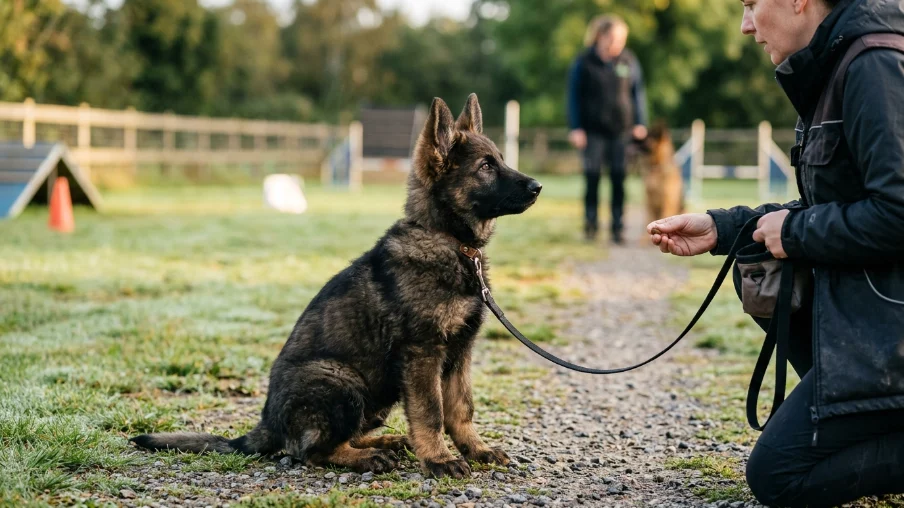
| Age | Development Stage |
|---|---|
| 8–12 Weeks | Critical socialization period |
| 3–5 Months | Confidence exploration |
| 6–10 Months | Adolescent testing phase |
| 10–18 Months | Territorial instincts develop |
| 18–24 Months | Emotional maturity improves |
| 2–3 Years | Full mental maturity |
Important Socialization Insight
Good socialization does not mean overwhelming exposure.
Stable shepherds develop through:
- controlled experiences
- calm observation
- positive neutrality
- confidence-based handling
Many reactive German Shepherds were accidentally overstimulated as puppies.
Exercise Requirements
This is not a low-energy breed.
Most Dark Sable German Shepherds require:
- structured physical exercise
- mental stimulation
- purposeful training
- daily engagement
Ideal Activities
| Activity | Main Benefit |
|---|---|
| Advanced obedience | Mental discipline |
| Hiking | Endurance outlet |
| Tracking | Scent fulfillment |
| Protection sports | Working engagement |
| Agility | Coordination |
| Tug work | Drive channeling |
The Exercise Mistake Most Owners Make
Constant stimulation without calmness work creates overstimulated dogs.
The goal should be balance, not exhaustion.
Grooming and Shedding
Dark sable coats shed heavily throughout the year.
Seasonal coat blowouts can be intense.
Grooming Essentials
Owners should expect:
- weekly brushing
- undercoat maintenance
- regular nail trimming
- increased shedding during seasonal changes
Dark fur also becomes highly visible on flooring and furniture.
Health and Genetic Concerns
The biggest health concerns are tied to breeding quality rather than coat color itself.
Common Health Issues
| Condition | Risk Level |
|---|---|
| Hip dysplasia | High |
| Elbow dysplasia | Moderate |
| Degenerative myelopathy | Moderate |
| Bloat | Serious |
| Allergies | Common |
| Digestive sensitivity | Moderate |
What Responsible Breeders Test
Ethical breeders typically evaluate:
- hips
- elbows
- working temperament
- nerve stability
- structural quality
- genetic disease risk
Appearance should never be the primary breeding goal.
Buyer Warning Section
Red Flags to Watch For
Be cautious if a breeder:
- markets only coat color
- charges extreme rare color pricing
- refuses health documentation
- avoids discussing temperament
- breeds unstable dogs
- cannot explain lineage clearly
Important Reality
Dark sable is visually impressive but should never replace sound breeding priorities.
Many inexperienced buyers accidentally purchase poorly bred dogs because the coat color looks dramatic online.
Insights Most Articles Miss
Working-Line Intensity Is Often Higher
Many dark sable shepherds come from working pedigrees with stronger drive levels than show-line dogs.
That can mean:
- better trainability
- more intensity
- harder adolescence
- greater exercise demands
Public Perception Changes Daily Life
The dark wolf-like appearance often changes how strangers react.
Owners commonly experience:
- increased public attention
- assumptions about aggression
- people avoiding the dog
- frequent questions about breed type
Emotional Stability Matters More Than Obedience
A dog that can sit and heel perfectly may still have poor nerves.
Experienced breeders care deeply about:
- stress recovery
- environmental confidence
- social neutrality
- emotional balance
Those traits matter far more long term.
Step-by-Step Care Guide
Morning Routine
- structured walk
- obedience engagement
- calm feeding routine
Afternoon Routine
- mental enrichment
- training work
- controlled exercise
Evening Routine
- decompression walk
- brushing if needed
- calm settling indoors
Lifestyle Compatibility
| Lifestyle | Compatibility |
|---|---|
| Active family | Excellent |
| Working dog home | Excellent |
| Rural property | Excellent |
| Apartment living | Difficult |
| Sedentary owner | Poor |
| First-time owner | Often challenging |
Preparation Checklist Before Buying
You May Be Ready If:
- you enjoy structured training
- you understand working breeds
- you can provide daily exercise
- you want an active companion
You May Struggle If:
- you prefer relaxed dogs
- you dislike shedding
- you travel constantly
- you want easy low-maintenance behavior
Frequently Asked Questions
Are Dark Sable German Shepherds rare?
Yes. They are less common than traditional black and tan German Shepherds, especially from strong working lines.
Are they more aggressive?
No. Temperament depends on genetics, breeding, training, and socialization rather than coat color.
Do Dark Sable German Shepherds stay dark forever?
Usually the coat changes slightly with maturity, seasonal shedding, and age.
Are they good family dogs?
Yes, when properly trained and mentally fulfilled.
Do they shed heavily?
Yes. Like most German Shepherds, they are heavy shedders throughout the year.
Are Dark Sable German Shepherds good for beginners?
Often not. Their intelligence and intensity can overwhelm inexperienced owners.
Conclusion
The Dark Sable German Shepherd combines powerful working ability with one of the most visually impressive coats in the breed.
But experienced breeders understand something important.
The coat is the least important part of the dog.
True quality comes from:
- stable nerves
- strong structure
- ethical breeding
- balanced temperament
- proper development
When those traits are prioritized correctly, the Dark Sable German Shepherd becomes an exceptionally loyal, intelligent, and capable companion built for both work and family life.