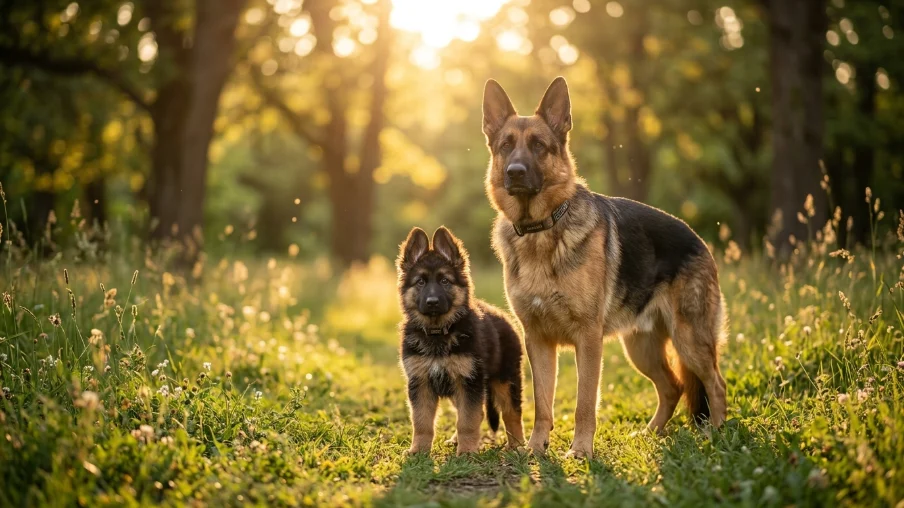
German Shepherd dwarfism is a rare inherited genetic condition that affects growth, coat development, fertility, and long term health. While dwarf German Shepherds may appear unusually small and visually unique, experienced veterinarians and ethical breeders consider the condition serious rather than desirable.
The real issue is not size alone. Hormonal deficiencies linked to pituitary dwarfism can significantly impact lifespan, immune health, and overall quality of life.
Quick Snapshot Table
| Category | Key Details |
|---|---|
| Condition Name | Pituitary dwarfism |
| Medical Classification | Endocrine growth disorder |
| Breed Most Affected | German Shepherd Dog |
| Cause | Genetic inherited disorder |
| Main Hormone Deficiency | Growth hormone |
| Additional Hormone Deficiencies | Often affects thyroid-stimulating hormone and prolactin |
| Inheritance Type | Autosomal recessive |
| Genetic Source | Mutation linked to pituitary gland dysfunction |
| Average Size | Significantly smaller than normal |
| Growth Pattern | Delayed or stunted skeletal development |
| Body Appearance | Puppy-like appearance retained into adulthood |
| Weight Range | Often 20–50 lbs depending on severity |
| Height Range | Much shorter than standard German Shepherd height |
| Facial Features | Fox-like or juvenile facial appearance common |
| Coat Development | Poor adult coat growth |
| Common Coat Symptoms | Patchy fur, alopecia, thin coat, retained puppy fur |
| Skin Issues | Hyperpigmentation and skin infections common |
| Common Symptoms | Small size, poor coat, delayed growth |
| Behavior Traits | Often intelligent, affectionate, socially aware |
| Temperament Impact | Usually normal German Shepherd temperament mentally |
| Energy Levels | Variable depending on health severity |
| Immune Health | Can be weaker than average |
| Fertility Issues | Common reproductive abnormalities |
| Organ Development | Delayed internal organ maturation possible |
| Dental Development | Delayed tooth eruption common |
| Bone Development | Delayed skeletal maturation visible on X-rays |
| Digestive Sensitivity | Sometimes more prone to digestive problems |
| Kidney Disease Risk | Increased long-term risk |
| Secondary Health Risks | Hypothyroidism, kidney failure, chronic skin disease |
| Average Lifespan | Often shortened |
| Typical Lifespan Range | Frequently 5–10 years depending on care |
| Diagnosis Method | Hormone testing, genetic testing, imaging |
| Veterinary Specialists Involved | Endocrinologists and reproductive specialists |
| Treatment Availability | Hormone management possible |
| Treatment Goal | Improve quality of life and slow complications |
| Common Treatments | Growth hormone therapy, thyroid supplementation, skin management |
| Treatment Cost | Often expensive and long-term |
| Management Difficulty | Moderate to high |
| Quality of Life Potential | Can improve significantly with veterinary care |
| Exercise Needs | Moderate and carefully monitored |
| Diet Needs | High-quality balanced nutrition with veterinary guidance |
| Ethical Concern | High |
| Breeding Recommendation | Affected dogs should not be bred |
| Carrier Breeding Risk | Carrier parents can produce affected puppies |
| Responsible Breeding Advice | Genetic screening strongly recommended before breeding |
| Veterinary Insight | Early diagnosis improves long-term management success |
| Expert Recommendation | Prioritize welfare and health over novelty or appearance |
| Public Misconception | Not simply a “mini German Shepherd” variation |
| Owner Commitment Level | High medical and emotional responsibility |
| Best Home Type | Experienced owners prepared for ongoing veterinary care |
Why German Shepherd Dwarfism Gets So Much Attention
A dwarf German Shepherd often looks permanently puppy-like.
That visual appearance attracts attention online very quickly. Smaller body size, oversized ears, fluffy coats, and youthful facial features can make these dogs appear unusually cute to inexperienced buyers.
Here is where most people get it wrong.
German Shepherd dwarfism is not simply a “miniature version” of the breed. It is a medical condition involving hormone dysfunction that can affect the dog’s entire development.
Experienced breeders do not intentionally promote dwarfism as a desirable trait.
What Is German Shepherd Dwarfism?
German Shepherd dwarfism is usually caused by pituitary dwarfism, a genetic disorder that prevents the body from producing enough growth hormone.
As a result, affected puppies fail to develop normally.
The condition impacts:
- skeletal growth
- coat development
- sexual maturity
- organ health
- immune function
Most affected dogs remain physically smaller than standard German Shepherds throughout life.
Understanding the Genetics Behind Pituitary Dwarfism
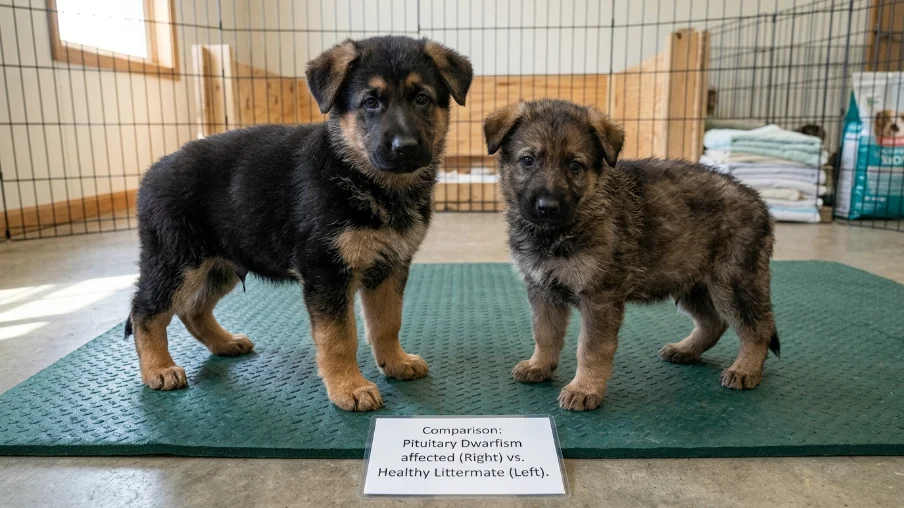
How the Disorder Is Inherited
Pituitary dwarfism in German Shepherds is inherited through an autosomal recessive gene.
In simplified terms:
- both parents may appear completely normal
- carriers can unknowingly produce affected puppies
- puppies must inherit two defective copies of the gene to develop dwarfism
Why Ethical Breeding Matters
Responsible breeders focus heavily on genetic testing because carriers may not show visible symptoms.
This is why pedigree research matters far more than appearance alone.
Poor breeding practices increase the likelihood of inherited disorders remaining in bloodlines.
Common Symptoms of German Shepherd Dwarfism
Physical Symptoms
Most affected puppies initially appear normal during the first few weeks.
Symptoms often become more noticeable between:
- 2 to 5 months of age
Common signs include:
- unusually small body size
- delayed growth
- puppy like proportions
- soft wooly coat
- patchy hair loss
- delayed tooth eruption
- weak bone development
Behavioral and Health Changes
Some dogs also experience:
- low energy
- recurrent infections
- digestive issues
- poor stress tolerance
The severity varies significantly between individuals.
How Big Does a Dwarf German Shepherd Get?
There is no exact standard size because severity differs between dogs.
However, most affected German Shepherds remain dramatically smaller than normal adults.
| Type | Typical Weight |
|---|---|
| Standard Female GSD | 50–70 lbs |
| Standard Male GSD | 65–90 lbs |
| Dwarf German Shepherd | Often 20–45 lbs |
Despite the smaller size, many still retain classic German Shepherd body structure and facial features.
Coat and Appearance Changes
One of the clearest signs involves coat development.
Typical Coat Differences
Affected dogs often develop:
- thin adult coats
- sparse fur
- excessive softness
- patchy hair loss
Some retain unusually fluffy puppy fur far longer than expected.
Why Coat Problems Happen
The hormonal imbalance affects normal hair cycling and skin health.
The real issue is internal endocrine dysfunction rather than cosmetic appearance.
Temperament and Behavior
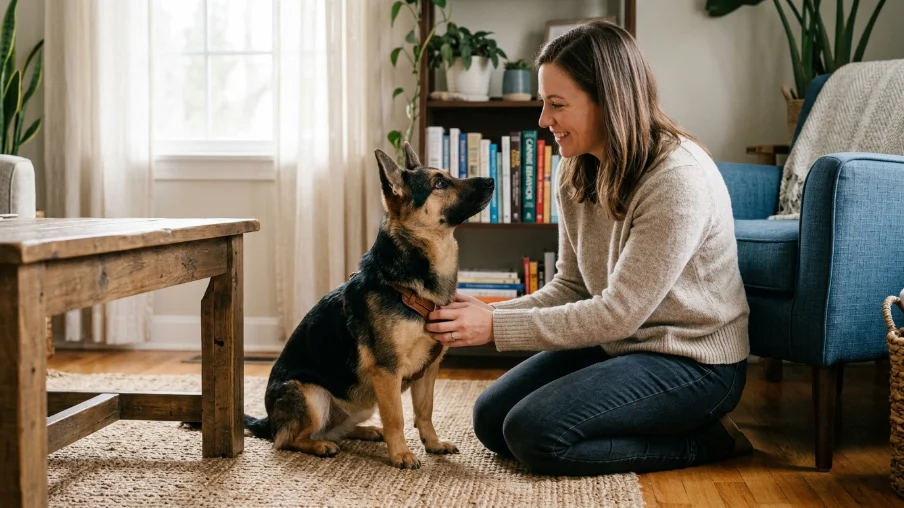
Dwarfism itself does not directly determine temperament.
Most affected dogs still display core German Shepherd traits such as:
- intelligence
- loyalty
- strong bonding behavior
- alertness
However, chronic health issues can influence:
- confidence
- stamina
- stress recovery
Some affected dogs become more physically fragile and emotionally sensitive over time.
Puppy Development Timeline
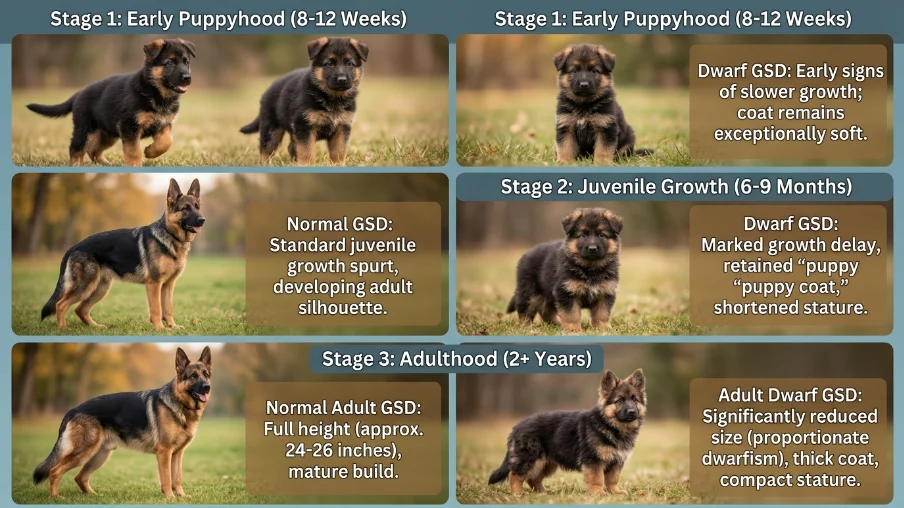
German Shepherd puppies affected by pituitary dwarfism usually appear normal during the earliest weeks of life. The developmental differences become more noticeable as littermates continue growing normally while the affected puppy falls behind physically.
Early recognition is important because delayed diagnosis can reduce treatment and management options.
| Age | Normal German Shepherd Development | Dwarfism Related Changes |
|---|---|---|
| Birth to 4 Weeks | Puppies grow rapidly and nurse normally | Most dwarf puppies still appear normal |
| 5 to 8 Weeks | Bone growth and coordination improve quickly | Slightly slower growth may begin |
| 2 to 3 Months | Ears begin changing, body length increases | Noticeable size difference may appear |
| 3 to 5 Months | Muscle and skeletal growth accelerate | Growth slows dramatically |
| 5 to 8 Months | Adult coat begins developing | Puppy coat often remains soft and fluffy |
| 8 to 12 Months | Sexual maturity develops | Delayed maturity is common |
| 1 to 2 Years | Adult structure stabilizes | Small stature and hormonal issues become fully visible |
The Early Warning Signs Most Owners Miss
Many owners assume the puppy is simply:
- the runt of the litter
- a late bloomer
- naturally small
The real concern usually appears when growth nearly stops while littermates continue developing normally.
Common early warning signs include:
- unusually short legs
- retained puppy fur
- delayed tooth eruption
- thin or patchy coat
- low muscle development
- reduced overall growth rate
Why Early Veterinary Evaluation Matters
Experienced veterinarians often recommend testing when a German Shepherd puppy shows:
- persistent growth delay
- coat abnormalities
- disproportionate body development
Earlier diagnosis may improve:
- hormone management outcomes
- coat condition
- immune support
- long term comfort
Developmental Behavior Differences
Many dwarf German Shepherd puppies still show:
- strong attachment to owners
- intelligence
- curiosity
- classic shepherd alertness
However, some may display:
- lower stamina
- faster fatigue
- increased physical sensitivity
This is why exercise plans should be adjusted carefully during growth stages rather than treating them like fully healthy working-line German Shepherd puppies.
Lifespan and Long Term Health
Can Dwarf German Shepherds Live Normal Lives?
Some can live relatively comfortable lives with veterinary support.
However, many face long term complications involving:
- kidneys
- thyroid function
- immune health
- reproductive development
Average Lifespan
Without treatment:
- lifespan may be significantly shortened
With proper hormonal management:
- some dogs live substantially longer
Early diagnosis matters greatly.
Veterinary Diagnosis
How Veterinarians Confirm Dwarfism
Diagnosis usually involves:
- physical examination
- growth evaluation
- hormone testing
- genetic screening
Veterinarians may also evaluate:
- thyroid function
- kidney health
- skeletal development
Why Early Testing Helps
The earlier treatment begins:
- the better long term management options become
Some therapies can improve:
- coat quality
- growth support
- immune function
Treatment Options
Hormone Therapy
Treatment may include:
- growth hormone support
- thyroid medication
- reproductive hormone management
Not every case responds equally.
Supportive Care
Long term management often focuses on:
- skin care
- infection prevention
- nutritional support
- careful monitoring
There is currently no true cure for pituitary dwarfism.
The Ethical Debate Around “Mini German Shepherds”
Social media has created growing interest in:
- miniature shepherds
- dwarf shepherds
- permanently puppy sized dogs
This creates serious ethical concerns.
Experienced breeders focus on:
- stable genetics
- health longevity
- structural integrity
Not unusually small appearance.
Important Reality
Intentional breeding for dwarfism is considered unethical by most responsible breeders and veterinary professionals.
The condition can involve lifelong medical complications.
Common Mistakes Owners Make
Mistake 1: Assuming the Dog Is Just a Small Shepherd
Many owners initially believe the puppy is simply growing slowly.
This delays diagnosis.
Mistake 2: Ignoring Coat Problems
Hair thinning and poor coat quality are often early warning signs.
Mistake 3: Buying From Color or Size Focused Breeders
Some unethical breeders market:
- “micro shepherds”
- “teacup shepherds”
- “mini German Shepherds”
These claims are major red flags.
Buyer Warning Section
Red Flags When Choosing a Breeder
Be cautious if a breeder:
- promotes extremely tiny shepherds
- avoids genetic testing discussions
- refuses health documentation
- markets dwarfism as rare or desirable
- cannot explain bloodlines
What Responsible Breeders Do Instead
Ethical breeders:
- test breeding stock
- avoid carrier pairings
- prioritize temperament and structure
- educate buyers honestly
Appearance alone tells you very little about long term health quality.
Insights Most Articles Miss
Many Dwarf Puppies Initially Look Normal
The condition often becomes obvious only after growth slows abnormally.
Some Dogs Experience Severe Hormonal Complications
The visible size difference is only part of the condition.
Internal endocrine disruption can affect multiple body systems.
Emotional Attachment Can Complicate Medical Decisions
Owners often become deeply attached because affected dogs retain puppy-like appearances longer.
This sometimes delays difficult health conversations.
Daily Care Guide
Exercise Needs
Most dwarf German Shepherds still require:
- mental stimulation
- moderate activity
- structured routines
However, excessive physical strain may be harmful depending on bone development.
Nutrition Support
Veterinary guided nutrition becomes especially important for:
- immune health
- bone support
- hormonal balance
Grooming Needs
Frequent coat care may help manage:
- skin irritation
- thinning fur
- dryness
Lifestyle Compatibility
| Lifestyle | Suitable? |
|---|---|
| Experienced dog owner | Best match |
| Veterinary committed owner | Strongly recommended |
| High activity sports home | Sometimes difficult |
| Casual first time owner | Often challenging |
| Breeding program | Not appropriate |
| Quiet companion home | Sometimes suitable |
Preparation Checklist
You May Be Ready If:
- you understand chronic medical care
- you can afford long term veterinary treatment
- you value health over appearance
- you are prepared for endocrine management
You May Want Another Dog If:
- you want a highly athletic shepherd
- you cannot manage medical expenses
- you prefer low maintenance dogs
- you want predictable physical development
Frequently Asked Questions
Is German Shepherd dwarfism rare?
Yes. Pituitary dwarfism is uncommon but well documented within the breed.
Is dwarfism in German Shepherds genetic?
Yes. It is inherited through a recessive genetic mutation.
Can dwarf German Shepherds live long lives?
Some can with proper veterinary treatment, but lifespan is often reduced compared to healthy German Shepherds.
Are dwarf German Shepherds recognized as a separate breed?
No. They are still German Shepherd Dogs affected by a medical condition.
Can dwarfism be prevented?
Responsible genetic testing and ethical breeding practices greatly reduce the risk.
Are mini German Shepherds the same as dwarf German Shepherds?
Not always. Some “mini German Shepherds” are mixed breeds, while dwarf German Shepherds specifically have a genetic growth disorder.
Conclusion
German Shepherd dwarfism is a serious inherited endocrine condition, not simply an unusually small version of the breed. While affected dogs can be deeply affectionate and visually distinctive, responsible ownership requires understanding the medical realities behind the appearance.
The most important priorities are:
- ethical breeding
- early diagnosis
- long term veterinary care
- realistic expectations
Experienced breeders focus on preserving stable, healthy German Shepherds with sound structure and reliable temperament. That matters far more than creating unusually small dogs for visual appeal alone.
You have not enough Humanizer words left. Upgrade your Surfer plan.