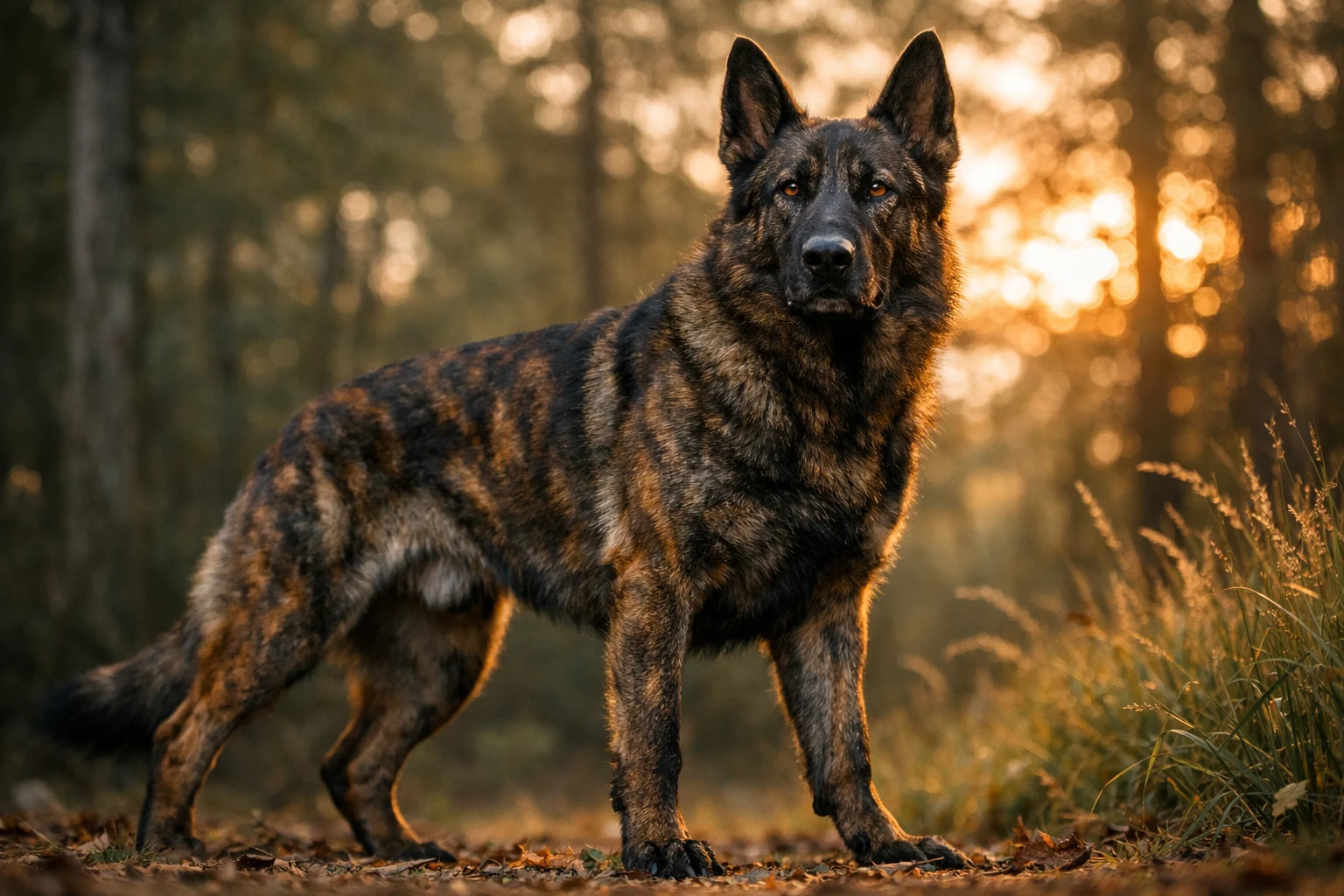
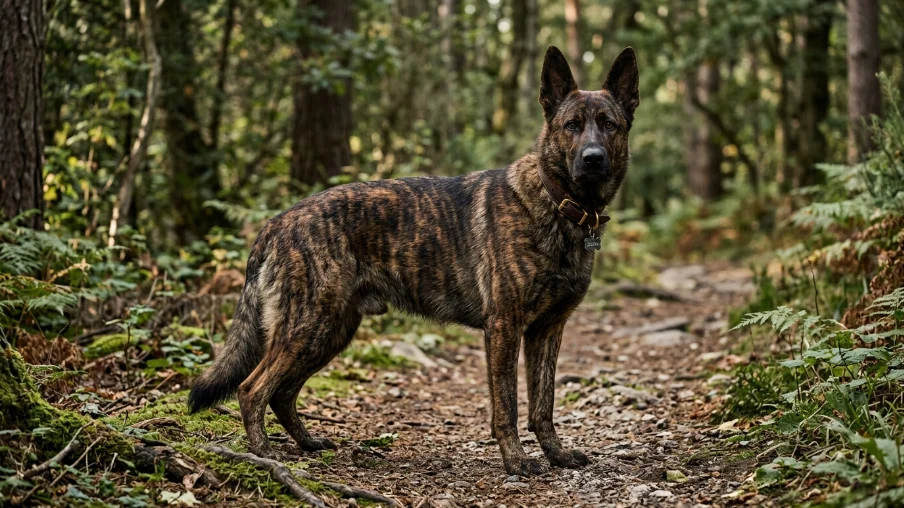
The Brindle German Shepherd is an extremely rare and controversial coat variation associated with tiger-like striping patterns. While many people assume brindle coloring is naturally purebred, experienced breeders often investigate lineage carefully because brindle is not a standard German Shepherd color in most major registries.
Appearance alone tells you very little. Temperament, structure, working ability, and genetic history matter far more than coat pattern.
Quick Snapshot Table
| Category | Key Details |
|---|---|
| Breed Type | German Shepherd variation |
| Common Name | Brindle German Shepherd |
| Coat Pattern | Brindle striping |
| Coat Appearance | Tiger-like dark stripes over brown, tan, or gray base coat |
| Rarity | Extremely rare |
| Breed Recognition | Often disputed |
| Breed Purity Debate | Some brindle dogs may result from mixed ancestry |
| Genetic Background | Brindle pattern is uncommon in traditional German Shepherd genetics |
| Recognition Status | Not accepted in most major breed standards |
| Size | Large working dog |
| Height | 22–26 inches |
| Weight | 50–90 lbs |
| Body Build | Athletic, muscular, agile |
| Eye Color | Brown to dark brown |
| Nose Color | Typically black |
| Coat Type | Dense double coat |
| Hair Length | Medium or long coat possible |
| Temperament | Intelligent, alert, energetic |
| Protective Instinct | Strong guarding tendencies |
| Energy Level | High |
| Exercise Needs | 1.5–2+ hours daily |
| Mental Stimulation Needs | Very high |
| Trainability | Excellent |
| Learning Ability | Fast learner with strong work drive |
| Working Ability | Strong if well-bred |
| Common Roles | Protection, obedience, scent work, active companion |
| Family Friendly | Depends on breeding |
| Good With Children | Usually good if properly socialized |
| Good With Other Pets | Possible with early exposure |
| Good for First-Time Owners? | Often challenging |
| Socialization Needs | Early socialization strongly recommended |
| Confidence Level | Typically bold and alert |
| Apartment Friendly? | Usually not ideal |
| Barking Level | Moderate to high |
| Drooling Level | Low |
| Shedding | Heavy seasonal shedding |
| Grooming Needs | Moderate to high maintenance |
| Brushing Frequency | 3–5 times weekly |
| Climate Tolerance | Excellent in cool climates |
| Heat Tolerance | Moderate with proper care |
| Lifespan | 9–13 years |
| Common Health Issues | Hip dysplasia, elbow dysplasia, bloat, allergies |
| Color-Related Health Risks | No proven brindle-specific health issue |
| Main Concern | Misrepresentation by unethical breeders |
| Breeder Warning | Verify pedigree and health testing carefully |
| Ethical Concern | Rare coat claims are sometimes used for inflated pricing |
| Expert Recommendation | Prioritize temperament, structure, and health over unusual coloration |
| Diet Needs | High-protein active-breed diet |
| Average Price (2026) | $2,000–$8,000+ depending on lineage claims |
| Popularity | Rare niche variation |
| Best For | Experienced active owners willing to research breeders carefully |
Why the Brindle German Shepherd Creates Debate
Few coat patterns in the German Shepherd world create more discussion than brindle.
The striped appearance immediately attracts attention because it looks unusual compared to traditional German Shepherd coloring. Many owners describe these dogs as “tiger-striped shepherds” due to the dark streaking across the coat.
However, here is where most people get it wrong.
Experienced breeders do not evaluate a German Shepherd based on rarity alone. They focus on:
- temperament stability
- genetic history
- structure
- working ability
- health testing
- lineage authenticity
The real issue is whether the brindle coloration appeared naturally within the bloodline or entered through crossbreeding generations earlier.
What Is a Brindle German Shepherd?
A Brindle German Shepherd is a shepherd-type dog displaying dark stripe-like markings layered over a lighter base coat.
Brindle itself is a genetic pattern commonly seen in breeds like:
- Boxers
- Dutch Shepherds
- Greyhounds
- Cane Corsos
The controversy exists because brindle is not considered a standard German Shepherd color in most major breed standards.
Important Breed Reality
Most kennel clubs recognize German Shepherd colors such as:
- black and tan
- sable
- black
- bi-color
Brindle is generally considered:
- non-standard
- highly uncommon
- genetically questionable in purebred lines
That does not automatically mean every brindle shepherd is unhealthy or poorly tempered. It simply means buyers should investigate breeding history carefully.
Understanding Brindle Genetics
How the Brindle Pattern Works
The brindle pattern is produced by specific genetic interactions that create dark striping over the base coat color.
In simplified terms:
- brindle genes create vertical or irregular dark striping
- stripe visibility depends on pigment intensity
- coat expression varies widely between dogs
Why Brindle Is Controversial in German Shepherds
Experienced German Shepherd breeders often question brindle coloration because:
- brindle historically does not appear in standard shepherd pedigrees
- some brindle dogs may descend from mixed ancestry
- certain bloodlines may carry undocumented crossbreeding generations back
This is why pedigree transparency matters enormously.
Appearance alone tells you very little about genetic integrity.
Temperament and Personality
Brindle coloring does not determine personality.
A well-bred Brindle German Shepherd should still display the core traits associated with the breed:
- intelligence
- loyalty
- trainability
- confidence
- environmental awareness
However, temperament depends entirely on breeding quality and lineage.
Common Personality Traits
| Trait | Typical Expression |
|---|---|
| Intelligence | Extremely high |
| Loyalty | Strong family attachment |
| Energy | High |
| Protective Instinct | Moderate to high |
| Confidence | Depends on genetics |
| Social Behavior | Reserved with strangers |
| Working Drive | Often strong |
What Daily Life Feels Like
These dogs are rarely passive companions.
A healthy shepherd temperament is:
- observant
- responsive
- mentally engaged
- eager to work
Without structure, many develop:
- excessive barking
- anxiety behaviors
- destructive chewing
- leash reactivity
The real challenge is mental management, not basic obedience.
Are Brindle German Shepherds Good Family Dogs?
Yes, if bred responsibly and raised correctly.
Stable shepherds often become deeply attached family companions. They typically thrive in homes that provide:
- leadership
- consistency
- activity
- training structure
Homes That Usually Work Well
| Lifestyle | Compatibility |
|---|---|
| Active family | Excellent |
| Experienced dog owners | Excellent |
| Rural environment | Very good |
| Working dog household | Excellent |
| Apartment lifestyle | Difficult |
| Sedentary owner | Poor fit |
Children and Social Behavior
Well-socialized shepherds are often excellent with children, but supervision still matters.
Experienced handlers prioritize:
- calm socialization
- neutrality
- confidence-building
- impulse control
Overexcitement and chaos create problems faster than strictness.
Training Difficulty and Intelligence
German Shepherds consistently rank among the most trainable working breeds in the world.
A Brindle German Shepherd should learn quickly if temperament and genetics are stable.
Best Training Approach
Focus On
- engagement training
- confidence building
- environmental neutrality
- structured obedience
- calm exposure
Avoid
- inconsistent discipline
- repetitive punishment
- overstimulation
- chaotic dog park exposure
The Adolescent Phase
Most shepherd behavior issues emerge between:
- 6 months
- 18 months
During this period:
- confidence fluctuates
- territorial instincts increase
- reactivity can develop
- overstimulation becomes common
Experienced breeders focus heavily on emotional regulation during this stage.
Puppy Development Timeline
| Age | Development Stage |
|---|---|
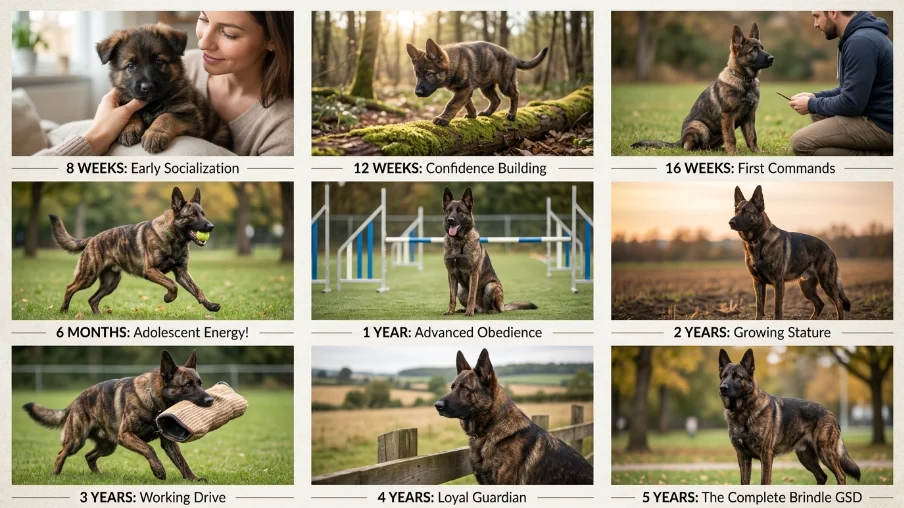
| 8–12 Weeks | Critical socialization period |
| 3–5 Months | Confidence exploration |
| 6–9 Months | Adolescent testing behaviors |
| 9–18 Months | Increased drive and intensity |
| 18–24 Months | Emotional maturity improves |
| 2–3 Years | Full adult temperament develops |
Socialization Mistake Most Owners Make
Many people confuse socialization with constant interaction.
Healthy socialization actually means:
- calm observation
- controlled exposure
- confidence building
- neutral experiences
Overwhelming puppies often creates nervous adults.
Exercise and Mental Stimulation
This is a high-drive working breed.
Most Brindle German Shepherds require:
- structured exercise
- mental challenges
- training engagement
- consistent routines
Daily Activity Recommendations
| Activity | Purpose |
|---|---|
| Long walks | Physical outlet |
| Obedience sessions | Mental engagement |
| Scent work | Natural fulfillment |
| Hiking | Endurance |
| Tug games | Drive control |
| Advanced training | Emotional regulation |
Common Owner Mistake
Many owners create overstimulated athletes instead of balanced dogs.
Constant high-intensity activity without calmness training often increases:
- frustration
- hyperactivity
- reactivity
Balanced structure matters more than endless exercise.
Grooming and Shedding
Brindle German Shepherds shed heavily like most shepherds.
The striped coat pattern may visually hide loose hair slightly better than lighter coats, but shedding volume remains significant.
Grooming Essentials
Weekly Maintenance
- slicker brushing
- undercoat removal
- nail trimming
- ear cleaning
Seasonal Coat Blowouts
Expect:
- heavy undercoat shedding
- loose hair throughout the home
- increased grooming needs twice yearly
Health and Genetic Concerns
The biggest concern is not brindle itself.
The real concern is breeding quality.
Common German Shepherd Health Risks
| Condition | Risk Level |
|---|---|
| Hip dysplasia | High |
| Elbow dysplasia | Moderate |
| Degenerative myelopathy | Moderate |
| Allergies | Common |
| Digestive sensitivity | Moderate |
| Bloat (GDV) | Serious |
Ethical Breeder Priorities
Responsible breeders focus on:
- hip certifications
- elbow testing
- temperament stability
- working structure
- pedigree transparency
A rare coat should never be prioritized above health.
Buyer Warning Section
Major Red Flags
Be cautious if a breeder:
- markets only “rare brindle color”
- avoids discussing lineage
- refuses health testing proof
- cannot explain pedigree history
- prices puppies excessively without justification
Important Reality Check
Some brindle shepherd-type dogs may not be fully purebred German Shepherds.
That does not automatically make them bad dogs.
However, buyers deserve transparency regarding:
- ancestry
- genetics
- registration status
- breeding practices
Experienced breeders openly discuss these issues instead of avoiding them.
Insights Most Articles Miss
Brindle Does Not Automatically Mean Rare Excellence
Scarcity alone does not create quality.
Many inexperienced buyers chase:
- unusual colors
- social media trends
- wolf-like appearances
Experienced handlers focus on:
- stable nerves
- working capability
- recovery from stress
- orthopedic soundness
Structure Matters More Than Color
Poorly bred shepherds often develop:
- weak backs
- unstable movement
- poor endurance
- joint issues
A beautiful coat cannot compensate for poor structure.
Public Attention Changes Daily Ownership
Owners of unusual shepherd colors often experience:
- constant public questions
- breed confusion
- assumptions about aggression or wolf ancestry
Many people underestimate how much attention rare-looking dogs attract.
Step-by-Step Care Guide
Morning Routine
- structured walk
- obedience engagement
- calm feeding routine
Afternoon Routine
- mental enrichment
- environmental exposure
- controlled play sessions
Evening Routine
- decompression walk
- grooming check
- calm settling indoors
Lifestyle Compatibility
| Owner Type | Suitable? |
|---|---|
| Active experienced owner | Excellent |
| Working dog enthusiast | Excellent |
| Outdoor lifestyle | Very good |
| First-time owner | Often difficult |
| Low-energy household | Poor fit |
| Busy travel-heavy lifestyle | Difficult |
Preparation Checklist Before Ownership
You May Be Ready If
- you enjoy daily training
- you understand working breeds
- you can provide structure
- you want an involved companion
You May Want Another Breed If
- you dislike shedding
- you prefer easygoing dogs
- you travel frequently
- you want minimal exercise demands
Frequently Asked Questions
Are Brindle German Shepherds purebred?
Some may be, while others may have mixed ancestry. Pedigree verification is important because brindle is not a standard German Shepherd color.
Are Brindle German Shepherds recognized by kennel clubs?
Most major German Shepherd breed standards do not officially recognize brindle coloring.
Are they aggressive?
No. Temperament depends on genetics, breeding quality, training, and socialization not coat color.
How rare are Brindle German Shepherds?
They are extremely uncommon compared to standard German Shepherd coat variations.
Do Brindle German Shepherds shed heavily?
Yes. Like most German Shepherds, they are heavy seasonal shedders.
Are they good working dogs?
If bred from stable working lines, they can perform extremely well in obedience, protection work, and active lifestyles.
Conclusion
The Brindle German Shepherd remains one of the most visually unusual and debated shepherd variations. The striped coat pattern attracts attention immediately, but experienced breeders look far deeper than appearance.
A quality shepherd should always be evaluated on:
- temperament
- health
- structure
- trainability
- genetic stability
That matters far more than rarity.
For the right owner, a well-bred brindle shepherd can become an intelligent, loyal, highly capable companion. But responsible buyers should prioritize transparency and breeding ethics over hype-driven marketing surrounding unusual coat colors.
You have not enough Humanizer words left. Upgrade your Surfer plan.