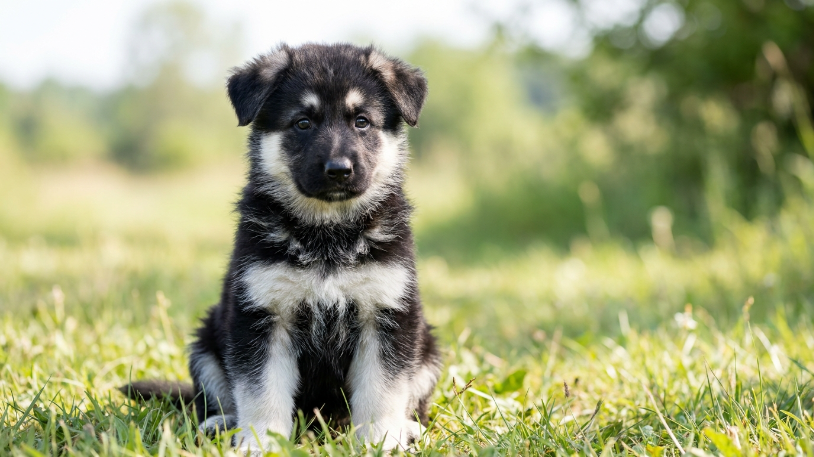
A Panda German Shepherd is a purebred German Shepherd with a rare genetic mutation that causes unique white and black markings.
This pattern is caused by the KIT gene and does not affect health, but proper breeding and early development care are critical to ensure stable temperament and structure.
Quick Snapshot Table
| Category | Key Details |
|---|---|
| Type | Purebred German Shepherd |
| Nickname | Panda German Shepherd |
| Unique Feature | White and black panda-like markings |
| Coat Pattern | Piebald / patched white markings |
| Genetic Cause | Rare KIT gene mutation |
| Color Genetics | Dominant spontaneous mutation |
| Rarity | Extremely rare |
| AKC Recognition | Recognized as purebred if lineage qualifies |
| Breed Purity | Not a mixed breed despite unusual markings |
| Health Impact | No direct negative effect from the panda gene |
| Main Health Risks | Same as standard German Shepherds |
| Key Risk | Poor breeding practices focused only on appearance |
| Action Point | Choose breeder carefully |
| Size | Large |
| Height | 22–26 inches |
| Weight | 50–90 lbs |
| Body Type | Strong, muscular, athletic |
| Temperament | Loyal, intelligent, protective |
| Trainability | Very high |
| Energy Level | Extremely active |
| Exercise Needs | 1.5–2+ hours daily |
| Mental Stimulation Needs | Very high |
| Protective Instinct | Strong natural guarding ability |
| Good Family Dog? | Yes, with training and socialization |
| Good with Kids? | Generally yes |
| Good with Other Pets? | Possible with early socialization |
| Good for First-Time Owners? | Usually challenging |
| Aggression Level | Typically confident, not naturally aggressive |
| Shedding | Heavy year-round |
| Coat Type | Double coat (short or long) |
| Grooming Needs | Brush several times weekly |
| Climate Tolerance | Better in cool to moderate climates |
| Lifespan | 9–13 years |
| Common Health Issues | Hip dysplasia, elbow dysplasia, bloat, allergies |
| Working Ability | Excellent for protection, obedience, service work |
| Barking Level | Moderate to high |
| Apartment Friendly? | Usually not ideal |
| Diet Needs | High-quality protein-rich diet |
| Average Puppy Price (2026) | $2,500–$8,000+ |
| Breeding Warning | Avoid breeders producing unhealthy color-focused litters |
| Popularity | Rare collector-style variation |
| Best For | Active experienced dog owners |
The Puppy That Everyone Talks About
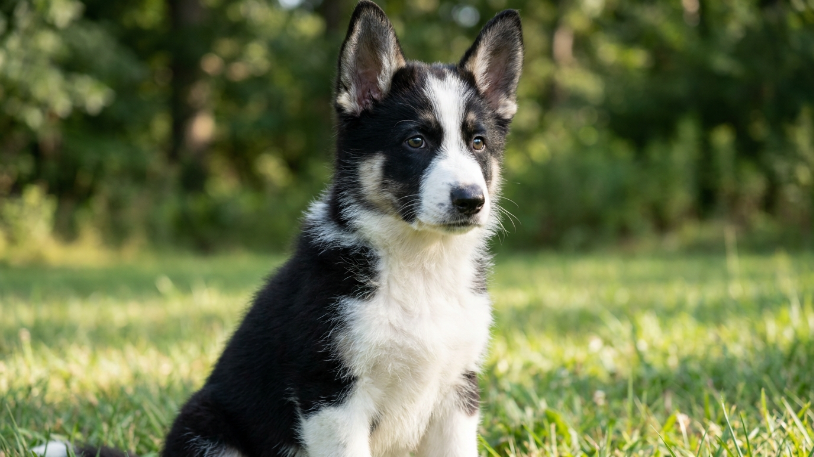
The first time I saw a Panda German Shepherd puppy in a litter, it stood out instantly.
Same structure. Same build. Same behavior.
But the coat told a different story.
While the others carried traditional black and tan patterns, this one had bold white patches across its face and chest. It looked almost unreal.
Here is where most people get it wrong.
They assume it is a mix. They assume it is rare because of crossbreeding.
In reality, the genetics are far more precise, and the responsibility on the breeder is even higher.
What Is a Panda German Shepherd
A Panda German Shepherd is not a mixed breed.
It is a purebred German Shepherd that carries a specific genetic mutation affecting coat color.
This mutation comes from the KIT gene, which alters pigment distribution, creating white patches combined with standard black coloring.
Key Genetic Facts
| Factor | Explanation |
|---|---|
| Gene | KIT gene mutation |
| Inheritance | Dominant trait |
| Breed Status | Pure German Shepherd |
| Color Pattern | White with black or tan patches |
One parent must carry the gene for the puppy to display the panda pattern.
Why the Panda Pattern Matters More Than It Looks
Most people focus only on appearance.
Experienced breeders focus on something else.
👉 Genetics stability and breeding ethics
The panda pattern itself is harmless. But chasing the pattern without understanding genetics leads to problems such as:
- Weak nerve strength
- Poor structure
- Unstable temperament
The coat should never be the priority. The dog should.
Panda German Shepherd Puppy Development
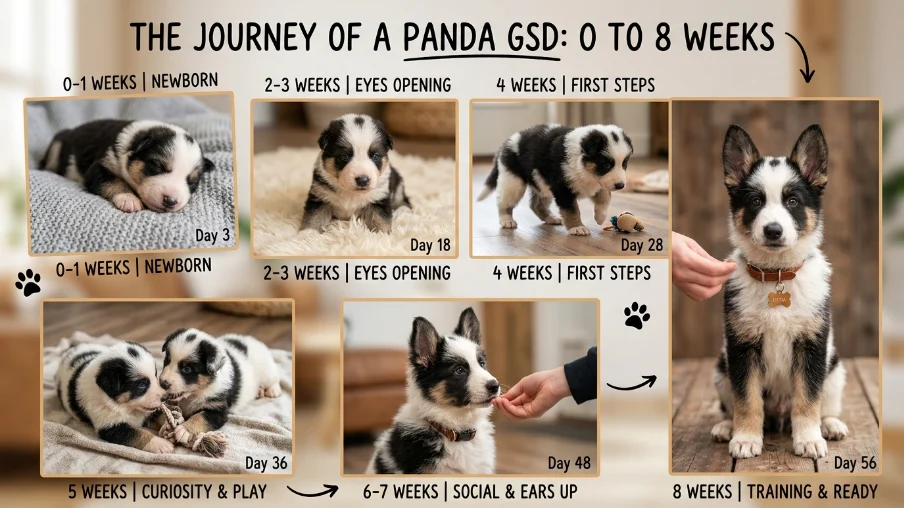
Panda German Shepherd puppies develop exactly like standard German Shepherd puppies in terms of growth and behavior.
Development Timeline
| Stage | Age | What Happens |
|---|---|---|
| Neonatal | 0 to 2 weeks | Blind, dependent |
| Transitional | 2 to 3 weeks | Eyes open |
| Awareness | 3 to 4 weeks | Movement and curiosity |
| Social Start | 4 to 6 weeks | Play begins |
| Learning Phase | 6 to 8 weeks | Personality develops |
The only difference is visual.
Everything else follows standard German Shepherd development patterns.
The Core Challenge With Panda German Shepherd Puppies
The biggest problem is not health.
It is breeding motivation.
Some breeders focus too heavily on producing the panda pattern. This often leads to:
- Ignoring temperament selection
- Overbreeding specific lines
- Compromising structure
Real Breeder Observation
In one case, a panda puppy from a poorly planned breeding showed hesitation in new environments at 6 weeks.
Not because of the color gene.
Because the parents were not selected for stability.
Step by Step Care for Panda German Shepherd Puppies
Week 0 to 2: Stability First
- Maintain warmth
- Monitor feeding behavior
- Track weight daily
Color does not matter here. Survival does.
Week 3 to 4: Early Awareness
- Begin light interaction
- Observe mobility
- Introduce gentle stimuli
Week 4 to 5: Weaning Begins
- Introduce soft food
- Monitor digestion
- Keep environment clean
Week 6 to 8: Social Development
- Introduce controlled human interaction
- Observe temperament differences
- Begin early behavior shaping
Common Mistakes With Panda German Shepherds
Mistake 1: Buying Based on Color Alone
This is the most common and most damaging mistake.
A visually unique puppy with poor genetics will create long-term issues.
Mistake 2: Believing They Are a Separate Breed
They are not.
They are still German Shepherds with the same needs, behavior, and training requirements.
Mistake 3: Ignoring Breeder Quality
Because panda puppies are rare, some breeders charge premium prices without proper standards.
Mistake 4: Overbreeding for Pattern
Focusing only on producing the panda look can weaken overall genetic quality.
Breed Specific Insights
1. Same Intelligence, Same Drive
Panda German Shepherds are just as intelligent and trainable as standard German Shepherds.
2. No Special Care Needed for Coat
Their coat does not require special treatment beyond normal grooming.
3. Temperament Depends on Breeding, Not Color
The gene affects appearance, not behavior.
Three Insights Most Articles Miss
Insight 1: The Rarity Creates Buyer Pressure
People rush decisions because the puppy looks unique. This often leads to poor choices.
Insight 2: Not All White Markings Are Panda
Some puppies may have white markings without carrying the true KIT gene mutation.
Insight 3: Ethical Breeders Do Not Prioritize Color
Experienced breeders focus on:
- Structure
- Temperament
- Health
Color comes last.
When to Be Careful as a Buyer
Red Flags
- Breeder focuses only on color
- No information about parents
- No health or temperament discussion
Green Flags
- Breeder explains genetics clearly
- Focus on structure and behavior
- Controlled breeding practices
Preparation and Buying Layer
Before getting a Panda German Shepherd puppy, prepare properly.
You will need:
- Quality puppy food
- Training plan
- Safe environment
You should also review a German Shepherd feeding chart by age to support healthy growth.
Understanding a full German Shepherd pregnancy timeline helps you evaluate breeder knowledge.
When selecting a puppy, learn how to choose a healthy German Shepherd puppy based on behavior and structure.
FAQs
Is a Panda German Shepherd a mixed breed?
No. It is a purebred German Shepherd with a genetic mutation affecting coat color.
What causes the panda pattern?
It is caused by a mutation in the KIT gene.
Are Panda German Shepherds rare?
Yes, they are very rare because the gene is not common.
Do they have health problems?
The panda gene itself does not cause health issues.
Are they recognized as purebred?
Yes, they are considered purebred German Shepherds.
Do they behave differently?
No. Their behavior depends on training and genetics, not coat color.
Are they more expensive?
Often yes, due to rarity, but price should not be the main factor.
Can two standard German Shepherds produce a panda puppy?
Only if one carries the mutation.
Is special care required?
No special care beyond normal German Shepherd puppy care.
What should I look for in a breeder?
Focus on health, temperament, and breeding ethics.
Conclusion
Panda German Shepherds are not special because of their color.
They are special because they reveal how easily people can be distracted from what truly matters.
A good dog is not defined by markings.
It is defined by:
- Stability
- Structure
- Temperament
If you focus on those first, the color becomes a bonus.
If you focus on color first, you risk everything else.
That is the difference between owning a rare dog and raising a great one.