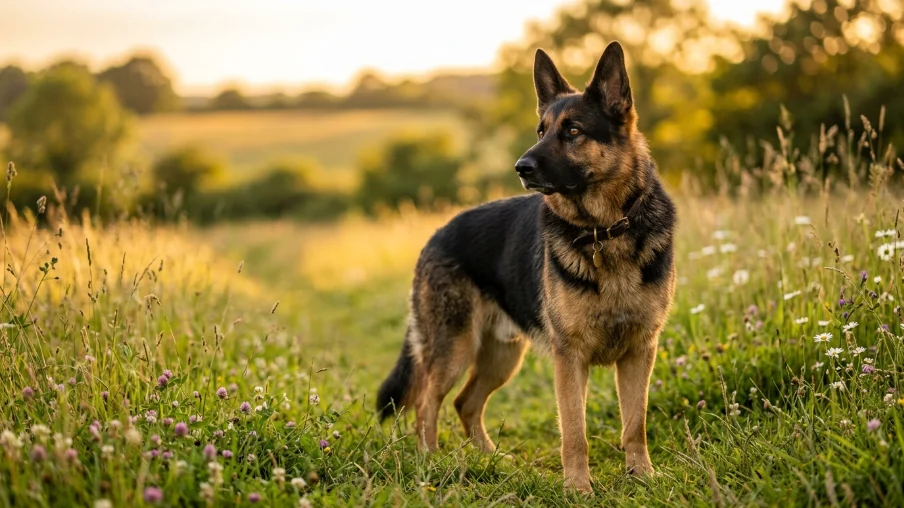
A Female German Shepherd is an intelligent, loyal, and highly trainable working dog that is typically smaller and lighter than a male. Many owners prefer females because they often mature faster, form strong handler-focused bonds, and are easier to manage physically. The quality of breeding, health testing, and socialization has a far greater impact on temperament than gender alone.
Quick Snapshot
| TraitFemale German Shepherd | |
|---|---|
| Breed | German Shepherd Dog |
| Gender | Female |
| Height | 22–24 Inches |
| Weight | 50–70 Pounds |
| Lifespan | 9–13 Years |
| Energy Level | High |
| Intelligence | Extremely High |
| Trainability | Excellent |
| Family Friendly | Yes |
| Good With Children | Usually Yes |
| Good With Other Dogs | Good When Properly Socialized |
| Protective Instinct | High |
| Loyalty Level | Exceptional |
| Affection Level | High |
| Watchdog Ability | Excellent |
| Guard Dog Ability | Excellent |
| Grooming Needs | Moderate |
| Shedding Level | Heavy |
| Seasonal Shedding | Very Heavy |
| Coat Type | Double Coat |
| Coat Length | Short, Medium, or Long |
| Exercise Needs | High |
| Daily Exercise Requirement | 60–120+ Minutes |
| Mental Stimulation Needs | Very High |
| Working Drive | High |
| Prey Drive | Moderate to High |
| Apartment Friendly | Possible with Extensive Exercise |
| First-Time Owner | Moderate |
| Experience Level | Beginner to Intermediate |
| Socialization Importance | Critical |
| Training Difficulty | Moderate |
| Stranger Friendly | Reserved but Polite |
| Barking Level | Moderate |
| Drooling | Low |
| Adaptability | High |
| Heat Tolerance | Moderate |
| Cold Tolerance | Excellent |
| Climate Preference | Cool to Moderate Climates |
| Service Dog Potential | Excellent |
| Therapy Dog Potential | Excellent |
| Search & Rescue Potential | Excellent |
| Protection Work Potential | High |
| Herding Ability | Excellent |
| Maternal Instinct | Often Strong |
| Off-Leash Reliability | High with Proper Training |
| Puppy Price Range | $800–$3,500+ |
| AKC Recognition | Yes |
| Breed Group | Herding Group |
| Original Purpose | Herding and Livestock Management |
| Modern Roles | Family Companion, Service Dog, Police K9, Search & Rescue |
| Common Health Concerns | Hip Dysplasia, Elbow Dysplasia, Degenerative Myelopathy, Bloat |
| Health Testing Importance | Extremely High |
| Maintenance Level | Moderate to High |
| Best For | Active Families, Working Homes, Dog Sports |
| Not Ideal For | Sedentary Households |
| Female Temperament Tendency | Often More Focused, Mature Earlier, and Slightly Easier to Manage Than Males |
| Physical Build | Generally Leaner and More Refined Than Males |
| Maturity Rate | Typically Matures Earlier Than Males |
| Companion Dog Rating | Excellent |
| Family Protection Rating | Excellent |
| Working Dog Rating | Excellent |
| Overall Suitability | A Loyal, Intelligent, Athletic, and Versatile Companion Suitable for Family and Working Roles |
What Is a Female German Shepherd?
A Female German Shepherd is the female version of the German Shepherd breed. She possesses the same intelligence, loyalty, trainability, and working ability that make German Shepherds one of the most respected dog breeds in the world.
Females are generally smaller, mature faster, and may be slightly more handler-focused than males, although individual personality varies significantly.
Breed History and Origin
The German Shepherd was developed in Germany during the late 19th century as a versatile working dog. The breed was created to combine intelligence, endurance, athleticism, and trainability.
Today, female German Shepherds excel as:
- Family companions
- Service dogs
- Police dogs
- Search and rescue dogs
- Sport competitors
- Working dogs
Appearance
Female German Shepherds typically have a more refined appearance than males while maintaining strong athletic structure.
Typical Size
| Measurement | Female |
|---|---|
| Height | 22–24 inches |
| Weight | 50–70 pounds |
Common coat colors include:
- Black and tan
- Sable
- Black
- Bi-color
Appearance alone tells you very little about temperament or health quality.
Genetics and Color
German Shepherd coat color is determined by inherited genetic combinations.
Experienced breeders focus on:
- Health testing
- Temperament
- Structure
- Working ability
- Genetic diversity
Responsible breeders evaluate far more than color.
The real issue is producing healthy, stable dogs with sound conformation and predictable temperament.
Female German Shepherd Temperament
Female German Shepherds are known for:
- Loyalty
- Intelligence
- Confidence
- Trainability
- Strong family bonds
Many owners describe females as:
- More mature earlier
- Slightly more independent
- Highly attentive to handlers
- Less physically overwhelming than males
These are common trends, not guarantees.
Temperament depends heavily on genetics, socialization, and training.
Female vs Male German Shepherd
| Trait | Female | Male |
|---|---|---|
| Weight | 50–70 lbs | 65–90 lbs |
| Maturity | Faster | Slower |
| Physical Size | Smaller | Larger |
| Handler Focus | Often Higher | Variable |
| Strength | High | Very High |
For most families, breeder quality matters far more than choosing male or female.
Intelligence and Trainability
German Shepherds rank among the most trainable dog breeds.
Female German Shepherds often excel in:
- Obedience
- Tracking
- Scent work
- Protection sports
- Service work
Training should begin early through:
- Socialization
- Basic obedience
- Confidence building
- Environmental exposure
Exercise Requirements
Female German Shepherds require substantial daily activity.
Most adults need:
- 90–120 minutes of exercise
- Mental stimulation
- Structured training
Good activities include:
- Hiking
- Fetch
- Agility
- Tracking
- Obedience training
A bored German Shepherd often creates her own entertainment.
Health Problems and Genetic Risks
Common health concerns include:
- Hip dysplasia
- Elbow dysplasia
- Degenerative myelopathy
- Allergies
- Bloat
- Arthritis
Recommended Health Testing
| Test | Purpose |
|---|---|
| OFA Hips | Hip evaluation |
| OFA Elbows | Elbow evaluation |
| DM Test | Genetic screening |
| Temperament Evaluation | Behavioral stability |
Responsible breeding programs prioritize health testing before breeding decisions are made.
Female German Shepherd Heat Cycle
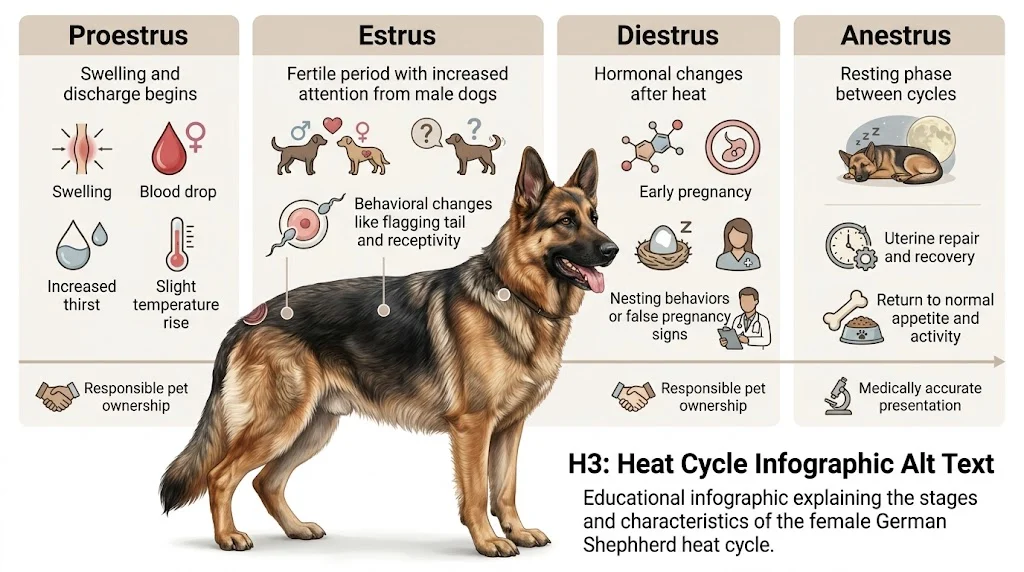
One of the most overlooked ownership topics is the female heat cycle.
Most females experience:
- First heat between 6–18 months
- Heat every 6–8 months on average
Possible changes include:
- Increased attention from male dogs
- Behavioral changes
- Appetite fluctuations
- Swelling and discharge
Owners should discuss reproductive management with their veterinarian.
Should You Spay a Female German Shepherd?
There is no universal answer.
The appropriate timing depends on:
- Individual health
- Growth development
- Veterinary guidance
- Lifestyle considerations
Current discussions often focus on balancing reproductive management with long-term orthopedic and health outcomes.
Puppy Development Timeline
| Age | Development Stage |
|---|---|
| Birth–8 Weeks | Early development |
| 2–4 Months | Critical socialization |
| 4–6 Months | Teething period |
| 6–12 Months | Adolescence |
| 12–18 Months | Physical maturity increases |
| 18–24 Months | Mental maturity develops |
| 2–3 Years | Full adult temperament |
Many first-time owners struggle most during adolescence, not puppyhood.
Female German Shepherd Growth Chart
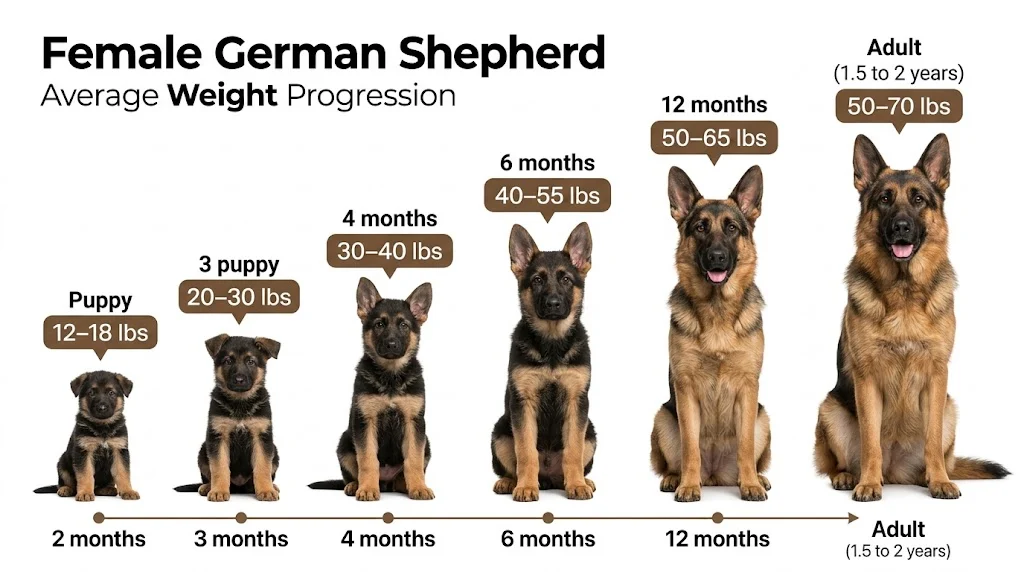
| Age | Average Weight |
|---|---|
| 2 Months | 12–18 lbs |
| 3 Months | 20–30 lbs |
| 4 Months | 30–40 lbs |
| 6 Months | 40–55 lbs |
| 12 Months | 50–65 lbs |
| Adult | 50–70 lbs |
Individual growth varies according to genetics and nutrition.
Feeding and Nutrition
A balanced diet should support:
- Lean muscle development
- Joint health
- Healthy body condition
- Controlled growth
Avoid overfeeding growing puppies.
Rapid growth can place additional stress on developing joints.
Grooming Guide
Female German Shepherds have a dense double coat that sheds year-round.
Grooming Schedule
| Task | Frequency |
|---|---|
| Brushing | 2–4 times weekly |
| Nail Trimming | Monthly |
| Ear Checks | Weekly |
| Teeth Brushing | Several times weekly |
Common Owner Mistakes
Common mistakes include:
- Poor socialization
- Delayed training
- Buying based on appearance alone
- Ignoring mental stimulation
- Purchasing from untested breeding programs
Here is where most people get it wrong.
A beautiful puppy does not automatically become a stable adult dog.
Insights Most Articles Miss
Experienced breeders evaluate:
- Nerve strength
- Confidence
- Recovery after stress
- Food drive
- Toy drive
- Human engagement
These factors often predict future success better than coat color or pedigree marketing.
Price Guide and Ownership Costs
Female German Shepherd Puppy Price
| Source | Typical Price |
|---|---|
| Backyard Breeder | $300–$1,000 |
| Reputable Breeder | $1,000–$4,000+ |
| Working Lines | $2,000–$5,000+ |
Annual Ownership Costs
| Expense | Estimated Cost |
|---|---|
| Food | $500–$1,200 |
| Veterinary Care | $300–$1,500 |
| Training | $200–$2,000 |
| Supplies | $100–$500 |
How to Find a Reputable Breeder
Look for breeders who:
- Perform OFA testing
- Provide health records
- Conduct temperament evaluations
- Prioritize socialization
- Offer lifetime support
Avoid breeders focused primarily on rare colors or marketing claims.
Questions to Ask Before Buying
- Are both parents health tested?
- Can I review OFA results?
- How are puppies socialized?
- What temperament testing is performed?
- What health guarantees are provided?
Buyer Warning Section
Avoid breeders who:
- Refuse health documentation
- Offer multiple litters constantly
- Cannot discuss genetics
- Emphasize color over health
- Avoid answering questions
Lifestyle Compatibility
| Lifestyle Factor | Suitable? | Notes |
|---|---|---|
| Families | Yes | Excellent with training |
| Children | Yes | Supervision recommended |
| Apartments | Sometimes | Needs substantial exercise |
| Active Owners | Excellent | Ideal fit |
| Working Homes | Excellent | Thrives with a job |
| First-Time Owners | Moderate | Requires commitment |
Pros and Cons
Pros
- Highly intelligent
- Loyal family companion
- Excellent trainability
- Often mature faster than males
- Strong working ability
Cons
- Heavy shedding
- High exercise requirements
- Protective instincts need guidance
- Heat cycles if intact
- Can become destructive when bored
FAQs
Are female German Shepherds calmer than males?
Many mature faster, but temperament depends more on genetics and training.
How much does a female German Shepherd weigh?
Most adult females weigh between 50 and 70 pounds.
Are female German Shepherds good family dogs?
Yes, when properly socialized and trained.
How often do female German Shepherds go into heat?
Most experience a heat cycle every 6–8 months.
Are female German Shepherds easier to train?
Some owners find females more focused, though both sexes are highly trainable.
How long do female German Shepherds live?
Most live between 9 and 13 years.
Do female German Shepherds shed a lot?
Yes, they shed year-round and heavily during seasonal coat changes.
Can they live in apartments?
Only if their exercise and mental stimulation needs are consistently met.
Conclusion
A Female German Shepherd combines intelligence, loyalty, athleticism, and exceptional trainability in a slightly smaller package than a male. While many owners appreciate their faster maturity and strong handler-focused bonds, gender alone does not determine quality.