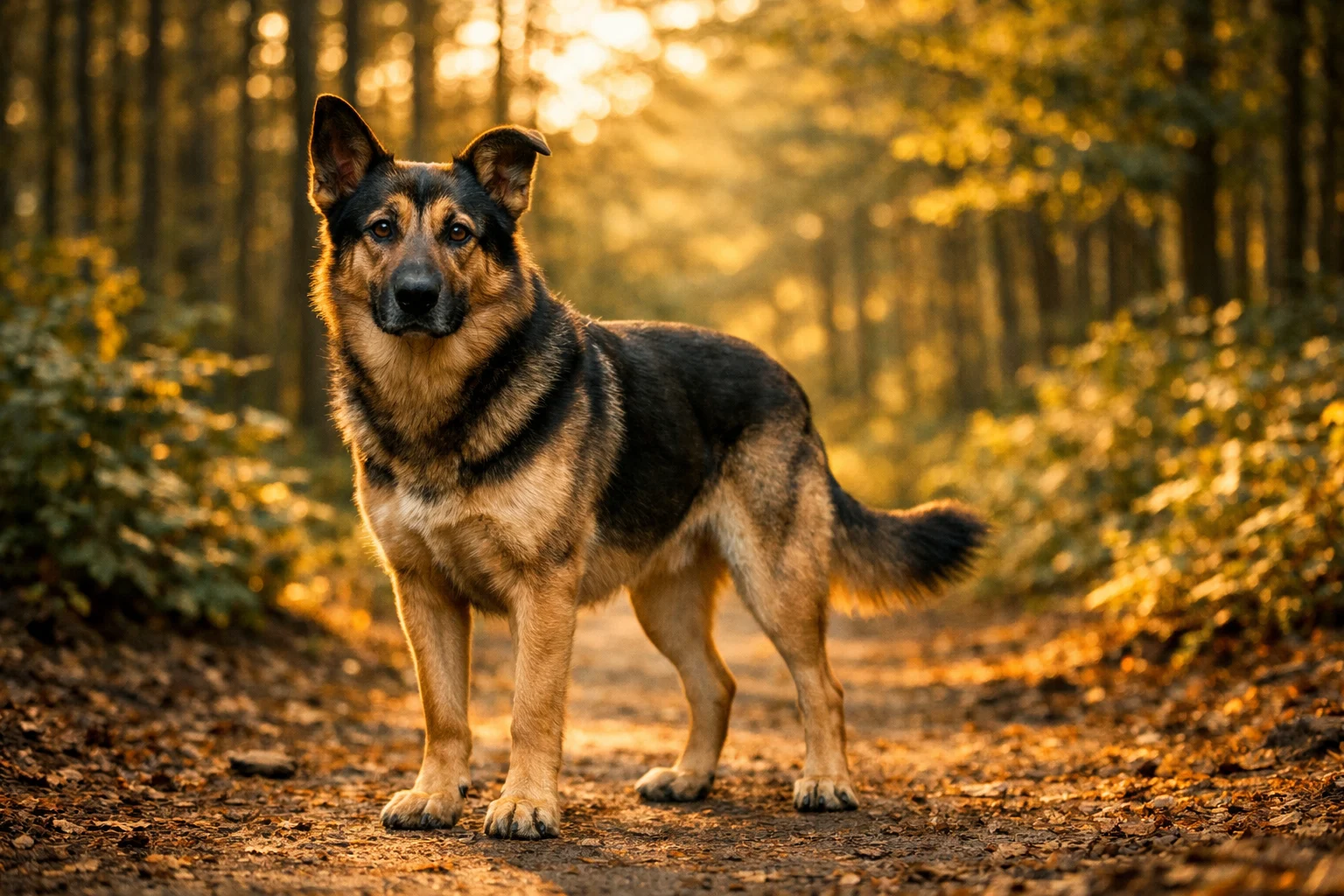
Also known as the Sheprador, the German Shepherd Lab Mix is a loyal, intelligent, and highly energetic hybrid breed. Combining the German Shepherd’s protective instincts with the Labrador Retriever’s friendly nature, this versatile dog makes an excellent family companion. Most Shepradors weigh between 50 and 90 pounds, feature a strong athletic build, and have a dense double coat that sheds throughout the year. Their trainability, affection, and adaptability have made them one of the most popular German Shepherd mixes in 2026.
Quick Snapshot Table
| Category | Details |
|---|---|
| Breed Type | Hybrid Dog |
| Common Name | Sheprador |
| Alternative Names | German Shepherd Lab Mix, Lab Shepherd Mix |
| Parent Breeds | German Shepherd and Labrador Retriever |
| Breed Status | Mixed-breed companion and working dog |
| Recognition Status | Not recognized as a purebred breed |
| Height | 21–27 inches |
| Weight | 50–90 lbs |
| Size Category | Large |
| Body Structure | Athletic, muscular, balanced |
| Lifespan | 10–14 years |
| Coat Type | Dense double coat |
| Coat Length | Short to medium |
| Common Colors | Black, black and tan, sable, yellow, chocolate, bi-color |
| Eye Color | Brown, amber, hazel |
| Energy Level | High |
| Exercise Needs | 60–120+ minutes daily |
| Mental Stimulation Needs | High |
| Trainability | Excellent |
| Intelligence Level | Very high |
| Learning Speed | Fast learner |
| Temperament | Loyal, friendly, intelligent, eager to please |
| Family Friendly | Yes |
| Good With Children | Usually Yes |
| Good With Other Pets | Often Yes with Socialization |
| Affection Level | High |
| Protective Nature | Moderate to High |
| Protection Ability | Moderate to High |
| Watchdog Ability | Excellent |
| Guard Dog Potential | Good but varies by genetics |
| Confidence Level | Generally stable and confident |
| Socialization Needs | Important from puppyhood |
| Prey Drive | Moderate |
| First-Time Owner Friendly | Sometimes |
| Apartment Friendly | Possible with sufficient exercise |
| Yard Requirement | Beneficial but not mandatory |
| Barking Level | Moderate |
| Drooling Level | Low to moderate |
| Shedding | Moderate to Heavy |
| Seasonal Coat Blow | Heavy twice yearly |
| Grooming Needs | Moderate |
| Brushing Frequency | 2–4 times weekly |
| Working Ability | Excellent |
| Common Roles | Service dog, therapy dog, search and rescue, scent work, obedience sports |
| Athletic Ability | Excellent for hiking, agility, and outdoor activities |
| Climate Tolerance | Good adaptability to most climates |
| Cold Weather Tolerance | Good |
| Heat Tolerance | Moderate; requires hydration and shade |
| Common Health Issues | Hip dysplasia, elbow dysplasia, obesity, allergies, ear infections, bloat |
| Joint Health Risk | Moderate |
| Recommended Health Testing | Hip, elbow, eye, cardiac, and genetic screening |
| Diet Requirements | High-quality protein-rich nutrition |
| Weight Management Importance | Critical for long-term joint health |
| Average Puppy Price (2026) | $800–$3,500+ |
| Monthly Ownership Cost | Approximately $100–$300+ depending on food, healthcare, and training |
| Adoption Availability | Frequently available through shelters and rescues |
| Breeder Warning | Choose breeders who health-test both parent breeds |
| Ethical Concern | Avoid breeders prioritizing demand over health and temperament |
| Veterinary Insight | Responsible breeding and preventive healthcare significantly influence lifespan and quality of life |
| Behavior Expert Insight | Early training and structured socialization strongly affect adult behavior and confidence |
| Best For | Active families, outdoor enthusiasts, service-dog prospects, and experienced pet owners |
| Not Ideal For | Sedentary households or owners unable to provide daily exercise and mental stimulation |
| Expert Ownership Advice | Shepradors thrive when given consistent training, meaningful daily activity, and strong family involvement. Their combination of Labrador friendliness and German Shepherd intelligence makes them one of the most versatile family companions when responsibly bred and properly trained. |
Why the German Shepherd Labrador Mix Is So Popular
The German Shepherd Labrador Mix has become one of the most sought-after hybrid dogs because it combines traits from two of the world’s most respected breeds.
On paper, the combination sounds almost perfect.
You get:
- German Shepherd intelligence
- Labrador friendliness
- strong trainability
- athletic ability
- family companionship
However, here is where most people get it wrong.
Many buyers assume every Sheprador automatically inherits the best qualities of both parent breeds. Genetics simply do not work that way.
Some puppies grow into outgoing, Labrador-like companions.
Others develop stronger German Shepherd characteristics and become more protective, intense, and work-oriented.
Understanding this unpredictability is essential before bringing one home.
What Is a German Shepherd Labrador Mix?
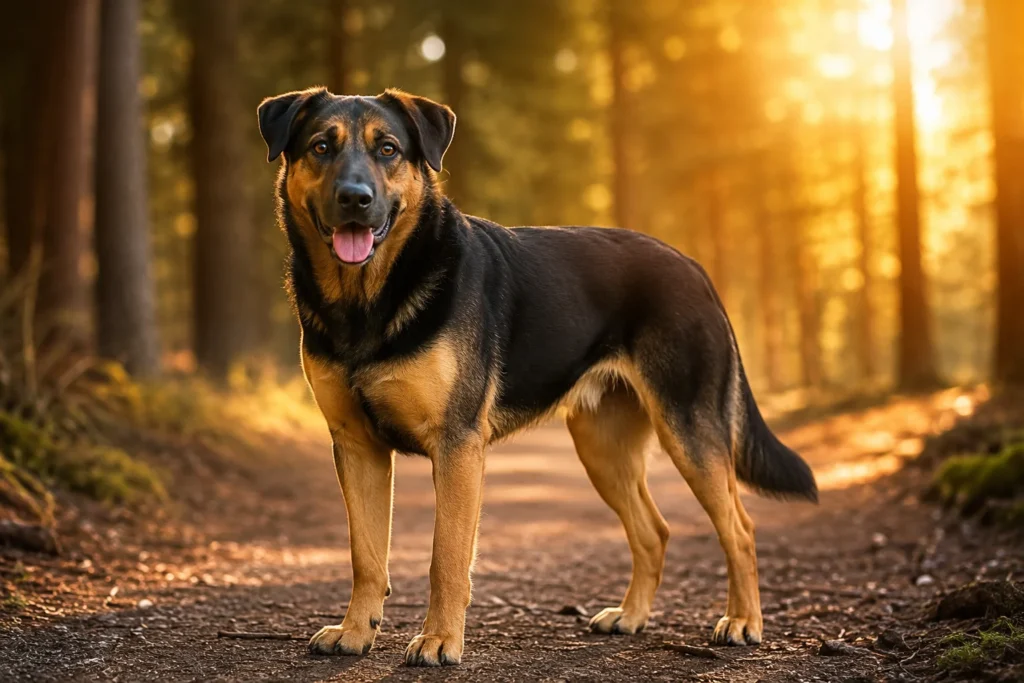
Understanding the Sheprador
A German Shepherd Labrador Mix is the offspring of a purebred German Shepherd and a purebred Labrador Retriever.
Unlike purebred dogs, there is no official breed standard for the Sheprador.
As a result:
- appearance varies
- personality varies
- coat types vary
- energy levels vary
Every puppy inherits a unique combination of genes from both parents.
Why Mixed Breed Genetics Matter
Many first-time owners expect predictable outcomes.
In reality, puppies from the same litter can differ dramatically in:
- confidence
- trainability
- guarding instincts
- sociability
- coat color
- body structure
Experienced trainers evaluate the individual dog rather than relying solely on breed labels.
Parent Breed Influence
Traits Commonly Inherited From the German Shepherd
German Shepherd genetics often contribute:
- intelligence
- loyalty
- confidence
- work ethic
- protective instincts
- strong handler focus
These qualities make German Shepherds one of the most respected working breeds in the world.
Traits Commonly Inherited From the Labrador Retriever
Labrador genetics frequently add:
- friendliness
- social confidence
- adaptability
- enthusiasm
- emotional stability
- family-oriented behavior
The Labrador’s influence often softens some of the intensity seen in working-line German Shepherds.
Which Parent Has More Influence?
There is no guaranteed answer.
Some Shepradors resemble German Shepherds almost entirely.
Others display strong Labrador personalities.
Most fall somewhere in the middle.
Appearance and Physical Characteristics
Size and Build
Most German Shepherd Labrador Mix dogs develop into large, athletic companions.
| Gender | Weight | Height |
|---|---|---|
| Male | 65–90 lbs | 23–27 inches |
| Female | 50–75 lbs | 21–25 inches |
Most inherit:
- strong muscles
- deep chest
- athletic movement
- balanced proportions
Why Appearance Varies So Much
One of the biggest surprises for owners is how different Shepradors can look.
Unlike purebred dogs, appearance is far less predictable.
Puppies from the same litter may develop:
- different coat lengths
- different ear positions
- different facial features
- different body structures
This variation is completely normal.
Coat Types and Colors
Common coat colors include:
- black
- black and tan
- yellow
- chocolate
- sable
- silver
- black and silver
Most Shepradors inherit a dense double coat that sheds throughout the year.
Temperament and Personality
What Living With a Sheprador Is Really Like
A well-bred Sheprador is often:
- affectionate
- intelligent
- loyal
- eager to please
- highly engaged with family
These dogs usually want to be involved in daily life rather than left alone for long periods.
Friendly Yet Protective
One reason this mix is so popular is the balance between:
- Labrador friendliness
- German Shepherd awareness
Many Shepradors become:
- welcoming with guests
- loyal to family
- naturally alert
However, socialization remains critical.
Good temperament develops through both genetics and environment.
Are They Good Family Dogs?
In most cases, yes.
They often thrive in:
- active households
- homes with children
- outdoor-oriented families
The best results come from early training and clear household structure.
Intelligence and Trainability
One of the Most Trainable Hybrid Dogs
Both parent breeds rank among the smartest dogs in the world.
As a result, many Shepradors learn quickly.
They often excel at:
- obedience
- scent work
- agility
- service work
- search and rescue
- therapy work
The Real Training Challenge
The challenge is rarely intelligence.
The real issue is consistency.
Without proper guidance, intelligent dogs quickly learn:
- bad habits
- unwanted behaviors
- household routines
They learn everything, not just what owners intend to teach.
Best Training Approach
Focus on:
- positive reinforcement
- consistency
- engagement
- socialization
- impulse control
Avoid relying solely on physical exercise.
Mental stimulation is equally important.
Exercise Requirements
High Energy Means High Commitment
This is not a low-energy companion.
Most adults require:
- 1.5 to 2.5 hours of daily activity
- regular mental challenges
- structured training
Without sufficient activity, problems often appear.
Common Signs of Under-Exercise
Many bored Shepradors develop:
- destructive chewing
- excessive barking
- digging
- hyperactivity
- attention-seeking behaviors
The real issue is usually boredom rather than disobedience.
Best Activities
Excellent options include:
- hiking
- swimming
- fetch
- obedience training
- scent games
- agility
- advanced trick training
Puppy Development Timeline
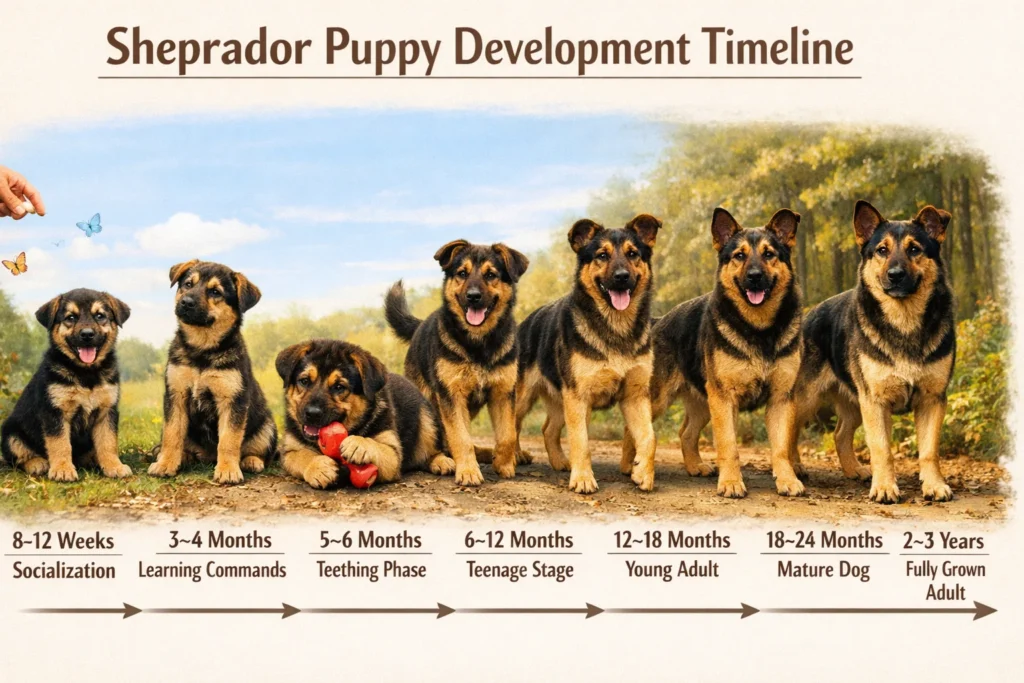
Most German Shepherd Labrador Mix puppies grow rapidly during the first two years.
Development varies depending on genetics, nutrition, and training.
Growth Timeline Table
| Age | Development Stage |
|---|---|
| 8–12 Weeks | Critical socialization period |
| 3–4 Months | Rapid learning phase |
| 5–6 Months | Teething begins |
| 6–12 Months | Adolescence develops |
| 12–18 Months | Physical maturity increases |
| 18–24 Months | Mental maturity improves |
| 2–3 Years | Full adult temperament develops |
The Most Challenging Development Stage
Most owners expect puppyhood to be difficult.
In reality, adolescence is often harder.
Between:
- 6 and 18 months
many dogs experience:
- selective listening
- testing boundaries
- increased independence
- excitement reactivity
- fluctuating confidence
This stage is completely normal.
Patience and consistency are critical.
Why Early Socialization Matters
Proper socialization helps develop:
- confidence
- emotional stability
- adaptability
- good manners
The goal is not overwhelming exposure.
The goal is calm, positive experiences.
Grooming and Shedding
How Much Do Shepradors Shed?
Most Shepradors shed throughout the year.
Owners should expect:
- regular brushing
- loose fur indoors
- seasonal shedding increases
They are not considered low-shedding dogs.
Grooming Routine
Weekly care typically includes:
- brushing
- nail trimming
- ear cleaning
- dental care
Consistent grooming supports healthier skin and coat condition.
Health and Genetic Concerns
Common Health Problems
Like all dogs, Shepradors may inherit health issues from either parent breed.
Potential concerns include:
- hip dysplasia
- elbow dysplasia
- obesity
- allergies
- bloat
- ear infections
Which Parent Breed Influences Health More?
German Shepherd genetics may contribute:
- hip issues
- digestive sensitivities
- degenerative conditions
Labrador genetics may contribute:
- obesity risk
- joint stress
- ear problems
Health outcomes depend heavily on breeding quality.
Why Health Testing Matters
Responsible breeders screen for:
- hip quality
- elbow health
- eye conditions
- genetic diseases
Appearance alone tells you very little about long-term health.
Common Mistakes New Owners Make
Choosing Based on Appearance
Many buyers focus on:
- coat color
- markings
- puppy photos
Instead of:
- temperament
- health testing
- parent quality
Underestimating Exercise Needs
A bored Sheprador often creates its own entertainment.
Unfortunately, owners rarely enjoy the results.
Ignoring Mental Stimulation
Physical exercise alone is not enough.
Intelligent dogs need opportunities to think and solve problems.
Insights Most Articles Miss
No Two Shepradors Are Exactly Alike
Mixed breed genetics create significant variation.
Even littermates may develop very different personalities.
Many Excel Beyond Family Life
The German Shepherd Labrador Mix often succeeds in:
- service work
- therapy work
- scent detection
- search and rescue
Their versatility is one of their greatest strengths.
Adolescence Is Usually Harder Than Puppyhood
Many behavioral issues emerge during adolescence rather than early puppyhood.
This stage often determines whether a dog becomes:
- stable
- confident
- reliable
or develops long-term behavioral problems.
Buyer Warning Section
Red Flags When Choosing a Breeder
Be cautious if a breeder:
- refuses health records
- focuses only on appearance
- cannot discuss temperament
- offers puppies too young
- avoids questions
What Responsible Breeders Prioritize
Ethical breeders focus on:
- health testing
- temperament
- socialization
- structural quality
These factors matter far more than coat color.
Is a German Shepherd Labrador Mix Good for First-Time Owners?
Sometimes, But Not Always
A Sheprador is often easier than a high-drive working-line German Shepherd.
However, they still require:
- exercise
- training
- socialization
- consistency
Owners seeking a low-maintenance dog may struggle.
Active owners usually succeed.
Lifestyle Compatibility
| Lifestyle | Compatibility |
|---|---|
| Active Family | Excellent |
| Experienced Owner | Excellent |
| Outdoor Lifestyle | Excellent |
| Apartment Living | Moderate |
| Sedentary Household | Poor |
| Frequent Travelers | Poor |
Preparation Checklist
You May Be Ready If
- you enjoy outdoor activities
- you want a trainable companion
- you have time for daily exercise
- you value mental stimulation
You May Want Another Breed If
- you prefer low-energy dogs
- you dislike shedding
- you travel frequently
- you have little time for training
Frequently Asked Questions
How big does a German Shepherd Labrador Mix get?
Most adults weigh between 50 and 90 pounds and stand 21 to 27 inches tall.
Are Shepradors aggressive?
No. Temperament depends on genetics, socialization, and training rather than breed mix alone.
Do German Shepherd Labrador Mix dogs shed a lot?
Yes. Most inherit dense double coats and shed moderately to heavily throughout the year.
How much exercise does a Sheprador need?
Most adults require 1.5 to 2.5 hours of combined physical and mental activity daily.
Are they easy to train?
Yes. They are generally highly intelligent and eager to learn.
Do Shepradors make good family dogs?
Yes. Most thrive in active households that provide structure, exercise, and social interaction.
Conclusion
The German Shepherd Labrador Mix combines many of the best qualities found in two exceptional breeds. Intelligent, loyal, trainable, and family-oriented, the Sheprador has earned its reputation as one of the most versatile hybrid dogs available.
However, success with this mix depends on more than genetics.
The dogs that thrive most are raised with:
- consistent training
- proper socialization
- daily exercise
- mental enrichment
For active owners willing to invest the time, a German Shepherd Labrador Mix can become an extraordinary companion for many years.