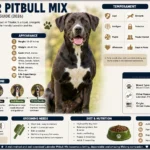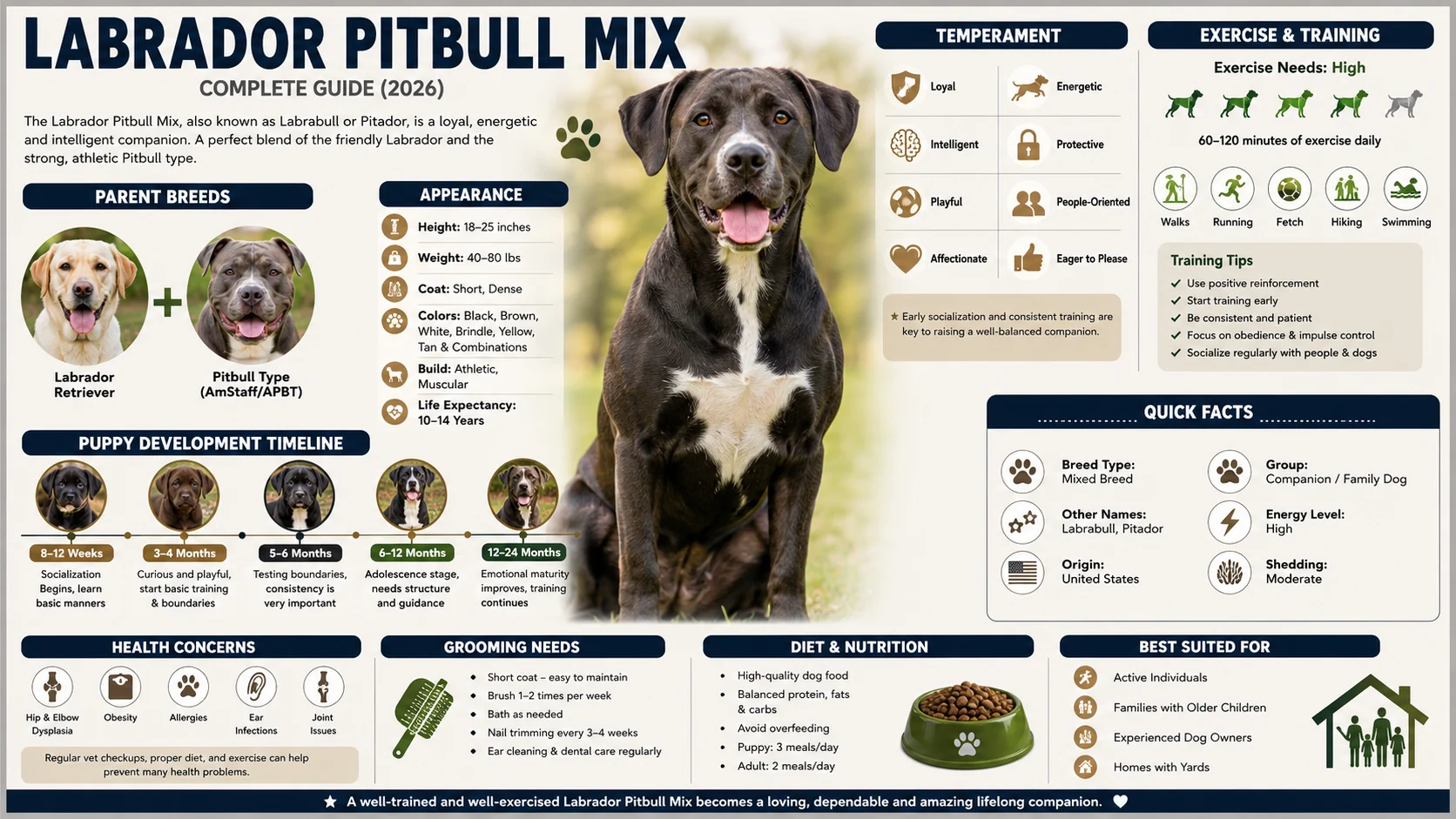
The Labrador Pitbull Mix is an energetic, intelligent cross combining Labrador Retriever friendliness with the athleticism and determination often associated with Pitbull type dogs.
Most are affectionate, people oriented companions, but their strength, energy, and need for consistent training should not be underestimated.
The best match is an active owner who prioritizes early socialization, impulse control, health screening, and responsible breeding over appearance.
Quick Snapshot Table
| Category | Details |
|---|---|
| Common Names | Labrabull, Pitador, Labrador Pitbull Mix |
| Breed Type | Mixed breed |
| Parent Breeds | Labrador Retriever × Pitbull type dog |
| Adult Height | Approximately 18 to 25 inches |
| Adult Weight | Approximately 40 to 80 lbs |
| Lifespan | Often around 10 to 14 years |
| Coat | Usually short and easy to maintain |
| Energy Level | High |
| Intelligence | High |
| Trainability | Generally very good |
| Temperament | Affectionate, energetic, loyal, playful |
| Exercise Needs | High |
| Grooming | Low to moderate |
| Best For | Active, involved owners |
| Main Concerns | Weight, joints, allergies, inherited conditions |
What Is a Labrador Pitbull Mix?
A Labrador Pitbull Mix is a cross between a Labrador Retriever and a dog from the Pitbull type category. The term “Pitbull” can refer to several related breeds or mixed dogs, so there is considerably more variation in these mixes than the name suggests.
You may also hear names such as:
- Labrabull
- Pitador
- Lab Pit Mix
- Pitbull Lab Mix
There is no single standardized appearance for this mix.
One puppy may strongly resemble a Labrador, while another may inherit a broader head, heavier musculature, or different body proportions from its Pitbull type parent.
That unpredictability is part of owning a mixed breed.
Appearance and Size
How Big Does a Labrador Pitbull Mix Get?
Most adult Labrador Pitbull Mixes fall somewhere between the medium and large dog categories, although individual size can vary considerably.
| Trait | Typical Range |
|---|---|
| Height | 18 to 25 inches |
| Weight | 40 to 80 lbs |
| Body | Athletic and muscular |
| Coat | Short and dense |
| Ears | Usually floppy or semi floppy |
| Tail | Medium to long |
| Build | Athletic to stocky |
Male dogs are often larger, but genetics matter more than sex alone.
What Does a Labrabull Look Like?
Common features include:
- broad chest
- muscular shoulders
- short coat
- strong legs
- expressive eyes
- medium to large head
- athletic body
Coat colors can include:
- black
- chocolate
- yellow
- white
- brown
- brindle
- tan
- combinations of these colors
There is no single “correct” Labrador Pitbull Mix appearance.
Temperament and Personality
The temperament of this mix is one of the biggest reasons people consider it.
A well socialized Labrador Pitbull Mix can be:
- affectionate
- playful
- energetic
- highly people oriented
- intelligent
- loyal
- eager to participate
But owners should not assume that every individual will automatically be friendly with every dog or stranger.
Genetics, early experiences, training, and environment all influence adult behavior.
Labrador Influence
Labrador Retrievers are generally known for their:
- sociability
- retrieving instinct
- enthusiasm
- food motivation
- willingness to interact with people
These qualities can produce a highly engaging mixed breed.
Pitbull Type Influence
Depending on the individual parent, Pitbull type genetics can contribute:
- athleticism
- physical strength
- determination
- intense play
- strong human attachment
The combination can produce a remarkably capable dog.
It can also produce a dog that is physically stronger than an inexperienced owner expects.
Are Labrador Pitbull Mixes Aggressive?
A Labrador Pitbull Mix should not be labeled aggressive simply because of its ancestry.
Breed label alone cannot predict an individual dog’s behavior.
What matters more is:
- stable genetics
- early socialization
- training
- handling
- environment
- individual temperament
Responsible owners should still take the dog’s strength seriously and teach appropriate greetings, impulse control, and leash manners.
Intelligence and Trainability
This mix can be exceptionally trainable.
Both parent types can be highly responsive to human interaction, which often makes the Labrabull eager to learn.
What Training Usually Works Best?
Use:
- positive reinforcement
- food rewards
- short training sessions
- consistent household rules
- impulse control exercises
- structured socialization
Avoid allowing a young puppy to rehearse behaviors that become difficult to manage at 60 or 70 pounds.
That is one of the biggest differences between training a strong mixed breed puppy and simply teaching cute tricks.
Commands Worth Teaching Early
Prioritize:
- Name recognition
- Recall
- Sit
- Down
- Leave it
- Drop it
- Loose leash walking
- Wait
- Place
- Calm settling
“Calm” is just as valuable as “sit.”
Exercise Requirements
The Labrador Pitbull Mix is usually not a good choice for a sedentary household.
Most need a combination of:
- daily walks
- active play
- training
- mental stimulation
- appropriate off leash exercise in secure areas
How Much Exercise Does a Labrabull Need?
Many healthy adults do well with roughly 60 to 120 minutes of combined activity per day, although age, health, temperament, and individual energy levels can change that considerably.
The goal should not be to exhaust the dog every day.
A better strategy is to create a balanced routine involving both physical activity and mental work.
Good Activities
| Activity | Benefit |
|---|---|
| Walking | Everyday conditioning |
| Fetch | Physical and retrieving outlet |
| Obedience | Mental stimulation |
| Hiking | Endurance |
| Swimming | Low impact exercise |
| Scent games | Problem solving |
| Tug with rules | Controlled engagement |
Puppy Development Timeline
Labrador Pitbull Mix puppies can grow quickly, but their adult appearance may not become obvious until later in development.
8 to 12 Weeks
The puppy is entering a critical socialization period.
Focus on:
- gentle handling
- household sounds
- different surfaces
- appropriate people
- controlled environments
- bite inhibition
Avoid overwhelming the puppy with too many intense experiences at once.
3 to 4 Months
Curiosity increases.
You may notice:
- stronger chewing
- increased confidence
- more independence
- rapid physical growth
This is an excellent time to reinforce basic obedience.
5 to 6 Months
Teething and boundary testing become significant.
The puppy may suddenly seem to “forget” commands.
It usually has not forgotten them.
Its environment, hormones, distractions, and growing confidence are simply becoming more challenging.
6 to 12 Months
Adolescence begins.
Expect:
- increased energy
- testing boundaries
- selective listening
- stronger physical strength
This is when consistent training becomes particularly important.
12 to 18 Months
The dog begins looking much more adult.
Muscle development becomes more obvious, although mental maturity may still be incomplete.
18 to 24 Months
Many individuals become easier to manage as impulse control and emotional maturity improve.
Some dogs continue developing socially and physically beyond two years.
Health and Genetic Considerations
Mixed breed does not automatically mean disease free.
A Labrador Pitbull Mix can inherit health problems associated with either parent.
Potential concerns include:
- hip dysplasia
- elbow dysplasia
- obesity
- allergies
- ear problems
- joint problems
- certain eye conditions
- heart conditions
The exact risk depends on the parent dogs and their genetics.
Joint Health
This is particularly important because Labrabulls can become substantial, muscular dogs.
Rapid weight gain places unnecessary stress on developing joints.
Keep growing puppies lean rather than trying to make them look “big” as quickly as possible.
Obesity Risk
Labrador genetics can contribute to strong food motivation.
Owners should measure meals rather than guessing portions.
A visible waist and easily felt ribs are more useful indicators than the number on the food bag.
Nutrition and Feeding
What Should a Labrador Pitbull Mix Eat?
Choose a complete, balanced diet appropriate for:
- age
- size
- activity level
- reproductive status
Growing puppies need carefully controlled nutrition rather than unrestricted calorie intake.
Feeding Mistakes to Avoid
Avoid:
- constant table scraps
- excessive treats
- free feeding
- rapid diet changes
- feeding for appearance rather than body condition
Food is also an excellent training tool, but treats should be included in the daily calorie budget.
Grooming Guide
The short coat makes grooming relatively simple.
Weekly Routine
A typical adult may need:
- brushing once or twice weekly
- regular nail trimming
- ear checks
- routine dental care
- occasional bathing
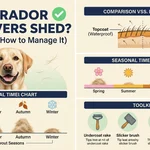
Shedding
Short hair does not mean no shedding.
Many Labrador Pitbull Mixes shed year round, with heavier shedding during seasonal changes.
The short hairs can also become surprisingly noticeable on furniture and clothing.
Socialization and Behavior
Socialization should begin early and continue throughout adolescence.
Introduce Puppies To
Gradually expose them to:
- different people
- calm dogs
- vehicles
- household sounds
- grooming
- veterinary handling
- new environments
The goal is not to make the dog greet everyone.
The goal is to create a confident dog that can remain calm around unfamiliar situations.
Dog to Dog Behavior
Do not assume that a friendly puppy will automatically remain friendly with every dog as an adult.
Monitor:
- body language
- arousal
- play intensity
- resource guarding
- frustration
Early professional guidance can prevent small issues from becoming serious problems.
Labrador Pitbull Mix vs Labrador Retriever
| Trait | Labrador Pitbull Mix | Labrador Retriever |
|---|---|---|
| Build | Often more muscular | Athletic |
| Energy | High | High |
| Trainability | High | High |
| Sociability | Variable | Generally high |
| Strength | High | Moderate to high |
| Coat | Usually short | Short and dense |
| Predictability | Lower | Higher |
| Working Drive | Variable | Strong retrieving drive |
The mixed breed offers more genetic and physical variation.
A purebred Labrador generally offers greater predictability in adult size, appearance, and breed tendencies.
Labrador Pitbull Mix vs Pitbull Type Dog
| Trait | Labrador Pitbull Mix | Pitbull Type |
|---|---|---|
| Size | Medium to large | Variable |
| Food Motivation | Often high | Often high |
| Retrieving Instinct | Often strong | Variable |
| Sociability | Variable | Individual dependent |
| Coat | Usually short | Usually short |
| Build | Athletic to muscular | Often muscular |
| Energy | High | High |
Common Mistakes Owners Make
Choosing Based Only on Appearance
A muscular puppy may look impressive.
That does not tell you whether it will be easy to live with.
Underestimating Adult Strength
A playful 12 week old puppy becomes a powerful adult surprisingly quickly.
Leash manners should begin immediately.
Confusing Exercise With Training
Running the dog for two hours does not automatically teach:
- patience
- impulse control
- calmness
- appropriate greetings
Mental education matters.
Overfeeding Puppies
Trying to produce a huge adult dog can create unnecessary growth and joint concerns.
Healthy development should be the goal.
Insights Most Articles Miss
The Adult Dog May Be More Variable Than Expected
Because “Pitbull” is not one single standardized breed designation, two Labrabulls can look and behave quite differently.
Strength Changes the Training Equation
A poorly trained small dog can be frustrating.
A poorly trained 70 pound athletic dog can become genuinely difficult to manage.
That is why leash skills and impulse control deserve serious attention.
Calmness Is a Skill
Many owners focus exclusively on exercise.
A better approach teaches the dog when to work and when to settle.
That distinction can dramatically improve life with a high energy Labrabull.
Buyer Warning Section
If you are purchasing a Labrador Pitbull Mix puppy, look beyond the puppy itself.
Ask the Breeder or Seller About
- parent temperament
- health history
- hip and elbow screening
- vaccination records
- deworming
- veterinary examination
- living conditions
- socialization
- genetic testing where appropriate
Major Red Flags
Be cautious if someone:
- guarantees a specific adult appearance
- promises a specific temperament
- cannot identify the parents
- refuses veterinary records
- pressures you to buy immediately
- markets the puppy using exaggerated “rare” claims
A responsible seller should be comfortable answering uncomfortable questions.
Lifestyle Compatibility
| Lifestyle | Suitability |
|---|---|
| Active family | Excellent |
| Experienced dog owner | Excellent |
| Runner or hiker | Often excellent |
| Owner wanting a training partner | Excellent |
| Sedentary household | Poor |
| First time owner | Possible with professional support |
| Apartment | Possible with serious exercise commitment |
| Owner away all day | Often difficult |
Is a Labrador Pitbull Mix Right for You?
Ask yourself:
Can You Provide Daily Exercise?
If the answer is no, reconsider.
Can You Handle a Strong Adult Dog?
You should be comfortable managing a powerful dog on leash.
Are You Willing to Train Beyond Puppyhood?
Basic puppy training is only the beginning.
Can You Provide Mental Stimulation?
A bored Labrabull may invent its own entertainment.
That can include:
- chewing
- digging
- barking
- stealing objects
- destructive play
Preparation Checklist
Before bringing one home, prepare:
Home
- secure fencing
- crate or safe resting area
- durable toys
- food and water bowls
- appropriate collar or harness
Training
- veterinarian selected training plan
- puppy socialization strategy
- recall practice
- leash training
- impulse control exercises
Health
- veterinary appointment
- vaccination plan
- parasite prevention
- weight monitoring
- long term health budget
Frequently Asked Questions
What is a Labrador Pitbull Mix called?
Common names include Labrabull, Pitador, Lab Pit Mix, and Labrador Pitbull Mix.
How big does a Labrador Pitbull Mix get?
Many adults weigh approximately 40 to 80 pounds and stand around 18 to 25 inches tall, although individual dogs can fall outside these ranges.
Is a Labrador Pitbull Mix a good family dog?
A well bred and properly socialized individual can be an excellent family companion, particularly for active households.
Are Labrabulls aggressive?
No breed label can reliably predict aggression in an individual dog. Genetics, socialization, training, environment, and individual temperament all matter.
Do Labrador Pitbull Mixes shed?
Yes. Their short coats generally shed moderately, with some dogs shedding considerably during seasonal changes.
Are Labrador Pitbull Mixes easy to train?
They are often intelligent and highly trainable, but their energy and physical strength mean consistency is essential.
How long does a Labrador Pitbull Mix live?
A healthy individual may live roughly 10 to 14 years, although lifespan varies with genetics, nutrition, preventive care, and overall health.
Is a Labrador Pitbull Mix good for first time owners?
It can be, but it is not necessarily an easy first dog. Professional training and a realistic understanding of high energy, strength, and adolescent behavior can make a major difference.
Conclusion
The Labrador Pitbull Mix can be an affectionate, athletic, intelligent companion with the energy to keep up with an active household. But this is not a mix to choose simply because the puppies look cute or the adults look muscular.
The most important questions are about temperament, health, training, and lifestyle compatibility.
A good Labrabull is not defined by having the biggest head, heaviest muscles, or most impressive appearance. The better dog is the one with stable behavior, sound movement, manageable energy, and a strong relationship with its owner.
That is what responsible ownership should prioritize in 2026.