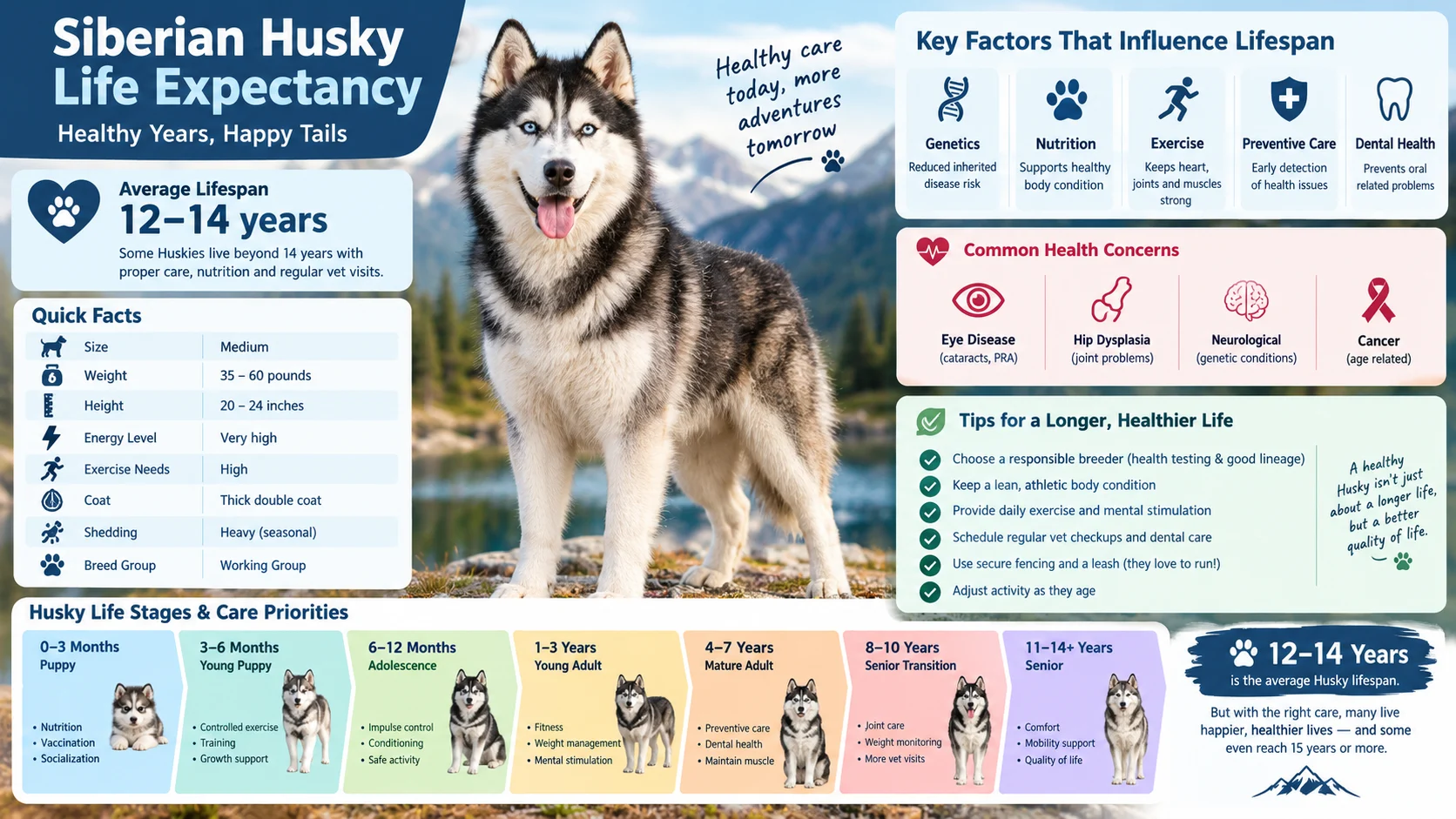
Husky life expectancy: 12–14 years
Quick Snapshot Table
| Category | Siberian Husky Details |
|---|---|
| Average Life Expectancy | About 12 to 14 years |
| Some Dogs | Can reach 14 years or beyond |
| Size | Medium |
| Typical Weight | 35 to 60 pounds |
| Height | About 20 to 24 inches |
| Senior Years | Generally around 8 to 10+ years |
| Energy Level | Very high |
| Exercise Needs | High |
| Coat | Thick double coat |
| Shedding | Heavy, especially seasonally |
| Common Health Concerns | Eye disease, hip dysplasia, certain inherited disorders |
| Major Longevity Factors | Genetics, weight, exercise, preventive care, nutrition |
| Breed Group | Working Group |
The American Kennel Club describes the Siberian Husky as a medium sized sled dog developed for endurance, while veterinary breed information commonly places its lifespan around 12 to 14 years.
How Long Do Huskies Live?
A healthy Siberian Husky typically lives about 12 to 14 years.
Some individuals live beyond that range, while others die younger because of inherited disease, cancer, accidents, severe illness, or other health complications. The American Kennel Club has listed the breed’s life expectancy at up to 14 years, while veterinary references give ranges around 12 to 14 years.
The number on the calendar, however, does not tell the whole story.
Two Huskies can both reach 12 years old and have very different health histories. One may remain active and mentally sharp, while another may develop significant joint, eye, or age related problems earlier.
That is why quality of life matters just as much as the number of years.
What Determines a Husky’s Lifespan?
There is no single factor that determines how long a Husky will live.
The biggest influences include:
| Factor | Why It Matters |
|---|---|
| Genetics | Influences inherited disease risk |
| Breeding quality | Responsible breeding can reduce certain inherited problems |
| Body condition | Excess weight places additional stress on joints and organs |
| Exercise | Supports cardiovascular fitness and muscle condition |
| Nutrition | Helps maintain healthy body condition and overall health |
| Veterinary care | Allows earlier detection of disease |
| Dental health | Poor oral health can contribute to broader health problems |
| Environment | Safe housing reduces preventable injuries |
| Mental stimulation | Supports behavioral and cognitive wellbeing |
Breed and size influence canine longevity, but individual health, genetics, and lifestyle also matter considerably.
Why Huskies Can Have Good Longevity
The Siberian Husky is not a giant breed.
That matters because larger dogs generally have shorter lifespans than smaller dogs. Huskies are medium sized, athletic dogs with a working history centered around endurance rather than extreme body mass.
Their original function also tells you something important about the breed.
Siberian Huskies were developed to pull relatively light loads over long distances and maintain endurance in demanding environments. Their bodies were designed for efficient movement rather than excessive size.
That athletic background is one reason a healthy Husky can remain surprisingly active well into its later years.
Husky Life Expectancy by Life Stage
A Husky’s needs change considerably as it moves from puppyhood into adulthood and eventually old age.
| Age | Life Stage | Main Priorities |
|---|---|---|
| 0 to 3 Months | Puppy | Nutrition, vaccination, socialization |
| 3 to 6 Months | Young Puppy | Controlled exercise, training, growth |
| 6 to 12 Months | Adolescence | Impulse control, conditioning, safe activity |
| 1 to 3 Years | Young Adult | Fitness, weight management, mental stimulation |
| 4 to 7 Years | Mature Adult | Preventive care, dental health, maintaining muscle |
| 8 to 10 Years | Senior Transition | More frequent monitoring, joint and weight care |
| 11 to 14+ Years | Senior | Comfort, mobility, nutrition, quality of life |
Puppy Development and Future Longevity
A Husky’s early development can influence its physical condition for years.
Puppies should not be treated like miniature endurance athletes simply because the breed is naturally energetic.
8 to 12 Weeks
This period is primarily about:
- safe socialization
- veterinary care
- appropriate nutrition
- bite inhibition
- basic household routines
The goal is not to exhaust the puppy.
3 to 6 Months
The puppy becomes more coordinated and curious.
This is an important period for teaching:
- leash manners
- recall foundations
- calm behavior
- appropriate play
- environmental confidence
6 to 12 Months
Adolescence can bring a dramatic increase in independence.
This is where many Husky owners discover that intelligence does not automatically mean obedience.
A Husky may understand exactly what you want and still decide that another option is more interesting.
Consistent training matters.
1 to 3 Years
The adult Husky becomes physically stronger and develops its full endurance.
This is the stage where structured exercise can become much more demanding, provided the dog’s physical development and veterinary condition support it.
Husky Health Problems That Can Affect Lifespan
A Husky can be generally healthy while still being predisposed to particular inherited conditions.
The American Kennel Club lists recommended health testing for Siberian Huskies that includes hip evaluation, ophthalmologist evaluation, and DNA tests for Siberian Husky Shaking Puppy Syndrome Type 1 and Siberian Husky Polyneuropathy Type 1.
Eye Problems
Eye health deserves particular attention in the breed.
Responsible breeders should be willing to discuss appropriate ophthalmic screening and the health history of their breeding dogs.
Hip Dysplasia
Hip dysplasia occurs when the hip joint develops abnormally.
It can contribute to:
- discomfort
- reduced mobility
- arthritis
- difficulty exercising
A healthy body weight can reduce unnecessary mechanical stress on the joints.
Inherited Neurological Conditions
Certain inherited neurological disorders are relevant to Siberian Huskies.
This is one reason genetic testing matters when selecting breeding dogs.
Cancer and Age Related Disease
No breed is protected from cancer or normal age related disease.
As a Husky enters its senior years, changes in:
- appetite
- weight
- mobility
- drinking
- urination
- breathing
- behavior
should not simply be dismissed as “old age.”
Early veterinary assessment can sometimes identify treatable problems before they become advanced.
Genetics Matter More Than a Fancy Coat Color
Husky owners are often attracted to dramatic coat colors and eye combinations.
But experienced breeders focus on something else.
They evaluate:
- health history
- genetic testing
- structure
- temperament
- working ability
- family longevity
A blue eyed Husky does not automatically have a shorter lifespan.
Likewise, a particular coat color does not guarantee superior health.
The quality of the breeding program matters much more than visual novelty.
Nutrition and Husky Longevity
Nutrition should support a lean, athletic body rather than simply making the dog look bigger.
Huskies can be remarkably efficient with food compared with some other active breeds.
This creates an important ownership lesson:
More exercise does not automatically mean unlimited food.
Signs Your Husky May Be Carrying Too Much Weight
Look for:
- difficulty feeling the ribs
- disappearing waistline
- reduced stamina
- heavy breathing during ordinary activity
- reluctance to jump or run
Veterinary body condition scoring is more useful than relying only on the number on the scale.
VCA notes that Huskies can maintain good weight efficiently and recommends monitoring body condition beneath their thick coat.
Exercise and Its Role in Lifespan
Exercise is essential for the breed, but the type of exercise matters.
A Siberian Husky was developed for endurance. It needs more than a short bathroom walk around the block.
Good Activities
- brisk walking
- hiking
- controlled running when physically mature
- scent games
- obedience training
- canine sports
- structured play
Avoid One Common Mistake
Do not assume that every tired Husky is a well exercised Husky.
A dog can be physically exhausted but mentally frustrated.
The best routine combines:
physical activity + mental work + calmness training
That balance is especially important because Siberian Huskies are intelligent, inquisitive, energetic dogs with a strong desire to run.
Exercise Changes With Age
A young Husky may happily run for long periods.
A senior Husky may still want to run even when its joints cannot tolerate the same workload.
Owners need to adjust activity according to the individual dog.
| Age | Exercise Approach |
|---|---|
| Puppy | Short, controlled activities |
| Young Adult | High activity with conditioning |
| Adult | Regular endurance and mental work |
| Mature Adult | Maintain fitness without excessive strain |
| Senior | Lower impact activity and mobility support |
Maintaining a Healthy Weight
Weight management is one of the most practical things an owner can control.
Excess body fat increases the mechanical demands placed on the musculoskeletal system.
For a breed built for efficient endurance, unnecessary weight can gradually change how the dog moves.
A Practical Monthly Check
Once a month, assess:
- body weight
- waistline
- rib visibility and feel
- stamina
- gait
- appetite
Small changes are easier to address than major weight gain.
Dental Health and Longevity
Dental care is often overlooked because owners focus on exercise and nutrition.
But oral health deserves regular attention.
A mature Husky should have its teeth checked as part of routine veterinary care.
Watch for:
- bad breath
- tartar buildup
- bleeding gums
- chewing difficulty
- dropping food
- reluctance to eat hard food
Dental disease should not be treated as simply a cosmetic problem.
Grooming and Lifespan
Huskies have a dense double coat and shed heavily.
The coat itself does not determine lifespan, but proper grooming supports skin health and allows owners to notice changes earlier.
Regular brushing can help you identify:
- lumps
- irritated skin
- parasites
- unusual hair loss
- wounds
The breed commonly experiences heavier seasonal shedding, and weekly brushing is generally recommended, with more frequent brushing during major shedding periods.
Senior Husky Development
A Husky does not suddenly become old on its eighth birthday.
Aging is gradual.
Many dogs begin showing subtle changes before obvious senior signs appear.
Early Senior Signs
Watch for:
- sleeping more
- slower recovery after exercise
- stiffness after resting
- reduced jumping
- graying around the muzzle
- changes in appetite
- altered hearing or vision
- increased sensitivity to temperature
The American Kennel Club notes that there is no single age when every dog becomes a senior; breed, size, genetics, lifestyle, and health all influence aging.
How to Help a Husky Live Longer
There is no guaranteed formula for extending a dog’s life.
But owners can stack the odds in favor of healthier aging.
1. Choose a Responsible Breeder
Ask about:
- health testing
- eye examinations
- hip evaluations
- genetic testing
- family health history
- longevity of parents and grandparents
2. Keep the Dog Lean
Do not confuse a heavy Husky with a healthy Husky.
Athletic condition is the goal.
3. Maintain Daily Activity
Consistent moderate activity is generally better than allowing an inactive dog to become extremely active only on weekends.
4. Provide Mental Stimulation
Training and enrichment help satisfy a breed originally developed for demanding work.
5. Schedule Preventive Veterinary Care
Routine examinations can detect changes before they become obvious at home.
6. Protect Against Preventable Accidents
Huskies have a strong instinct to run.
Secure fencing and reliable management are extremely important.
The AKC specifically notes the breed’s deep rooted desire to run and recommends leash use or secure fencing.
Common Mistakes That Can Shorten a Husky’s Healthy Years
Ignoring Weight Because the Dog Is Active
A very active dog can still become overweight.
Letting a Husky Run Unsecured
This is one of the breed’s most practical safety concerns.
A Husky that escapes can travel surprisingly far.
Assuming Every Health Change Is Normal Aging
Persistent coughing, weight loss, excessive thirst, mobility problems, or major behavior changes deserve veterinary attention.
Overexercising Puppies
Puppies need activity, but their developing bodies should not be treated like adult endurance athletes.
Ignoring Dental Care
Oral health should be part of routine preventive care.
Buying From Breeders Who Avoid Health Testing
A beautiful Husky from an untested breeding program can carry preventable genetic risks.
Buyer Warning Section
If you are purchasing a Siberian Husky puppy, do not ask only:
“How long do Huskies live?”
Ask the breeder:
- How old are the parents?
- What health problems have appeared in the bloodline?
- Have the hips been evaluated?
- Have the eyes been examined?
- What genetic testing has been performed?
- Are there neurological conditions in the pedigree?
- How long have previous relatives lived?
A breeder who is uncomfortable discussing health history deserves careful scrutiny.
The AKC’s current working group recommendations specifically include hip, ophthalmic, and relevant genetic testing for Siberian Huskies.
Insights Most Articles Miss
Lifespan Is Not the Same as Healthspan
A Husky living to 14 is not automatically a success if most of its final years are affected by unmanaged disease.
Owners should aim for:
more healthy years, not simply more years.
Genetics Cannot Be Replaced by Perfect Care
Excellent nutrition and exercise cannot completely eliminate inherited disease.
This is why responsible breeding is the first layer of longevity protection.
The Husky’s Independence Can Affect Safety
The same intelligence and independence that make Huskies fascinating can create real management challenges.
A dog that repeatedly escapes is exposed to traffic, injury, fights, and environmental hazards.
Preventing those accidents can matter enormously to lifespan.
Senior Huskies Still Need Purpose
An older Husky may not be able to run for hours anymore.
That does not mean it needs a completely inactive life.
Older dogs can still enjoy:
- sniff walks
- short training sessions
- puzzle feeders
- gentle play
- controlled outdoor exploration
Mental engagement remains valuable as physical ability changes.
Lifestyle Compatibility
| Owner Lifestyle | Husky Compatibility |
|---|---|
| Active outdoor owner | Excellent |
| Hiking household | Excellent |
| Runner with mature dog | Excellent |
| Apartment with serious exercise commitment | Possible |
| Sedentary household | Poor fit |
| Owner wanting an easy off leash dog | Poor fit |
| Family prepared for shedding | Good |
| Owner unwilling to secure fencing | Poor fit |
Preparation Checklist for a Long Lived Husky
Before bringing a Husky home, prepare:
Health
☐ Find a veterinarian
☐ Plan preventive examinations
☐ Discuss vaccination and parasite prevention
☐ Learn the breed’s health risks
Nutrition
☐ Choose an appropriate complete diet
☐ Monitor body condition
☐ Avoid unnecessary weight gain
Exercise
☐ Establish a daily activity routine
☐ Provide mental stimulation
☐ Adjust exercise as the dog ages
Safety
☐ Secure the yard
☐ Use reliable leash equipment
☐ Never assume a Husky will stay nearby when loose
Senior Care
☐ Monitor mobility
☐ Watch weight carefully
☐ Schedule appropriate senior screening
☐ Adapt exercise rather than eliminating it
Frequently Asked Questions
What is the average Husky life expectancy?
A Siberian Husky generally lives around 12 to 14 years. Individual lifespan varies with genetics, health, environment, and preventive care.
Can a Husky live 15 years?
Yes, some Huskies can reach or exceed 15 years, although that is beyond the commonly cited average range. Individual longevity varies substantially.
Is 10 old for a Husky?
Ten years is generally an advanced age for a Siberian Husky, but it does not automatically mean the dog is near the end of life. Health and functional condition are more informative than age alone.
What health problems affect Husky lifespan?
Important concerns include inherited eye disorders, hip dysplasia, and certain genetic neurological conditions. Responsible breeding and appropriate health screening can help identify or reduce some risks.
Do male or female Huskies live longer?
There is not a reliable breed specific rule that allows owners to assume one sex will always live longer. Individual genetics, health, body condition, and lifestyle matter considerably.
How can I help my Husky live longer?
Focus on responsible breeding, healthy body condition, appropriate exercise, preventive veterinary care, dental health, mental stimulation, and accident prevention.
When does a Husky become a senior?
There is no universal birthday that makes every Husky a senior. Many dogs begin showing age related changes during their later adult years, and veterinary guidance should be based on the individual dog’s health and condition.
Conclusion
The typical Husky life expectancy is around 12 to 14 years, but the healthiest approach is to think beyond the number.
A long lived Siberian Husky is supported by several layers of responsible care: sound genetics, appropriate nutrition, lean body condition, regular exercise, preventive veterinary care, dental health, mental stimulation, and safe management.
The most important insight is simple: longevity begins before the puppy comes home. Choosing a breeder who performs appropriate health testing and takes inherited disease seriously can matter just as much as everything you do afterward.
A well cared for Husky can remain active, curious, and deeply engaged with its family for many years. The goal is not simply reaching an impressive age. It is preserving mobility, comfort, independence, and quality of life for as much of that lifespan as possible.











1 thought on “Husky Life Expectancy (2026) | Lifespan & Care Guide”