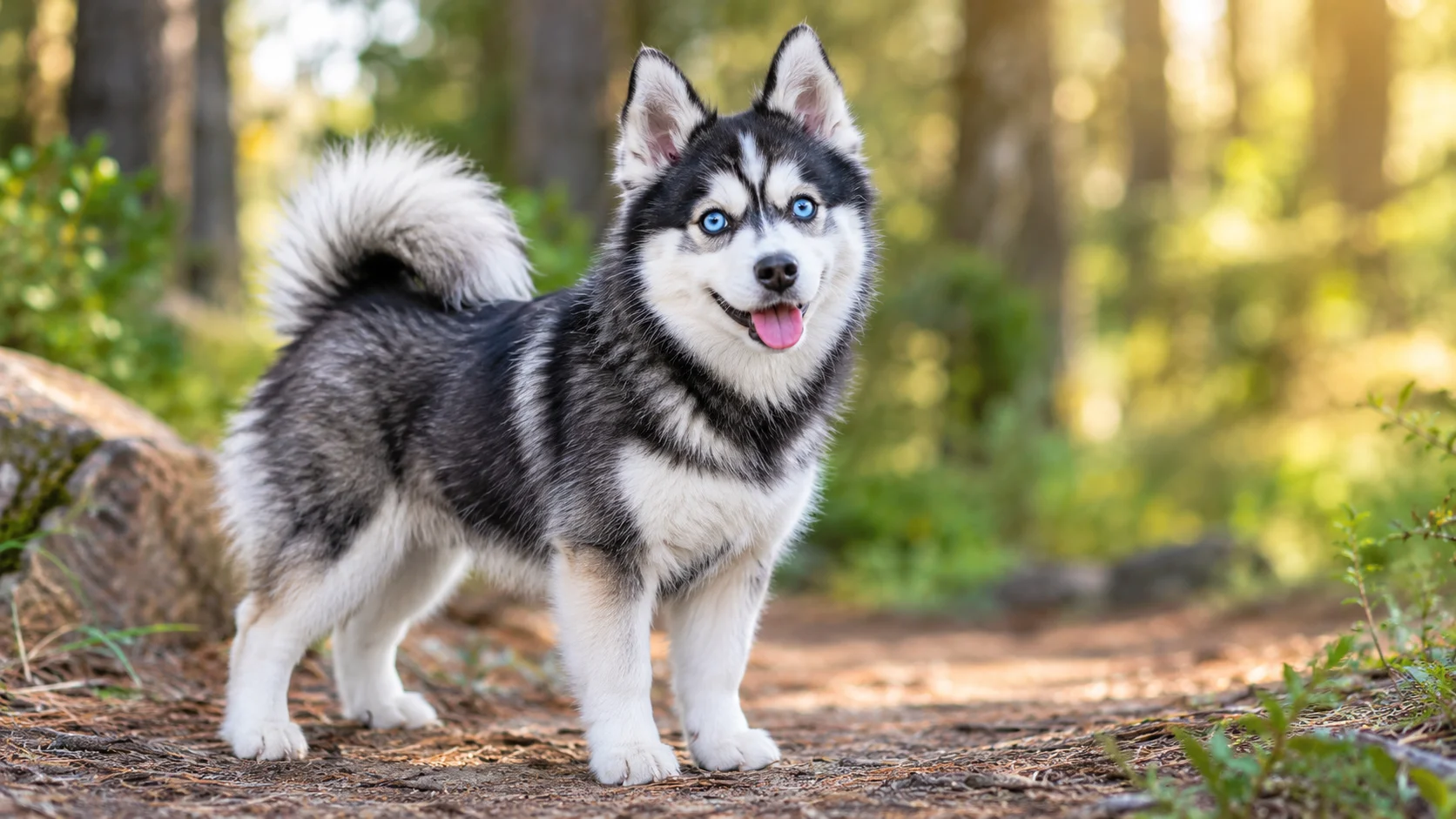
A Mini Husky is a smaller Husky type dog known for its thick coat, pointed ears, and playful personality. The term may refer to a smaller Siberian Husky, an Alaskan Klee Kai, or a Husky mix. Size, temperament, price, and care needs depend on the dog’s actual breed and genetics.
Quick Snapshot Table
| Feature | Key Details |
|---|---|
| Common Name | Mini Husky |
| Breed Status | Usually a smaller Siberian Husky variety |
| Adult Height | Around 12 to 17 inches for commonly marketed Miniature Huskies |
| Adult Weight | Often around 15 to 35 pounds |
| Lifespan | Approximately 12 to 14 years, depending on genetics and health |
| Temperament | Intelligent, playful, vocal, independent |
| Energy Level | High |
| Exercise Needs | Around 1 to 2 hours daily for many healthy adults |
| Coat | Thick double coat |
| Shedding | Heavy, especially during seasonal coat changes |
| Training Difficulty | Moderate to challenging |
| Best For | Active owners who enjoy training and outdoor activities |
| Main Concern | Misleading miniature claims and irresponsible breeding |
Note: “Mini Husky” is not a universally recognized separate breed. Size, lifespan, and temperament depend on the dog’s actual breed, lineage, and health.
What Is a Mini Husky?
A Mini Husky is a smaller dog marketed for its resemblance to the Siberian Husky, including erect ears, a thick coat, expressive eyes, and a curled or sickle shaped tail. The term most commonly refers to a selectively bred smaller Siberian Husky, but it can also be used for Husky mixes.
Unlike the standard Siberian Husky, a Mini Husky does not have one universally accepted breed standard. Buyers should confirm whether a puppy is a smaller purebred Siberian Husky, a mixed breed, or a dog being advertised as miniature without reliable pedigree evidence.
Why Mini Huskies Are So Popular
Mini Huskies appeal to people who love the appearance and personality of a Siberian Husky but prefer a smaller dog.
Their appeal often comes from:
- A compact, attractive appearance
- Blue, brown, or sometimes differently colored eyes
- A thick, plush double coat
- A playful and adventurous personality
- A size that may be easier to accommodate than a standard Husky
However, smaller size does not automatically mean easier care. Many Mini Huskies retain the intelligence, vocal behavior, prey drive, and exercise requirements associated with their Husky ancestry.
Mini Husky Size, Height and Weight
Mini Huskies are generally smaller than standard Siberian Huskies, but their adult measurements vary considerably.
| Type | Approximate Adult Height | Approximate Adult Weight |
|---|---|---|
| Commonly marketed Mini Husky | 12 to 17 inches | 15 to 35 lbs |
| Standard Siberian Husky | 20 to 23.5 inches | 35 to 60 lbs |
| Small Husky mix | Varies by parentage | Varies by parentage |
These are general estimates, not guaranteed measurements. A dog’s parents, sex, breeding history, and overall health all influence adult size.
How Big Does a Mini Husky Get?
Many dogs advertised as Mini Huskies remain under 18 inches tall, but there is no single official height or weight limit that applies to every dog sold under this name.
Ask the breeder for the adult measurements of both parents and records from previous litters. A puppy’s current weight alone cannot reliably predict its final size.
When Does a Mini Husky Stop Growing?
Most smaller Husky type dogs reach much of their adult height by around 8 to 12 months, although they may continue filling out and developing muscle afterward.
| Age | Typical Development |
|---|---|
| 8 to 12 Weeks | Rapid early growth and social learning |
| 3 to 6 Months | Leg growth, teething, and increasing coordination |
| 6 to 12 Months | Adolescent energy and independence become more noticeable |
| 12 to 18 Months | Many reach near adult size |
| 18 to 24 Months | Some continue developing adult muscle and body condition |
A puppy that remains unusually small or grows inconsistently should be evaluated by a veterinarian rather than assumed to be a healthy miniature.
Is a Mini Husky a Real Breed?
“Mini Husky” is a descriptive term, not the name of a universally recognized separate breed. One of the most important distinctions for buyers is the difference between an Alaskan Klee Kai, a small Siberian Husky, and a Husky mix.
The Alaskan Klee Kai is a recognized breed developed to resemble a smaller northern sled dog. It comes in toy, miniature, and standard size categories under its breed standard.
Mini Husky vs. Alaskan Klee Kai vs. Pomsky

Alaskan Klee Kai
A distinct small companion breed with Husky-like markings, erect ears, a double coat, and a curled tail. It typically weighs much less than a Siberian Husky and may be reserved around strangers.
Best for: owners seeking a small northern-type companion.

Siberian Husky
A medium-sized working breed originally developed for endurance and sled pulling. Some individuals are smaller than average, but that does not make them a separate miniature breed.
Best for: active owners who can meet working-breed exercise needs.

Pomsky
A cross between a Pomeranian and a Siberian Husky. Size, coat, temperament, and adult appearance can vary depending on the parents.
Best for: buyers comfortable with mixed-breed variation.
Mini Husky Temperament and Personality
Mini Huskies are generally intelligent, alert, playful, and independent. However, personality depends on whether the dog is an Alaskan Klee Kai, a smaller Siberian Husky, or a crossbreed.
Are Mini Huskies Friendly?
Many enjoy close relationships with their families, but friendliness toward strangers varies. Alaskan Klee Kai can be naturally reserved, while Siberian Huskies are often more outgoing. Early, positive socialization helps dogs handle unfamiliar people, animals, and environments.
Do Mini Huskies Howl and Bark?
They can be surprisingly vocal for their size. Depending on the individual, you may hear:
- Howling and whining
- Excited barking
- Attention-seeking vocalizations
- Vocal responses to other dogs
Boredom, frustration, excitement, and separation distress can all contribute to excessive noise. Teaching calm behavior and providing suitable enrichment is more effective than simply punishing vocalization.
Are Mini Huskies Aggressive?
Miniature size does not determine aggression. Fear, inadequate socialization, painful medical conditions, and individual temperament can all affect behavior.
A responsible breeder should help you assess the parents’ behavior, confidence, and response to unfamiliar situations rather than promising that every puppy will be friendly.
Exercise and Mental Stimulation
A Mini Husky may be smaller than a standard Siberian Husky, but it is not necessarily a low-energy dog. Alaskan Klee Kai are active, curious companions, while Siberian Huskies retain strong endurance and working instincts.
How Much Exercise Does a Mini Husky Need?
Many healthy adult dogs benefit from daily walks, play, and training, but the right amount depends on the dog’s breed, age, fitness, and health. Start with manageable sessions and increase activity gradually.
Useful activities include:
- Brisk walks and supervised outdoor exploration
- Scent games and food puzzles
- Reward-based obedience training
- Fetch or age-appropriate play
- Securely enclosed play areas
Avoid forced long-distance running and repetitive high-impact exercise for puppies whose joints are still developing.
Why Mental Exercise Matters
A Mini Husky that gets physical exercise but little mental engagement may still dig, chew, bark, or search for ways to escape.
Short training sessions, sniffing opportunities, and food puzzles can help meet its needs without relying on constant high-intensity exercise.
Training a Mini Husky
Mini Huskies can learn quickly, but intelligence does not guarantee obedience. Independence, curiosity, and prey drive can make reliable recall particularly challenging.
The Most Effective Training Approach
- Use small, high-value rewards to reinforce desirable behavior.
- Practise recall indoors and in secure outdoor areas before attempting greater distractions.
- Introduce new people, dogs, sounds, and environments gradually.
- Reward calm settling as well as active engagement.
- Use a secure leash and harness outdoors until recall is consistently reliable.
Can Mini Huskies Live in Apartments?
Yes, some can adapt to apartment living if their exercise, enrichment, and noise needs are met. However, frequent howling, alert barking, or distress when left alone can cause problems in shared buildings.
A small dog still needs an appropriate daily routine.
Mini Husky Coat Colors and Grooming
Mini Huskies often have a dense double coat, a facial mask, and contrasting markings. Common colors include black and white, gray and white, and red and white, although appearance depends on the dog’s breed and lineage.
Do Mini Huskies Shed a Lot?
Yes. Many shed throughout the year and experience heavier seasonal shedding when their undercoat changes. Alaskan Klee Kai also have a double coat and can shed heavily during coat-blowing seasons.
Grooming Routine
| Grooming Task | Recommended Approach |
|---|---|
| Brushing | Weekly, more frequently during heavy shedding |
| Bathing | As needed, using dog-safe shampoo |
| Nail trimming | Regularly, before nails become excessively long |
| Ear checks | Weekly visual checks |
| Dental care | Regular tooth brushing |
| Coat maintenance | Use suitable brushes to remove loose undercoat |
Never shave a double-coated dog simply to reduce shedding. The coat helps protect the skin and supports insulation; ask a veterinarian or qualified groomer about coat problems.
Mini Husky Health and Lifespan
A Mini Husky’s health outlook depends on its actual breed, inherited traits, body condition, and veterinary care. Do not assume that a dog will be healthier simply because it is smaller.
How Long Do Mini Huskies Live?
A reasonable estimate for many Alaskan Klee Kai is around 13 to 16 years, while the American Kennel Club lists a typical lifespan of 12 to 14 years for the standard Siberian Husky. Individual dogs can live shorter or longer lives.
Health Concerns to Discuss With a Breeder
For an Alaskan Klee Kai, ask about screening for:
- Patellar luxation, involving the kneecap
- Thyroid disorders
- Eye conditions
- Cardiac abnormalities
- Factor VII deficiency, an inherited blood-clotting disorder
These are recognized screening considerations for the breed.
For a Siberian Husky or a Husky mix, request health testing appropriate to the parents’ breeds and family history.
Signs That Need Veterinary Attention
Contact a veterinarian if your dog develops persistent limping, unusual fatigue, repeated vomiting, breathing difficulty, or a sudden change in behavior. Difficulty breathing, collapse, or severe bleeding requires urgent veterinary care.
Mini Husky Puppy Development Timeline
Mini Husky puppies need age-appropriate nutrition, gradual socialization, and careful monitoring of growth. Their development will vary depending on whether they are Alaskan Klee Kai, Siberian Huskies, or mixed breeds.
| Age | Typical Development | Owner’s Priority |
|---|---|---|
| Birth to 8 Weeks | Rapid early growth and learning from the mother and littermates | Responsible breeding and appropriate early care |
| 8 to 12 Weeks | Adjustment to a new home and rapid social learning | Gentle handling, routine, and positive experiences |
| 3 to 6 Months | Teething, coordination, and increasing independence | Reward-based training and safe play |
| 6 to 12 Months | Adolescence, greater energy, and boundary testing | Recall practice, consistency, and impulse control |
| 12 to 18 Months | Physical development approaches maturity for many dogs | Maintain exercise and monitor body condition |
| 18 to 24 Months | Some dogs continue filling out and maturing behaviorally | Adapt activity and training to the individual |
How to Support Healthy Puppy Growth
- Feed a complete, age-appropriate puppy diet.
- Keep vaccinations and parasite prevention on schedule with a veterinarian.
- Introduce new experiences gradually rather than overwhelming the puppy.
- Avoid excessive jumping and repetitive high-impact exercise while growing.
- Monitor weight and body condition instead of trying to keep the dog artificially tiny.
A puppy that is substantially smaller than expected, has difficulty gaining weight, or shows unusual weakness should be examined by a veterinarian. Deliberately restricting food to preserve a miniature size is unsafe.
Mini Husky Price in 2026
Mini Husky prices vary considerably by country, breeder, pedigree, health screening, and the type of dog being sold. The name alone is not enough to establish a fair price.
What Affects the Price?
| Factor | Why It Matters |
|---|---|
| Breed and lineage | Determines whether the dog is an Alaskan Klee Kai, Siberian Husky, or mix |
| Health screening | Helps identify inherited risks |
| Breeder reputation | Responsible breeders document parentage and puppy care |
| Location | Local demand and breeding costs vary |
| Age and availability | Puppy and rescue options differ |
Some published US estimates place Alaskan Klee Kai puppies around $1,500 to $3,000, but actual prices vary and should be verified locally.
What Should Buyers Avoid?
Be cautious of sellers who:
- Guarantee an unusually tiny adult size.
- Advertise “teacup” or “micro” Huskies without explaining their breeding.
- Refuse to identify the parents or provide health records.
- Claim that rare eye colors guarantee superior quality.
- Pressure buyers to pay a deposit before verifying the puppy and seller.
A high price is not proof of responsible breeding.
Common Mistakes Mini Husky Owners Make
Assuming Small Dogs Need Less Training
Small size does not remove the need for recall, leash manners, socialization, and calm behavior around distractions.
Letting a Husky Type Dog Roam Off Leash
A strong interest in chasing wildlife or exploring can make recall unreliable. Use a leash outside secure areas and check fencing for escape routes.
Choosing Appearance Over Health
Blue eyes, facial masks, and fluffy coats can be attractive, but they do not guarantee good temperament or sound genetics.
Underestimating Shedding and Vocalization
Before buying, consider whether your household can accommodate loose fur, daily activity, and potentially noisy behavior.
What Responsible Mini Husky Breeders Should Provide
A trustworthy breeder should be able to explain exactly what breed they produce, show relevant health records, and discuss the strengths and limitations of their dogs honestly.
Breeder Evaluation Checklist
Confirm the puppy’s breed and parentageReview health screening records for both parentsMeet the mother when practical and safeObserve the puppies’ behavior and living conditionsAsk about adult size, temperament, and inherited risksReceive veterinary records and written sale or adoption termsAvoid breeders who guarantee extreme miniature size
0 of 7 checks completed
Is a Mini Husky Right for Your Lifestyle?
| Owner Lifestyle | Suitability |
|---|---|
| Active individual or couple | Often a good match |
| Family willing to train consistently | Potentially excellent |
| Apartment resident prepared for exercise and noise management | Possible |
| Sedentary household | Often a poor match |
| Owner seeking a quiet, low-shedding dog | Usually not ideal |
| First-time owner willing to learn | Depends on breed and support available |
The key question is not simply whether you have enough room for a small dog. It is whether you can meet the dog’s physical, social, and mental needs every day.
Frequently Asked Questions
Is a Mini Husky a purebred dog?
Sometimes. The term may describe a smaller Siberian Husky, an Alaskan Klee Kai, or a mixed breed. Ask for documented parentage rather than relying on the seller’s label.
Is an Alaskan Klee Kai the same as a Mini Husky?
No. The Alaskan Klee Kai is a distinct breed developed as a smaller northern-type companion. “Mini Husky” is a broader informal term that sellers use for different dogs.
How much does a Mini Husky weigh?
Many dogs marketed as Mini Huskies weigh approximately 15 to 35 pounds, but the range varies. Alaskan Klee Kai are generally smaller, with size depending on their recognized size variety.
Are Mini Huskies good family dogs?
They can be, provided they receive appropriate training, supervision around children, exercise, and socialization. Individual temperament and the specific breed matter.
Do Mini Huskies have blue eyes?
Some do, but eye color varies. Blue eyes are not exclusive to miniature dogs and should not be used as the main criterion when selecting a puppy.
Are Mini Huskies easy to train?
They are often intelligent and quick to learn, but independence and prey drive can make reliable recall challenging. Consistent, reward-based training is important.
Can Mini Huskies live in hot climates?
They can live in warm climates with careful management, but their thick double coats and activity levels require attention. Provide shade, water, ventilation, and cooler times for outdoor exercise. Never leave a dog in a parked car, and watch for signs of overheating.
Are Mini Huskies hypoallergenic?
No. Their double coats shed, and no dog breed is completely hypoallergenic.
Conclusion
The Mini Husky offers the striking appearance of a northern dog in a smaller package, but the name can describe several different types of dogs. Understanding the difference between an Alaskan Klee Kai, a smaller Siberian Husky, and a Husky mix is the first step toward making a responsible choice.
Prioritize verified parentage, health screening, stable temperament, and realistic adult size expectations over miniature claims or appearance alone. A well-matched dog is a far better choice than the smallest puppy a seller promises.