Best food for healthy Frenchie growth and digestion
Quick Snapshot Table
| Feeding Factor | Best Approach |
|---|---|
| Food Type | Complete and balanced puppy food |
| Life Stage | Formulated specifically for growth |
| Protein | High quality, highly digestible protein |
| Meal Frequency | Usually 3 meals for young puppies |
| Older Puppy | Usually transition toward 2 meals |
| Portion Size | Based on age, weight, calories and body condition |
| Kibble Shape | Easy for a brachycephalic puppy to pick up |
| Water | Fresh water available at all times |
| Treats | Limited and included in daily calories |
| Main Concern | Overfeeding and excess weight |
| Digestive Focus | Digestibility and stool quality |
| Veterinary Input | Important for individual feeding plans |
Why French Bulldog Puppy Food Requires More Thought
Choosing food for a French Bulldog puppy is not simply about finding the bag with the highest protein percentage or the most impressive ingredient list.
French Bulldogs have a distinctive combination of characteristics that can influence feeding, including their compact muscular build, brachycephalic facial structure, tendency toward excess weight, and potential digestive sensitivity. Their short muzzle can also make picking up and chewing certain foods more difficult.
The goal is straightforward:
Feed enough to support growth without feeding so much that the puppy becomes overweight.
That balance matters because excess body weight can place additional stress on a French Bulldog’s joints and can worsen breathing difficulties associated with brachycephalic anatomy.
Here is where many owners get it wrong. A chunky Frenchie puppy may look adorable, but healthy growth is not the same thing as maximum weight gain.
What Is the Best Food for a French Bulldog Puppy?
The best French Bulldog puppy food is a complete and balanced diet formulated for puppy growth, with appropriate calories, highly digestible nutrients, and a texture or kibble shape the puppy can comfortably pick up and chew.
Look for a food that provides:
- Appropriate protein for growing muscle
- Balanced fat and calorie levels
- Essential vitamins and minerals
- Digestible ingredients
- Nutrients supporting normal bone development
- Appropriate nutrition for the puppy’s growth stage
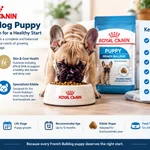
A breed specific formula can be convenient, particularly when its kibble shape is designed around the French Bulldog’s short muzzle. However, the words “French Bulldog” on the package are not automatically proof that a food is superior. The nutritional adequacy statement, formulation, calorie density, ingredients, and your puppy’s individual response matter more. The AKC also emphasizes researching what a particular dog actually needs rather than relying solely on rankings or marketing claims.
What Nutrients Does a French Bulldog Puppy Need?
Protein for Muscle Development
French Bulldog puppies need sufficient high quality protein because they are developing muscle, connective tissue and other body structures during rapid growth.
The objective is not simply to choose the food with the highest protein percentage.
Protein quality and digestibility matter too.
Fat for Energy
Growing puppies require concentrated energy because they are developing rapidly.
However, more calories are not automatically better.
A Frenchie that receives excessive calories can gain unnecessary body fat surprisingly quickly.
Vitamins and Minerals
Calcium, phosphorus and other minerals need to be supplied in appropriate proportions for normal skeletal development.
This is one reason homemade puppy diets should not be improvised.
The AKC notes that home cooked diets require careful consideration of vitamins, minerals, oils and other nutritional components and recommends veterinary nutritionist guidance when preparing them.
Omega 3 Fatty Acids
Omega 3 fatty acids, including EPA and DHA, can be useful components of a balanced canine diet.
They are particularly relevant to skin and coat nutrition, which matters in a breed that can experience skin problems.
Digestible Carbohydrates and Fiber
Carbohydrates are not automatically bad for dogs.
What matters is the overall formulation and how your puppy responds to it.
Appropriate fiber and digestible ingredients can support normal stool quality and digestive function.
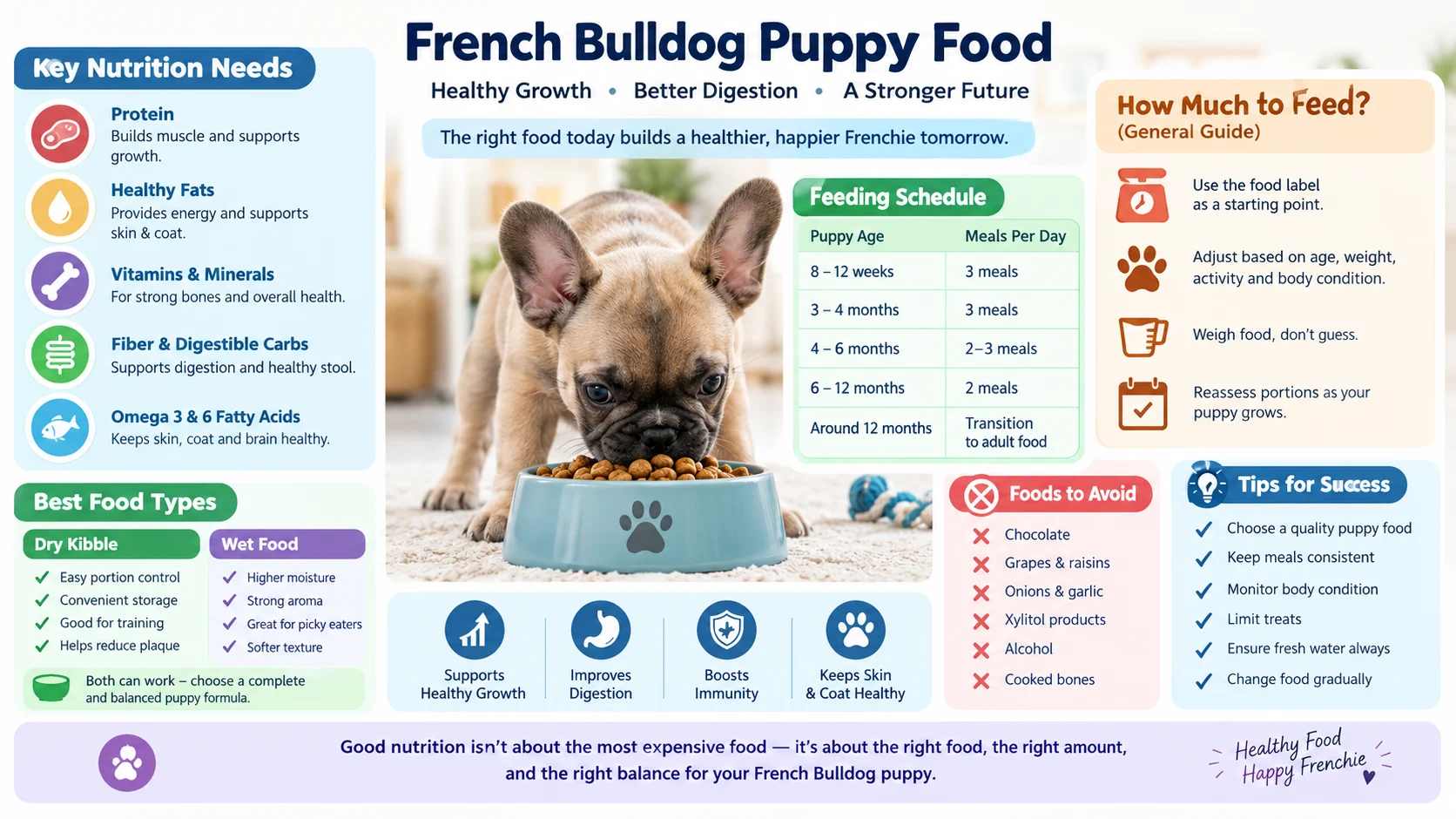
French Bulldog Puppy Feeding Schedule
Young French Bulldogs generally do better with their daily food divided into multiple meals rather than receiving the entire day’s ration at once.
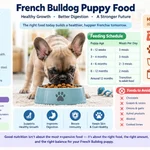
Royal Canin’s French Bulldog guidance recommends three meals daily for puppies up to around four months, followed by two meals for puppies between four and twelve months.
| Puppy Age | Typical Meal Pattern |
|---|---|
| 8 to 12 weeks | 3 meals |
| 3 to 4 months | 3 meals |
| 4 to 6 months | 2 to 3 meals |
| 6 to 12 months | 2 meals |
| Around 12 months | Transition toward adult nutrition |
This is a practical framework rather than a rigid prescription.
A puppy with unusual growth, digestive disease, poor body condition or another medical issue may require a different feeding plan from a veterinarian.
How Much Food Should a French Bulldog Puppy Eat?
There is no single gram amount that is correct for every French Bulldog puppy.
The appropriate quantity depends on:
- Age
- Current weight
- Expected adult size
- Activity
- Food calorie density
- Growth rate
- Body condition
- Health status
This is why copying another Frenchie’s feeding amount can be misleading.
For example, two puppies of the same age may eat different quantities if their foods have different calorie densities.
Use the Food Label as a Starting Point
Start with the manufacturer’s puppy feeding recommendation, then monitor your puppy’s body condition and growth.
Do not automatically increase food simply because your puppy finishes the bowl quickly.
French Bulldogs can be enthusiastic eaters.
The important question is not:
“Does my puppy want more?”
It is:
“Is my puppy growing at an appropriate rate and maintaining a healthy body condition?”
Puppy Development and Food Requirements
8 to 12 Weeks
This is a major transition period.
The puppy is adapting to a new home while continuing rapid physical and neurological development.
Feed consistent meals and avoid making several dietary changes at once.
If you are changing the breeder’s food, gradual transition is preferable. AKC guidance notes that keeping a puppy on the same diet for the first few days can help avoid digestive upset, with changes introduced gradually afterward.
3 to 4 Months
Growth remains intense.
The puppy may become more active and hungry, but this does not automatically mean the food portion should increase dramatically.
Monitor:
- weight
- stool quality
- energy
- body condition
- coat quality
4 to 6 Months
Many puppies can move toward fewer meals during this period.
The body is becoming more muscular and coordinated, while the puppy’s calorie needs continue changing.
This is a good time to reassess portions rather than continuing the original feeding amount indefinitely.
6 to 12 Months
Growth begins slowing compared with early puppyhood.
Some Frenchies become less active while still enjoying food enthusiastically.
This is one of the stages where overfeeding can become especially obvious.
Choosing Kibble for a French Bulldog Puppy
The shape and texture of food deserve more attention with French Bulldogs than many owners realize.
Their brachycephalic facial structure can make grasping and chewing conventional kibble less comfortable.
Some foods designed for French Bulldogs therefore use specialized kibble shapes intended to make picking up the food easier and encourage chewing.
What to Look For
Choose kibble that your puppy can:
- Pick up without frustration
- Chew comfortably
- Digest consistently
- Eat without excessive gulping
If your puppy repeatedly struggles to pick up food, drops large amounts from the mouth, or appears uncomfortable while eating, discuss the issue with your veterinarian.
Wet Food vs Dry Food for French Bulldog Puppies
Both wet and dry complete diets can be useful.
Dry Food
Advantages include:
- Easy portion control
- Convenient storage
- Simple daily feeding
- Easy use with training
Wet Food
Advantages include:
- Higher moisture content
- Stronger aroma
- Often appealing to picky eaters
- Soft texture
Mixed Feeding
Some owners combine wet and dry food.
That can work, but calories from both foods must be considered together.
Adding wet food on top of the normal kibble ration without adjusting the total calories can unintentionally cause weight gain.
French Bulldog Puppy Food and Digestive Problems
Digestive sensitivity is one of the biggest reasons owners begin searching for “best food for French Bulldog puppies.”
Common signs of digestive trouble include:
- Loose stool
- Excessive gas
- Vomiting
- Poor appetite
- Frequent stool changes
- Sudden food intolerance
French Bulldogs can be prone to digestive sensitivity, and their brachycephalic anatomy may also contribute to regurgitation in some dogs.
Don’t Blame Every Problem on Food
This is an important distinction.
Persistent vomiting, repeated regurgitation, chronic diarrhea or poor growth should not simply be treated by buying another bag of dog food.
Those symptoms deserve veterinary assessment.
French Bulldog Puppy Food and Gas
Frenchies have a reputation for being gassy.
Diet can influence stool quality and intestinal fermentation, but food is not the only factor.
Consider:
- eating speed
- portion size
- sudden food changes
- food composition
- individual intolerance
A slow, consistent feeding routine may help some puppies.
If gas is accompanied by vomiting, diarrhea, weight loss or obvious discomfort, veterinary evaluation is appropriate.
How to Prevent Overfeeding
French Bulldog puppies can gain excess weight easily, so portion control deserves serious attention.
Royal Canin specifically notes that French Bulldogs are prone to overweight and recommends adjusting food based on age, weight, activity and other individual factors.
Practical Portion Control
Use these habits:
- Weigh food instead of guessing
- Follow the package feeding guide as a starting point
- Reassess portions as the puppy grows
- Limit unnecessary treats
- Include training treats in daily calorie intake
- Monitor body condition regularly
A measuring cup is better than handfuls, but a kitchen scale is even more consistent.
How to Tell if Your French Bulldog Puppy Is Too Fat
Do not judge weight only by appearance.
A healthy puppy should have an appropriate body condition for its age and build.
You should generally be able to feel the ribs without excessive fat covering them.
Watch for:
- ribs becoming difficult to feel
- rapidly expanding waistline
- reduced activity
- heavy breathing during mild activity
- difficulty moving comfortably
Because excess weight can worsen respiratory and mobility problems, keeping a French Bulldog lean is particularly important.
Treats and Training Food
French Bulldog puppies are usually highly food motivated.
That makes treats useful for training.
But it also creates an easy pathway to accidental overfeeding.
Better Training Treats
Use:
- tiny commercial puppy treats
- small pieces of the puppy’s regular kibble
- veterinarian approved low calorie treats
The treat does not need to be large to be rewarding.
For frequent training, using part of the puppy’s normal daily food allowance can make calorie control easier.
Foods French Bulldog Puppies Should Avoid
Some foods are dangerous for dogs regardless of breed.
Never intentionally feed foods such as:
- Chocolate
- Grapes and raisins
- Onions
- Garlic
- Xylitol containing products
- Alcohol
- Cooked bones
If your puppy accidentally consumes a potentially toxic substance, contact a veterinarian or animal poison service promptly rather than waiting for symptoms.
Homemade Food for French Bulldog Puppies
Home cooking sounds attractive because owners can see exactly what goes into the bowl.
But puppy nutrition is difficult to balance correctly.
A growing puppy needs appropriate amounts and ratios of numerous nutrients.
The AKC notes that home cooked canine diets require careful attention to minerals, vitamins, oils and other nutritional components and recommends working with a veterinary nutritionist.
When Homemade Diets Become Risky
Problems can arise when owners create meals from:
- chicken
- rice
- vegetables
- eggs
without calculating the complete nutritional profile.
Those ingredients can be useful foods, but a simple homemade combination is not automatically a complete puppy diet.
Raw Food for French Bulldog Puppies
Raw feeding remains controversial.
The important question is not whether raw food looks natural.
It is whether the diet is:
- nutritionally complete
- properly balanced
- hygienically handled
- appropriate for the puppy’s developmental stage
Puppies have particularly important nutritional requirements during growth, so experimenting with an unbalanced raw diet is not something to approach casually.
If you are considering raw feeding, discuss the specific diet with a veterinarian or veterinary nutritionist.
French Bulldog Puppy Food and Skin Health
Food is only one part of skin health.
French Bulldogs can develop skin problems for several reasons, including allergies, environmental factors and their skin folds.
A nutritionally complete diet supports normal skin and coat function, but changing foods repeatedly is not a reliable treatment for every skin condition.
If your puppy has:
- persistent itching
- red skin
- recurrent ear problems
- hair loss
- chronic paw licking
get the underlying cause investigated.
Best Feeding Routine for a French Bulldog Puppy
Morning
Provide the first measured meal at a consistent time.
Allow the puppy to eat calmly rather than encouraging frantic competition.
Midday
For younger puppies, provide the second meal.
Keep fresh water available.
Evening
Provide the final scheduled meal and allow time for digestion before intense activity.
Throughout the Day
Use small portions of the daily food allowance for training when practical.
This keeps rewards connected to the puppy’s nutritional plan rather than adding unlimited extra calories.
Common French Bulldog Puppy Feeding Mistakes
Feeding Based on Hunger Alone
A puppy asking for more food does not necessarily need more calories.
Changing Food Too Quickly
Sudden dietary changes can contribute to digestive upset. A gradual transition is generally easier on the digestive system.
Choosing Food Only by Ingredient List
A long ingredient list does not automatically mean better nutrition.
Look at the complete nutritional formulation.
Ignoring Kibble Shape
A food that is nutritionally appropriate but physically difficult for your puppy to pick up may be a poor practical choice.
Overusing Treats
Training treats can quietly add hundreds of calories over time.
Keeping Puppy Portions Unchanged
A feeding chart is not permanent.
Your puppy’s requirements change as growth progresses.
What Most Articles Miss About French Bulldog Puppy Food
Food Is Part of Respiratory Management
Weight control matters particularly in brachycephalic dogs.
A French Bulldog that becomes overweight may have more difficulty handling heat and physical activity because excess weight adds to an already challenging respiratory structure.
The Bowl Itself Can Matter
A very deep or awkward bowl may make eating harder for some short muzzled puppies.
The practical goal is simple:
Your puppy should be able to access food comfortably without excessive struggle.
Stool Quality Is Useful Feedback
Your puppy’s stool can provide valuable information about how well the current diet agrees with them.
Consistently poor stool deserves attention rather than being dismissed as “normal for a Frenchie.”
When Should You Change French Bulldog Puppy Food?
Consider changing food only for a clear reason.
Possible reasons include:
- Poor stool quality
- Poor tolerance
- Veterinary recommendation
- Life stage transition
- Dietary requirement
- Failure to maintain appropriate body condition
Do not change food every few days because your puppy seems bored.
Dogs do not require constant dietary variety in the same way humans often do.
How to Change Food Safely
Days 1 to 3
Use mostly the old food with a smaller portion of the new food.
Days 4 to 6
Gradually increase the new food.
Days 7 and Beyond
Move toward the new diet if the puppy is tolerating it well.
The exact transition can be adjusted depending on the puppy’s digestive sensitivity.
If severe vomiting or diarrhea develops, contact your veterinarian.
Buyer and Food Label Checklist
Before purchasing French Bulldog puppy food, check:
Nutritional Checklist
- Is it formulated for puppy growth?
- Does it provide a complete and balanced diet?
- Is the calorie density appropriate?
- Does your puppy digest it well?
- Can the puppy comfortably eat the food?
- Does the company provide clear feeding guidance?
Practical Checklist
- Can you measure portions accurately?
- Can you purchase the food consistently?
- Does your puppy maintain healthy stool?
- Is the puppy maintaining an appropriate body condition?
French Bulldog Puppy Food Preparation Checklist
Before bringing your puppy home, prepare:
- Complete puppy food
- Measuring scale or accurate measuring cup
- Comfortable food bowl
- Fresh water bowl
- Small training treats
- Storage container
- Feeding schedule
- Veterinary contact information
Keep the puppy’s initial diet as consistent as possible during the first few days.
Once the puppy settles in, dietary changes can be introduced gradually when necessary.
Lifestyle Compatibility
| Owner Situation | Feeding Consideration |
|---|---|
| First time puppy owner | Follow a structured feeding plan |
| Active household | Monitor calories despite activity |
| Sedentary Frenchie | Portion control is especially important |
| Sensitive stomach | Avoid frequent food changes |
| Multi dog household | Feed separately if necessary |
| Overweight puppy | Veterinary guided calorie adjustment |
| Very picky puppy | Investigate underlying causes before constant food switching |
Frequently Asked Questions
What is the best food for a French Bulldog puppy?
The best choice is a complete and balanced puppy diet that provides appropriate nutrition for growth and is well tolerated by the individual puppy. Kibble size and shape can also matter because of the breed’s brachycephalic facial structure.
How many times a day should a French Bulldog puppy eat?
Young French Bulldogs commonly eat three meals per day. Many can transition toward two meals as they get older. Royal Canin recommends three meals until around four months and two meals from four to twelve months.
How much should I feed my French Bulldog puppy?
The amount depends on age, weight, expected adult size, activity and the calorie density of the food. Use the manufacturer’s feeding guide as a starting point and adjust with veterinary guidance and body condition monitoring.
Can French Bulldog puppies eat adult dog food?
Puppies should generally receive food formulated to meet their nutritional requirements for growth rather than simply eating an adult maintenance diet.
Is grain free food better for French Bulldog puppies?
Not automatically. Grain free does not mean nutritionally superior. Choose a complete diet based on the puppy’s nutritional needs and individual tolerance rather than marketing terminology.
Can I feed my French Bulldog puppy homemade food?
Yes, homemade diets can be formulated, but a growing puppy’s diet needs to be nutritionally complete and balanced. Veterinary nutritionist guidance is strongly recommended rather than relying on an informal recipe.
Why does my French Bulldog puppy have so much gas?
Diet can contribute to gas, but eating speed, portion size, digestive sensitivity and other factors can also play a role. Persistent gas combined with vomiting, diarrhea, poor appetite or weight loss warrants veterinary evaluation.
Should French Bulldog puppies have wet or dry food?
Either can work if the food is complete and balanced for growth and suits the puppy. Dry food is convenient for measuring, while wet food may be useful for puppies that prefer softer textures.
Conclusion
The best French Bulldog puppy food is not necessarily the most expensive bag, the highest protein formula, or the food with the longest ingredient list.
It is the diet that provides complete nutrition for growth, appropriate calories, good digestibility and practical feeding for a brachycephalic puppy.
The biggest priorities are simple:
- Feed a complete puppy diet
- Measure portions carefully
- Use multiple meals for young puppies
- Monitor body condition
- Choose a food the puppy can comfortably eat
- Introduce dietary changes gradually
- Take persistent digestive problems seriously
- Keep treats within the overall calorie plan
Most importantly, remember that French Bulldog puppy nutrition is about controlled growth, not maximum growth. A lean, well nourished Frenchie has a much better foundation for comfortable movement, healthy development and long term wellbeing.