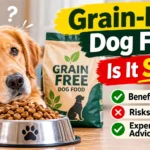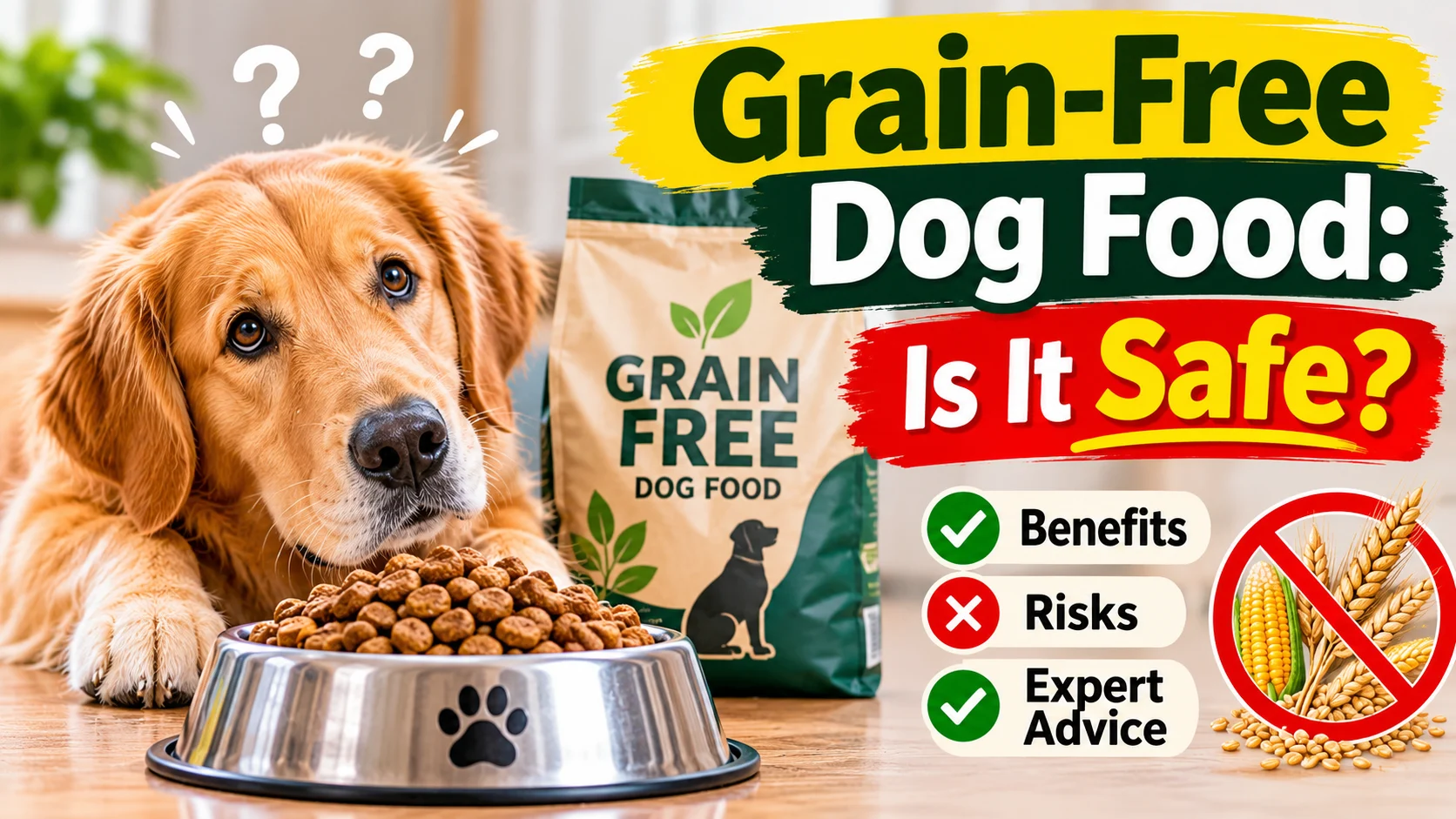
Grain-free dog food is generally safe for most dogs, but it is not necessarily healthier than grain-inclusive food. While it can benefit dogs with diagnosed grain allergies or specific dietary sensitivities, some grain-free diets have been linked to canine dilated cardiomyopathy (DCM), a potentially serious heart condition. Choose a nutritionally complete diet and consult your veterinarian before switching your dog’s food.
Grain-free dog food has become popular among pet owners who want to provide their dogs with a diet that seems more natural, easier to digest, or less likely to cause allergies. These foods are made without common grains such as wheat, corn, rice, barley, and oats. Instead, manufacturers often use alternative carbohydrate sources such as potatoes, peas, lentils, chickpeas, or tapioca.
But is grain-free dog food actually safe?
The answer is not a simple yes or no. A properly formulated grain-free diet can meet a dog’s nutritional needs, but there is no general evidence that dogs are healthier simply because their food contains no grains. More importantly, certain grain-free diets have been associated with reports of dilated cardiomyopathy (DCM), a potentially serious heart condition.
The concern is not necessarily the absence of grains. Researchers are investigating whether the overall formulation, including the amount and type of legumes and other ingredients, may contribute to nutritional or metabolic problems in some dogs.
This guide explains the potential benefits and risks of grain-free dog food, what current research says about heart health, which dogs may need grain-free diets, and how to choose a nutritionally appropriate formula.
What Is Grain-Free Dog Food?
Grain-free dog food is formulated without traditional cereal grains. These ingredients are commonly replaced with alternative carbohydrate sources.
Common grains excluded from grain-free formulas include:
- Wheat
- Corn
- Rice
- Barley
- Oats
- Rye
- Sorghum
Alternative ingredients may include:
- Peas
- Lentils
- Chickpeas
- Potatoes
- Sweet potatoes
- Tapioca
- Other legumes and starches
Grain-free food is available in dry kibble, canned food, freeze-dried products, and some fresh or raw-style formulations.
It is important to understand that grain-free does not mean carbohydrate-free. Many grain-free foods still contain substantial amounts of carbohydrates from potatoes, peas, lentils, and other plant ingredients.
Is Grain-Free Dog Food Safe?
Grain-free dog food can provide complete nutrition when it is carefully formulated, but it is not automatically healthier or safer than grain-inclusive food.
The main concern is a possible association between certain diets and dilated cardiomyopathy, a disease that affects the heart muscle and can reduce its ability to pump blood effectively.
The US Food and Drug Administration (FDA) began investigating reports of DCM in dogs eating certain diets in 2018. Many reported diets were grain-free and contained substantial amounts of peas, lentils, other pulses, or potatoes among their main ingredients.
However, the FDA has not established that grain-free food itself causes DCM. Reports have also involved some grain-containing diets, and researchers continue to investigate the possible roles of diet formulation, genetics, underlying health conditions, and other factors.
A 2026 study using data from the Dog Aging Project found that grain-free diets were not predictive of new owner-reported cardiac diagnoses over a two-year period. This is useful evidence, but it does not settle every question about diet-associated heart disease or establish that all grain-free formulas are equally safe.
The most sensible approach is to select food based on nutritional quality and your dog’s individual needs rather than choosing grain-free because of marketing claims.
What Is Dilated Cardiomyopathy (DCM)?
Dilated cardiomyopathy is a disease in which the heart’s muscular walls become weakened and the heart chambers may enlarge. This can reduce the heart’s ability to pump blood efficiently.
DCM may develop because of inherited factors, nutritional problems, or other medical conditions.
Some dogs with diet-associated DCM have been found to have low taurine levels, while others have had normal taurine concentrations. This suggests that the condition may involve more than a simple taurine deficiency.
Possible Signs of DCM in Dogs
Early DCM may not produce obvious symptoms. As the disease progresses, signs can include:
- Reduced energy.
- Exercise intolerance.
- Weakness.
- Coughing.
- Rapid or difficult breathing.
- Fainting or collapse.
- Abdominal swelling caused by fluid accumulation.
- Reduced appetite.
These signs can indicate serious heart or respiratory problems. Seek veterinary attention promptly if your dog develops breathing difficulty, fainting, or sudden weakness.
Which Grain-Free Diets Have Raised Concerns?
Reports have frequently involved diets containing high proportions of ingredients such as:
- Peas.
- Lentils.
- Chickpeas.
- Other pulse ingredients.
- Potatoes or potato ingredients.
These ingredients are not inherently poisonous or dangerous to dogs. They can provide nutrients and are used in many commercial foods.
The concern is whether the quantity, combination, processing, or nutritional balance of certain formulations may affect nutrient availability or heart health in susceptible dogs.
A grain-inclusive label does not automatically make a food safe from every possible dietary concern, either. Some grain-containing diets also contain legumes.
Why Are Peas and Lentils Used in Grain-Free Dog Food?
Peas and lentils are popular ingredients because they provide several nutritional and manufacturing benefits.
They can contribute:
- Plant-based protein.
- Dietary fiber.
- Carbohydrates.
- Certain vitamins and minerals.
- Texture and structure in dry kibble.
They are also useful substitutes for grains in recipes marketed to owners looking for grain-free food.
However, the ingredient list does not tell the entire nutritional story. A food containing peas or lentils is not automatically unhealthy, just as a food without these ingredients is not automatically superior.
The overall recipe, nutrient balance, ingredient proportions, digestibility, and quality-control procedures matter.
Potential Benefits of Grain-Free Dog Food
Grain-free diets are not necessary for most dogs, but certain individual dogs may benefit from avoiding a specific grain or ingredient.
1. Useful for Dogs With a Confirmed Grain Allergy
Some dogs develop adverse reactions to particular dietary ingredients. In uncommon cases, a dog may have a confirmed allergy to a grain protein.
If a veterinarian identifies a specific grain as the trigger, a carefully selected diet that excludes that ingredient may help manage symptoms.
However, food allergies in dogs are more commonly associated with animal proteins than grains.
2. May Suit Dogs With Specific Ingredient Intolerances
Some dogs experience digestive symptoms after eating particular ingredients. If a veterinarian identifies an ingredient that causes intolerance, avoiding it may improve digestive comfort.
This does not mean all dogs with sensitive stomachs need grain-free food.
3. Provides Alternative Ingredient Options
Grain-free products offer different carbohydrate and fiber sources. These alternatives may be useful when a dog needs to avoid a particular ingredient for a medical reason.
The important point is to choose an appropriately formulated food rather than assuming alternative ingredients are always better.
4. May Offer Different Texture and Flavor Choices
Grain-free products are available in different kibble sizes, textures, and flavors. Some dogs may prefer a particular formula.
Palatability is an individual preference, not proof of superior nutritional quality.
Potential Risks of Grain-Free Dog Food
Although grain-free diets can meet nutritional requirements, several concerns deserve attention.
1. Possible Association With DCM
The most significant concern is the ongoing investigation into diet-associated DCM.
Certain diets containing substantial amounts of peas, lentils, and other pulses have appeared frequently in reports involving dogs diagnosed with non-hereditary DCM.
The exact cause remains uncertain. Researchers are investigating ingredient interactions, nutrient availability, metabolism, and individual susceptibility.
2. Nutritional Imbalance
Not every commercial dog food is formulated to the same standard.
A diet may be marketed as natural, premium, or grain-free without providing the level of nutritional research and quality control owners should expect.
An unbalanced diet can cause health problems over time, regardless of whether it contains grains.
3. Higher Protein Does Not Automatically Mean Better Nutrition
Some grain-free foods advertise high protein levels. However, part of that protein may come from peas, lentils, or other plant ingredients.
Dogs need a balanced supply of essential amino acids, not simply a high crude-protein percentage.
The source, digestibility, and overall amino acid profile matter.
4. Unnecessary Ingredient Restrictions
Removing grains without a medical reason can unnecessarily limit food choices.
Dogs generally digest properly cooked grains well, and grains can provide useful carbohydrates, fiber, vitamins, and minerals.
5. Potential Weight Gain
Some grain-free formulas contain relatively high levels of fat and calories.
If portions are too large, a dog may gain excess weight. Obesity can increase the risk of several health problems, including joint disease and metabolic conditions.
Always compare calorie content rather than assuming grain-free food is lower in calories.
Grain-Free vs. Grain-Inclusive Dog Food
Both grain-free and grain-inclusive diets can provide complete nutrition. The best choice depends on the quality of the individual formula and your dog’s needs.
| Feature | Grain-Free Food | Grain-Inclusive Food |
| Grain content | Excludes cereal grains | Includes one or more grains |
| Common carbohydrates | Peas, lentils, potatoes, tapioca | Rice, oats, corn, barley, wheat |
| Protein sources | Animal and plant proteins | Animal and plant proteins |
| Allergy management | Useful for selected ingredient restrictions | Suitable for most dogs |
| DCM concerns | Some formulations have appeared in diet-associated reports | Some grain-containing diets have also been reported |
| General nutritional value | Depends on the complete formulation | Depends on the complete formulation |
There is no universal nutritional advantage to excluding grains.
For a healthy dog without a diagnosed grain-related problem, a well-formulated grain-inclusive diet is often a practical choice.
Grain-Free Dog Food vs. Gluten-Free Dog Food
Grain-free and gluten-free are not interchangeable terms.
Grain-free food excludes all cereal grains included in its formulation. Gluten-free food excludes gluten-containing ingredients but may still contain other grains.
For example:
- Rice is a grain but is naturally gluten-free.
- Corn is a grain but does not contain gluten.
- Wheat contains gluten.
- Barley contains gluten.
- Rye contains gluten.
A gluten-free food may therefore contain rice or corn, while a grain-free food excludes both.
Dogs do not generally need gluten-free food unless there is a specific medical reason to avoid gluten-containing ingredients.
Does Grain-Free Dog Food Help With Allergies?
Grain-free food is often advertised as a solution for dogs with allergies, but this claim can be misleading.
Dogs can develop food allergies to different proteins, including beef, chicken, dairy, eggs, and other ingredients. Grain proteins can also trigger reactions, but they are not the most common reported allergens.
Removing grains will not help if the actual trigger is chicken, beef, or another ingredient that remains in the food.
Signs of a Possible Food Allergy
Symptoms may include:
- Persistent itching.
- Paw licking.
- Red or irritated skin.
- Recurrent ear infections.
- Skin infections.
- Vomiting.
- Diarrhea.
- Repeated digestive discomfort.
These signs can also be caused by environmental allergies, parasites, infections, or other conditions.
How to Identify a Food Allergy
A veterinarian may recommend an elimination diet using a hydrolyzed protein or carefully selected novel-protein formula.
The diet is fed exclusively for the recommended period, commonly around eight weeks for skin-related symptoms. Treats, table scraps, chews, and unapproved supplements must be avoided.
If symptoms improve, a controlled dietary challenge may help confirm the food trigger.
Simply switching to grain-free food is not a reliable way to diagnose a food allergy.
Is Grain-Free Food Safe for Puppies?
Puppies need carefully balanced nutrition to support growth, bone development, muscle development, and normal organ function.
A grain-free puppy food can be appropriate if it is complete and balanced for growth and formulated to meet the puppy’s nutritional requirements.
However, grain-free labeling does not guarantee that a food is suitable for puppies.
When choosing puppy food, check:
- Whether it is formulated for growth.
- Whether it meets recognized nutritional standards.
- Its calorie content.
- Its calcium and phosphorus levels.
- The manufacturer’s nutritional expertise and quality-control procedures.
Large-breed puppies need particular attention to mineral balance and controlled growth. Choose a food specifically suitable for large-breed growth when appropriate.
Do not select grain-free food simply because a puppy has occasional digestive upset. A veterinarian can help determine whether a dietary change is necessary.
Is Grain-Free Food Safe for Senior Dogs?
Senior dogs may have different nutritional needs because of changes in activity, muscle condition, body weight, and organ function.
A grain-free formula is not automatically more suitable for older dogs.
Consider:
- Calorie requirements.
- Protein quality.
- Muscle maintenance.
- Digestive tolerance.
- Kidney and heart health.
- Joint health.
- Dental condition.
If an older dog has heart disease or a suspected nutritional problem, discuss its diet with a veterinarian before making changes.
How to Choose a Safe Grain-Free Dog Food
If your veterinarian recommends a grain-free formula for a specific reason, use the following checklist.
1. Check the Nutritional Adequacy Statement
Look for a statement confirming that the food is complete and balanced for the appropriate life stage.
A product labeled as a treat, topper, or supplemental food should not replace a complete daily diet unless a veterinary professional has designed the feeding plan.
2. Evaluate the Manufacturer
Look for a company that can explain:
- Who formulates its diets.
- Whether qualified veterinary nutritionists or animal nutrition specialists are involved.
- How ingredients and finished products are tested.
- Whether it conducts feeding trials or other appropriate nutritional research.
- How it monitors product quality and consistency.
A professional nutrition and quality-control program is more meaningful than attractive packaging.
3. Review the Ingredient List
Pay attention to the main protein sources and the placement of peas, lentils, chickpeas, potatoes, and their derivatives.
Their presence does not automatically make a food unsafe. However, the overall formulation deserves careful consideration, especially when these ingredients appear prominently.
4. Compare Calories
Check the calories per cup or per kilogram.
Feeding too much can cause weight gain even when the food is nutritionally complete.
5. Match the Food to Your Dog’s Life Stage
A puppy, adult dog, and senior dog may have different nutritional requirements.
Choose a formula appropriate for your dog’s age, size, activity level, and health.
6. Discuss Heart Health
If your dog belongs to a breed with a known predisposition to DCM, has a family history of heart disease, or has other risk factors, discuss its diet with your veterinarian.
Do not add taurine supplements or change food solely based on marketing claims. Supplementation should be guided by an appropriate veterinary assessment.
Popular Grain-Free Dog Food Brands
Several established brands sell grain-free products. However, a brand name alone does not establish that every formula is appropriate for every dog.
Examples include:
| Brand | Grain-Free Product Lines or Options | What to Check |
| Taste of the Wild | Selected grain-free formulas | Main protein sources and pulse ingredients |
| Orijen | Selected grain-free recipes | High-protein formulation and ingredient proportions |
| Acana | Selected grain-free recipes | Protein sources and complete nutritional profile |
| Blue Buffalo | Selected grain-free formulas | Exact recipe and nutritional adequacy |
| Wellness | Selected grain-free formulas | Calorie content and ingredient profile |
| Merrick | Selected grain-free formulas | Protein sources and suitability for life stage |
Product formulations can change, and availability varies by country. Check the current package rather than relying on an older ingredient list or online description.
These products are examples of the grain-free category, not a ranking of the safest foods or a recommendation that dogs should avoid grains.
How Much Grain-Free Food Should You Feed Your Dog?
The correct amount depends on the food’s calorie density and your dog’s individual energy needs.
Factors include:
- Body weight.
- Age.
- Activity level.
- Breed and body composition.
- Neutering status.
- Health conditions.
- Weight-management goals.
Use the manufacturer’s feeding guide as a starting point and adjust portions according to body condition and veterinary advice.
A calorie-dense grain-free formula may require a smaller serving than another food. Measuring portions accurately is more reliable than estimating by eye.
How to Transition Your Dog to a New Food
Sudden food changes can cause digestive upset in some dogs.
If your veterinarian approves a change, a gradual transition over approximately seven days may help.
| Days | New Food | Previous Food |
| 1–2 | 25% | 75% |
| 3–4 | 50% | 50% |
| 5–6 | 75% | 25% |
| 7 onward | 100% | 0% |
Monitor your dog’s appetite, stool quality, energy, and skin condition during the transition.
If vomiting, diarrhea, or other concerning symptoms develop, contact your veterinarian. A different transition schedule may be appropriate for dogs with existing digestive conditions.
Should You Switch Your Dog From Grain-Free to Grain-Inclusive Food?
Not every dog eating grain-free food needs an immediate diet change. The decision should consider the specific formula, your dog’s health, and its nutritional history.
If your dog is healthy and eating a grain-free diet, discuss the formulation with your veterinarian rather than making a sudden change based on alarming headlines.
A switch to a well-formulated grain-inclusive diet may be a sensible option when there is no medical reason to avoid grains, particularly if the current food relies heavily on legumes or other ingredients that concern your veterinarian.
Dogs with diagnosed DCM or suspected diet-associated heart disease need an individualized veterinary plan. Do not delay evaluation or treatment while experimenting with food.
Common Mistakes Dog Owners Make
Assuming Grain-Free Means Healthier
Grain-free is a marketing and formulation description, not a guarantee of superior nutrition.
Believing All Grains Cause Allergies
Most dogs tolerate properly prepared grains. Food allergies can involve many ingredients, and animal proteins are common triggers.
Ignoring the Main Ingredients
Focusing only on the words grain-free can distract from the rest of the formulation, including the amount and type of legumes and protein sources.
Choosing Food Based on Protein Percentage Alone
A higher crude-protein number does not automatically mean better-quality nutrition. Protein digestibility and amino acid balance matter.
Adding Supplements Without Veterinary Advice
Adding taurine, vitamins, minerals, or other supplements without assessing the complete diet may create unnecessary or harmful nutrient imbalances.
Changing Food Without Monitoring Health
A diet change should be followed by observation of body weight, appetite, digestion, skin, energy, and any existing medical symptoms.
Frequently Asked Questions
Is grain-free dog food safe for everyday feeding?
A properly formulated grain-free food can provide complete nutrition, but it is not automatically the best choice for everyday feeding. Discuss the specific formula with your veterinarian, particularly if it contains substantial amounts of peas, lentils, or other pulses.
Do veterinarians recommend grain-free dog food?
Veterinarians generally do not recommend grain-free food simply because it is marketed as natural or healthier. It may be considered when there is a specific medical or dietary reason to avoid particular ingredients.
Can grain-free dog food cause heart problems?
Certain grain-free diets have been associated with reports of diet-associated DCM. A direct cause-and-effect relationship has not been established, and researchers are still investigating the role of ingredients, formulation, and individual risk factors.
Are peas and lentils bad for dogs?
No. Peas and lentils are not inherently toxic or harmful to dogs. They provide nutrients, but the quantity and role they play in a complete diet deserve consideration.
Is grain-free dog food better for digestion?
Not necessarily. Some dogs tolerate particular grain-free formulas well, while others do better on grain-inclusive foods. Digestive health depends on the entire recipe, ingredient quality, digestibility, and the dog’s individual needs.
Does grain-free food prevent allergies?
No. Grain-free food does not prevent food allergies. A dog can still react to chicken, beef, fish, dairy, or other ingredients in a grain-free formula.
Can Golden Retrievers eat grain-free food?
Golden Retrievers can eat properly formulated food, but the breed deserves particular attention because some Golden Retrievers have been affected by DCM and taurine-related concerns. Discuss the diet with a veterinarian before choosing a grain-free formula.
Is grain-free food safe for large-breed dogs?
It can meet nutritional requirements if appropriately formulated, but large-breed dogs should receive food suited to their life stage and size. Puppies especially need controlled mineral levels and balanced growth nutrition.
Should I avoid all dog food containing peas?
No. Peas are not automatically dangerous. Consider the overall formulation, ingredient proportions, manufacturer quality controls, and your dog’s individual health rather than treating one ingredient as a universal warning.
Is grain-inclusive food healthier than grain-free food?
Neither category is automatically healthier. A well-formulated grain-inclusive food is a practical option for many dogs, while a carefully selected grain-free diet may suit certain individual needs. Nutritional quality matters more than the label.
Final Verdict
Grain-free dog food is not automatically unsafe, but it is not necessary for most dogs either. Although some dogs may benefit from avoiding a specific ingredient, there is no general evidence that removing grains improves health in dogs that tolerate them.
The ongoing investigation into diet-associated DCM makes it especially important to look beyond the grain-free label. Pay attention to the complete recipe, the role of peas and lentils, the manufacturer’s nutritional expertise, and your dog’s individual health risks.
For most healthy dogs without a diagnosed grain-related problem, a well-formulated grain-inclusive diet is a sensible choice. If grain-free food is being considered for a medical reason, work with your veterinarian to select a nutritionally complete formula and monitor your dog’s health over time.