Labrador Retrievers are notorious shedders. In fact, they rank among the heaviest-shedding breeds, and that’s not an exaggeration. If you’re considering bringing a Lab into your home or you’re already living with one understanding their shedding patterns is essential for maintaining both your sanity and your home.
But here’s the thing: the amount of shedding isn’t random. It’s rooted in biology, and once you understand why Labs shed so much, managing it becomes significantly easier.
Why Labrador Retrievers Shed So Heavily
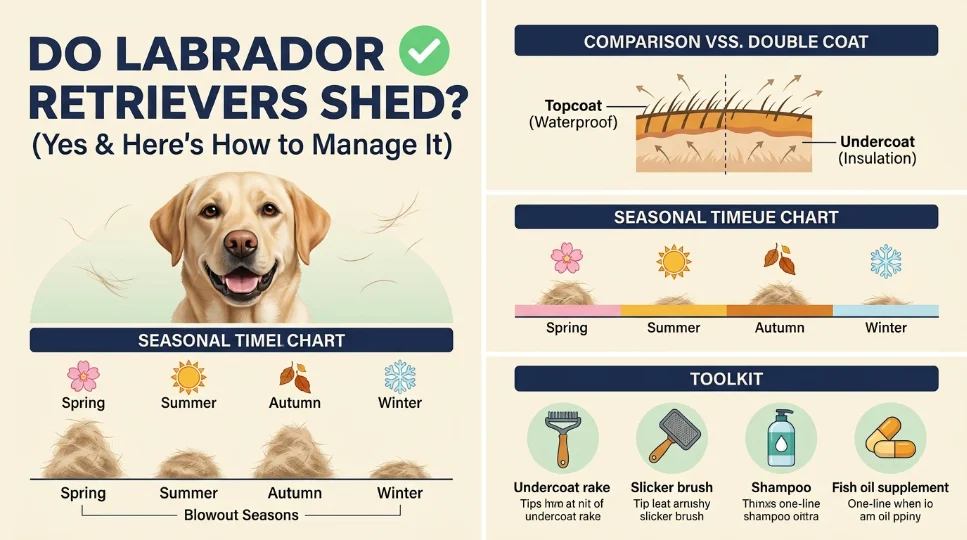
The Double Coat Structure
Labradors possess a double coat a feature inherited from their working dog ancestors who spent long hours retrieving game from icy waters.
The two layers are:
- Topcoat (Guard Hairs): Coarse, water-resistant, and slightly harsh to the touch. This layer protects your Lab from the elements and repels water.
- Undercoat: Dense, soft, and fluffy. This is the layer that provides insulation keeping your Lab warm in winter and cool in summer.
The undercoat is where the bulk of shedding comes from. Because each guard hair follicle is surrounded by 3 to 15 secondary hairs, when that undercoat releases, it comes out in staggering volumes.
Year-Round Shedding vs. Seasonal “Blowouts”
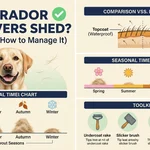
Labs shed every day of the year at a low to moderate level. But twice annually during spring and autumn they undergo what’s known as “blowing coat” a period of intense, heavy shedding that can last 2–3 weeks.
| Season | Shedding Intensity | What’s Happening |
|---|---|---|
| Spring | ⭐⭐⭐⭐⭐ (Extreme) | Losing thick winter undercoat to prepare for warmer weather |
| Summer | ⭐⭐ (Moderate) | Lighter coat, steady background shedding |
| Autumn | ⭐⭐⭐⭐ (Heavy) | Shedding summer coat to grow thicker winter undercoat |
| Winter | ⭐ (Lowest) | Full coat held steady; minimal shedding |
Important note: Indoor Labs living in temperature-controlled homes may shed more consistently year-round rather than in two clear bursts, as central heating can disrupt their natural seasonal cycle.
Factors That Influence Shedding
Diet and Nutrition
A high-quality diet rich in omega-3 and omega-6 fatty acids promotes healthy skin and coat, which can potentially reduce excessive shedding. Fish-based foods or those supplemented with fish oils are particularly beneficial.
Conversely, low-quality diets with excessive fillers can contribute to dry skin and increased shedding.
Health and Medical Conditions
If your Lab suddenly starts shedding more than usual particularly if accompanied by:
- Bald patches or thinning fur
- Skin irritation, redness, or scabs
- Dull, brittle coat
consult your veterinarian. These could indicate underlying health issues, allergies, or parasitic infestations.
Neutering and Spaying
Because coat growth is hormonally regulated, spaying or neutering can disrupt your Lab’s natural shedding rhythm. Some neutered Labs experience what’s described as “turbo shedding mode” intense, constant hair loss without seasonal pauses.
Stress
Like humans, dogs can experience stress-related hair loss. Significant changes in environment, routine, or household dynamics can temporarily increase shedding.
Do Different Colours Shed Differently?
No. There’s no evidence that Black, Yellow, or Chocolate Labs shed more or less than one another. Any variation in shedding amount is down to individual genetics, not coat colour.
However, black and chocolate Labs often have thicker, denser coat structures than their yellow counterparts, which may require more intensive grooming during blowout seasons.
How to Manage Your Labrador’s Shedding
You cannot stop a Labrador from shedding. But with the right routine, you can significantly reduce the amount of hair landing on your furniture, clothes, and floors.
1. Brushing: Your First Line of Defence
How often?
- Outside moult season: At least once per week
- During spring/autumn moults: Daily and brush outdoors if possible
Which tools work best?
| Tool | Purpose |
|---|---|
| Undercoat Rake | Reaches the dense underlayer where most shedding originates |
| Rubber Curry Brush | Lifts loose hair from the topcoat |
| Slicker Brush | Removes loose fur and prevents matting |
Pro tip: Use the rake first to loosen undercoat, then the brush to remove it. This order removes far more hair in one session.
2. Bathing: Strategic and Effective
A proper bath not just a quick rinse can remove significant amounts of loose hair before it ends up on your floor.
Key principles:
- Two washes: First with a deep-cleansing shampoo, second with a nourishing or deshedding shampoo depending on the season
- Thorough rinsing: Your Lab’s water-resistant coat means you need to really work the shampoo in and rinse completely
- Frequency: Every 4–6 weeks, or as recommended by your vet
- Avoid over-bathing: Too-frequent baths dry out the skin, which can actually increase shedding
3. Nutrition for a Healthy Coat
- Choose a high-quality, meat-based dog food with minimal fillers
- Look for added omega fatty acids to support skin and coat health
- Ensure your Lab stays well-hydrated dehydration contributes to dry skin and increased shedding
4. Environmental Management
- Keep your home at a consistent temperature to reduce the impact of seasonal changes on your Lab’s coat
- Use a high-quality vacuum designed for pet hair
- Consider furniture covers or throws that can be easily washed
5. Regular Vet Check-Ups
Annual wellness visits help catch health issues that could be causing excessive shedding before they become serious problems.
When Shedding Is Not Normal
While Labs are heavy shedders, there’s a difference between normal shedding and problematic hair loss.
Contact your vet if you notice:
- Sudden, dramatic increase in shedding not linked to seasonal change
- Bald patches or areas of thinning fur
- Red, irritated, or scaly skin
- Excessive scratching or licking
- Dull, brittle, or dry coat accompanied by shedding
Key Takeaways
| Question | Answer |
|---|---|
| Do Labradors shed? | Yes heavily and year-round |
| When do they shed most? | Spring and autumn “blowouts” lasting 2–3 weeks |
| Can I stop it? | No but you can manage it significantly |
| How often to brush? | Weekly normally; daily during shedding season |
| Does colour matter? | No all colours shed equally |
| When to see a vet? | If shedding is accompanied by skin issues, bald patches, or sudden increase |
The Bottom Line
Labrador Retrievers are wonderful, loving, and loyal companions but they come with a lot of hair. That’s the reality of sharing your home with this breed.
The good news? With a consistent brushing routine, proper nutrition, and the occasional strategic bath, you can keep your Lab’s shedding under control without it taking over your life. And the unconditional love and joy they bring? More than worth a few extra minutes with a brush.