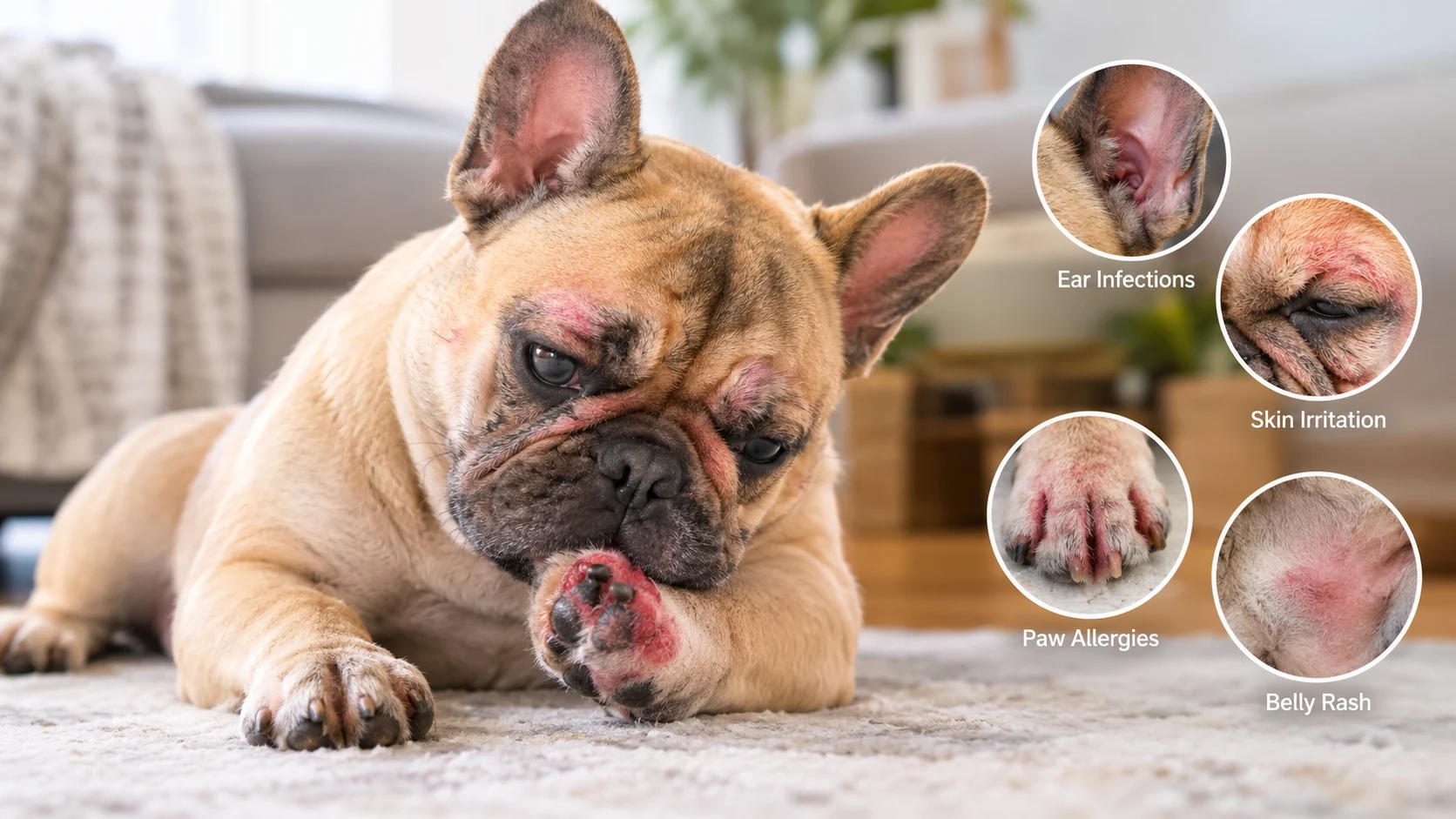
French Bulldog Allergies: Spot Symptoms, Find Relief
French Bulldogs are prone to allergic skin inflammation, food sensitivities, and environmental allergies. Persistent itching is not always a simple allergy, so identifying the trigger and ruling out infections are essential for effective treatment.
Quick Snapshot Table
| Category | Key Details |
|---|---|
| Breed | French Bulldog |
| Common Allergy Types | Environmental, food, flea and contact allergies |
| Most Recognizable Symptom | Persistent itching |
| Commonly Affected Areas | Paws, ears, face, skin folds and belly |
| Possible Digestive Signs | Diarrhea, vomiting and gas |
| Common Complications | Yeast and bacterial skin infections |
| Diagnosis | Veterinary examination and targeted testing |
| Food Allergy Test | Strict elimination diet followed by a food challenge |
| Treatment | Depends on the trigger and severity |
| Long Term Outlook | Often manageable with consistent care |
Why French Bulldogs Are Prone to Allergies
French Bulldogs have a recognized predisposition to allergic skin disease. Their skin barrier, inherited susceptibility and characteristic facial folds can make recurring skin inflammation particularly challenging to manage. Allergies may also coexist with bacterial or yeast infections, which can intensify itching and odor.
The first mistake many owners make is assuming every itchy Frenchie has a food allergy.
In reality, itching can result from several different conditions, including environmental allergies, flea allergy, food reactions, parasites and skin infections. These problems can look remarkably similar at home.
The goal is not simply to stop the scratching. It is to identify what is causing it and prevent the cycle from returning.
What Are the Main Types of French Bulldog Allergies?
Environmental Allergies
Environmental allergies, also called canine atopic dermatitis, develop when a dog’s immune system reacts to substances in its surroundings.
Common triggers include:
- Grass and tree pollen
- Weed pollen
- House dust mites
- Mold spores
Symptoms may worsen during particular seasons, although indoor allergens can cause problems throughout the year.
French Bulldogs with environmental allergies commonly lick their paws, rub their faces, develop irritated skin and experience recurring ear problems.
Food Allergies
A food allergy occurs when the immune system reacts adversely to an ingredient in the diet, often a protein.
Potential triggers include beef, chicken, dairy and other ingredients the dog has eaten. No single ingredient is responsible for every French Bulldog’s symptoms.
Food allergies can cause:
- Persistent itching throughout the year
- Recurrent ear infections
- Inflamed skin
- Paw licking
- Vomiting or diarrhea in some dogs
A dog can develop a food allergy even after eating the same food for months or years. Grain free food is not automatically hypoallergenic, and changing brands repeatedly does not reliably identify the trigger.
Flea Allergies
Some dogs develop a strong allergic reaction to proteins in flea saliva. In sensitive dogs, even a small number of bites can trigger substantial itching.
Common warning signs include:
- Scratching near the tail base
- Chewing the hindquarters
- Red or irritated skin
- Hair loss around the lower back
You might not see fleas on your Frenchie, so their absence during a quick inspection does not rule out flea allergy.
Contact Allergies
Contact reactions can occur when the skin reacts to particular substances it touches. Possible triggers include certain cleaning products, topical products or materials in the dog’s environment.
A reaction may affect the paws, belly or chin, depending on the exposure. However, irritation in these areas does not automatically confirm contact allergy. A veterinarian must also consider other causes.
French Bulldog Allergy Symptoms: What to Look For
Early Warning Signs
The earliest signs are often behavioral rather than dramatic skin changes.
Watch for:
- Repeated paw licking
- Frequent scratching
- Face rubbing against furniture
- Head shaking
- Redness around the ears
- Excessive licking of skin folds
These signs become more concerning when they persist, recur after treatment or interfere with sleep.
Skin and Coat Symptoms
As inflammation continues, you may notice:
- Red patches on the belly or chest
- Hair thinning or bald spots
- Scabs and small bumps
- Darkened or thickened skin
- Greasy fur or unpleasant odors
- Moist, inflamed facial folds
Long standing inflammation can change the appearance and texture of the skin. Secondary bacterial or yeast infections may develop and make the original itching considerably worse.
Ear and Paw Symptoms
French Bulldog allergies frequently involve the paws and ears.
| Symptom | What It May Indicate |
|---|---|
| Persistent paw licking | Allergic inflammation, infection or irritation |
| Brown staining between toes | Repeated licking and moisture |
| Head shaking | Ear irritation or infection |
| Dark ear discharge | Wax buildup, yeast or other ear disease |
| Swollen paws | Inflammation, infection or injury |
| Strong odor | Possible secondary infection |
These symptoms are clues, not definitive diagnoses. Ear mites, foreign material, injuries and other conditions can produce similar signs.
Digestive Symptoms
Some French Bulldogs with food allergies also experience gastrointestinal problems, such as:
- Loose stools
- Recurrent diarrhea
- Vomiting
- Excessive gas
- Abdominal discomfort
However, digestive symptoms alone do not establish a food allergy. Parasites, dietary intolerance and other gastrointestinal disorders may cause similar problems.
How to Tell Food Allergies From Environmental Allergies
The symptoms overlap, so timing and medical history can help guide the investigation.
| Clue | Food Allergy | Environmental Allergy |
|---|---|---|
| Seasonal pattern | Often present year round | May worsen during particular seasons |
| Paw licking | Common | Common |
| Ear infections | Can recur | Can recur |
| Digestive signs | May occur | Less characteristic |
| Response to diet change | May improve with a correctly conducted trial | Usually does not resolve the underlying environmental trigger |
| Reliable diagnostic approach | Elimination diet and controlled food challenge | Clinical evaluation and, when appropriate, allergy testing |
These are patterns, not rules. Some dogs have both food and environmental allergies, and seasonal environmental allergies can become year round.
How Are French Bulldog Allergies Diagnosed?
Step 1: Veterinary Examination
Your veterinarian will review the dog’s symptoms, age, diet, medications, flea prevention and previous skin problems.
The examination may include checks for:
- Fleas and other parasites
- Ear inflammation
- Skin fold dermatitis
- Bacterial infection
- Yeast overgrowth
- Other skin disorders
Treating a secondary infection may be necessary before the underlying allergy can be assessed accurately.
Step 2: Identify the Likely Trigger
A symptom diary can help identify patterns.
Record when itching starts, which areas are affected, whether symptoms change with the seasons, and whether digestive problems occur alongside skin symptoms.
This information can help your veterinarian decide which tests or treatment trials are appropriate.
Step 3: Test for Food Allergy When Indicated
The reliable method for diagnosing a food allergy is a strict elimination diet followed by a controlled challenge with the previous food or suspected ingredient.
Veterinarians commonly recommend a trial lasting around eight weeks, although the appropriate duration can vary.
During the trial, the dog must eat only the prescribed diet. Treats, table scraps, flavored chews and other foods can undermine the results.
Blood, saliva and hair tests marketed for diagnosing food allergies are not reliable substitutes for a properly conducted elimination diet.
Step 4: Consider Environmental Allergy Testing
If environmental allergies are suspected, a veterinarian may recommend referral to a veterinary dermatologist.
Intradermal or serum allergy testing can help identify relevant environmental allergens when planning allergen specific immunotherapy. These tests do not independently diagnose atopic dermatitis.
Treatment Options for French Bulldog Allergies
The best treatment depends on the cause. There is no single allergy medication or food that works for every French Bulldog.
Veterinary Allergy Medications
Depending on the diagnosis, a veterinarian may recommend:
- Prescription medications to reduce itching and inflammation
- Injectable treatments such as lokivetmab where appropriate
- Other targeted therapies for allergic skin disease
- Medication to treat confirmed bacterial or yeast infections
Some treatments provide relatively rapid relief, while others are intended for longer term control. Your veterinarian should consider the dog’s age, other medical conditions and infection status before choosing medication.
Never give human antihistamines, painkillers or steroid medications without veterinary guidance.
Medicated Shampoos and Skin Care
Veterinary recommended shampoos or topical products may help remove allergens, soothe irritated skin or manage certain infections.
Use products appropriate for the dog’s diagnosis. Excessive bathing, harsh fragrances and unsuitable cleaning products may worsen irritation.
Long Term Allergy Management
Many allergic dogs need ongoing care rather than a one time cure.
A management plan may combine trigger avoidance, appropriate medication, skin care and treatment of recurring infections. For some dogs with confirmed environmental allergies, allergen specific immunotherapy may help reduce symptoms over time.
French Bulldog Food Allergies: What Should You Feed?
Choose a Diet Based on Diagnosis
There is no universally best allergy food for all French Bulldogs.
A veterinarian may recommend a prescription hydrolyzed protein diet or a carefully selected novel protein diet. The right choice depends on the dog’s previous food exposure, symptoms and nutritional needs.
Do not assume that grain free, limited ingredient or expensive commercial food is automatically suitable for a dog with a food allergy.
Avoid Uncontrolled Food Switching
Repeatedly changing food makes it harder to identify the cause of symptoms.
Instead:
- Document the dog’s current food and treats.
- Discuss suspected ingredients with your veterinarian.
- Choose an appropriate elimination diet.
- Follow the trial without extra foods.
- Review the response with your veterinarian.
Once a food allergy is confirmed, avoiding the relevant trigger is central to long term management.
Caring for Allergy Prone French Bulldog Skin
Clean Facial Wrinkles Carefully
Facial folds can trap moisture and debris, increasing the risk of irritation and fold dermatitis.
Follow your veterinarian’s cleaning instructions and dry the folds gently. Avoid harsh disinfectants, fragranced wipes and products not intended for dogs.
Persistent redness, discharge or odor needs veterinary assessment rather than repeated cleaning alone.
Maintain Paw Hygiene
After outdoor walks, gently wipe the paws if your veterinarian recommends it, especially when pollen or grass exposure appears to trigger symptoms.
Dry between the toes carefully. If licking continues despite cleaning, look for an underlying allergy, infection, injury or foreign body rather than assuming dirt is responsible.
Keep Flea Prevention Consistent
Use a veterinarian recommended flea prevention product appropriate for your dog’s age, weight and health status. In a flea allergy, consistent prevention is important even when fleas are not obvious.
Monitor Ears and Skin Folds
Check for redness, moisture, odor and discharge. Avoid inserting cotton swabs or home remedies into the ear canal.
Early assessment of recurring symptoms can help prevent more severe inflammation and discomfort.
Common Mistakes French Bulldog Owners Make
Assuming Every Itch Is a Food Allergy
Environmental allergens, fleas and infections can cause similar symptoms. Changing food without investigating these possibilities may delay effective treatment.
Stopping Treatment Too Early
Visible improvement does not always mean the underlying condition is controlled. Follow the treatment plan and ask your veterinarian before stopping prescribed medication.
Using Home Remedies Without Guidance
Essential oils, vinegar mixtures, human creams and leftover medications can irritate skin or be unsafe if licked.
Use only products appropriate for your dog’s condition.
Ignoring Recurrent Ear Infections
Repeated ear infections can be a sign of underlying allergic inflammation. Treating each flare without investigating the cause may lead to a recurring cycle.
Choosing Food Based on Marketing
Words such as natural, sensitive skin and grain free do not prove that a diet will control an allergy. Diagnosis and ingredient selection matter more than packaging claims.
When Should You See a Veterinarian?
Book an appointment if your French Bulldog has persistent itching, recurring ear infections, hair loss, irritated skin folds or repeated digestive problems.
Seek urgent veterinary care if your dog develops:
- Sudden facial swelling
- Difficulty breathing
- Collapse or severe weakness
- Repeated vomiting accompanied by marked distress
Difficulty breathing or collapse is an emergency. Do not wait for a routine appointment.
Lifestyle Compatibility and Prevention
Allergies do not mean a French Bulldog cannot enjoy a comfortable life. Most management plans focus on reducing exposure to known triggers and controlling inflammation before secondary infections become established.
Helpful habits include:
- Keeping flea prevention consistent
- Washing bedding regularly with a suitable detergent
- Drying skin folds after cleaning
- Monitoring symptoms across seasons
- Avoiding unnecessary dietary changes
- Keeping veterinary follow up appointments
Prevention cannot eliminate every allergy, particularly when genetic susceptibility plays a role. However, consistent care can help many dogs remain comfortable.
Preparation Checklist for Your Veterinary Appointment
Before the visit, prepare the following information:
- When the itching first started
- Which body areas are affected
- Current food, treats and supplements
- Previous diets and medication trials
- Flea prevention history
- Any vomiting, diarrhea or gas
- Photos of skin flare ups, if they come and go
- Previous ear or skin infection records
This information can make the diagnostic process more efficient and help avoid unnecessary trial and error.
Frequently Asked Questions
Why does my French Bulldog keep scratching?
Persistent scratching may result from environmental allergies, food allergies, flea allergy, parasites or skin infections. A veterinary examination is the best way to determine the cause.
What are the most common French Bulldog allergy symptoms?
Common signs include itchy skin, paw licking, red facial folds, recurrent ear infections, belly irritation and hair loss. Some dogs also experience digestive symptoms.
What foods are French Bulldogs commonly allergic to?
Dogs can react to various proteins and other food ingredients. Beef and chicken are among the recognized potential triggers, but no ingredient should be blamed without appropriate evaluation.
What is the best food for a French Bulldog with allergies?
For a confirmed food allergy, a veterinarian may recommend a prescription hydrolyzed protein diet or a suitable novel protein diet. The choice should reflect the dog’s medical history and a properly managed elimination trial.
Can French Bulldog allergies be cured?
Some contact reactions may resolve when the trigger is removed, but chronic environmental allergies often require long term management. Food allergies generally require ongoing avoidance of the confirmed trigger.
Are French Bulldog allergies seasonal?
They can be. Pollen and other environmental allergens may cause seasonal flare ups, while dust mites, food allergies and other triggers can produce symptoms throughout the year.
Can I give my French Bulldog antihistamines?
Do not give medication without veterinary guidance. The correct product and dose depend on the dog, and some human formulations contain additional ingredients that are unsafe for pets.
Why does my French Bulldog lick its paws constantly?
Paw licking may indicate allergic inflammation, yeast or bacterial infection, irritation or injury. Persistent licking can damage the skin and should be evaluated.
Are allergies responsible for my French Bulldog’s bad smell?
They can contribute indirectly. Allergic inflammation may encourage secondary yeast or bacterial infections, which can produce odor around the ears, paws and skin folds. Other causes are possible, so persistent odor deserves examination.
Conclusion
French Bulldog allergies can be frustrating because itching, paw licking, ear infections and irritated wrinkles often have overlapping causes. The most effective approach is to identify the trigger, treat any secondary infection and establish a management plan tailored to the individual dog.
Prioritize accurate diagnosis over repeated food changes or home remedies. With appropriate veterinary care, consistent skin hygiene and targeted treatment, many allergy prone French Bulldogs can enjoy a much more comfortable life.